
 CN
CN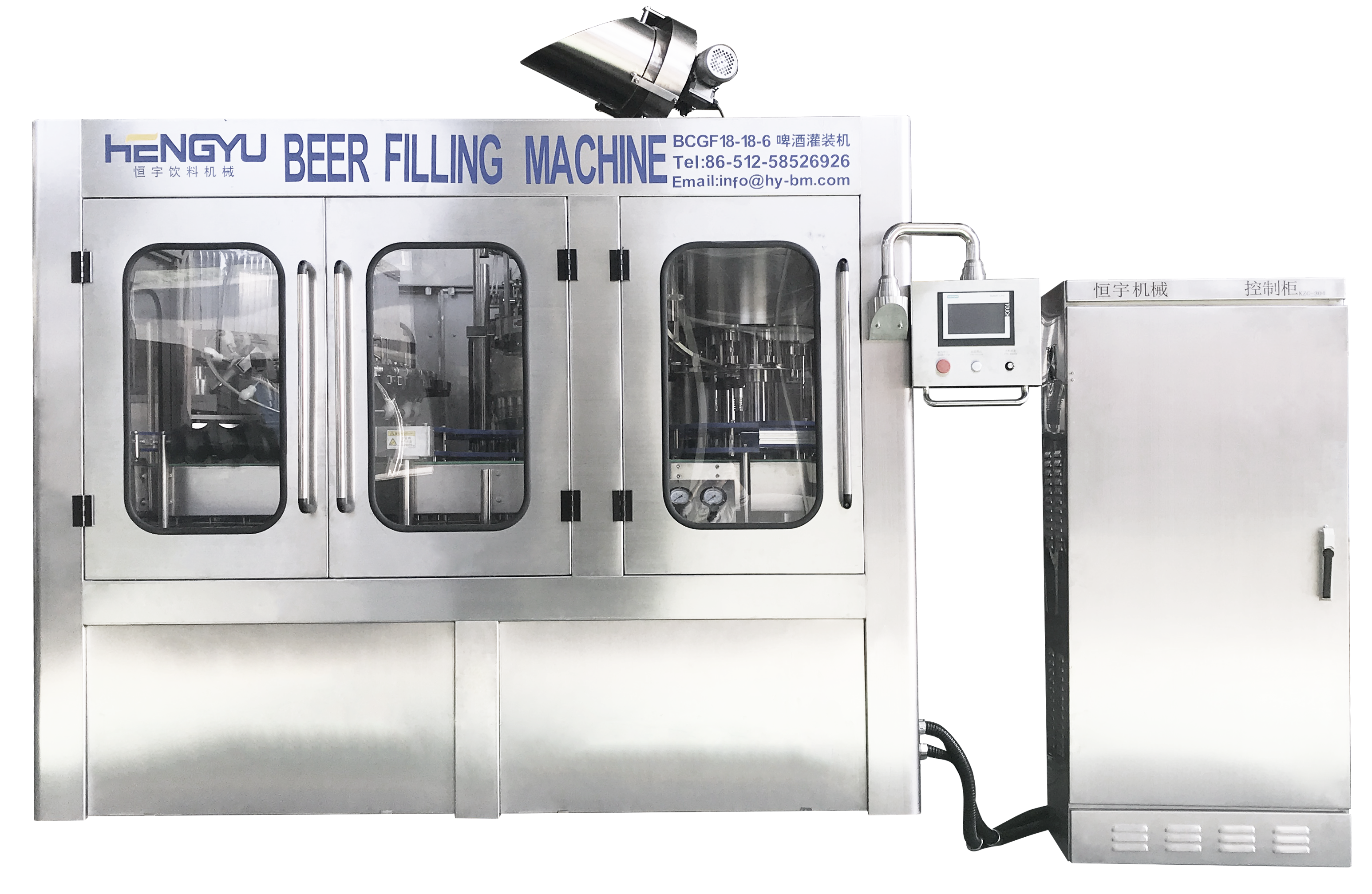
Understanding Snift Chamber Foam Dynamics and Their Impact on Yield Loss
How foam overflow directly drives measurable yield loss—quantifying the 0.8% per 100,000 bbl/year penalty
In high-speed rotary beer fillers, the snift chamber is designed to release excess foam after filling—but uncontrolled overflow translates directly into lost product. Operational data from large-scale breweries shows that even minor foam surges incur a consistent 0.8% yield penalty per 100,000 barrels annually. Each overflow event carries beer, hop extracts, and dissolved CO₂ out of the filler and into the drain. For a mid-sized brewery producing 500,000 barrels yearly, that represents 4,000 barrels—or over $740,000 at typical wholesale prices. Hidden costs compound the impact: increased wastewater treatment load, wasted packaging materials, and reduced line efficiency. Foam overflow also disrupts fill-level consistency, forcing operators to slow production or discard underfilled containers. Effective snift chamber foam management targets this loss by controlling foam volume and collapse rate before it exits the chamber. Without intervention, the filler’s rapid cycling creates a feedback loop where each overflow preconditions the next cycle—making the loss systematic, not incidental.
CO₂ solubility shifts and nucleation kinetics during deceleration: root causes of transient foam surges
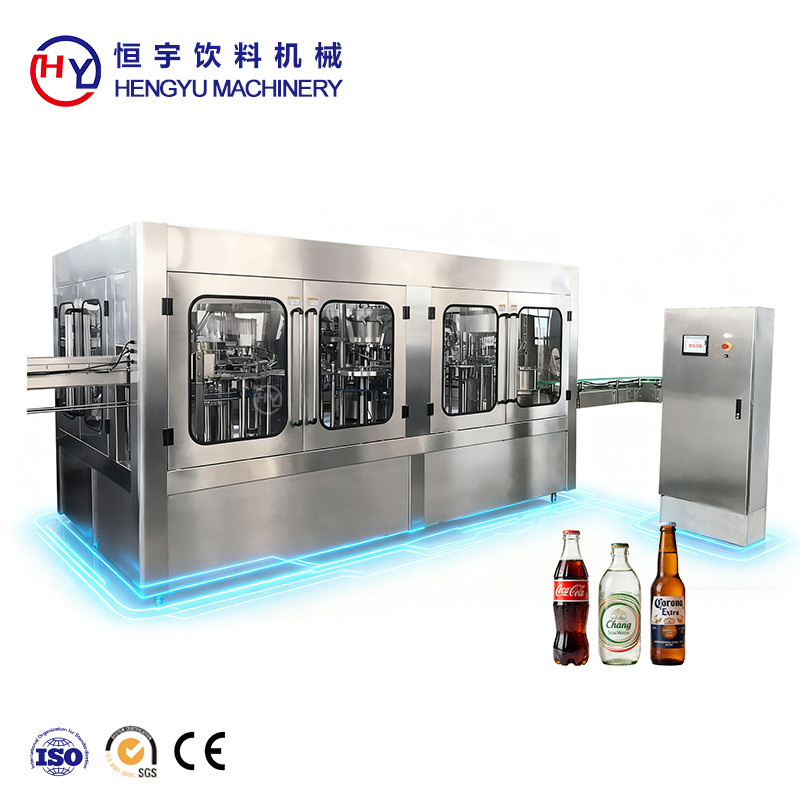
The abrupt deceleration of bottles as they exit the filling valve triggers a rapid pressure drop in the snift chamber, destabilizing dissolved CO₂ equilibrium. Per Henry’s law, lower pressure reduces CO₂ solubility—causing supersaturated beer to release gas not gradually, but explosively. This sudden change in flow velocity generates shear forces that accelerate bubble nucleation on microscopic surface defects and suspended particles. The result is a transient foam surge: a dense, rapidly expanding froth capable of overwhelming chamber capacity. Nucleation peaks within the first 0.2–0.5 seconds post-deceleration, with bubble formation rates reaching up to 10⁴ per cubic centimeter. Foam stability depends heavily on beer composition—higher protein and iso-alpha acid levels strengthen bubble walls, prolonging surge duration. Rough bottle interiors or residual cleaning agents further amplify nucleation. Addressing these root causes—not just symptoms—is essential for durable foam control. Mechanical fixes like oversized chambers fail without correcting underlying solubility and nucleation dynamics.
Proven Rotary Filler-Specific Foam Management Strategies
Vacuum-assisted snift chamber depressurization: field-validated 22–34% foam volume reduction
Vacuum-assisted depressurization directly counters the core driver of snift foam: the sudden pressure drop that triggers massive CO₂ nucleation. By applying a precisely metered vacuum immediately before the snift valve opens, the system gently draws off excess CO₂ from both headspace and liquid—reducing nucleation energy without stripping carbonation below target. Field trials across multiple 72-valve, 60,000 cph lines confirm a 22–34% reduction in foam volume compared to standard atmospheric venting, per a 2022 study by a leading filler OEM. This translates to up to 2.4 liters per minute recovered per filler—more than 80 hL annually on a typical line. Critically, vacuum tuning avoids cavitation while preserving dissolved CO₂ integrity, ensuring carbonation consistency right through to seaming.
Nozzle geometry optimization for controlled foam collapse—effects on fill accuracy and headspace consistency
Nozzle design significantly influences foam behavior inside the snift chamber. Split-flow nozzles with integrated flow-straightening vanes minimize turbulence and shear—key drivers of excessive foaming—by dividing the liquid stream into multiple laminar jets that merge smoothly. This reduces splashing and gas breakout during fill tube descent and snift blow-off. As demonstrated in 2023 trials published by Filling Technology Review, such geometries cut foam-related waste by over 70% in carbonated beverage filling. Plants retrofitting standard single-orifice nozzles report fill-level standard deviation shrinking from ±2.5 mm to under ±1.0 mm—improving headspace oxygen control and pasteurization consistency. With less foam escaping, fill accuracy becomes less operator-dependent, overfill adjustments decrease, and vacuum-assist systems operate more efficiently—preserving dissolved CO₂ while supporting yield recovery.
Real-Time Monitoring and Adaptive Control for Precision Foam Management
Ultrasonic foam-height sensing integrated with PLC-driven fill-rate modulation
Ultrasonic foam-height sensors mounted directly in the snift chamber provide continuous, non-contact measurement with sub-millimeter resolution. A PLC processes these signals using a proportional-integral-derivative (PID) algorithm—not just monitoring absolute foam height, but anticipating surges by analyzing its rate of change. When foam rises above a preset threshold, the PLC initiates a brief, targeted deceleration phase, allowing bubbles to collapse naturally before neck overflow occurs. This closed-loop response compensates for variability in beer temperature, CO₂ nucleation, and glass imperfections—eliminating reliance on static timer settings. Deployments on 72-valve fillers running at 1,200 bottles per minute show a 0.4–0.6% reduction in yield loss attributable solely to snift foam overflow—recovering 400–600 bbl annually for a 100,000 bbl/year brewery. Importantly, the system maintains a thin, protective foam layer that suppresses dissolved oxygen pickup—demonstrating that precision foam control, not elimination, delivers both yield and quality gains.
Rethinking the 'Zero Foam' Goal: Balancing Yield Loss Reduction with Beer Quality Integrity
Pursuing zero foam in the snift chamber often undermines beer quality. While unchecked overflow incurs the documented 0.8% yield loss per 100,000 barrels annually, aggressively eliminating all foam strips beer of foam-positive proteins and critical dissolved CO₂—degrading head retention, mouthfeel, and aroma perception. Industrial experience confirms that a stable, 1–2 cm foam layer cushions transient pressure changes during deceleration, smoothing nucleation surges and reducing fill-level variance. The objective must therefore shift from total abolition to dynamic, precision control. This balanced approach reconciles yield recovery with sensory integrity—ensuring optimized throughput never compromises the quality hallmarks that define a premium brand.
FAQ
What is the main cause of foam overflow in snift chambers?
Foam overflow in snift chambers is primarily caused by rapid pressure drops during bottle deceleration. This destabilizes dissolved CO₂, leading to explosive gas release and bubble formation.
How does foam overflow impact breweries?
Foam overflow translates into significant product losses, increased wastewater treatment costs, and decreased operational efficiency. For a mid-sized brewery, it could result in thousands of barrels lost annually, equating to substantial financial losses.
What is the benefit of vacuum-assisted depressurization in foam management?
Vacuum-assisted depressurization helps counter CO₂ nucleation by gently drawing off excess gas, reducing foam volume by 22–34% without compromising carbonation quality.
Why is maintaining a thin foam layer important?
A thin foam layer helps cushion pressure changes, reduces nucleation surges, maintains beer head retention, and prevents dissolved oxygen pickup—key factors for quality control and yield optimization.