
 CN
CNLarge-scale beverage production demands precision, speed, and reliability that manual or basic beverage filling machine systems simply cannot deliver. Modern factories producing soft drinks, juices, water, and other beverages require a beverage filling machine that operates at ultra-high speeds while maintaining strict quality standards and minimizing product waste. The right beverage filling machine becomes a critical asset that directly impacts production capacity, operational costs, and competitive market position. Understanding how to select and deploy a beverage filling machine tailored to factory-scale operations is essential for manufacturers seeking sustainable growth and efficient resource allocation in today's demanding beverage market.
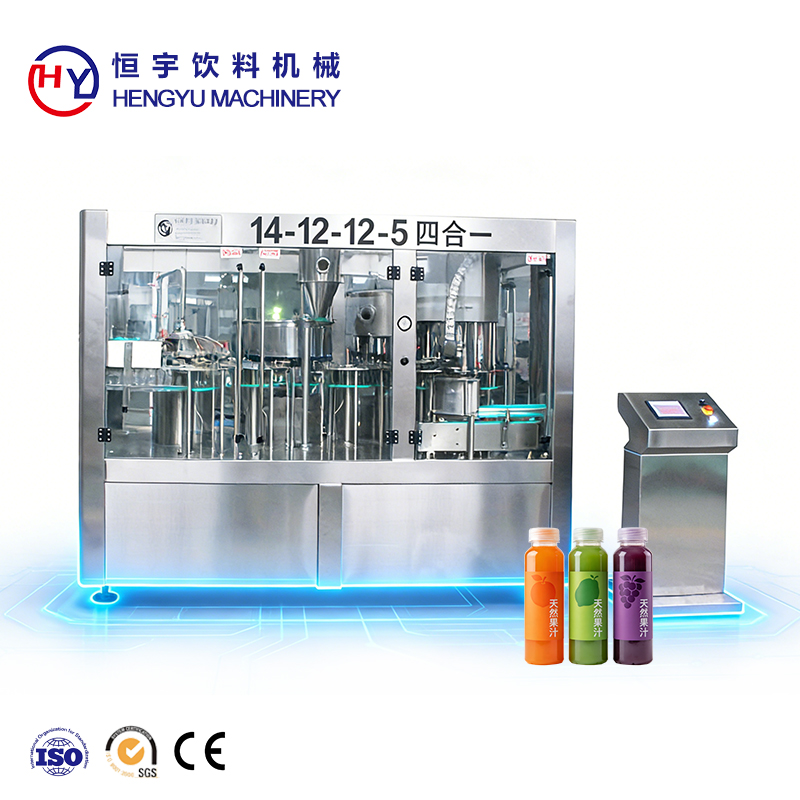
The evolution of beverage filling machine technology has fundamentally transformed factory operations, enabling producers to achieve output levels of 14,000 bottles per hour or more while reducing labor dependency and increasing product consistency. A high-performance beverage filling machine integrates multiple critical functions—rinsing, filling, and capping—into a single automated system that operates with minimal human intervention. For large factories handling carbonated soft drinks, juices, water, or energy beverages, investing in a purpose-built beverage filling machine represents both a production necessity and a strategic competitive advantage that influences profitability and market responsiveness.
Technology and Automation in Modern Beverage Filling Machines
Core Components Driving High-Speed Production
The structural foundation of an industrial beverage filling machine combines precision engineering with advanced automation systems that work in perfect synchronization. Each beverage filling machine includes servo-controlled filling heads, pneumatic or electric actuators, and real-time monitoring sensors that adjust fill volumes within milliseconds to ensure consistency across every bottle. The valve system within a beverage filling machine manages liquid flow with such precision that overfilling and underfilling are virtually eliminated, protecting both product quality and profit margins. Modern beverage filling machine designs incorporate stainless steel construction and hygienic material interfaces that comply with food safety regulations while withstanding the corrosive nature of acidic beverages and cleaning agents used in factory environments.
Integration with Factory Automation Systems
Contemporary beverage filling machine equipment integrates seamlessly with broader factory automation frameworks, allowing real-time data collection, predictive maintenance alerts, and production scheduling optimization. The beverage filling machine communicates with upstream and downstream systems—labeling machines, crating equipment, and quality control stations—through networked controllers that eliminate manual handoffs and bottlenecks. This digital connectivity transforms the beverage filling machine from a standalone tool into a component of an intelligent production ecosystem where throughput, defect rates, and energy consumption are continuously monitored and optimized. Factories that deploy advanced beverage filling machine systems gain access to detailed performance analytics that reveal inefficiencies, identify maintenance needs before breakdowns occur, and guide strategic upgrades to production workflows.
Performance Metrics and Production Capacity
Throughput Capabilities and Efficiency Gains
High-speed beverage filling machine systems designed for factory-scale operations typically process between 12,000 and 20,000 bottles per hour depending on container size, product type, and fill volume precision requirements. The beverage filling machine capacity directly influences whether a factory can meet seasonal demand surges, negotiate favorable contracts with retail partners, or expand into new market segments without substantial capital reinvestment. When a beverage filling machine operates at peak efficiency, factory labor costs per unit production drop dramatically, enabling competitive pricing strategies while maintaining healthy profit margins. The beverage filling machine becomes the primary determinant of a factory's ability to scale production incrementally without proportional increases in staffing, facility space, or utility consumption.
Product Loss Reduction and Quality Consistency
A properly configured beverage filling machine minimizes product spillage, overfill waste, and underfill rejection rates through precision volume measurement and real-time adjustment mechanisms. The beverage filling machine employs optical sensors and weight-check systems that validate each bottle's fill level before it proceeds to the capping station, ensuring zero substandard products reach distribution channels. Factory managers implementing a modern beverage filling machine typically observe immediate reductions in product loss ranging from 2 to 5 percent compared to older or semi-automatic systems, translating directly to recovered revenue and improved environmental sustainability metrics. The beverage filling machine's contribution to waste reduction enhances both the financial performance and the environmental reputation of beverage manufacturers in increasingly competitive markets where sustainability credentials influence retailer and consumer decisions.
Return on Investment and Factory Economics
Capital Expenditure and Payback Timelines
Installing a high-performance beverage filling machine represents a significant capital commitment, but the financial returns typically justify the investment within 18 to 36 months under normal operating conditions. A beverage filling machine with a capacity of 14,000 bottles per hour, combined with labor savings and product loss reduction, generates incremental revenue that directly offsets equipment acquisition costs. Factory financial managers should structure beverage filling machine procurement as a discounted cash flow analysis that incorporates production volume growth, utility cost changes, and maintenance expense trajectories over the equipment's 10 to 15 year operational lifespan. The beverage filling machine investment also provides flexibility to accept larger customer orders without external contract manufacturing, protecting market share and customer relationships during peak demand periods.
Operational Cost Optimization
Beyond initial capital recovery, a beverage filling machine continuously generates operational savings through reduced utility consumption, lower maintenance overhead compared to aging systems, and minimal product waste. The beverage filling machine's automated operation requires only two to three trained technicians per shift versus five to eight workers managing semi-automatic or manual filling processes, representing annualized labor savings of 200,000 to 400,000 currency units depending on regional wage structures. Preventive maintenance protocols for a modern beverage filling machine cost significantly less than emergency repairs and production downtime, enabling factories to maintain consistent operational schedules and reliable delivery commitments to customers. The beverage filling machine's energy-efficient design, utilizing regenerative air systems and optimized pump technology, reduces electrical consumption by 15 to 25 percent compared to legacy equipment, further strengthening financial performance and environmental compliance profiles.
Selection and Implementation Considerations
Matching Equipment Specifications to Production Requirements
Selecting the optimal beverage filling machine requires detailed analysis of production volume targets, product characteristics, container types, and growth projections over the next five to seven years. A beverage filling machine sized appropriately for current production may become a bottleneck within three years if demand grows faster than anticipated, necessitating expensive upgrades or parallel installations that disrupt workflow efficiency. Factory managers should evaluate whether a beverage filling machine with modular design capabilities allows for capacity expansion through component upgrades rather than complete equipment replacement, protecting capital investment flexibility as business conditions evolve. The beverage filling machine specification phase should include consultation with equipment manufacturers regarding sanitation requirements, changeover procedures for different product types, and integration compatibility with existing or planned factory infrastructure.
Training, Support, and Vendor Partnership
The success of any beverage filling machine installation depends heavily on operator training, maintenance competency development, and access to reliable technical support from the equipment vendor. Factory stakeholders should verify that beverage filling machine vendors provide comprehensive operator certification programs, comprehensive documentation, and rapid response maintenance services that minimize unplanned production interruptions. A beverage filling machine supplier offering remote diagnostics capabilities, spare parts inventory management, and predictive maintenance services becomes a strategic partner rather than a transactional vendor, enhancing long-term equipment reliability and factory productivity. Establishing clear beverage filling machine service level agreements that define response times, spare parts availability, and performance guarantees protects factory operations against extended downtime and provides financial certainty for budget planning and working capital management.
FAQ
What production speeds can a modern beverage filling machine achieve?
Modern high-speed beverage filling machine systems designed for large factories typically achieve throughput rates between 12,000 and 20,000 bottles per hour, depending on container size, product type, and fill volume specifications. Advanced beverage filling machine models utilizing servo-driven technology can reach 14,000 bottles per hour for standard carbonated soft drink applications with exceptional fill accuracy and minimal product waste. The beverage filling machine's actual speed depends on factors including container shape consistency, labeling integration requirements, and quality control checkpoint sequences that validate fill accuracy before downstream processing.
How much do factories save by upgrading to a beverage filling machine?
Factories implementing a modern beverage filling machine typically realize total cost savings of 30 to 50 percent per unit production compared to semi-automatic or manual filling systems, incorporating labor reduction, product loss minimization, and utility cost decreases. A beverage filling machine investment typically achieves complete capital payback within 18 to 36 months through these combined efficiency gains, creating years of net positive cash flow contribution to factory profitability. The beverage filling machine also enables factories to accept larger customer orders without external outsourcing, protecting gross margin preservation and customer relationship stability during market growth phases.
What maintenance requirements does a beverage filling machine need?
A properly maintained beverage filling machine requires routine preventive maintenance including daily cleaning, weekly calibration checks, and monthly component inspections that typically consume 4 to 8 maintenance hours per week depending on production intensity. Modern beverage filling machine designs incorporate self-diagnostic systems that alert technicians to potential issues before failure occurs, enabling planned maintenance scheduling that minimizes emergency downtime. The beverage filling machine's maintenance costs typically represent 3 to 5 percent of equipment acquisition cost annually, significantly lower than the combined cost of labor reduction and product loss prevention that the beverage filling machine delivers throughout its 10 to 15 year operational lifespan.