
 CN
CN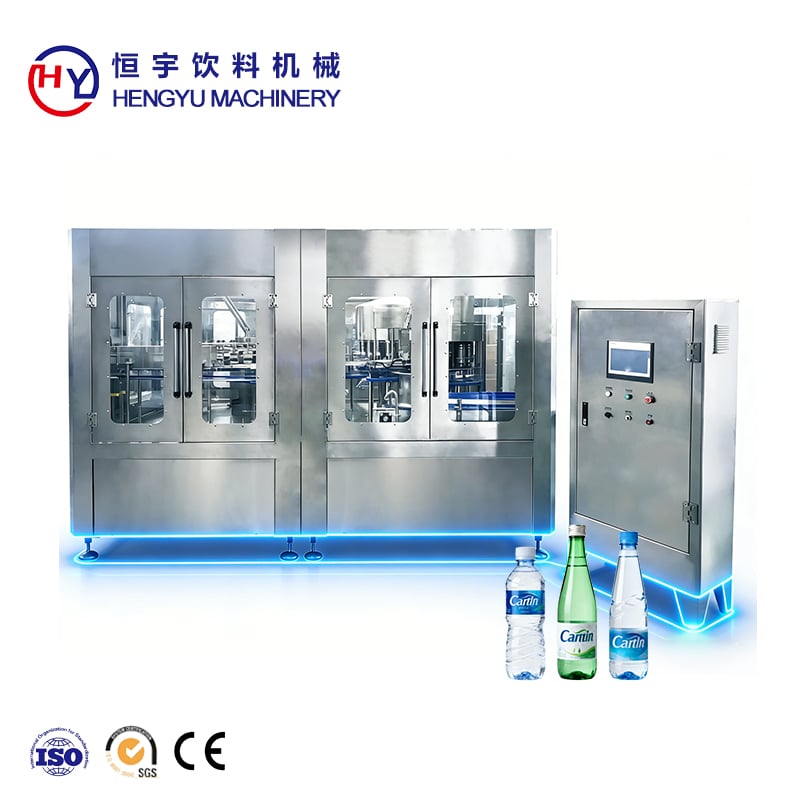
Setting up a bottled water production line is one of the most capital-intensive yet rewarding investments in the beverage manufacturing sector. Whether you are entering the market for the first time or scaling an existing operation, understanding the full scope of equipment, process flow, and facility requirements is essential before committing resources. A well-planned bottled water production line does not just fill bottles — it integrates water treatment, container handling, filling, sealing, labeling, and packaging into a seamless, hygienic, and efficient workflow.
This guide walks through every critical stage of building a complete bottled water production line — from raw water intake and purification to final packaging and quality control. The goal is to give operators, investors, and plant managers a practical, decision-useful framework for planning, procuring, and commissioning a production system that meets both regulatory standards and commercial output targets. A properly built bottled water production line can serve small regional markets or large-scale distribution networks, depending on how each stage is configured and scaled.
Understanding the Core Stages of a Bottled Water Production Line
Water Source and Pre-Treatment
Every bottled water production line begins with the water source. Whether the input is municipal tap water, groundwater, or spring water, the raw supply must undergo pre-treatment before it enters the purification system. Pre-treatment typically involves sediment filtration, activated carbon filtration, and softening stages that remove suspended particles, chlorine, organic compounds, and hardness minerals.
The quality of pre-treatment directly affects the performance and lifespan of downstream purification equipment. Skipping or under-investing in this stage leads to premature membrane fouling, inconsistent product quality, and higher long-term operating costs. For any bottled water production line, pre-treatment is not optional — it is the foundation on which everything else depends.
Operators should conduct a thorough water analysis before selecting pre-treatment components. The specific combination of filters, softeners, and dosing systems will vary based on source water chemistry. A professional water analysis report is the starting point for designing a pre-treatment train that is both effective and cost-efficient.
Purification Systems: RO and Beyond
The purification stage is the technical heart of any bottled water production line. Reverse osmosis (RO) is the most widely used technology for producing purified drinking water at commercial scale. An RO system forces pre-treated water through semi-permeable membranes under pressure, removing dissolved salts, heavy metals, bacteria, and other contaminants to produce water that meets international drinking water standards.
Depending on the product type — purified water, mineral water, or alkaline water — additional treatment steps may follow the RO stage. These can include remineralization cartridges, pH adjustment systems, ozone treatment, or ultraviolet (UV) sterilization. Each of these steps adds a layer of product differentiation and safety assurance to the bottled water production line.
UV sterilization is particularly important as a final disinfection step before water enters the filling zone. It eliminates residual microorganisms without introducing chemicals, making it a preferred method in food-grade production environments. Ozone treatment serves a similar purpose and also extends the shelf life of the finished product by maintaining sterility inside sealed containers.
Container Handling and Preparation in a Bottled Water Production Line
Bottle Types and Format Considerations
A bottled water production line must be designed around the container format it will run. The two most common formats are small PET bottles (ranging from 200ml to 2 liters) and large 5-gallon (18.9-liter) polycarbonate or PET barrels. Each format requires a different set of handling, rinsing, filling, and capping equipment, so the container choice must be made early in the planning process.
Small PET bottles are typically produced on-site using a blow molding machine that converts preforms into finished bottles just before filling. This approach reduces storage space requirements and eliminates the logistics of transporting empty bottles. Integrating blow molding into the bottled water production line creates a more compact and cost-efficient operation for high-volume small-format production.
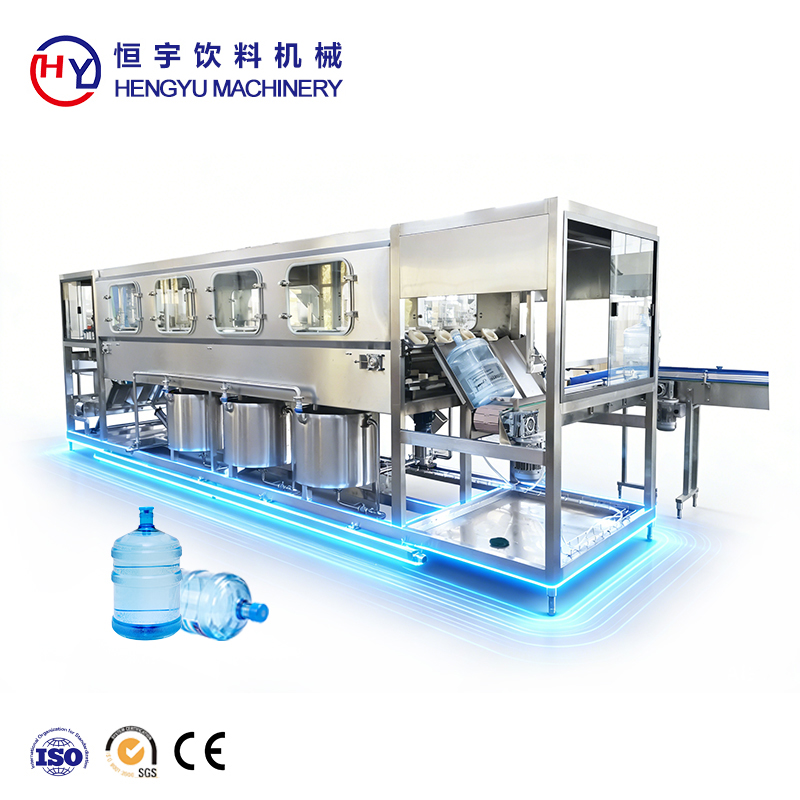
Five-gallon barrels, on the other hand, are reusable containers that require a dedicated washing and sterilization circuit before each refill cycle. The barrel washing system must be capable of interior and exterior cleaning, sanitizing with ozone or hot water, and drying before the barrel enters the filling station. This adds complexity to the bottled water production line but is standard practice in the large-format water dispensing market.
Rinsing and Sterilization Before Filling
Regardless of container format, all bottles or barrels must be thoroughly rinsed and sterilized immediately before filling. In a modern bottled water production line, this is handled by an automated rinsing machine that inverts containers and flushes them with purified water or a sterilizing solution. The rinsing step removes dust, residual particles, and any microbial contamination introduced during storage or transport.
For small PET bottles produced on-site via blow molding, the rinsing step is often integrated into a 3-in-1 monobloc unit that combines rinsing, filling, and capping in a single enclosed machine. This configuration minimizes the exposure of open containers to the ambient environment, which is critical for maintaining the hygienic integrity of the bottled water production line.
Sterilization protocols should be validated and documented as part of the facility's food safety management system. Regular microbiological testing of rinse water, filled product, and contact surfaces is essential to demonstrate that the bottled water production line consistently meets safety standards.
Filling, Capping, and Sealing Systems
Filling Technology Selection
The filling machine is the centerpiece of any bottled water production line. For still water, gravity filling or pressure filling systems are the standard choice. These systems use a series of filling valves that open and close to deliver a precise volume of water into each container. The filling speed, measured in bottles per hour (BPH), determines the overall throughput capacity of the bottled water production line.
For large-format 5-gallon barrel lines, filling is typically done through a bottom-up filling nozzle that minimizes turbulence and foam formation. The filling station is enclosed in a clean room or positive-pressure environment to prevent airborne contamination. Automated level sensors and flow meters ensure consistent fill volumes across every barrel processed by the bottled water production line.
Operators should select filling equipment with a capacity that matches their target output while leaving room for future expansion. Undersizing the filling station creates a bottleneck that limits the entire bottled water production line, while oversizing leads to underutilized capital and higher maintenance costs. A capacity planning exercise based on projected sales volumes is a necessary step before equipment procurement.
Capping, Sealing, and Tamper Evidence
Immediately after filling, containers must be capped and sealed to preserve product integrity and prevent contamination. In a small-bottle bottled water production line, capping is performed by an automatic capping machine that applies screw caps or snap caps at high speed. The capping torque must be precisely controlled to ensure a leak-proof seal without damaging the cap or bottle neck.
For 5-gallon barrels, sealing typically involves applying a tamper-evident cap or a heat-shrink sleeve over the barrel mouth. Some operations use a combination of a snap-on cap and a full-neck shrink sleeve to provide both a hygienic seal and a visible tamper indicator. This is an important consumer trust element in the large-format water market and should be built into the bottled water production line from the outset.
Induction sealing is another option used in premium small-bottle formats. An induction sealer applies an aluminum foil liner to the inside of the cap using electromagnetic induction, creating an airtight seal that is clearly visible when broken. This technology adds a layer of product safety and brand credibility to the bottled water production line output.
Labeling, Coding, and Secondary Packaging
Labeling Systems for Bottled Water
Labeling is both a regulatory requirement and a branding opportunity in any bottled water production line. Automatic labeling machines apply pre-printed labels to bottles or barrels at high speed, using pressure-sensitive adhesive, hot glue, or shrink sleeve technology. The choice of labeling method depends on the container shape, label material, and production speed requirements.
Shrink sleeve labeling is increasingly popular in the bottled water sector because it allows full 360-degree label coverage, vibrant graphics, and tamper-evidence functionality in a single application. A shrink sleeve labeler applies a pre-printed sleeve over the container and then passes it through a steam or hot-air shrink tunnel that conforms the sleeve tightly to the container shape. This method is compatible with most container formats used in a bottled water production line.
All labels must comply with local food labeling regulations, which typically require the product name, water source, treatment method, mineral content, volume, batch code, and expiry date. Integrating a coding and marking system — such as an inkjet coder or laser marker — into the bottled water production line ensures that each container carries a unique production date and batch identifier for traceability purposes.
Secondary Packaging and Palletizing
After labeling and coding, finished bottles move into the secondary packaging stage. For small PET bottles, this typically involves grouping bottles into multipacks using a shrink wrap machine or a carton packer. The packaged units are then stacked onto pallets, either manually or by an automatic palletizer, for storage and distribution.
For 5-gallon barrel lines, secondary packaging is simpler — barrels are typically stacked in racks or loaded onto pallets with protective wrapping. However, the logistics of handling large, heavy containers require careful attention to ergonomics and warehouse layout. The bottled water production line should be designed with material flow in mind, ensuring that finished goods move efficiently from the production floor to the dispatch area.
Automated conveyor systems connect each stage of the bottled water production line, reducing manual handling and maintaining a consistent production pace. Investing in a well-designed conveyor layout minimizes downtime caused by manual transfers and reduces the risk of container damage or contamination between stations.
Quality Control and Regulatory Compliance
In-Line and Off-Line Quality Checks
A complete bottled water production line must incorporate quality control checkpoints at multiple stages. In-line sensors monitor parameters such as water conductivity, pH, turbidity, and flow rate in real time, alerting operators to deviations before they affect finished product quality. These automated checks are the first line of defense in maintaining consistent product standards.
Off-line laboratory testing complements in-line monitoring by providing detailed microbiological and chemical analysis of water samples taken at regular intervals. A well-equipped on-site laboratory allows the production team to verify compliance with drinking water standards without relying entirely on third-party testing services. For a bottled water production line serving regulated markets, documented test results are a mandatory part of the quality management system.
Fill volume verification is another critical quality check. Automatic checkweighers or volumetric sensors installed on the conveyor after the filling station confirm that each container meets the declared fill volume. Underfilled containers represent a regulatory violation and a consumer trust issue, while overfilling increases product cost. Tight fill volume control is a mark of a well-calibrated bottled water production line.
Regulatory Frameworks and Certification Requirements
Operating a bottled water production line requires compliance with national and international food safety regulations. Depending on the target market, this may include obtaining certifications such as ISO 22000, HACCP, NSF/ANSI 61, or local health authority approvals. These frameworks require documented procedures for water treatment, equipment sanitation, personnel hygiene, and product testing.
Facility design must also meet regulatory requirements for food-grade production environments. This includes the use of food-safe materials for all water-contact surfaces, adequate drainage and ventilation, pest control measures, and separation of production zones from storage and utility areas. A bottled water production line that is built to regulatory standards from the start avoids costly retrofits and approval delays later.
Engaging a regulatory consultant or working with an equipment supplier that has experience in compliant facility design can significantly reduce the time and cost of obtaining production approvals. The regulatory landscape for bottled water varies by country and product type, so early engagement with the relevant authorities is strongly recommended for any new bottled water production line project.
FAQ
What is the minimum investment required to set up a bottled water production line?
The investment required depends heavily on production capacity, container format, and level of automation. A small-scale 5-gallon barrel bottled water production line with a capacity of around 600 barrels per hour can be significantly more affordable than a high-speed small-bottle line running tens of thousands of bottles per hour. Beyond equipment costs, investors must also budget for facility construction or leasing, water source development, regulatory approvals, and working capital. A detailed feasibility study is the best way to arrive at an accurate investment figure for a specific bottled water production line configuration.
How long does it take to commission a complete bottled water production line?
The timeline from equipment order to full commercial production typically ranges from four to twelve months, depending on the complexity of the bottled water production line, facility readiness, and regulatory approval timelines. Equipment manufacturing and delivery usually takes two to four months. Installation, commissioning, and operator training add another four to eight weeks. Regulatory inspections and product testing can extend the timeline further, particularly in markets with strict pre-market approval requirements. Early planning and parallel-tracking of facility preparation and equipment procurement can help compress the overall schedule.
Can a bottled water production line be expanded after initial installation?
Yes, most modern bottled water production line configurations are designed with scalability in mind. Modular equipment layouts allow operators to add capacity by installing additional filling heads, upgrading the RO system, or adding parallel production lines without replacing the entire system. However, scalability must be planned at the design stage — the facility layout, utility supply, and water treatment capacity should all be sized to accommodate future expansion. Retrofitting a bottled water production line that was not designed for growth is significantly more expensive than building in scalability from the start.
What are the most common causes of downtime in a bottled water production line?
The most frequent causes of unplanned downtime in a bottled water production line include RO membrane fouling, filling valve wear, conveyor jams, labeling machine misfeeds, and cap supply interruptions. Preventive maintenance programs that include regular membrane cleaning, valve inspection, and lubrication schedules are the most effective way to minimize downtime. Maintaining an adequate inventory of critical spare parts — particularly filling valves, seals, and conveyor components — ensures that minor failures can be resolved quickly without halting the entire bottled water production line for extended periods.
Table of Contents
- Understanding the Core Stages of a Bottled Water Production Line
- Container Handling and Preparation in a Bottled Water Production Line
- Filling, Capping, and Sealing Systems
- Labeling, Coding, and Secondary Packaging
- Quality Control and Regulatory Compliance
-
FAQ
- What is the minimum investment required to set up a bottled water production line?
- How long does it take to commission a complete bottled water production line?
- Can a bottled water production line be expanded after initial installation?
- What are the most common causes of downtime in a bottled water production line?