
 CN
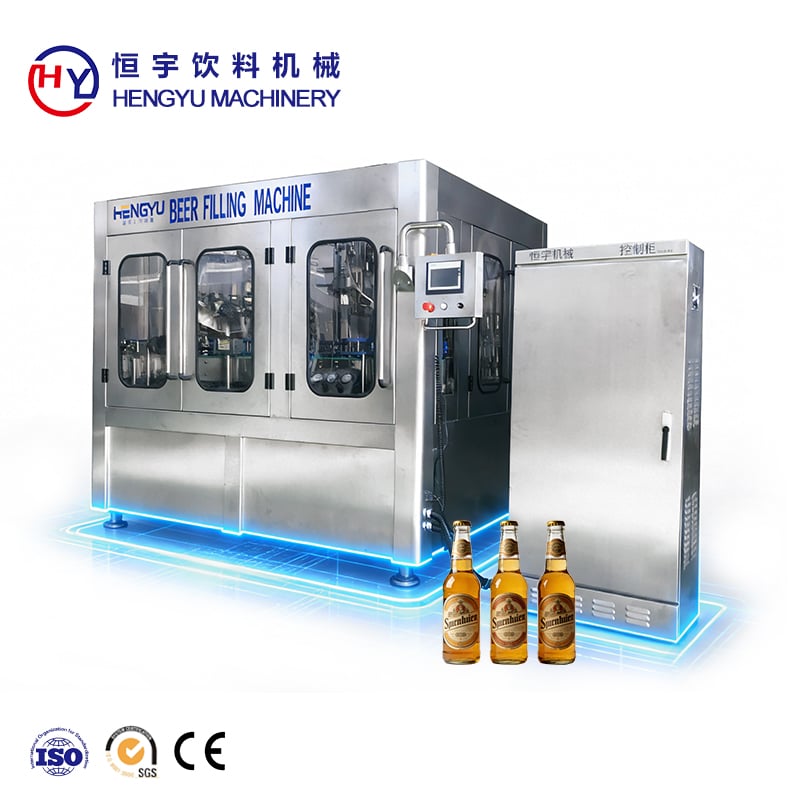
The beverage manufacturing industry is experiencing rapid transformation as producers adopt advanced technologies to meet growing demand and maintain competitive advantages. An automatic beer filling machine has become central to modern brewery operations, enabling facilities to scale production while maintaining consistent quality. Understanding the latest automation trends helps brewery operators make informed investment decisions that align with their long-term operational goals and market positioning.

Today's automatic beer filling machine solutions go far beyond simple mechanical filling. Contemporary systems integrate sophisticated sensors, real-time monitoring capabilities, and intelligent control systems that optimize every aspect of the filling process. These advancements reduce product waste, minimize downtime, and enhance operational efficiency in ways that would have been impossible just a few years ago. Breweries investing in modern automatic beer filling machine technology gain measurable advantages in production speed, quality consistency, and overall equipment effectiveness.
Integration of Smart Sensor Technology
Real-Time Monitoring and Adaptive Control
Modern automatic beer filling machine systems rely on embedded sensors that continuously monitor fill levels, pressure differentials, and product characteristics during operation. These sensors enable adaptive filling algorithms that automatically adjust parameters in real-time, ensuring each bottle receives precisely the correct amount of product regardless of variations in bottle geometry or product viscosity. The automatic beer filling machine can now detect potential quality issues before they result in customer complaints, creating a proactive quality management layer that traditional equipment cannot match.
The integration of smart sensor networks transforms how operators understand their automatic beer filling machine performance. Data flows continuously from multiple measurement points directly to centralized control systems where artificial intelligence algorithms analyze patterns and predict maintenance needs. This predictive maintenance capability means breweries can schedule service during planned downtime rather than experiencing unexpected equipment failures that disrupt production schedules and revenue streams.
Data Analytics for Production Optimization
An automatic beer filling machine equipped with advanced data collection capabilities generates enormous volumes of operational intelligence that manufacturers can leverage for continuous improvement. Analytics platforms process this data to identify optimization opportunities, validate process consistency, and track equipment performance trends over time. Breweries using this information-driven approach with their automatic beer filling machine achieve higher overall equipment effectiveness and faster return on investment compared to facilities relying on manual observation and traditional maintenance schedules.
Increased Speed and Capacity Performance
Enhanced Throughput Without Quality Compromise
Contemporary automatic beer filling machine models achieve significantly higher production speeds than earlier generations while maintaining stricter accuracy tolerances. Modern systems operate at speeds exceeding 300 bottles per minute for standard configurations, with some specialized automatic beer filling machine installations reaching 500 bottles per minute or higher depending on bottle format and product type. This dramatic speed increase allows breweries to meet seasonal demand spikes and grow revenue without requiring proportional increases in facility square footage or workforce size.
Speed improvements stem from multiple technological advances working in concert within the automatic beer filling machine architecture. Faster valve response times, more efficient product pathways, reduced transition sequences between different fill levels, and improved mechanical component precision all contribute to the overall speed capability. Importantly, this acceleration does not sacrifice accuracy or reliability; modern automatic beer filling machine systems maintain fill precision within one percent of target volumes even at peak speeds.
Scalability Across Production Formats
Flexible automatic beer filling machine systems can transition between different bottle sizes and formats with minimal downtime, representing a major advantage for diversified breweries producing multiple product lines. Quick-change components and software-driven adjustments allow a single automatic beer filling machine to accommodate bottles ranging from 12 ounces to 22 ounces to 750-milliliter formats within minutes rather than hours. This flexibility enables breweries to maximize equipment utilization and respond rapidly to market demands for new product formats without capital investment in dedicated production lines.
Sustainability and Resource Efficiency
Reduced Product Loss and Environmental Impact
Advanced automatic beer filling machine technology minimizes product waste through precise volumetric control and reduced spillage during bottle transfer and filling sequences. Modern systems achieve fill accuracy that reduces overfill and underfill incidents to negligible levels, protecting product quality while conserving valuable raw materials and reducing disposal costs. The environmental benefits extend beyond material conservation; breweries operating optimized automatic beer filling machine systems consume less water for cleaning cycles and generate fewer reject bottles requiring reprocessing or recycling.
Energy efficiency improvements in contemporary automatic beer filling machine designs reflect years of engineering refinement focused on reducing operational costs. Optimized pneumatic systems, variable-speed drive technologies, and intelligent idle-state management mean that automatic beer filling machine installations consume significantly less electrical and compressed-air energy compared to legacy equipment. These efficiency gains compound over years of operation, contributing meaningfully to facility sustainability goals and bottom-line profitability.
Cleaning System Advancements
Modern automatic beer filling machine systems incorporate integrated cleaning mechanisms that reduce water consumption and chemical requirements compared to manual cleaning approaches. Automated cleaning cycles run during scheduled downtime with minimal human intervention, ensuring hygiene compliance while preserving equipment longevity. The advancement of these cleaning systems demonstrates how current automatic beer filling machine technology addresses environmental concerns while improving operational economics and workplace safety.
FAQ
What specific features define a high-quality automatic beer filling machine for modern breweries?
High-quality automatic beer filling machine equipment combines precision filling accuracy within one percent of target volumes, rapid changeover capabilities between bottle formats, integrated real-time monitoring sensors, predictive maintenance algorithms, and modular component design. The best automatic beer filling machine installations include sanitary stainless steel construction, automated cleaning systems, variable speed capabilities, and user-friendly control interfaces that minimize operator training requirements. Additionally, superior automatic beer filling machine manufacturers provide responsive technical support and readily available spare parts to minimize unplanned downtime.
How does an automatic beer filling machine improve production efficiency compared to manual or semi-automated systems?
An automatic beer filling machine eliminates inconsistencies introduced by manual operation, reduces product waste through precision volumetric control, operates continuously at high speeds exceeding 300 bottles per minute, and integrates predictive maintenance capabilities that prevent unexpected downtime. The automatic beer filling machine also reduces labor requirements significantly while improving workplace safety by removing operators from repetitive tasks and hazardous chemical handling. Breweries typically achieve 30-40% productivity improvements within the first year of operating modern automatic beer filling machine systems.
What factors should breweries consider when selecting an automatic beer filling machine for their facility?
Critical selection factors for an automatic beer filling machine include compatibility with existing bottle formats and product types, production speed requirements matching facility demand forecasts, installation space availability and utility infrastructure capacity, total cost of ownership including maintenance and spare parts availability, and the manufacturer's track record for technical support and equipment reliability. Breweries should also evaluate whether their chosen automatic beer filling machine can accommodate anticipated product line expansion and format diversification plans. Requesting references from similar-sized facilities operating comparable automatic beer filling machine models provides valuable insight into real-world performance and long-term satisfaction.
Table of Contents
- Integration of Smart Sensor Technology
- Increased Speed and Capacity Performance
- Sustainability and Resource Efficiency
-
FAQ
- What specific features define a high-quality automatic beer filling machine for modern breweries?
- How does an automatic beer filling machine improve production efficiency compared to manual or semi-automated systems?
- What factors should breweries consider when selecting an automatic beer filling machine for their facility?