
 CN
CN
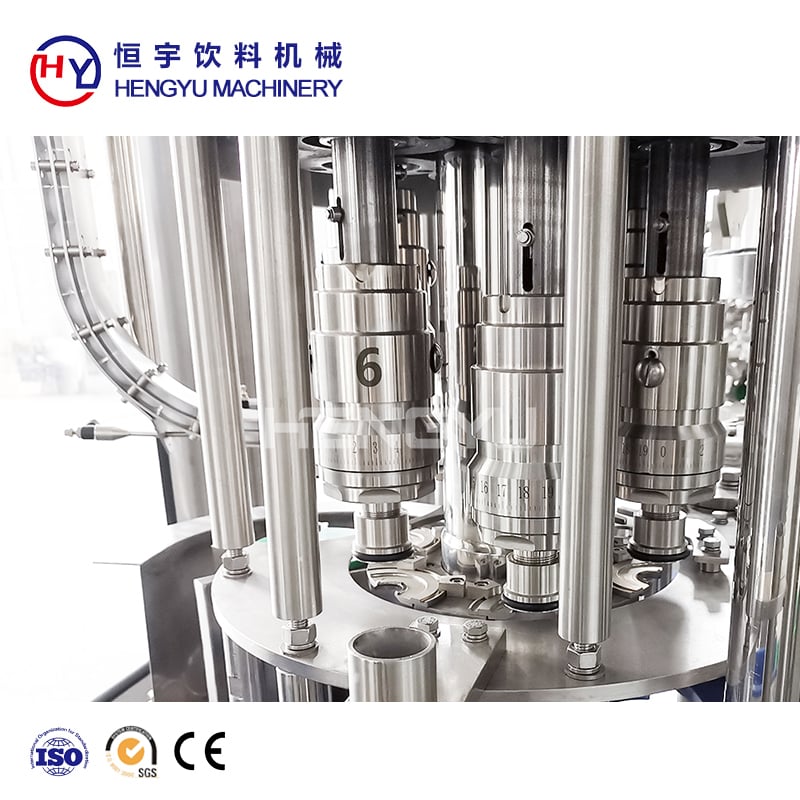
Isobaric Filling Principles: How Can Filling Machines Preserve Carbonation Under Pressure
The Physics of CO₂ Solubility and Why Counter-Pressure Is Non-Negotiable
The way carbon dioxide dissolves in drinks basically follows what we call Henry's Law, where how much gas stays dissolved depends on the pressure applied. When there’s a quick drop in pressure, like happens when using gravity fillers, all that CO2 comes out of solution fast. This creates foam, wastes product, and messes up the carbonation forever. That’s why most modern plants switch to counter pressure or isobaric filling methods instead. These systems balance the pressure inside the beverage tank with whatever container it’s going into before actually pouring starts. Keeping this pressure balance helps maintain stable carbonation levels throughout the whole filling process. Studies show these isobaric systems cut down CO2 losses by around 34 percent compared to old school gravity filling techniques according to Packaging Trends 2023 report. For anyone serious about producing quality carbonated beverages, moving away from gravity fillers isn’t just smart business, it’s pretty much essential nowadays.
Pre-Fill Pressurization: Foam Suppression and CO₂ Loss Prevention
Before liquid enters the can, isobaric fillers execute a tightly controlled pre-pressurization sequence:
- CO₂ injection: Food-grade CO₂ floods the empty can, displacing oxygen and matching tank pressure—typically 2.5–3.5 bar for soft drinks or 5–6 bar for highly carbonated formats.
- Pressure stabilization: High-resolution sensors verify pressure variance remains ≤0.5%, ensuring laminar flow and eliminating turbulence-induced foaming.
- Controlled liquid transfer: Beverage flows into the pressurized environment at regulated velocity, preserving nucleation stability and minimizing interfacial disruption.
This protocol delivers 98%±2% pressure uniformity across containers—even at high-speed operation (600+ cans/minute)—making it foundational to consistent carbonation retention.
Precision Engineering in Can Filling Machines: Valves, Automation, and Real-Time Control
Multi-Stage Filling Valves with Dynamic Flow Regulation
Today's isobaric can filling systems rely on advanced electromagnetic valves designed to handle different stages of operation with pinpoint accuracy. When getting things ready, these valves pump in just the right amount of CO₂ so the pressure inside matches what’s needed in the tank. Then comes the actual filling process where special servo-controlled openings adjust the flow rate constantly depending on how fast the production line is running, what kind of liquid we're dealing with, and even how much space remains at the top of each can. The result? Amazing precision with only about half a percent variation in volume measurement, all while keeping pace with machines that can fill as many as 1,200 cans every single minute. This means less wasted product from overfilling and better protection for those precious bubbles in carbonated drinks. Plus, switching between products becomes almost effortless thanks to smart valve systems that calibrate themselves automatically, which saves time and money since there’s no need for workers to stop everything and tweak settings manually anymore.
Integrated Sensors and Feedback Loops for Pressure, Temperature, and Fill-Level Accuracy
PLCs work with a bunch of really sensitive sensors to keep carbonation levels stable throughout production. The pressure sensors can spot changes down to just 0.1 bar and will automatically adjust valves when needed. For filling levels, ultrasonic sensors check the height accuracy to within about plus or minus 1 mm. Meanwhile, infrared temperature sensors are constantly watching how hot or cold the liquid stays. All these sensor readings go into special control algorithms that manage everything from CO2 addition rates to cooling processes and flow adjustments. This system keeps oxygen residuals under control at less than 0.5 ppm, which is pretty impressive compared to older methods. Manufacturers report around 25% less wasted product when switching from manual operations or basic automation setups to this kind of advanced control system.
Oxygen Exclusion and Hermetic Sealing: Critical Steps in Carbonated Beverage Can Filling
CO₂ Purging, Pre-Evacuation, and O₂ Residual Control (<0.5 ppm)
Oxygen plays a major role in causing flavor loss through oxidation and speeds up the escape of carbon dioxide from beverages. When there’s even a tiny amount of oxygen left behind, say anything over 1 part per million, we start seeing noticeable drops in carbonation levels. Research indicates that products can lose between 15 to 20 percent of their CO2 content within just one month if these oxygen levels aren’t controlled properly. Modern filling equipment addresses this problem by combining several techniques. First, they purge containers with CO2 to push out any remaining air. Some systems also include pre-evacuation steps before filling, which helps create an environment where oxygen levels drop below half a part per million. Getting such precise control requires advanced technology like adjustable gas flow systems, sophisticated laser sensors for oxygen detection, and specially designed gaskets with three sealing points. These innovations work together to maintain both the fizziness consumers expect and important microbial barriers against contamination at the same time.
End-to-End Carbonation Integrity: Linking Can Filling Machine Performance to Final Product Quality
Temperature Management Across Filling, Seaming, and Post-Fill Cooling
According to Henry’s Law, when temperatures go up by around 10 degrees Celsius, carbon dioxide solubility goes down roughly 15%. That means keeping things cool is absolutely essential for managing carbonation levels properly. The best isobaric fillers actually combine cold product delivery systems with built-in temperature sensors so they can keep liquids between 3 and 5 degrees Celsius while filling takes place. After the cans are filled, most plants run them through rapid cooling tunnels that get those sealed containers down to about 1 degree Celsius in just 90 seconds flat. This quick chill helps stabilize all that dissolved gas before the actual can sealing happens. Plants that monitor temperatures in real time tend to see about 40% fewer unexpected shutdowns compared to older facilities. And their products come out looking much more consistent from one batch to the next too.
Seam Quality Metrics and Their Impact on Shelf-Life and CO₂ Retention
Hermetic sealing is the final, non-negotiable barrier against CO₂ leakage and spoilage. Critical seam performance metrics include:
- Seam tightness: ≤0.5 µm maximum leakage path
- Overlap percentage: 85–95% for aluminum end configurations
- Compression force: 200–250 N to ensure gasket deformation without lid distortion
A 2021 analysis of 12,000 containers demonstrated that heat-sealed lids retained 98.7% of initial CO₂ after six months—19% higher than standard mechanical seams. Today’s fillers achieve this reliability via laser-validated seam inspection and pressure-responsive gaskets that self-correct micro-flaws in real time—directly linking machine precision to shelf-life assurance.
FAQ
Why is counter-pressure important in isobaric filling?
Counter-pressure is crucial because it helps maintain the pressure balance between the beverage tank and the container, preventing CO₂ from rapidly escaping and causing foaming and product waste.
What role do sensors play in carbonation stability during the filling process?
Sensors keep track of pressure, temperature, and fill-level accuracy in real time. They help manage flow adjustments and CO₂ addition rates, ensuring stable carbonation levels throughout the filling process.
How does temperature management impact carbonation in beverages?
Temperature management is essential as higher temperatures reduce CO₂ solubility. Keeping beverages cool ensures that carbonation levels remain stable from filling through to shelf life.
What are the key seam quality metrics in can sealing?
Critical seam quality metrics include seam tightness (≤0.5 µm), overlap percentage (85-95%), and compression force (200-250 N) to ensure effective hermetic sealing.
Table of Contents
- Isobaric Filling Principles: How Can Filling Machines Preserve Carbonation Under Pressure
- Precision Engineering in Can Filling Machines: Valves, Automation, and Real-Time Control
- Oxygen Exclusion and Hermetic Sealing: Critical Steps in Carbonated Beverage Can Filling
- End-to-End Carbonation Integrity: Linking Can Filling Machine Performance to Final Product Quality
- FAQ