
 CN
CN
Why Dissolved Oxygen Threatens Beer Shelf Life
Dissolved oxygen (DO) is one of the most critical quality parameters in beer packaging. Even trace amounts introduced during canning trigger oxidative reactions that degrade hop compounds—eroding bitterness and aromatic intensity—and generate off-flavors described as cardboard, papery, or stale. These reactions persist at refrigerated temperatures: lipid oxidation and Strecker aldehyde formation steadily compromise flavor integrity, while haze-causing compounds diminish visual clarity and consumer appeal.
Research shows that DO levels exceeding 50 ppb significantly accelerate staling, potentially shortening shelf life by 20–30% (Brewing Stability Report, 2022). Hop-forward styles like IPAs are especially vulnerable—their delicate aromas can fade within weeks without tight DO control. Non-alcoholic beers face heightened risk due to lower natural antioxidant content. Excessive DO also reacts with can liners, increasing the likelihood of micro-leaks that undermine package integrity, leading to product waste, warranty claims, recalls, and reputational harm. Accelerated aging tests confirm that even a 10 ppb increase in DO measurably reduces shelf life (Brewing Science Institute, 2023). Rigorous CO₂ purging—applied before filling—is therefore an indispensable foundation for maximizing beer stability.
How CO₂ Purging Reduces Dissolved Oxygen Before Filling
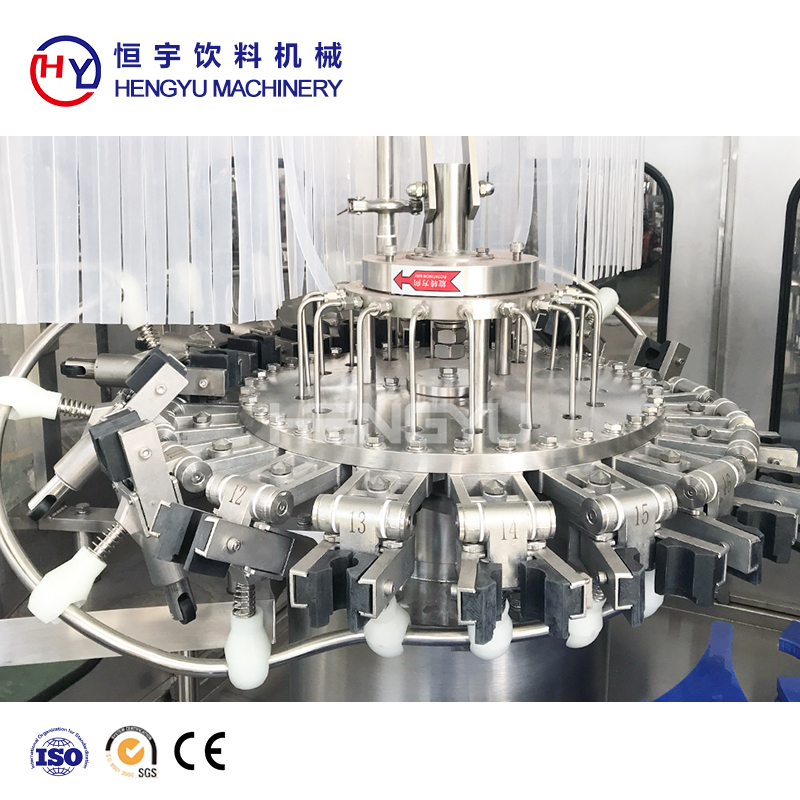
Before filling, CO₂ purging displaces ambient air in the can—a critical step that prevents oxygen pickup and preserves shelf life. The effectiveness of this displacement depends on gas flow dynamics, can geometry, and process parameters.
Gas displacement physics: Laminar vs. turbulent flow impact on purge efficiency
Laminar CO₂ flow creates a stable, piston-like displacement. Because CO₂ is ~1.5× denser than air, a laminar stream pushes oxygen upward and out through a vent with minimal mixing. Turbulent flow, by contrast, induces chaotic gas churning—trapping oxygen pockets and reducing removal efficiency. Purging systems engineered for laminar conditions routinely achieve final DO levels as low as 20 ppb. Controlled trials show laminar nozzles reduce turbulence by up to 40%, improving displacement consistency. Multiple purge cycles further reinforce this effect, eliminating residual oxygen that a single turbulent flush would leave behind.
Can geometry, fill speed, and CO₂ purity (99.9% vs. 99.99%) affect real-world DO reduction?
Can design and line speed strongly influence purging outcomes. Narrow-diameter cans with smooth internal profiles support stable CO₂ blankets; wide-mouth or ribbed cans tend to trap air. Slower fill speeds extend the purging window, allowing more complete oxygen displacement—while high-speed lines rely on two or more rapid CO₂ flushes to match performance. CO₂ purity is equally decisive: 99.9% grade may contain up to 1,000 ppm residual oxygen, whereas 99.99% CO₂ reduces that to ~100 ppm. This tenfold improvement lowers the dissolved oxygen baseline by 5–10 ppb in finished beer—making higher-purity CO₂ a straightforward, high-impact lever for extending shelf life in sensitive products.
Measuring and Validating Dissolved Oxygen Control on the Line
Accurate dissolved oxygen (DO) measurement is the linchpin of any CO₂ purging strategy—directly linking packaging performance to finished beer shelf life. Without rigorous verification, even well-designed purging can allow undetected oxygen ingress that triggers rapid staling. Brewers must validate DO at every critical point—from filler bowl to sealed can—and use methods capable of reliably detecting levels below 100 ppb.
Inline DO sensors vs. portable analyzers: Accuracy, calibration, and detection limits below 100 ppb
Inline optical DO sensors—based on fluorescence quenching—are now the gold standard for continuous, real-time monitoring. They consume no oxygen, require no warm-up or stirring, and deliver stable readings with ±1 ppb precision in the 0–100 ppb range—well below the threshold where stale flavors develop. Calibration is infrequent, often only monthly, thanks to digital sensor caps that store calibration constants. Portable electrochemical analyzers offer flexibility for spot-checking multiple locations but demand daily calibration and suffer from oxygen consumption during measurement—introducing drift of 5–10 ppb over hours, which compromises accuracy at sub-100 ppb levels. For validation, leading brewers pair both tools: inline sensors for continuous process control and portable units for periodic cross-checks at filler heads and seamers—ensuring total package oxygen remains consistently below 50 ppb.
Integrated Strategies to Maximize Shelf Life Beyond CO₂ Purging
While effective CO₂ purging is the primary defense against DO, integrating complementary technologies creates a robust, multi-barrier system. These synergistic methods tackle oxygen ingress at distinct stages of the canning process—significantly extending shelf life.
Vacuum pre-fill, counter-pressure filling, and lid-seal integrity as complementary DO mitigation levers
The battle against DO begins before filling. Vacuum pre-fill evacuates ambient air from the empty can—removing a large volume of oxygen that would otherwise require dilution by CO₂ alone. This is followed by counter-pressure filling, where the can is pressurized with CO₂ before and during fill. This technique prevents air draw-back and maintains low-turbulence flow—critical for minimizing oxygen pickup. Finally, lid-seal integrity serves as the non-negotiable final barrier: even a microscopic seam defect can create a capillary leak, drawing oxygen-rich air into the package over time and negating all prior DO reduction. Together, vacuum evacuation, CO₂ pressurization, and hermetic sealing form a continuous, airtight sequence that fortifies long-term product stability.
FAQs
Why is dissolved oxygen a threat to beer?
Dissolved oxygen triggers chemical reactions that degrade beer flavor and aroma, shorten its shelf life, and increase the risk of off-flavors and haze.
How does CO₂ purging help reduce dissolved oxygen?
CO₂ purging displaces ambient oxygen in cans before filling, lowering oxygen levels and minimizing chemical degradation, especially in sensitive beers.
What is the role of inline DO sensors in controlling dissolved oxygen?
Inline DO sensors provide precise, real-time monitoring, enabling brewers to maintain dissolved oxygen levels below the staling threshold.
How does can geometry influence CO₂ purging efficiency?
Narrow-diameter cans with smooth profiles support a stable CO₂ blanket, while wide-mouth or ribbed cans may trap air and reduce purging efficiency.
Are there other methods to minimize dissolved oxygen beyond CO₂ purging?
Yes, integrated strategies like vacuum pre-fill, counter-pressure filling, and ensuring lid-seal integrity effectively reduce dissolved oxygen risk in beer packaging.