
 CN
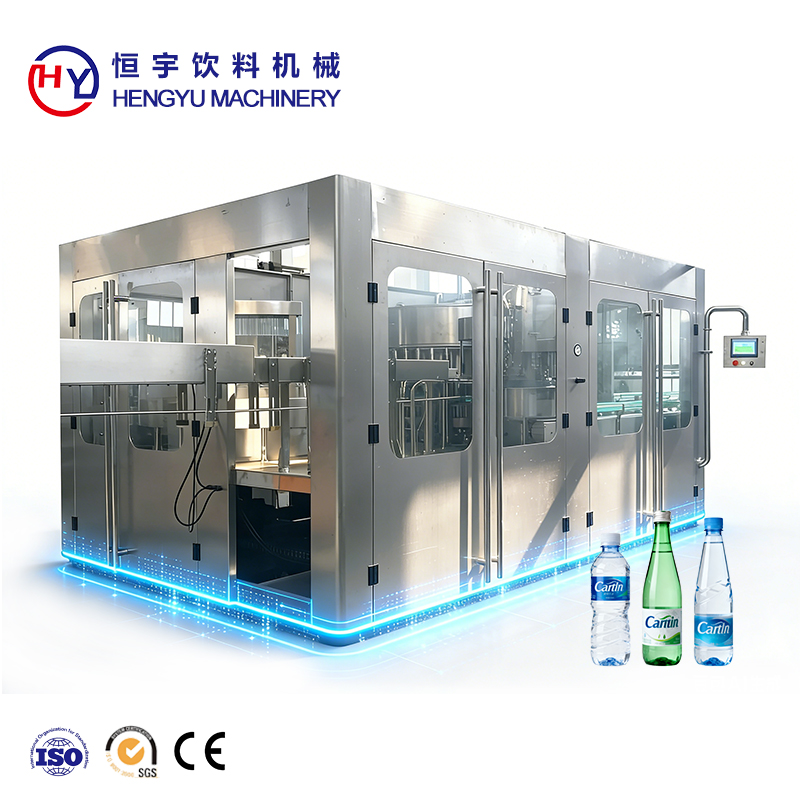
The modern beverage production industry faces unprecedented pressure to increase output while maintaining strict quality standards and reducing operational costs. Smart automation has emerged as a transformative solution that fundamentally changes how manufacturers operate their equipment, and the water filling machine stands at the center of this revolution. By integrating intelligent control systems, real-time monitoring, and predictive maintenance capabilities, a water filling machine can now deliver performance levels that were previously unattainable through manual or traditional mechanical approaches. Understanding how smart automation elevates water filling machine performance is essential for any production facility seeking competitive advantage in today's fast-paced market.

Smart automation systems transform a standard water filling machine into an intelligent production asset capable of self-optimization and adaptive performance management. These systems utilize sensors, artificial intelligence, and networked control platforms to monitor every aspect of operation, from fill accuracy and cycle speed to equipment health and material consumption. The integration of these technologies creates a cohesive ecosystem where the water filling machine continuously learns from operational data, identifies inefficiencies, and adjusts its parameters autonomously to maintain peak performance levels throughout the production day.
Enhanced Precision and Accuracy Through Intelligent Control
Real-Time Fill Level Monitoring and Adjustment
Smart automation enables a water filling machine to achieve fill accuracy levels that manually controlled systems cannot consistently maintain. Advanced sensor arrays detect liquid levels with micron-precision, allowing the water filling machine to make instantaneous adjustments to valve opening times and flow rates. This level of precision reduces product giveaway, ensures compliance with regulatory standards, and minimizes customer complaints related to underfilled or overfilled containers. The result is a water filling machine that delivers consistent quality with every cycle, directly improving profitability through reduced waste and increased customer satisfaction.
Adaptive Response to Variable Operating Conditions
Production environments constantly change due to factors like fluctuating water temperature, pressure variations, and different container geometries. A water filling machine equipped with smart automation compensates for these variations automatically without operator intervention. Temperature sensors trigger automatic adjustments to flow rates, ensuring that a water filling machine maintains consistent fill volumes regardless of seasonal changes or equipment aging. This adaptive capability transforms the water filling machine into a robust asset that performs reliably across diverse operational scenarios, reducing downtime and maintaining production velocity.
Maximized Efficiency and Output Optimization
Predictive Maintenance and Downtime Prevention
One of the most significant benefits of smart automation is the ability to predict equipment failures before they occur. A water filling machine with integrated diagnostics continuously monitors bearing wear, valve response times, motor performance, and seal integrity. By analyzing this data against historical benchmarks, the water filling machine can alert maintenance teams to address potential issues during scheduled downtime rather than experiencing catastrophic failures during production. This proactive approach ensures that a water filling machine operates at maximum efficiency consistently, reducing unexpected shutdowns that disrupt production schedules and inflate operational costs.
Throughput Optimization and Cycle Time Reduction
Smart automation allows a water filling machine to operate at speeds that push the boundaries of mechanical capability while maintaining safety and quality standards. The water filling machine's control system continuously analyzes the relationship between cycle speed, fill accuracy, and product quality, automatically adjusting parameters to maximize throughput without compromising results. Operators receive data-driven recommendations for optimal configuration settings, and the water filling machine can switch between different production profiles instantly based on product requirements. This dynamic optimization capability means a water filling machine generates substantially higher output from the same footprint compared to conventional equipment.
Integrated Production Visibility and Data-Driven Decision Making
Real-Time Production Analytics and Performance Metrics
Smart automation platforms transform the water filling machine from an isolated piece of equipment into a connected node within the broader production ecosystem. A modern water filling machine generates continuous streams of operational data including cycles per hour, fill accuracy statistics, reject rates, maintenance alerts, and energy consumption patterns. This information becomes accessible through intuitive dashboards that allow production managers to track water filling machine performance across multiple shifts and identify trends that inform strategic decisions. By understanding precisely how their water filling machine is performing at any given moment, manufacturers can make informed adjustments that improve overall facility efficiency.
Integration With Enterprise Systems and Quality Management
Contemporary manufacturing environments demand seamless integration between equipment and broader quality management systems. A water filling machine equipped with smart automation can connect directly to quality control platforms, automatically logging fill data for regulatory compliance and traceability. When the water filling machine identifies a quality deviation, the system can trigger corrective actions, quarantine affected product runs, and generate alerts that feed into comprehensive quality records. This integration ensures that a water filling machine becomes an active participant in quality assurance rather than merely an execution tool, providing manufacturers with confidence that every bottle meets specifications and regulatory requirements.
FAQ
How does smart automation specifically improve fill accuracy in a water filling machine?
Smart automation improves fill accuracy through multi-sensor feedback systems that work in real-time. A water filling machine equipped with these sensors detects actual liquid levels during filling and adjusts valve timing microsecond-by-microsecond to achieve precise target volumes. The water filling machine's control system learns from each cycle, building a profile of how factors like temperature and pressure affect performance, then compensates proactively rather than reactively. This combination of real-time sensing and predictive adjustment makes modern automated water filling machines accurate to within 1-2 milliliters consistently, compared to 10-50 milliliter variation in manually controlled systems.
What maintenance advantages does smart automation provide for a water filling machine?
Smart automation transforms maintenance from reactive crisis management into predictive planning. A water filling machine with integrated diagnostics monitors hundreds of parameters continuously, detecting subtle degradation patterns that precede failures. The water filling machine alerts technicians when specific components are approaching end-of-life, allowing them to schedule replacement during planned downtime. This predictive capability typically extends equipment lifespan by 15-25 percent and reduces unexpected downtime by 40-60 percent, directly improving facility throughput and reducing emergency maintenance costs associated with catastrophic failures of your water filling machine.
Can a water filling machine with smart automation switch between different bottle sizes quickly?
Yes, modern smart automation enables a water filling machine to transition between different container formats remarkably quickly. A water filling machine equipped with automatic changeover capabilities stores multiple configuration profiles that can be selected and deployed instantly. The water filling machine's vision systems and intelligent sensors automatically detect bottle dimensions and adjust fill height, timing, and flow rates accordingly. Changeover time for a water filling machine can be reduced from 30-45 minutes to as little as 2-5 minutes, allowing facilities to produce multiple SKUs efficiently without excessive downtime and making a water filling machine ideal for flexible, responsive production environments.