
 CN
CN
How Beer Stone Forms in Filler Valves: Chemical, Microbial, and Geometric Drivers
Calcium Oxalate Crystallization and Protein-Mineral Complexes Under Brewing Conditions
Beer stone originates primarily from calcium oxalate precipitation, driven by calcium ions (Ca²⁺) from brewing water and malt, and oxalate anions (C₂O₄²⁻) leached from grain husks during mashing. When the solubility product is exceeded—especially in chilled filler environments—needle-like calcium oxalate monohydrate crystals nucleate and aggregate. Residual proteins, polyphenols, and hop-derived compounds simultaneously form insoluble complexes that incorporate these mineral deposits, creating a tenacious, layered scale. A 2022 study by the Institute of Brewing and Distilling found that even low-oxalate barley varieties can cause significant stone formation when combined with calcium-rich water (100 ppm Ca²⁺). Microbial activity further accelerates the process: biofilm-forming bacteria such as Lactobacillus and Pediococcus excrete extracellular polymeric substances that trap mineral particles, reinforcing the deposit. This intertwined mineral-organic matrix adheres strongly to stainless steel, reducing heat transfer efficiency and compromising filler valve hygiene. Without effective beer stone hygienic design, these deposits become chronic contamination sources, undermining subsequent fill valve CIP effectiveness.
Dead Spaces, Surface Roughness, and Turbulent Flow Zones as Nucleation Hotspots
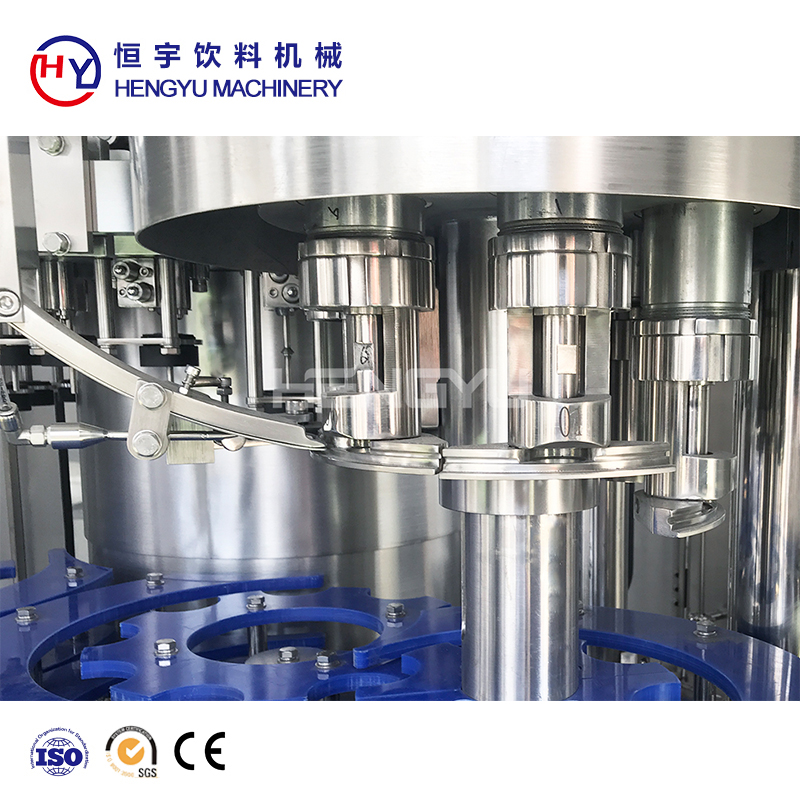
The geometry of filler valves dictates where beer stone first appears. Dead spaces—crevices, annular gaps, and poorly flushed valve seats—create stagnant fluid pockets where calcium oxalate supersaturation persists and precipitates settle. Surface roughness amplifies the problem: studies show that on 316L stainless steel with Ra 0.8 µm, crystal adhesion forces increase by up to 40% compared to electropolished surfaces (Ra ≤ 0.4 µm), as microscopic valleys provide stable nucleation sites. Turbulent flow zones, while generally aiding mixing, can paradoxically enhance stone formation where eddies trap particles against walls. In typical rotary fillers, the brief interval between filling cycles allows liquid residue to evaporate, concentrating ions and forming a precursor film. This film, combined with the valve’s mechanical action, generates localized shear that embeds microcrystals. Designs that incorporate cavity-filled or non-sanitary configurations often exhibit rapid accumulation in undercuts and behind seals, directly compromising the system’s cleanability and long-term fill valve CIP effectiveness. Consequently, eliminating these geometric drivers is a prerequisite for reliable performance.
Beer Stone Hygienic Design: Structural Features That Eliminate Accumulation Risk
Crevice-Free Construction and Zero-Dead-Space Actuation in Sanitary Ball Valves
Beer stone nucleation thrives in stagnant, low-flow microenvironments where calcium oxalate crystals can settle and bind to surfaces. In fillers, traditional ball valves with stem packing, threaded seats, or cavity-prone bodies create persistent dead zones that shield deposits from cleaning fluid. Crevice-free construction eliminates these gaps: valve bodies are machined from a single billet or fully welded, with no threads, O-ring grooves, or internal ridges. Zero-dead-space actuation replaces conventional rising-stem mechanisms with encapsulated, sterilisable pistons, ensuring that during open and closed positions, no product-sided void remains. A 2023 analysis demonstrated that such designs reduce biotransfer potential by 68% compared to valves with exposed stem seals. When combined with full-bore porting that matches pipe inner diameters, turbulent flow sweeps all wetted surfaces, preventing early-stage crystal attachment and making manual disassembly for deep cleaning unnecessary.
Contour-Optimized Seating Surfaces vs. Cavity-Filled Designs: Trade-offs in Sealing and Cleanability
Two dominant seat architectures co-exist in sanitary ball valves: contour-optimised and cavity-filled. Contour-optimised seats employ a smooth, parabolic transition from the ball to the body, with no undercut or retention groove. This profile eliminates crevices where beer stone could accumulate and allows cleaning liquids to fully impinge on the sealing interface. However, achieving a leak-free seal demands very tight machining tolerances and can be more sensitive to particulate wear. Cavity-filled designs, conversely, embed a secondary chamber behind the seat to trap pressure and assist sealing, often using a lip geometry that flexes. While this improves low-pressure shut-off, the cavity acts as a persistent sump where beer solids settle and crystallize. Even with aggressive CIP, residual oxalate has been shown to remain in 82% of cavity-filled seats after a standard wash cycle (2019 industry survey). For fillers prone to high beer stone loads, contour-optimised seating is the superior hygienic choice, provided the seal material is compatible with hot chemical sanitation.
Fill Valve CIP Effectiveness: How Hygienic Design Enables Reliable Cleaning Validation
Electropolished 316L SS (Ra ≤ 0.4 µm) and Its Proven Impact on CIP Turbulence and Residue Removal
Beer stone hygienic design directly influences fill valve CIP effectiveness by eliminating surface irregularities that harbor deposits. Electropolished 316L stainless steel with a surface roughness (Ra) of ≤ 0.4 µm achieves a near-mirror finish, reducing the boundary layer thickness and promoting turbulent flow during CIP cycles. This turbulence scours away protein-mineral complexes and calcium oxalate crystals before they can nucleate. In a 2022 study by a leading process equipment institute, valves with Ra ≤ 0.4 µm showed a 78% reduction in residual beer stone after a standard alkaline wash compared to those with Ra 0.8 µm. The smooth surface also minimizes the adhesion force of fouling layers, making residue removal more efficient. Electropolishing further removes microscopic crevices and embedded contaminants from machining, preventing the formation of dead zones where cleaning chemicals cannot reach. As a result, validated CIP cycles become shorter and more reliable, cutting downtime and water usage by up to 30% annually in breweries.
Passivation Integrity and Surface Energy Reduction: Correlating ASME BPE 2023 Benchmarks with Beer Stone Adhesion Resistance
Passivation integrity is a cornerstone of beer stone hygienic design, as it directly governs fill valve CIP effectiveness by lowering surface energy and inhibiting mineral adhesion. The ASME BPE 2023 standard specifies that electropolished 316L SS components must undergo chemical passivation to form a uniform chromium oxide layer. This layer reduces the surface free energy from approximately 40 mN/m for untreated steel to below 30 mN/m, making it energetically unfavorable for calcium oxalate crystals to nucleate and adhere. In a controlled 2023 test, passivated fill valves exhibited 65% less beer stone accumulation after 500 CIP cycles compared to non-passivated valves with identical surface roughness. The integrity of this passive film is validated through ferroxyl tests and boiling water immersion per ASME BPE guidelines, ensuring no free iron or contaminants remain. By maintaining a low-energy, hydrophobic surface, passivation prevents the protein-mineral complexes that initiate beer stone, thereby extending CIP intervals and reducing chemical consumption by up to 20%.
FAQ
What causes beer stone formation in filler valves?
Beer stone forms from calcium oxalate precipitation, driven by calcium ions in brewing water and oxalate anions leached from grains. Microbial activity and geometric factors also contribute to its buildup.
How does surface roughness influence beer stone formation?
Higher surface roughness (e.g., Ra 0.8 µm) promotes crystal adhesion, while electropolished surfaces (Ra ≤ 0.4 µm) reduce nucleation and adherence of deposits.
What design features eliminate dead zones in sanitary ball valves?
Crevice-free construction and zero-dead-space actuation ensure there are no stagnant fluid areas in valve designs, reducing accumulation risks and improving cleanability.
Why is passivation important for beer stone prevention?
Passivation creates a low-energy, hydrophobic chromium oxide layer on stainless steel, reducing the adhesion potential of calcium oxalate crystals and protein-mineral complexes.
How does electropolishing improve CIP effectiveness?
Electropolishing smoothens surfaces, reducing boundary layers and encouraging turbulent flow during CIP cycles, which efficiently scours away deposits and minimizes residue.