
 CN
CN
Why Isobaric Filling Is Essential for CO₂ Loss Prevention in Canned Beverages
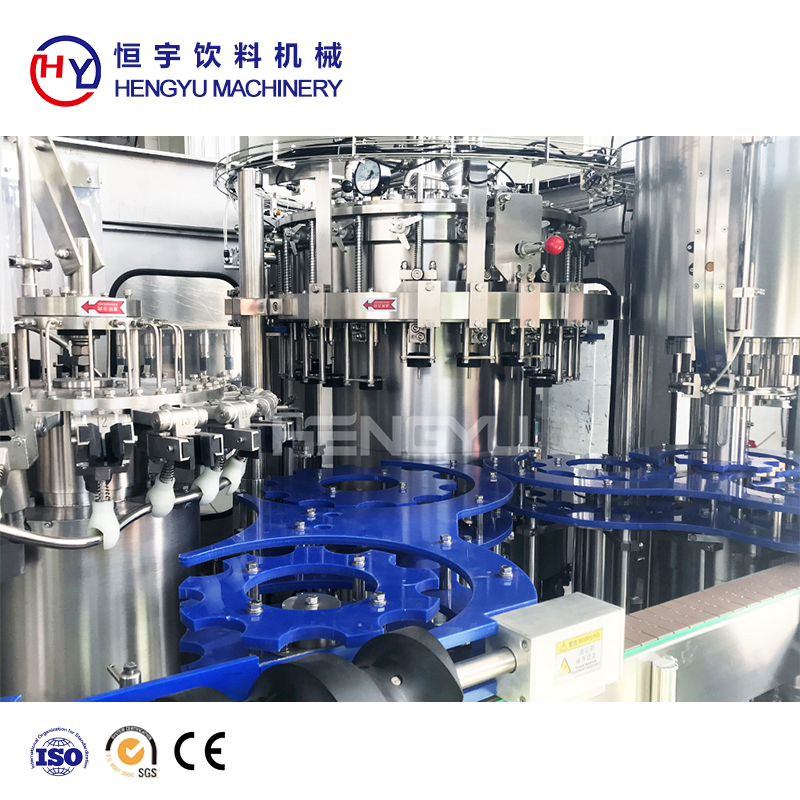
Maintaining carbonation in canned beer and sparkling water demands precise control over pressure, temperature, and fluid dynamics. Isobaric filling—also called counter-pressure filling—achieves this by equalizing pressure between the product tank and the can before liquid transfer, preventing rapid CO₂ release governed by Henry’s Law.
The physics of CO₂ retention: Pressure, temperature, and nucleation thresholds
Carbon dioxide remains dissolved only when the partial pressure of CO₂ above the liquid matches its internal saturation pressure. If a can is at atmospheric pressure while the liquid holds 2–4 bar of CO₂, gas escapes immediately upon contact. Isobaric systems prevent this by pressurizing the can to match the beverage’s equilibrium pressure before filling, enabling laminar flow down the can wall and avoiding turbulence that triggers nucleation at microscopic surface imperfections or suspended particles. Temperature further modulates solubility: colder liquids (0–4 °C) retain CO₂ more effectively, as gas solubility increases with decreasing temperature. Modern fillers maintain pressure within ±0.05 bar and fill temperature within ±1 °C to suppress bubble nucleation at the source—ensuring CO₂ stays in solution until the can is sealed.
Comparative impact of CO₂ loss on beer foam stability vs. sparkling water effervescence
Beer foam relies on proteins (e.g., LTP1, hordeins) and hop-derived iso-alpha acids to stabilize CO₂ bubbles. Premature CO₂ loss during filling degrades foam architecture: even a 0.2-volume drop in carbonation can reduce foam stand by 30% and accelerate oxidative staling. In contrast, sparkling water depends on rapid, uniform bubble formation to deliver crispness and tingling mouthfeel—qualities lost silently but decisively when CO₂ escapes early. While flat foam is visually apparent in beer, effervescence loss in sparkling water manifests as dullness and rapid flavor fatigue within seconds of opening. Isobaric filling preserves both beer’s delicate foam structure and sparkling water’s persistent effervescence by eliminating the pressure differential that drives premature degassing.
Isobaric Filling for Beer Canning: Optimizing Foam, Flavor, and Shelf Life
Managing protein and hop-derived foam sensitivity under counter-pressure conditions
Beer’s foam is highly sensitive to sudden pressure drops that activate nucleation sites on proteins and hop compounds. Isobaric filling mitigates this by pre-pressurizing the can to match the beer’s equilibrium CO₂ pressure—eliminating disequilibrium that causes violent foaming. Cooling the beer to 2 °C in the bright tank and limiting in-line warming to ≤4 °C minimizes solubility shifts and reduces protein denaturation. A brief pre-purging phase displaces residual headspace oxygen without disturbing the liquid surface, while controlled decompression (snift) avoids shock-induced nucleation after valve closure. The following table highlights key process variables that directly influence foam stability and CO₂ retention:
| Variable | Typical Setting | Impact on Foam & CO₂ Retention |
|---|---|---|
| Filling pressure | 0.8–1.5 bar (above equilibrium) | Prevents premature breakout; maintains uniform liquid column. Excessive pressure can induce turbulence and micro-nucleation. |
| Pre-purging duration | 0.3–1.2 s | Allows trapped oxygen to escape without disturbing the liquid surface, reducing foam generation during fill. |
| Product temperature | 2–4 °C at filler inlet | Lowers CO₂ solubility changes; reduces foamable protein activity and hop-acid precipitation. |
| Snift decompression | Gradual, ≤0.5 bar/s release | Avoids shock-induced nucleation that causes over-foaming and product loss after valve shut-off. |
These interdependent settings preserve delicate hop aromas and protein-driven foam texture—even in highly foam-positive craft recipes.
Case Study: 98.3% CO₂ retention in craft lager canning (2023)
A 2023 study at a leading Bavarian craft brewery demonstrated how precision isobaric filling transforms packaging into a quality-protection step. Integrating a counter-pressure canning line with controlled pre-purging and a two-stage snift valve, the brewery achieved 98.3% CO₂ retention from bright tank to sealed can. Dissolved oxygen pickup remained below 20 ppb—well under the 50 ppb threshold associated with shelf-life stability—extending fresh taste by weeks without pasteurization. Consistent carbonation ensured uniform foam stand and mouthfeel across thousands of cans, while hop-forward aromas were preserved without off-flavors.
Isobaric Filling for Sparkling Water: Precision De-aeration and Solubility Control
Sparkling water demands exceptional purity: even trace oxygen compromises crispness and triggers metallic or cardboard-like off-notes. Isobaric filling systems integrate advanced de-aeration and CO₂ purging to achieve dissolved oxygen (DO) levels below 10 ppb—a critical threshold for flavor stability and long shelf life.
Achieving <10 ppb dissolved oxygen via integrated de-aeration and CO₂ purging
To meet the <10 ppb DO target, modern isobaric fillers combine vacuum degassing of the water supply with continuous CO₂ sparging—stripping residual oxygen before the liquid enters the filler bowl. Inside the machine, each can is pre-pressurized with pure CO₂, creating an inert barrier against air intrusion. The filling valve then transfers de-aerated, carbonated water under stable counter-pressure, minimizing turbulence. A 2022 process study confirmed that integrated de-aeration systems consistently maintain DO between 5–8 ppb—far below the spoilage threshold—delivering neutral taste and extended shelf stability.
Henry’s Law compliance: Maintaining carbonation consistency across variable T–P profiles
Henry’s Law dictates that CO₂ solubility in water is directly proportional to partial pressure and inversely related to temperature. Small deviations in either parameter during filling shift carbonation levels, resulting in flat or overly fizzy product. Isobaric fillers enforce compliance by holding filler bowl pressure stable—typically 3.0–4.5 bar for sparkling water—while actively cooling the product to 2–4 °C. In-line pressure transmitters and temperature probes feed a closed-loop control system that dynamically adjusts fill speed and decompression ramp-down to prevent micro-nucleation. Field data from high-speed lines show this approach holds carbonation within ±0.15 volumes of target (e.g., 3.0 volumes), even amid ambient temperature fluctuations—ensuring uniform mouthfeel and effervescence from first to last can.
Equipment and Process Architecture for Reliable Isobaric Filling
Can pre-pressurization: CO₂ vs. N₂–CO₂ blends for headspace management
Isobaric filling requires matching the can’s internal pressure to the beverage’s carbonation pressure to prevent CO₂ breakout. Pure CO₂ is the standard pre-pressurization medium, delivered at 2–5 bar to maintain equilibrium. In select beer applications, a nitrogen–CO₂ blend may be introduced post-fill to fine-tune foam texture and reduce oxygen pickup—but nitrogen’s low solubility means it must be carefully calibrated to avoid diluting carbonation or altering sensory profile. Sparkling water producers universally use 100% CO₂ to preserve intended effervescence, clarity, and shelf stability.
Filling-to-decompression timing: Preventing micro-nucleation during pressure ramp-down
After sealing, internal pressure must be reduced to atmospheric without triggering micro-nucleation—rapid bubble formation that disrupts the liquid column and causes fobbing or product loss. Reliable isobaric fillers employ staged decompression, typically using two or more pressure-hold steps: pressure is first lowered to ~1 bar, held for 0.3–0.5 s to allow equilibration, then released to ambient. Advanced controllers monitor real-time pressure decay rates, ensuring ramp-down stays below the nucleation threshold. This precision preserves carbonation integrity, ensures consistent fill height, and eliminates post-fill foaming.
Frequently Asked Questions (FAQ)
What is isobaric filling?
Isobaric filling is a packaging process where cans or bottles are pre-pressurized to equalize pressure with a carbonated beverage before filling, preventing CO₂ loss and ensuring retaining carbonation.
How does temperature impact CO₂ retention during filling?
Lower temperatures (0–4 °C) improve CO₂ solubility, aiding retention. Higher temperatures can reduce solubility and increase risks of nucleation and CO₂ loss.
Why is pre-purging important?
Pre-purging displaces oxygen from the container headspace before filling, reducing oxidative damage and minimizing foam generation during the process.
What happens during snift decompression?
Snift decompression gradually reduces pressure post-fill to avoid micro-nucleation or bubble formation which may disrupt product consistency and reduce carbonation.
Why is dissolved oxygen (DO) critical in sparkling water filling?
High DO compromises flavor stability and creates off-notes. Maintaining DO below 10 ppb ensures extended shelf life and product purity.
Table of Contents
- Why Isobaric Filling Is Essential for CO₂ Loss Prevention in Canned Beverages
- Isobaric Filling for Beer Canning: Optimizing Foam, Flavor, and Shelf Life
- Isobaric Filling for Sparkling Water: Precision De-aeration and Solubility Control
- Equipment and Process Architecture for Reliable Isobaric Filling
- Frequently Asked Questions (FAQ)