
 CN
CN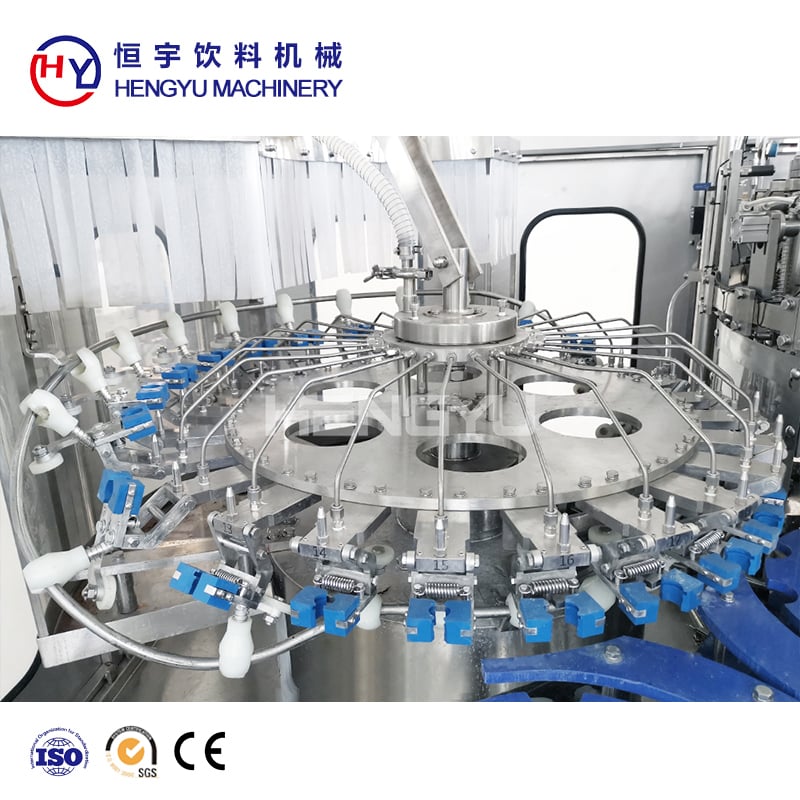
The Science Behind Nitrogen Dosing: How It Boosts Can Rigidity
Liquid Nitrogen Phase Change and Internal Pressurization Mechanics
When a precisely metered dose of liquid nitrogen (LN₂) is injected into a beverage can just before sealing, it undergoes rapid vaporization. At −196°C, LN₂ absorbs heat from the product and container, expanding approximately 700-fold in volume as it transitions to gaseous nitrogen. This creates a controlled internal pressure—typically 15–30 psi—that transforms the can from a flexible shell into a rigid, pressurized vessel. The resulting outward force places the can walls and ends in tension, counteracting external compressive loads during stacking, transport, and handling. Simultaneously, the nitrogen displaces oxygen, forming an inert headspace that inhibits oxidative degradation of sensitive beverages. Modern dosing systems deliver micro-doses with ±0.1 g accuracy, ensuring consistency across high-speed lines. This dual mechanical and protective effect underpins lightweighting strategies without compromising structural integrity.

Measuring Structural Gains: Pressure-Strain Response and Burst Strength Data
Quantifying nitrogen’s rigidity benefit requires precise mechanical testing. Strain gauge data show that internal pressurization significantly reduces deformation under axial load: a standard 12 oz aluminum can buckles at ~89 lbs, while a nitrogen-dosed equivalent withstands over 120 lbs—a 30% stiffness improvement (Packaging Mechanics Research, 2023). Burst strength testing confirms this reinforcement: nitrogen-pressurized cans consistently reach 95 psi versus 60 psi for unpressurized units (Container Integrity Analysis, 2022). Finite element modeling attributes these gains to hoop stress redistribution, which stiffens the cylindrical wall against buckling. Critically, this performance uplift enables aluminum thickness reductions of 10–15%, supporting sustainability goals while maintaining durability—making nitrogen dosing a foundational enabler of next-generation can design.
Nitrogen Dosing for Product Freshness and Shelf-Life Extension
Oxygen Displacement and Oxidation Suppression in Carbonated and Sensitive Beverages
Injecting a metered dose of LN₂ into the headspace immediately before seaming rapidly displaces ambient oxygen, reducing residual O₂ to <0.5%—a level proven to suppress oxidative pathways responsible for flavor staling, color bleaching, and nutrient loss (e.g., vitamin C degradation). This inert environment is especially valuable for carbonated soft drinks, cold-brew teas, and wines, where oxidation accelerates carbonate breakdown and dulls aroma-active volatiles. In a controlled trial by an international beverage science consortium (2023), nitrogen-dosed vitamin-fortified juice retained 92% of its initial ascorbic acid after nine months—versus just 67% in conventionally packaged controls. The same mechanism inhibits aerobic spoilage organisms, aligning with clean-label expectations. For low-acid or minimally processed beverages, nitrogen dosing delivers measurable improvements in sensory fidelity and consumer acceptance, establishing it as a core technology for freshness-critical formulations.
Real-World Shelf-Life Validation: Nitrogen-Dosed vs. Standard Cans Across Beverage Categories
Commercial inventory tracking and accelerated aging studies confirm consistent shelf-life extension across categories. The table below reflects aggregated 2024 data from independent contract-packers:
| Beverage Category | Nitrogen-Dosed Shelf Life (months) | Standard Can Shelf Life (months) | Average Extension |
|---|---|---|---|
| Still Flavored Water | 12–14 | 8–10 | +35% |
| Carbonated Soft Drink | 9–11 | 6–7 | +50% |
| Cold‑Pressed Juice | 4–6 | 2–3 | +60% |
Beyond duration, nitrogen-dosed cans preserve sensory quality more effectively: in a 2023 multi-brand sensory panel, trained tasters rated their aroma and taste within 15% of fresh-product benchmarks—even at terminal shelf life—while standard cans often fell below the 50% acceptability threshold. These outcomes stem from sustained oxygen exclusion, which slows enzymatic browning and volatile compound loss. For producers, the result is lower waste, broader distribution capability, and stronger retail freshness perception—positioning nitrogen dosing as a strategic lever in scalable beverage operations.
Industrial Integration of Nitrogen Dosing Systems in Beverage Tech
Inline Dosing Architecture, Precision Nozzle Calibration, and Process Control Integration
Inline nitrogen dosing is now integral to high-speed packaging lines—particularly as manufacturers adopt lighter aluminum cans and thin-wall PET bottles. The system mounts directly over the filler discharge, injecting a calibrated LN₂ droplet milliseconds before seaming. Performance hinges on nozzle precision: each orifice must deliver repeatable volume, tuned to container size, headspace volume, and line speed. Advanced servo-driven dosers use dual-sensor detection (container presence and velocity) to trigger injection with sub-millisecond timing. A PLC integrates these inputs, dynamically adjusting dose timing and volume to maintain target internal pressure. This closed-loop control ensures every can achieves optimal rigidity and oxygen displacement—without over-pressurization—making the doser a seamless extension of the filler that supports both structural performance and freshness assurance.
Balancing Performance and Safety: Avoiding Over-Pressurization in High-Volume Production
In high-volume canning, nitrogen dosing must reliably achieve target rigidity and freshness while preventing unsafe pressure buildup. Excess LN₂ can push internal pressure beyond burst strength—risking seam failure, leakage, or rupture. To mitigate this, modern systems combine mass-flow control, real-time pressure monitoring, and adaptive algorithms that adjust dose volume based on line speed and product temperature—keeping pressure within the safe operational window (typically 90–100 psi for aluminum cans). Redundant safeguards include pressure-relief valves that vent excess gas before critical thresholds are reached. Daily nozzle calibration and statistical burst-strength sampling further verify that every can remains well below its deformation point—even at peak throughput. This layered safety approach ensures nitrogen dosing delivers its full functional benefits without compromising operational reliability or brand integrity.
FAQ
What is nitrogen dosing, and why is it essential for cans?
Nitrogen dosing involves injecting a small amount of liquid nitrogen into a can right before sealing. This process creates internal pressure to boost can rigidity and displaces oxygen to enhance product freshness and shelf-life.
How does nitrogen dosing improve can stability during transport?
Nitrogen dosing increases internal pressure, transforming the can wall into a rigid structure that better resists external compressive forces during stacking and shipping.
Does nitrogen dosing affect product quality?
Yes, nitrogen displaces oxygen in the headspace, which significantly suppresses oxidation and helps preserve flavor, nutrients, and sensory quality over extended periods.
Are there safety risks associated with nitrogen dosing?
Modern systems mitigate safety risks by using mass flow controllers, real-time pressure monitoring, and adaptive algorithms to avoid over-pressurization. Additionally, pressure-relief valves and daily calibrations ensure safe operation.
How does nitrogen dosing impact sustainability efforts?
By boosting structural stability, nitrogen dosing allows for aluminum thickness reductions, supporting lightweighting strategies that reduce material usage while maintaining durability.