
 CN
CN
How Pre-Evacuation Cycles Remove Headspace Oxygen from Beer Bottles
Pre‑evacuation is a cornerstone of modern bottling lines designed to combat oxidation. By evacuating ambient air before filling, brewers dramatically reduce total packaged oxygen (TPO) in the headspace—extending shelf life and preserving sensory integrity. The core principle involves creating a vacuum to strip away atmospheric gases (roughly 21% oxygen) and replacing them with inert CO₂.
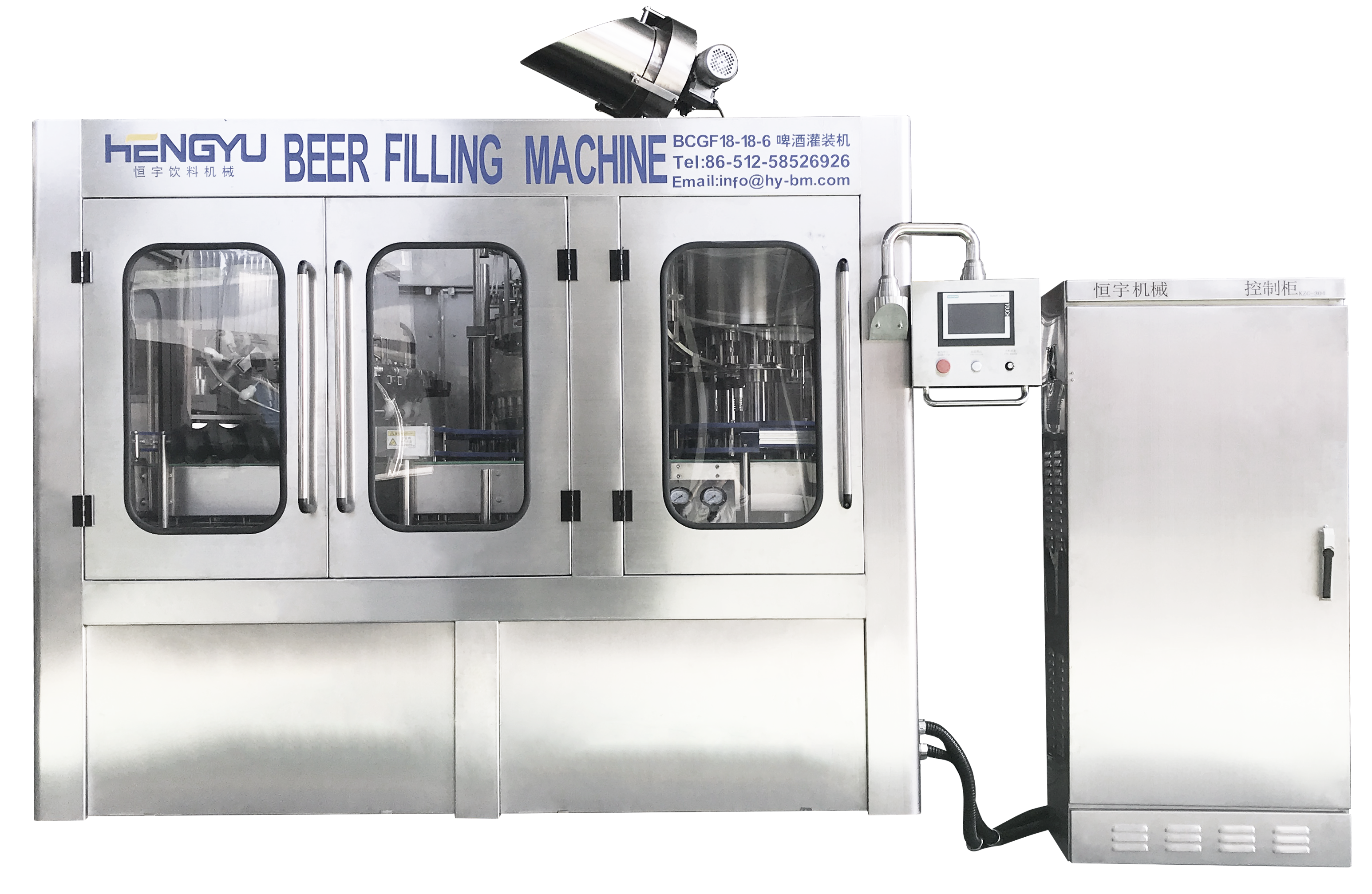
Physical Mechanism: Vacuum-Driven Oxygen Displacement Before Filling
The physical mechanism begins once the bottle is sealed against the fill valve gasket. A vacuum pump lowers internal pressure, drawing out ambient air—nitrogen, oxygen, and trace gases. This targets oxygen dissolved in the headspace air: as little as 0.1 ppm dissolved oxygen can accelerate staling, and levels exceeding 50 ppb can boost trans‑2‑nonenal (the compound behind cardboard-like off-flavours) by 30% (Food Chemistry Journal, 2024). After the first evacuation, the bottle is flushed with pressurised CO₂ at 2.2–3.0 bar, then vented to expel residual oxygen. A second cycle ensures thorough removal. The result is a near-oxygen-free environment before liquid fill begins—keeping total oxygen pick-up (TOP) within the industry-validated target range of 40–100 ppb. Combined with counter-pressure filling, this forms a closed-loop barrier that prevents ambient air re-entry—a critical requirement for oxidation-sensitive beverages like beer.
Single vs. Double Pre-Evacuation: Measured Impact on Residual Headspace Oxygen
The number of evacuation cycles directly governs final oxygen load. A single pre-evacuation removes ~90% of initial air volume, leaving 4–8% residual oxygen in the headspace after counter-pressure—often pushing TOP above 150 ppb (Packaging Science Review, 2024). In contrast, double pre-evacuation extracts up to 99% of original air, slashing headspace oxygen to <0.5% and reliably holding TOP between 40–100 ppb.
| Pre-Evacuation Cycle | Air Volume Reduction | Typical Headspace O₂ After Counter‑Pressure | Resulting TOP Range (ppb) |
|---|---|---|---|
| Single | ~90 % | 4–8 % | 150–300+ |
| Double | ~99 % | <0.5 % | 40–100 |
Breweries adopting double pre-evacuation cut oxygen ingress by over an order of magnitude—dramatically slowing staling reactions. The second cycle not only displaces more atmospheric gas but also enhances the efficiency of the subsequent CO₂ purge, ensuring delicate hop aromas and malt character remain intact for months post-packaging.
Optimizing Pre-Evacuation with CO₂ Purging and Counter-Pressure Filling
CO₂ Purging Synergy: Lowering Residual Oxygen After Pre-Evacuation
Pre-evacuation removes bulk headspace air—but small oxygen fractions persist in the neck or dissolve into the beer surface. Introducing a CO₂ purge immediately after vacuum treatment displaces these residuals. The purge floods the bottle with CO₂ at ~1.8× the beer’s equilibrium pressure, pushing out nitrogen and remaining oxygen. This two-step sequence—vacuum then CO₂—achieves oxygen reductions unattainable by either method alone. For instance, a controlled bottling study found that double pre-evacuation followed by CO₂ counter-pressure filling yielded just 0.28 mL/L headspace oxygen (MoreBeer), while a single CO₂ purge without vacuum left 0.42 mL/L—and simple counter-pressure fill without pre-evacuation measured 0.40 mL/L. The vacuum step removes the bulk oxygen; the CO₂ purge scrubs the last traces and seals the headspace against recontamination. This synergy is essential for breweries targeting shelf-life extensions beyond six months, as even 0.1 mL/L of residual headspace oxygen accelerates oxidative degradation.
Vacuum-Assisted Counter-Pressure Filling: Enhancing Oxidation Prevention
Vacuum-assisted counter-pressure filling integrates evacuation with CO₂ blanketing during the fill itself. After evacuation, the filler injects CO₂ to match the beer’s saturation pressure (typically 2.5–3.5 bar), then introduces product under laminar flow. This prevents oxygen ingress and minimizes turbulence that could release dissolved CO₂. Modern systems follow a three-phase sequence: pre-purge, pressure equalization, and controlled liquid injection. Such fillers maintain CO₂ retention as high as 97.3%, compared to 82% for non-pressurized methods (ACE Filling). Crucially, vacuum depth directly influences outcome: trials confirm double pre-evacuation plus counter-pressure reduces headspace oxygen to 0.28 mL/L, whereas single pre-evacuation with identical fill mechanics yields 0.32 mL/L. By establishing a near-zero-oxygen environment before beer enters, vacuum-assisted counter-pressure filling directly limits oxidative load—preserving both flavor stability and carbonation integrity.
Balancing Oxidation Prevention and Carbonation Stability in Low-Oxygen Bottling
Headspace Volume, Oxygen Residuals, and CO₂ Equilibrium Trade-Offs
Pre-evacuation sharply reduces headspace oxygen—but it also lowers total headspace pressure, potentially disturbing CO₂ equilibrium. A smaller gas volume post-evacuation accelerates CO₂ breakout during filling, especially if backpressure timing isn’t tightly controlled. Field data from high-speed lines show that reducing headspace oxygen by just 0.5 mL/L may coincide with a 0.12 g/L CO₂ loss if backpressure deviates by more than ±0.1 bar (Brewing Technology Quarterly, 2023). Effective pre-evacuation sequences therefore synchronize vacuum depth with immediate CO₂ repressurization—maintaining stable headspace partial pressure to prevent both oxygen ingress and CO₂ escape. The goal isn’t maximal vacuum, but optimal pressure balance: enough oxygen removal to meet shelf-life targets, without compromising carbonation stability.
Foaming Risk vs. Oxidation Control: Mitigating the Pre-Evacuation Paradox
The pre-evacuation paradox occurs when vacuum—intended to lower dissolved oxygen—triggers foaming via rapid CO₂ nucleation. Double evacuation can transiently drop headspace pressure below the beer’s saturation point, generating persistent foam that carries oxygen-sensitive compounds and disrupts fill accuracy. To mitigate, advanced fillers apply a graduated CO₂ purge immediately after final evacuation—repressurizing to 3.0–3.2 bar before liquid introduction. Trials demonstrate this approach cuts foam-related fill defects by 34% while maintaining headspace oxygen below 0.1 mg/L (Packaging Technology, 2022). Success hinges on treating pre-evacuation not as an isolated oxygen-removal step, but as one node in a coordinated pressure–oxygen–foam triangle—where each variable must be calibrated in relation to the others.
Impact of Headspace Oxygen on Beer Shelf Life and Sensory Quality
Headspace oxygen accounts for roughly 75% of total packaged oxygen in sealed beer bottles—making it the dominant driver of oxidation. Even trace amounts—measured in parts per billion—initiate staling reactions that convert vibrant hop aromas into muted, cardboard-like off-flavours. In darker styles, the same pathways dull colour intensity and produce a perceptibly stale character. Modern bottling lines leverage pre-evacuation cycles to strip nearly all ambient air from the headspace before filling, cutting residual oxygen below 0.5% and directly inhibiting formation of trans-2-nonenal and other oxidative markers. By eliminating this primary oxidation source, breweries routinely double or triple shelf life while preserving the bright, crisp sensory profile consumers expect.
FAQ
What is pre-evacuation in bottling?
Pre-evacuation is a process in modern bottling lines where ambient air is vacuumed out of bottles before filling to reduce total packaged oxygen (TPO) and prevent oxidation of the contents.
How does pre-evacuation impact beer quality?
Pre-evacuation significantly reduces oxygen in the bottle’s headspace, preventing staling reactions and preserving the beer’s sensory integrity, hop aromas, and malty flavors.
Why are double pre-evacuations more effective than single pre-evacuations?
Double pre-evacuations remove up to 99% of air in the bottle, slashing headspace oxygen to less than 0.5%, while single pre-evacuations only remove ~90%, leaving higher residual oxygen levels that can degrade quality.
How does CO₂ purging enhance pre-evacuation?
CO₂ purging displaces residual oxygen remaining after vacuum treatment, ensuring even lower oxygen levels and sealing the bottle against recontamination.
What are the risks of over-vacuuming during pre-evacuation?
Over-vacuuming can disturb CO₂ equilibrium, potentially causing foaming, carbonation loss, and fill accuracy issues. Controlled pressure balancing mitigates these risks.
How does pre-evacuation extend the shelf life of beer?
By reducing headspace oxygen to minimal levels, pre-evacuation delays staling reactions, maintaining the beer’s fresh flavors and sensory qualities for a longer period.
Table of Contents
- How Pre-Evacuation Cycles Remove Headspace Oxygen from Beer Bottles
- Optimizing Pre-Evacuation with CO₂ Purging and Counter-Pressure Filling
- Balancing Oxidation Prevention and Carbonation Stability in Low-Oxygen Bottling
- Impact of Headspace Oxygen on Beer Shelf Life and Sensory Quality
-
FAQ
- What is pre-evacuation in bottling?
- How does pre-evacuation impact beer quality?
- Why are double pre-evacuations more effective than single pre-evacuations?
- How does CO₂ purging enhance pre-evacuation?
- What are the risks of over-vacuuming during pre-evacuation?
- How does pre-evacuation extend the shelf life of beer?