
 CN
CN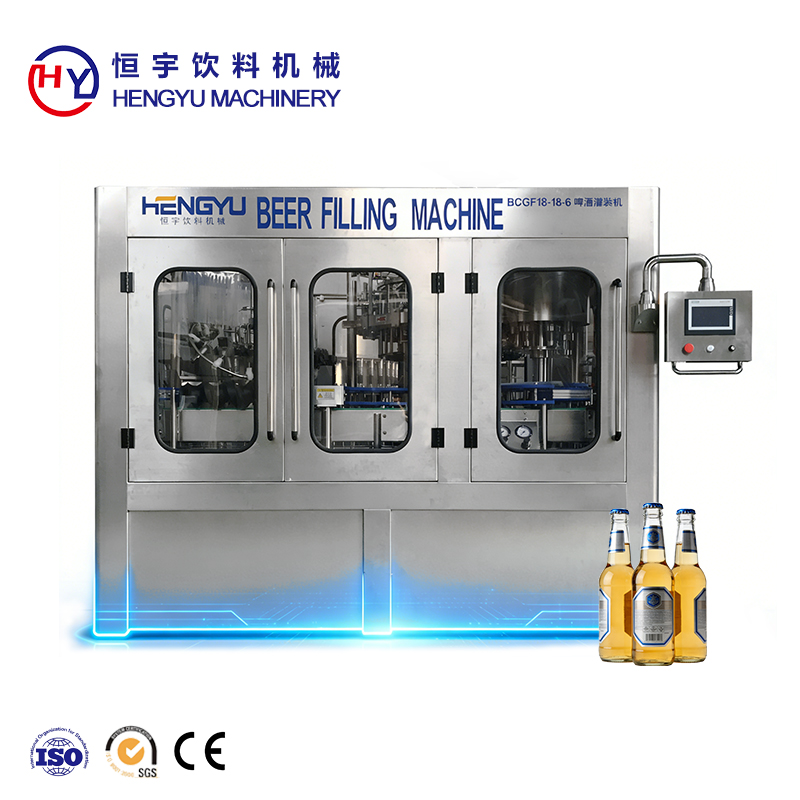
Bottle breakage is one of the most persistent and costly challenges in any beverage or liquid packaging operation. When a glass bottle filling machine is not properly configured, maintained, or operated, the result is shattered product, lost revenue, contaminated batches, and serious safety hazards on the production floor. Understanding the root causes of breakage and implementing systematic solutions is not just about protecting your bottles — it is about protecting your entire production line's efficiency and profitability.
The good news is that most glass breakage incidents in a glass bottle filling machine environment are preventable. With the right combination of equipment design, operational discipline, and preventive maintenance, producers can dramatically reduce their breakage rates and keep their lines running smoothly. This article explores the key causes of glass bottle breakage, proven reduction strategies, and the mechanical features that make the biggest difference in a high-throughput filling environment.

Understanding Why Glass Bottles Break in Filling Operations
Mechanical Stress and Impact Points
Glass is a rigid, non-compressible material that transmits stress rather than absorbing it. When bottles collide, fall, or are gripped too tightly during the filling cycle, the cumulative stress exceeds the glass's modulus of rupture and the bottle fails. In a glass bottle filling machine, the most common impact points occur at the infeed star wheel, the filling carousel entry, and the capping station where pressure is applied. Even minor misalignments at these transition zones can cause repeated stress fractures that weaken bottles before they break entirely.
Bottle-to-bottle contact along the conveyor is another leading mechanical cause. When production speed outpaces the infeed timing mechanism, bottles bunch together and collide repeatedly. Over time, even bottles that survive intact may have developed micro-cracks that cause spontaneous breakage later in the line or in distribution. Identifying and eliminating high-impact zones is the first step toward a measurable reduction in breakage rates.
Poorly calibrated guide rails and conveyor lane dividers add to the mechanical stress problem. Rails that are set too tightly pinch bottles and concentrate stress at the bottle shoulder or heel — the two weakest geometric zones on most glass containers. A properly tuned glass bottle filling machine will have adjustable guide rails that match the specific bottle profile being run, and these settings should be verified every time a different bottle format is introduced to the line.
Thermal Shock as a Breakage Driver
Thermal shock is an underappreciated but serious cause of glass breakage in filling operations. When a cold glass bottle encounters a hot product — or a warm bottle is rapidly chilled during a rinse cycle — the sudden temperature differential creates internal stress gradients that can exceed the glass's tensile strength. Beer fillers, in particular, run cold carbonated product and must ensure that bottles are conditioned to an appropriate temperature before entering the glass bottle filling machine.
Hot-fill applications present the opposite challenge. A glass bottle that is too cold when filled with a hot sauce, juice, or syrup product will experience thermal shock at the inner wall surface. This is why many hot-fill lines incorporate a pre-warming tunnel or gradual bottle temperature conditioning system before the filling station. Thermal shock-induced breakage often appears as clean, radial fractures from the base of the bottle — a pattern that is diagnostically distinct from impact or pressure breakage.
Equipment Design Features That Reduce Breakage
Gentle Handling Star Wheel and Transfer Systems
The design of the star wheel and transfer components in a glass bottle filling machine plays a central role in breakage prevention. Modern machines use star wheels with precision-molded pockets that cradle each bottle without metal-to-glass contact, using engineering-grade plastic or UHMW polyethylene inserts to cushion the transition. This material choice reduces the shock loading that glass experiences as it accelerates from linear conveyor motion into the rotational filling carousel.
The pitch and timing of the star wheel must be synchronized precisely with the conveyor speed and the carousel rotation. When these are out of sync — even by small margins — bottles experience jerking movements at the transfer points, which amplifies impact stress significantly. A well-engineered glass bottle filling machine will incorporate servo-driven or mechanically interlocked transfer systems that guarantee smooth, continuous motion regardless of line speed changes or brief stoppages.
Some advanced systems incorporate bottle presence sensors at each transfer point. If a bottle is absent, misaligned, or has fallen over, the machine can react before a jam or crash occurs. These sensors do not eliminate breakage on their own, but they prevent the secondary breakage cascade that often occurs when a single broken bottle disrupts the flow of a dozen others downstream.
Filling Valve Design and Pressure Control
The filling valve is the most intimate point of contact between the machine and the bottle. In counterpressure filling systems commonly used for beer and carbonated beverages, the valve must apply CO2 pre-pressurization inside the bottle before liquid enters. If the pressurization is too rapid or the vent valve releases too quickly, pressure differentials inside the bottle can induce stress fractures in the glass, particularly in bottles that already have minor surface defects.
A high-quality glass bottle filling machine uses pressure-regulated valve assemblies with controlled opening and closing sequences that prevent pressure spikes. The filling speed should be matched to the bottle's wall thickness specification and the product's carbonation level. Running a lightweight bottle at the maximum rated pressure of a heavy-bottle machine is a common and avoidable source of filling-station breakage in many production environments.
Liquid turbulence during filling also contributes to bottle stress and foaming issues. When the filling tube geometry causes product to enter the bottle with high lateral velocity, it creates impact forces at the bottle base and sidewall. Selecting a glass bottle filling machine with properly engineered filling tubes, along with anti-turbulence nozzle inserts where needed, directly reduces the mechanical load on the glass during every fill cycle.
Operational Practices That Minimize Breakage
Bottle Inspection and Pre-screening Protocols
Not all breakage in a glass bottle filling machine originates with the machine itself. Bottles that arrive at the production facility with existing micro-cracks, chips, or surface abrasions are statistically far more likely to break under the normal stresses of filling operations. Implementing a structured incoming bottle inspection protocol — including visual inspection and periodic pressure testing of random samples — can eliminate a significant proportion of pre-damaged bottles before they enter the line.
For high-speed operations, automated bottle inspection systems using camera vision technology can detect surface defects, wall thickness anomalies, and base irregularities faster and more reliably than manual inspection. These systems can be installed upstream of the glass bottle filling machine to divert defective bottles before they cause line stoppages or trigger downstream breakage cascades.
Bottle storage and handling prior to line entry also matters. Glass bottles should be stored in conditions that prevent moisture buildup on the glass surface, as wet glass has significantly lower surface friction resistance and is more prone to slipping during star wheel transfer. Temperature-conditioned storage areas reduce both the moisture problem and the thermal shock risk when bottles enter the filling environment.
Line Speed Optimization and Transition Management
Running a glass bottle filling machine consistently at maximum rated speed without accounting for bottle type, product characteristics, and ambient conditions is a reliable way to increase breakage rates. Line speed should be treated as a variable that is optimized for each specific combination of bottle format, product fill, and environmental conditions — not simply set to the highest available setting.
During line startup and shutdown, bottle handling stresses are disproportionately high because the conveyor system is accelerating or decelerating while the filling carousel is still coming up to speed. Many experienced line operators implement a deliberate ramp-up protocol that gradually increases speed over several minutes, allowing all mechanical components to reach their steady-state timing relationships before full production throughput is attempted.
Changeover between bottle formats is another high-risk period. After a format change, every guide rail, star wheel, and filling valve setting must be re-verified against the format-specific setup sheet. Attempting to rush back to production speed after a changeover without completing these verifications is one of the most common causes of elevated breakage rates seen during the first run of a new bottle type.
Maintenance and Long-Term Breakage Control
Wear Component Monitoring and Replacement Schedules
The plastic and composite components in a glass bottle filling machine — including star wheel pockets, guide rail liners, and bottle gripper pads — wear over time and gradually lose their ability to handle bottles gently. As these surfaces become rough or dimensionally inaccurate due to wear, the glass bottles experience greater friction, uneven contact forces, and unpredictable movements during transfer. A proactive replacement schedule for all wear components is one of the most cost-effective breakage reduction strategies available.
Filling valves and their sealing components also degrade over time. A filling valve that no longer seals cleanly can cause uncontrolled pressure release, product leakage, and erratic filling sequences — all of which increase the mechanical and thermal stress on the bottle during the fill cycle. Maintenance teams should monitor valve cycle counts and conduct regular pressure testing to identify valves that are approaching end-of-service-life before they cause breakage events.
Conveyor chain tension and guide rail alignment should be part of every scheduled maintenance inspection. Loose conveyor chains cause rhythmic speed variations that disrupt bottle spacing, while misaligned guide rails introduce lateral forces into the bottle stream. Both conditions increase bottle-to-bottle contact and raise the overall stress load on the glass throughout the glass bottle filling machine operation cycle.
Data-Driven Breakage Analysis and Continuous Improvement
Production teams that track breakage data systematically — recording the location, time, bottle type, and operating conditions at the moment of each breakage event — can identify patterns that point to specific correctable causes. A glass bottle filling machine operation that experiences the majority of its breakage at a specific star wheel or during a specific shift may have a mechanical issue or an operator training gap that targeted action can resolve.
Breakage rate trending over time is equally valuable. If breakage rates are gradually rising without an obvious cause, it typically signals progressive wear in one or more mechanical systems. Catching this trend early and acting on it prevents the more serious production disruptions and safety risks that occur when worn components fail abruptly during a high-speed production run.
For producers looking to upgrade their filling equipment with breakage reduction as a priority, the glass bottle filling machine solutions designed for beer and carbonated beverage applications incorporate many of the mechanical features discussed in this article, including pressure-controlled filling valves, gentle-handling star wheel systems, and servo-driven transfer mechanisms that collectively minimize the stress placed on glass containers during every stage of the fill cycle.
FAQ
What is the most common cause of glass breakage in a glass bottle filling machine?
The most common cause is mechanical impact stress at bottle transfer points, particularly at the infeed star wheel and the filling carousel entry. Misaligned guide rails, unsynchronized transfer timing, and bottle-to-bottle collision on the conveyor are the primary contributors. Addressing these mechanical factors — through proper setup, wear component replacement, and speed management — typically yields the greatest reduction in breakage rates.
How does thermal shock cause bottles to break during filling?
Thermal shock occurs when a glass bottle experiences a rapid temperature change that creates unequal stress between the inner and outer bottle walls. In cold-fill carbonated beverage applications, warm bottles encountering cold product are at risk. In hot-fill applications, cold bottles encountering hot product face the same hazard. Gradual temperature conditioning of bottles before they enter the glass bottle filling machine is the standard preventive measure.
How often should wear components be replaced to prevent breakage?
Replacement intervals vary based on production volume, bottle type, and the specific component. As a general principle, star wheel pockets, guide rail liners, and gripper pads should be inspected at every scheduled maintenance interval and replaced proactively when visible wear or dimensional deviation is detected — rather than waiting for a failure event. Many operations establish cycle-count-based replacement schedules for high-wear items in their glass bottle filling machine to remove guesswork from the maintenance process.
Can running at lower line speeds significantly reduce bottle breakage?
Yes, line speed has a measurable effect on breakage rates because higher speeds amplify the impact forces at every transfer and contact point in the glass bottle filling machine. However, the goal should not simply be to run at the lowest possible speed — it should be to identify the optimal speed for each specific bottle and product combination that balances throughput with acceptable breakage rates. A properly maintained and calibrated machine can achieve low breakage rates at rated speed, making equipment condition and setup quality equally important as speed selection.