
 CN
CN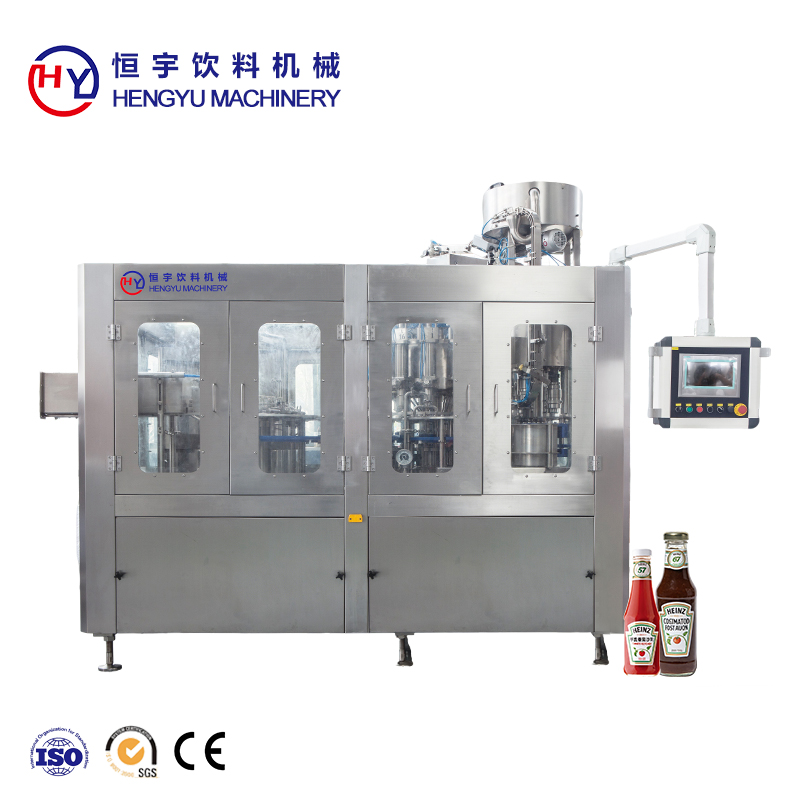
In the competitive world of condiment manufacturing, selecting the right sauce bottling equipment is one of the most critical decisions a producer can make. Whether you are running a large-scale ketchup production line or scaling up a chili sauce operation, the machinery you choose directly determines your output quality, production efficiency, and long-term profitability. Sauce-based products present unique challenges compared to water or carbonated beverages, and understanding how the right equipment addresses those challenges is essential for any serious manufacturer.
Ketchup and chili sauce are among the most widely consumed condiments globally, and their production volumes continue to grow year over year. These products share certain physical characteristics — high viscosity, particulate content, and sensitivity to contamination — that demand specialized sauce bottling equipment capable of handling thick, dense fluids while maintaining precise fill accuracy, hygienic processing standards, and consistent seal integrity. This article explores the key components, operational considerations, and selection criteria for sauce bottling equipment tailored specifically to ketchup and chili sauce manufacturing environments.
The Unique Production Demands of Ketchup and Chili Sauce
Viscosity and Particulate Challenges
One of the defining characteristics of ketchup and chili sauce is their high viscosity. Unlike thin liquids such as water or juice, these products resist flow and can clog or damage equipment not specifically designed for thick-product handling. Sauce bottling equipment intended for these applications must include pump systems and filling valves engineered to manage high-viscosity fluids without product degradation or excessive shear forces that could alter texture or consistency.
Chili sauce in particular often contains visible particulates such as chili flakes, seed fragments, or vegetable pieces. Standard filling nozzles designed for homogenous liquids cannot reliably accommodate these solids without causing blockages or inconsistent fill volumes. Purpose-built sauce bottling equipment incorporates wide-bore nozzles, piston fillers, or rotary valve mechanisms that allow particulate-laden products to pass through smoothly and cleanly.
Ketchup presents its own version of this challenge through its characteristic thixotropic behavior — it becomes temporarily thinner when agitated and thickens again at rest. Sauce bottling equipment designed for ketchup must account for this behavior in the filling sequence to ensure accurate dosing and minimal product waste during each fill cycle.
Hot Fill Requirements for Sauce Products
Many ketchup and chili sauce producers rely on hot filling as their primary preservation method. In this process, the sauce is heated to a specific temperature before being filled into bottles, relying on the thermal energy of the product itself to sterilize the container interior and extend shelf life without preservatives. This approach requires sauce bottling equipment that can handle elevated product temperatures — typically between 85°C and 95°C — throughout the entire filling cycle.
Hot fill sauce bottling equipment must be constructed from materials resistant to thermal stress. Stainless steel contact surfaces, heat-rated seals, and temperature-stable filling valves are all essential components. The bottles themselves must also be compatible with hot fill conditions, which is why PET bottles manufactured with heat-resistant formulations are commonly paired with this type of sauce bottling equipment.
Beyond material compatibility, hot fill operations require precise temperature monitoring throughout the bottling line. Sauce bottling equipment used in hot fill applications typically integrates temperature sensors and automated control systems to maintain consistent product temperatures from the holding tank through to the capping station, ensuring every bottle receives the same thermal treatment.
Core Components of Sauce Bottling Equipment
Filling Systems and Valve Technology
The filling station is the operational heart of any sauce bottling equipment setup. For ketchup and chili sauce production, piston filling systems are among the most widely used configurations because they deliver highly accurate volumetric fills regardless of product viscosity. Each piston stroke displaces a fixed volume of product, making this approach reliable even when dealing with thick or chunky sauces.
Gravity-based or overflow filling systems, which work well for thin liquids, are generally unsuitable for dense sauce products. The viscosity of ketchup or chili sauce means product flow cannot be controlled reliably through gravity alone without significant variation in fill volumes. Sauce bottling equipment designed for these products must use positive-displacement technology to guarantee dosing precision across thousands of bottles per hour.
Valve design is equally important. Anti-drip nozzles are a standard feature in high-quality sauce bottling equipment because the thick nature of the product increases the risk of stringing or post-fill dripping onto bottle exteriors. Clean, drip-free fills are not only important for product presentation but also for maintaining hygienic conditions around the filling station and reducing cleaning frequency.
Capping and Sealing Mechanisms
After filling, sauce products must be sealed securely to maintain freshness and prevent contamination. The capping stage in sauce bottling equipment lines can accommodate a range of closure types depending on the product format, including screw caps, press-on lids, flip-top closures, and tamper-evident bands. For ketchup and chili sauce specifically, screw caps with induction seals are a popular combination because they provide both re-sealability for the consumer and a tamper-evident barrier.
Torque consistency is a critical parameter in the capping stage. Over-tightening can crack or deform bottle necks, while under-tightening creates leak risks during transport and storage. Advanced sauce bottling equipment lines use servo-controlled capping heads that apply precise, repeatable torque values to every closure, reducing both quality defects and material waste.
In hot fill sauce bottling equipment configurations, capping must occur quickly after filling while the product is still at an elevated temperature. As the filled and capped bottle cools, the product contracts and creates a slight negative pressure inside the bottle, forming a vacuum seal that enhances preservation. The timing and speed of the capping station in this type of sauce bottling equipment setup must be carefully synchronized to capture this vacuum effect reliably.
Automation and Production Line Integration
Inline Versus Rotary Filling Configurations
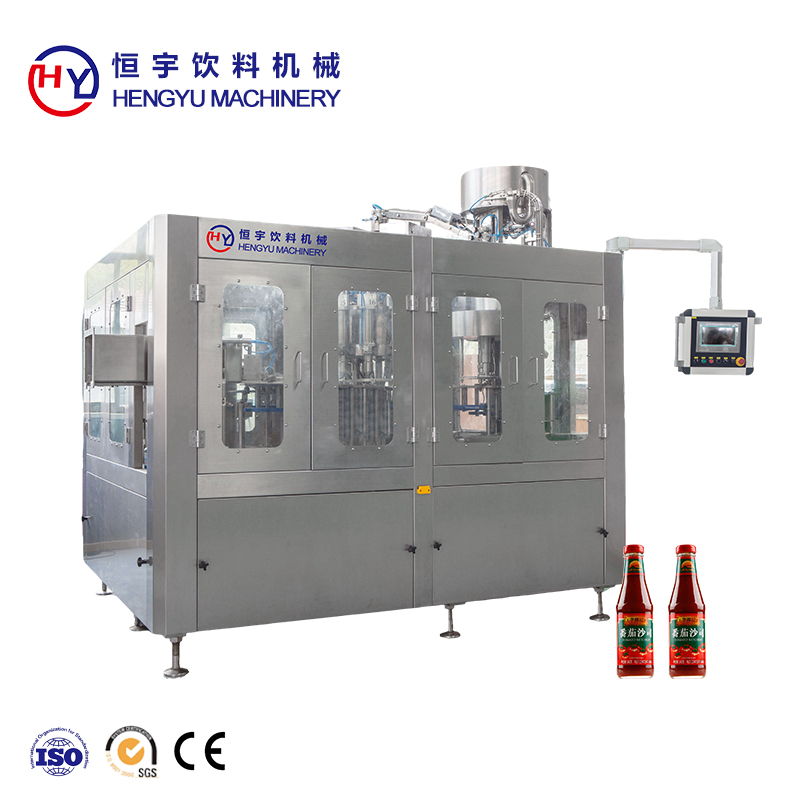
Sauce bottling equipment is available in both inline and rotary configurations, and the choice between them has significant implications for production throughput, floor space, and operational flexibility. Inline systems move bottles in a straight path through sequential stations — rinsing, filling, capping — and are generally preferred for smaller production volumes or facilities with limited floor space. They are easier to operate, maintain, and reconfigure for different bottle formats.
Rotary systems, by contrast, are designed for high-speed continuous production. Bottles travel along a circular carousel where each station operates simultaneously, allowing much higher throughput rates. For large-scale ketchup or chili sauce producers targeting output levels above 5,000 bottles per hour, rotary sauce bottling equipment offers the speed and consistency that linear systems cannot match at equivalent scale.
The integration of a rinsing station at the start of the line is an important hygienic feature in both configurations. Before any product contact, bottles pass through a rinsing carousel or tunnel that removes dust, residual contaminants, and static charges from the interior. This step is especially important for sauce products where the viscous nature of the product can trap contaminants more effectively than thinner liquids.
Control Systems and Data Monitoring
Modern sauce bottling equipment is expected to deliver more than mechanical functionality — it must also provide operational intelligence. Programmable logic controllers (PLCs) and human-machine interface (HMI) touchscreens have become standard features on professional-grade equipment, giving operators real-time visibility into fill weights, line speeds, reject rates, and machine status across every station in the bottling line.
For ketchup and chili sauce production, where recipe parameters can vary significantly between product SKUs, the ability to store and recall preset programs for different products is a practical necessity. Operators can switch between a ketchup program and a chili sauce program without manual recalibration, reducing changeover time and the risk of human error during product transitions.
Data logging capabilities within sauce bottling equipment control systems also support traceability and quality assurance requirements that are increasingly expected by major retailers and food safety regulatory bodies. Time-stamped records of fill temperatures, volumes, and line performance can be retrieved during audits or used to investigate quality deviations, supporting both compliance and continuous improvement initiatives.
Hygienic Design and Maintenance Considerations
Sanitary Construction Standards
Food-grade sauce bottling equipment must comply with rigorous sanitary design principles to prevent contamination and support efficient cleaning procedures. All surfaces that come into contact with the product — tanks, pipework, valves, nozzles, and conveyors — must be fabricated from materials approved for food contact, typically 304 or 316 stainless steel with smooth, crevice-free finishes that resist bacterial growth and are easy to clean.
Seals and gaskets used throughout sauce bottling equipment must be manufactured from food-safe elastomers such as silicone or EPDM rubber. Standard rubber or petroleum-based materials can degrade when exposed to acidic products like ketchup or the capsaicin compounds in chili sauce, leading to seal failure and potential product contamination. Choosing correctly specified materials from the outset is essential for long-term hygienic performance.
Clean-in-place (CIP) capability is a significant advantage in modern sauce bottling equipment. Rather than disassembling the entire filling circuit for manual cleaning, CIP systems circulate cleaning solutions — typically caustic wash, rinse water, and sanitizer — automatically through the product contact zones. This approach reduces cleaning time dramatically, ensures consistent cleaning quality, and minimizes the risk of reassembly errors that could compromise hygiene.
Scheduled Maintenance and Component Longevity
The demanding operating conditions of sauce production — high temperatures, abrasive particulates, acidic product chemistry — place considerable stress on sauce bottling equipment components over time. Establishing a rigorous preventive maintenance schedule is essential for protecting equipment lifespan and avoiding unplanned downtime that disrupts production commitments.
Key wear components in sauce bottling equipment include filling nozzle seals, piston cylinder liners, conveyor belts, and capping chuck inserts. These parts should be inspected at regular intervals and replaced according to manufacturer recommendations rather than waiting for failure. Keeping a stock of critical spare parts on-site reduces repair lead times significantly when unexpected component failures do occur.
Lubrication of mechanical drive components, calibration checks on fill volume settings, and periodic inspection of electrical connections are all part of a comprehensive maintenance program for sauce bottling equipment. Producers who invest in preventive maintenance consistently achieve longer equipment service life, lower total cost of ownership, and more reliable production quality compared to those who operate reactively.
Selecting the Right Sauce Bottling Equipment for Your Operation
Matching Equipment Capacity to Production Goals
The first step in selecting sauce bottling equipment is accurately defining your current and projected production requirements. Output targets measured in bottles per hour, anticipated product variety, and planned bottle format range should all be established before evaluating specific machine models. Purchasing equipment that is undersized for future growth creates bottlenecks, while over-specifying machinery that runs far below capacity represents an unnecessary capital investment.
For startup and mid-scale producers of ketchup and chili sauce, semi-automatic sauce bottling equipment can offer a cost-effective entry point that still delivers consistent fill quality. As production volumes grow, upgrading to fully automatic lines with integrated rinsing, filling, and capping stations provides the throughput efficiency required to compete at commercial scale without proportional increases in labor costs.
Bottle format flexibility is another key consideration. Ketchup and chili sauce are sold in a wide range of container sizes, from small retail bottles of 150ml to catering-format containers exceeding one liter. Sauce bottling equipment that supports rapid format changeover through adjustable tooling and stored recipe programs allows producers to serve multiple market segments on a single production line, maximizing asset utilization.
Total Cost of Ownership and Support Infrastructure
The purchase price of sauce bottling equipment is only one element of the true cost of ownership. Energy consumption, spare parts availability, technical support access, and the cost of production downtime must all be factored into the investment evaluation. Equipment with a lower upfront cost but limited after-sales support or poor spare parts availability can prove far more expensive over a five to ten year operating horizon than a higher-specification machine backed by strong service infrastructure.
Operator training is an often-overlooked factor in the total cost picture. Sauce bottling equipment that is intuitive to operate, with clear HMI interfaces and comprehensive operating documentation, reduces the training burden and lowers the risk of operator-induced errors that lead to quality issues or equipment damage. When evaluating suppliers, the quality and accessibility of training programs should be weighted alongside the technical specifications of the machinery itself.
Finally, the availability of remote diagnostics and technical support has become increasingly valuable in the sauce bottling equipment sector. Machines capable of transmitting operational data to supplier service teams allow problems to be diagnosed remotely and solutions communicated quickly, reducing the downtime associated with on-site engineer visits and enabling faster resolution of technical challenges as they arise.
FAQ
What type of filling system is best suited for ketchup and chili sauce production?
Piston filling systems are widely regarded as the most suitable for thick, viscous, or particulate-containing products like ketchup and chili sauce. They deliver consistent volumetric accuracy regardless of product density, handle particulates without blockage, and maintain fill precision at high production speeds. Gravity and overflow filling systems are generally not recommended for these product types due to the flow resistance created by high viscosity.
Can sauce bottling equipment handle both ketchup and chili sauce on the same line?
Yes, modern sauce bottling equipment can typically be configured to handle multiple sauce products on the same line, provided the machine supports quick-change tooling and has programmable recipe storage. Thorough CIP cleaning between product changeovers is essential to prevent cross-contamination, and fill volume settings should be recalibrated for each product to account for differences in density and viscosity between ketchup and chili sauce formulations.
Why is hot fill technology important for sauce bottling equipment used in ketchup production?
Hot fill technology allows producers to preserve ketchup and similar sauce products using heat rather than chemical preservatives, extending shelf life while meeting clean-label consumer preferences. Sauce bottling equipment designed for hot fill must withstand sustained product temperatures of 85°C to 95°C, incorporate temperature monitoring systems to maintain process consistency, and be paired with heat-resistant containers that can tolerate the thermal and vacuum stresses of the hot fill and cooling process.
How often should sauce bottling equipment be cleaned and maintained?
Cleaning frequency depends on production schedule, product type, and regulatory requirements, but as a general standard, sauce bottling equipment should undergo a full CIP cleaning cycle at the end of each production run or shift. Preventive mechanical maintenance — including seal inspection, lubrication, and calibration checks — should follow the schedule recommended by the equipment manufacturer, typically on a weekly, monthly, and quarterly basis depending on component criticality and operating hours.
Table of Contents
- The Unique Production Demands of Ketchup and Chili Sauce
- Core Components of Sauce Bottling Equipment
- Automation and Production Line Integration
- Hygienic Design and Maintenance Considerations
- Selecting the Right Sauce Bottling Equipment for Your Operation
-
FAQ
- What type of filling system is best suited for ketchup and chili sauce production?
- Can sauce bottling equipment handle both ketchup and chili sauce on the same line?
- Why is hot fill technology important for sauce bottling equipment used in ketchup production?
- How often should sauce bottling equipment be cleaned and maintained?