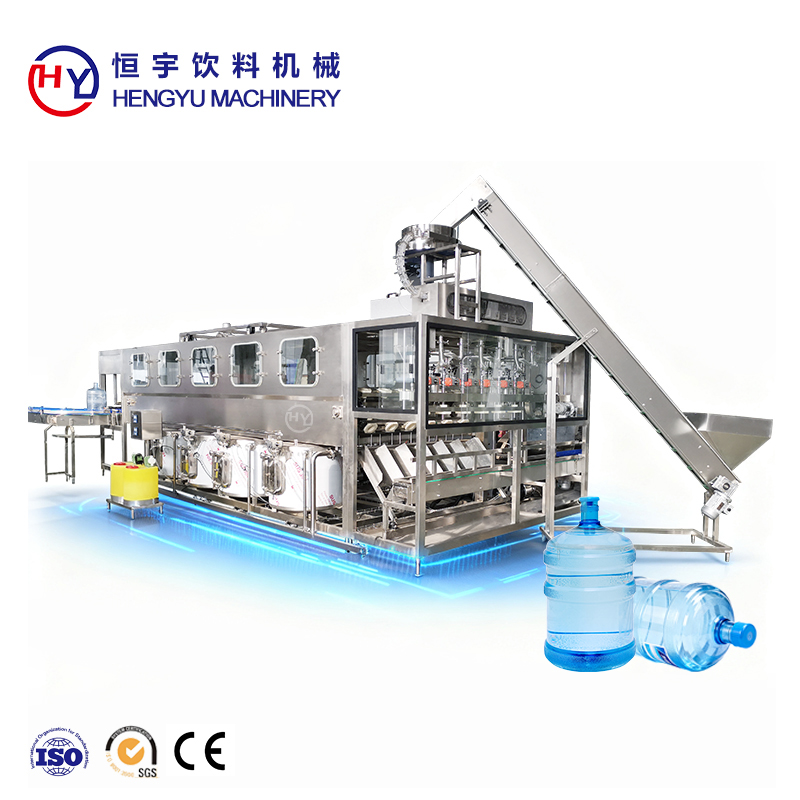
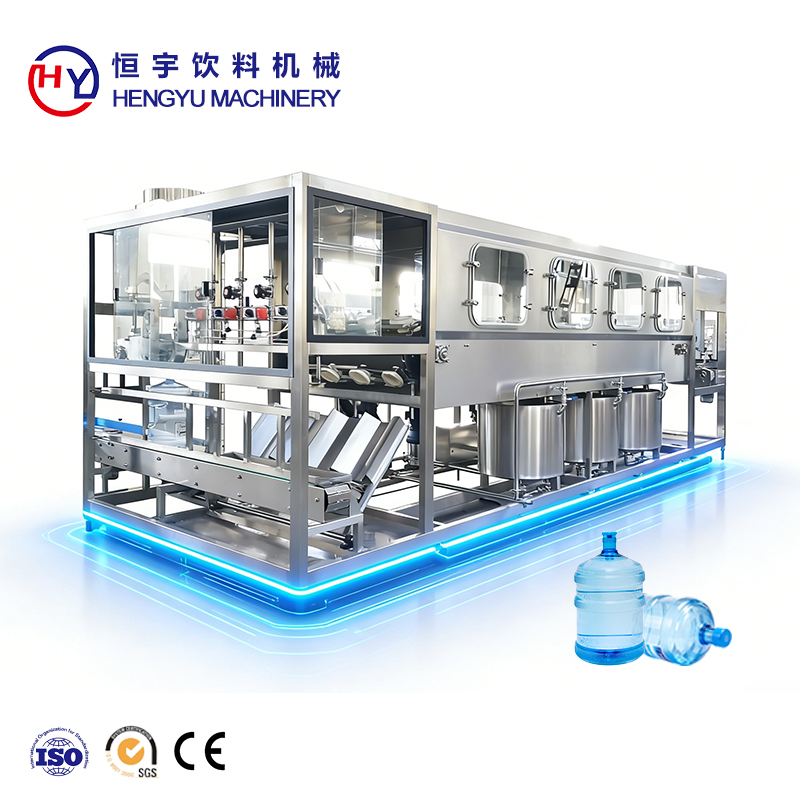
5 Gallon Water Bottling Machine - Professional Automated Filling Solutions for Commercial Production

All Categories

5 gallon water bottling machine

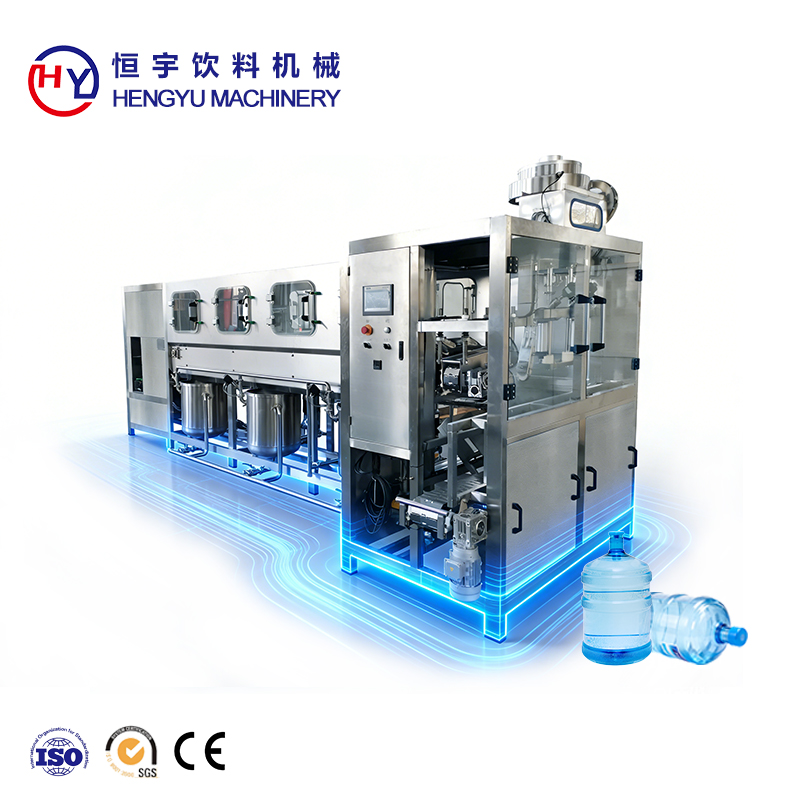
The 5 gallon water bottling machine represents a comprehensive automated solution designed specifically for filling, capping, and packaging large-capacity water containers in commercial production environments. This sophisticated equipment streamlines the entire bottling process, from initial bottle washing through final capping, ensuring consistent quality and operational efficiency. The machine integrates multiple processing stations including automatic bottle decrowner, internal and external washing systems, filling mechanisms, capping units, and conveyor systems that work in seamless coordination. Modern 5 gallon water bottling machine systems incorporate advanced PLC control technology, enabling operators to monitor and adjust production parameters through intuitive touchscreen interfaces. These machines typically feature stainless steel construction throughout all water-contact components, guaranteeing food-grade safety standards and long-term durability in demanding production settings. The filling accuracy of professional 5 gallon water bottling machine units reaches impressive precision levels, minimizing product waste while maintaining consistent fill volumes across thousands of bottles daily. Production capacities vary widely depending on configuration, with entry-level systems handling 100-300 bottles per hour and industrial-grade installations processing 1200 bottles or more hourly. The equipment accommodates various bottle materials including polycarbonate and PET containers, adapting to different market requirements and customer preferences. Safety features are paramount in design, incorporating emergency stop mechanisms, protective guards, and fail-safe sensors that halt operations when irregularities are detected. Energy efficiency has become increasingly important in modern designs, with manufacturers implementing variable frequency drives and optimized water recirculation systems that reduce operational costs significantly. The 5 gallon water bottling machine serves diverse industries including municipal water suppliers, private bottling companies, beverage manufacturers, and distribution centers requiring reliable high-volume production capabilities for both purified and mineral water products.

New Product Releases

Investing in a professional 5 gallon water bottling machine delivers substantial benefits that directly impact your bottom line and operational capabilities. First and foremost, automation dramatically reduces labor costs by eliminating the need for multiple workers to manually wash, fill, and cap bottles throughout production shifts. A single operator can effectively manage an entire production line, redirecting human resources to other critical business functions while maintaining consistent output levels. The speed advantage cannot be overstated, as automated systems complete in minutes what would take hours through manual processing, enabling businesses to fulfill larger orders, respond quickly to market demand fluctuations, and scale operations without proportional increases in workforce requirements. Quality consistency represents another compelling advantage, since the 5 gallon water bottling machine executes each cycle with identical precision, eliminating the variability inherent in human performance and ensuring every bottle meets exact specifications for cleanliness, fill volume, and seal integrity. This consistency translates directly into reduced customer complaints, fewer returns, and enhanced brand reputation in competitive markets. Hygiene standards improve significantly through automated processing, as machines minimize human contact with product and containers, reducing contamination risks while maintaining sterile processing environments that comply with stringent health regulations and food safety certifications. The 5 gallon water bottling machine also delivers impressive return on investment timelines, with most operations recovering equipment costs within 18-24 months through labor savings, increased production capacity, and reduced waste. Flexibility proves valuable as production needs evolve, since quality machines accommodate different bottle sizes and types through quick-change components and adjustable settings, protecting your equipment investment as market preferences shift. Maintenance requirements remain manageable with proper training, as modern designs incorporate accessible components, self-diagnostic systems, and readily available replacement parts that minimize downtime during servicing. The professional appearance of machine-bottled products enhances marketability, as consistently filled and sealed bottles project quality and reliability that consumers recognize and trust. Environmental benefits emerge through reduced water waste during washing cycles, lower energy consumption compared to less efficient manual or semi-automated approaches, and decreased product spillage that would otherwise require disposal. Operational data collection becomes possible through integrated monitoring systems, providing valuable insights into production efficiency, maintenance schedules, and quality control metrics that inform continuous improvement initiatives. The competitive advantage gained through owning a 5 gallon water bottling machine enables smaller operations to compete effectively with larger established players by matching their production quality and efficiency while maintaining the agility and customer service focus that characterizes successful growing businesses in the bottled water industry.

Tips And Tricks

How to Choose a Glass Bottle Filling Machine for Beverage Production

06

Mar

How to Choose a Glass Bottle Filling Machine for Beverage Production

Match Filling Technology to Beverage Type and Sensitivity Counter-Pressure Fillers for Carbonated Beverages and Beer Carbonated drinks like soda, sparkling water and beer need careful filling techniques to keep their fizz intact while avoiding exc...
View More
How Can Filling Machines Improve Beverage Production Speed

24

Mar

How Can Filling Machines Improve Beverage Production Speed

Filling Machine Type Determines Maximum Throughput Potential Gravity, Isobaric, and Piston Can Filling Machines: Speed vs. Precision Trade-offs Gravity fillers work well for delicate drinks such as juice, processing around 20 to 36 bottles every mi...
View More
Can Filling Machine Capacity Planning Guide

22

Mar

Can Filling Machine Capacity Planning Guide

Understanding Can Filling Machine Capacity: Theory vs. Real-World Performance Why Theoretical Capacity Rarely Matches Effective Output on Can Filling Lines When companies talk about canning speed at 100 cans per minute, they're referring to what ha...
View More
Can Sealing Machine Maintenance Tips

23

Mar

Can Sealing Machine Maintenance Tips

Daily and Weekly Preventive Maintenance for Your Can Sealing Machine Essential Daily Checks: Belt Tension, Sealing Bar Alignment, and Tape Head Cleanliness Starting every shift with a quick check on belt tension makes all the difference. If belts a...
View More

Get a Free Quote

Our representative will contact you soon.
Email
Name
Phone/WhatsApp
Required Product
Message
0/1000

5 gallon water bottling machine

Advanced Automated Washing System Ensures Superior Bottle Hygiene

Advanced Automated Washing System Ensures Superior Bottle Hygiene

The washing system integrated within modern 5 gallon water bottling machine configurations stands as one of the most critical components for ensuring product safety and customer satisfaction. This sophisticated subsystem typically incorporates multiple washing stages that thoroughly clean both the interior and exterior surfaces of returned bottles before refilling. The process begins when bottles enter the machine through automated conveyors that position each container precisely for crown removal, where specialized mechanisms extract caps and seals from previously used bottles. Following decrowning, bottles proceed to the internal washing station where high-pressure nozzles inject cleaning solutions and rinses deep into the bottle interior, dislodging residual sediment, biofilm, and potential contaminants that could compromise water quality. The spray patterns are engineered to reach every interior surface including the neck, shoulders, and bottom areas where deposits commonly accumulate. Water temperature control systems maintain optimal cleaning temperatures that enhance detergent effectiveness while remaining safe for bottle materials. The 5 gallon water bottling machine washing cycle includes multiple rinse stages using progressively cleaner water, ultimately finishing with a sanitizing rinse that may incorporate food-grade disinfectants or ozone-enriched water to eliminate microbial contamination. External washing occurs simultaneously through strategically positioned spray bars that remove dust, labels, and surface dirt from bottle exteriors, ensuring the final product appears pristine when delivered to customers. The duration of washing cycles can be adjusted based on bottle condition, with heavily soiled containers receiving extended treatment while relatively clean bottles move through more quickly to optimize production throughput. Modern systems incorporate water recirculation and filtration mechanisms that substantially reduce water consumption compared to older single-pass designs, addressing environmental concerns while lowering operational costs. Quality 5 gallon water bottling machine models feature inspection stations following the washing process, where optical sensors or manual checkpoints verify cleanliness before bottles advance to filling stations, preventing contaminated containers from entering the production stream. The materials used throughout the washing system, particularly stainless steel and food-grade plastics, resist corrosion and bacterial colonization, maintaining system hygiene across extended operational periods. Maintenance protocols for washing systems emphasize regular inspection of spray nozzles for blockages, verification of water pressure and temperature settings, and periodic deep cleaning of tanks and piping to prevent scale buildup or biofilm formation that could compromise system effectiveness over time.
Precision Filling Technology Maximizes Product Consistency and Minimizes Waste

Precision Filling Technology Maximizes Product Consistency and Minimizes Waste

The filling mechanism represents the heart of any 5 gallon water bottling machine, where engineering precision directly impacts product quality, operational efficiency, and profitability. Contemporary filling systems employ multiple technological approaches depending on production requirements and budget considerations, with the most common being gravity filling, pressure filling, and vacuum filling methods. Gravity filling systems utilize the weight of water in elevated tanks to create consistent flow rates into bottles positioned below, offering simplicity and reliability for operations prioritizing straightforward maintenance and moderate production speeds. Pressure filling introduces controlled air pressure to reservoirs, accelerating flow rates and enabling higher production volumes while maintaining fill accuracy through sophisticated valve controls and sensors. Vacuum filling technology creates negative pressure within bottles before introducing water, particularly effective for preventing foaming and achieving precise fill levels in high-speed production environments. Regardless of methodology, modern 5 gallon water bottling machine filling systems incorporate electronic sensors and automated controls that monitor fill levels in real-time, immediately adjusting flow rates or stopping filling when target volumes are reached. This precision typically achieves accuracy within plus or minus 10-20 milliliters across thousands of bottles, far exceeding manual filling capabilities and ensuring regulatory compliance with labeling requirements. The filling nozzles themselves feature specialized designs that minimize turbulence and air entrainment during filling, preserving water clarity and reducing foam formation that can interfere with proper capping. Anti-drip mechanisms prevent water waste between fill cycles, capturing residual drops that would otherwise soil bottle exteriors or accumulate on equipment surfaces. Sanitary design principles govern all water-contact components within the filling system of quality 5 gallon water bottling machine installations, with stainless steel construction, smooth surfaces without crevices, and CIP (clean-in-place) capabilities that allow thorough sanitization without equipment disassembly. The filling speed can be adjusted through control interfaces, enabling operators to balance production throughput against fill accuracy requirements based on immediate operational needs. Some advanced systems incorporate flowmeters that precisely measure the volume delivered to each bottle, automatically compensating for variations in supply pressure or temperature that might otherwise affect fill consistency. The positioning system that aligns bottles with filling nozzles utilizes mechanical guides, sensors, or servo-controlled mechanisms ensuring proper alignment before filling commences, preventing spills and equipment damage from mispositioned containers. Integration with upstream washing and downstream capping stations creates a continuous production flow where the 5 gallon water bottling machine operates as a synchronized system rather than isolated components, maximizing overall equipment effectiveness and minimizing bottlenecks that reduce hourly output rates.
Reliable Capping System Guarantees Secure Seals and Product Integrity

Reliable Capping System Guarantees Secure Seals and Product Integrity

The capping station of a 5 gallon water bottling machine provides the critical final step that secures product freshness, prevents contamination during storage and distribution, and ensures customer satisfaction upon delivery. This system must consistently apply caps with precise torque specifications that create hermetic seals without over-tightening that could damage bottle threads or under-tightening that allows leakage or tampering. Modern capping mechanisms typically employ either spinning chuck systems or magnetic torque heads, both engineered to deliver repeatable results across extended production runs. Spinning chuck systems grip caps and rotate them onto bottle necks with controlled force, utilizing adjustable clutches that disengage when proper torque is achieved, preventing the mechanical damage that occurs when excessive force continues beyond optimal tightening. Magnetic torque capping systems offer advantages in applications requiring frequent cap size changes or gentler handling, using magnetic coupling to transfer rotational force that automatically slips when resistance reaches predetermined levels. The 5 gallon water bottling machine capping station incorporates cap feeding mechanisms that orient and deliver caps to the capping heads in proper alignment, typically using vibratory bowl feeders or gravity-fed chutes that ensure continuous cap availability without operator intervention. Cap sorting systems reject damaged, deformed, or incorrectly oriented caps before they reach application stations, preventing quality issues and equipment jams that interrupt production flow. The positioning system ensures bottles arrive beneath capping heads in precise alignment, with hold-down mechanisms securing bottles against rotational forces during cap application, preventing bottle spinning or displacement that would result in improperly sealed containers. Quality control sensors positioned immediately after capping verify that caps are present and properly seated, automatically rejecting bottles that fail inspection criteria before they proceed to labeling or packaging stations. Some advanced 5 gallon water bottling machine configurations incorporate torque verification systems that measure the actual applied torque electronically, creating data records for quality assurance documentation and regulatory compliance purposes. The versatility of modern capping systems allows accommodation of different cap styles including screw caps, snap caps, and tamper-evident designs through quick-change tooling or adjustable mechanisms that adapt to various closure types without extensive downtime for changeovers. Material selection for capping components emphasizes durability and contamination prevention, with stainless steel and food-grade plastics predominating in construction to withstand the moisture-rich production environment while maintaining sanitary conditions. Maintenance requirements for capping systems focus on regular inspection and cleaning of cap feeding mechanisms, verification of torque settings through periodic testing with calibrated instruments, and replacement of wear components such as chuck liners or gripper pads that can degrade with extended use. The integration of capping operations with overall machine control systems enables the 5 gallon water bottling machine to halt all upstream operations automatically when capping problems occur, preventing the accumulation of filled but unsealed bottles that would require manual intervention and potentially compromise product quality through extended exposure before sealing.