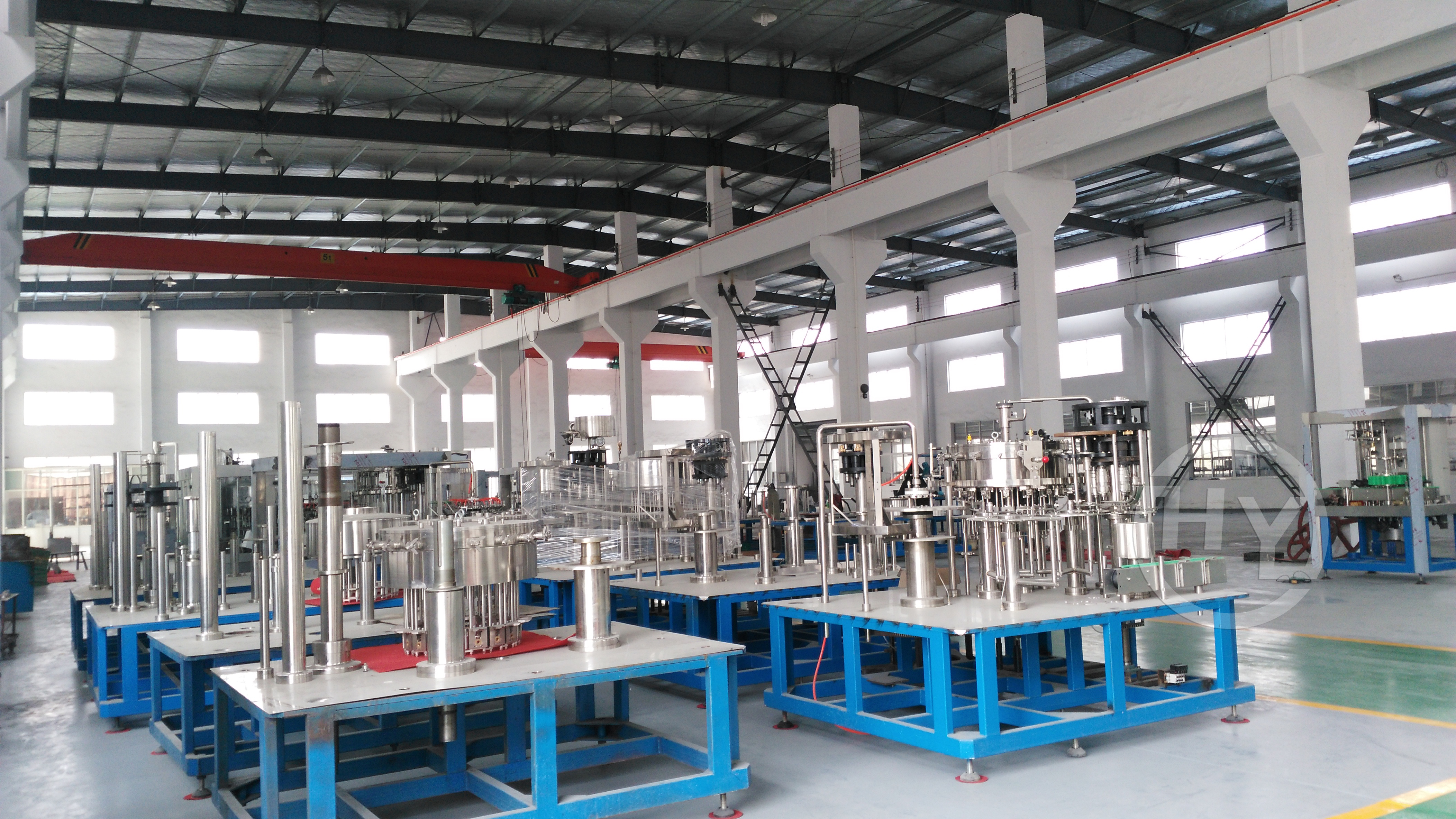
On August 20, Zhangjiagang Hengyu Beverage Machinery Co., Ltd. successfully completed the factory trial run of an 8,000–10,000 bottles-per-hour carbonated beverage filling line prepared for a customer in Chile.
The successful test marked an important milestone for the project before shipment and installation. During the trial, the major sections of the production line were connected and operated together to verify equipment coordination, bottle conveying, filling-line continuity and downstream processing performance under actual operating conditions.
Unlike testing a single machine independently, a complete-line trial focuses on how every section works as one production system. For a carbonated beverage project, stable operation depends not only on the filling machine itself, but also on the coordination of bottle handling, conveying, labeling, packaging and other supporting equipment.
The successful trial demonstrated that the line had reached an important stage of production readiness and provided a solid foundation for the next phase of the Chilean customer’s project.
A complete beverage line consists of many individual machines, but the customer ultimately depends on the performance of the entire system.
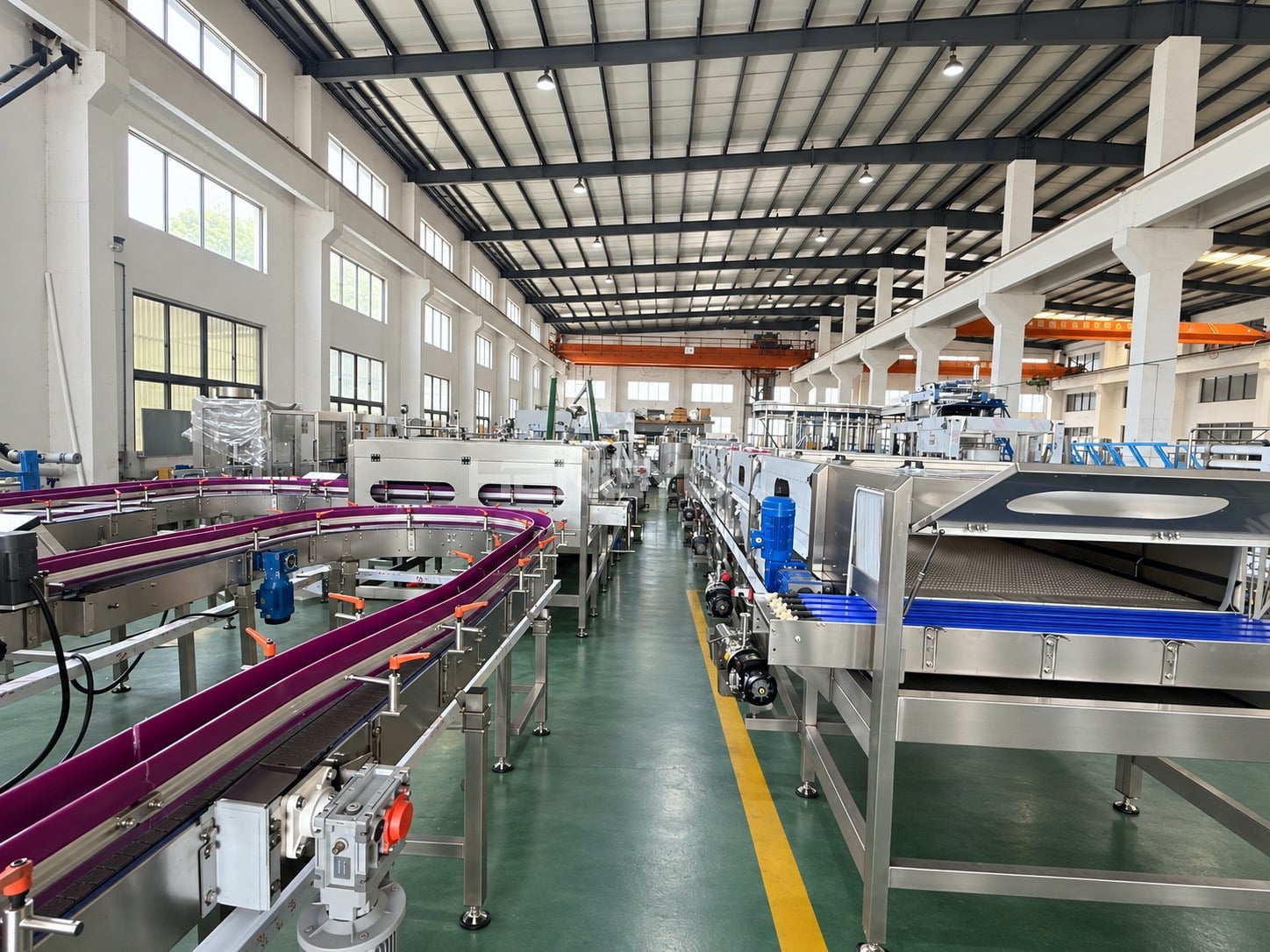
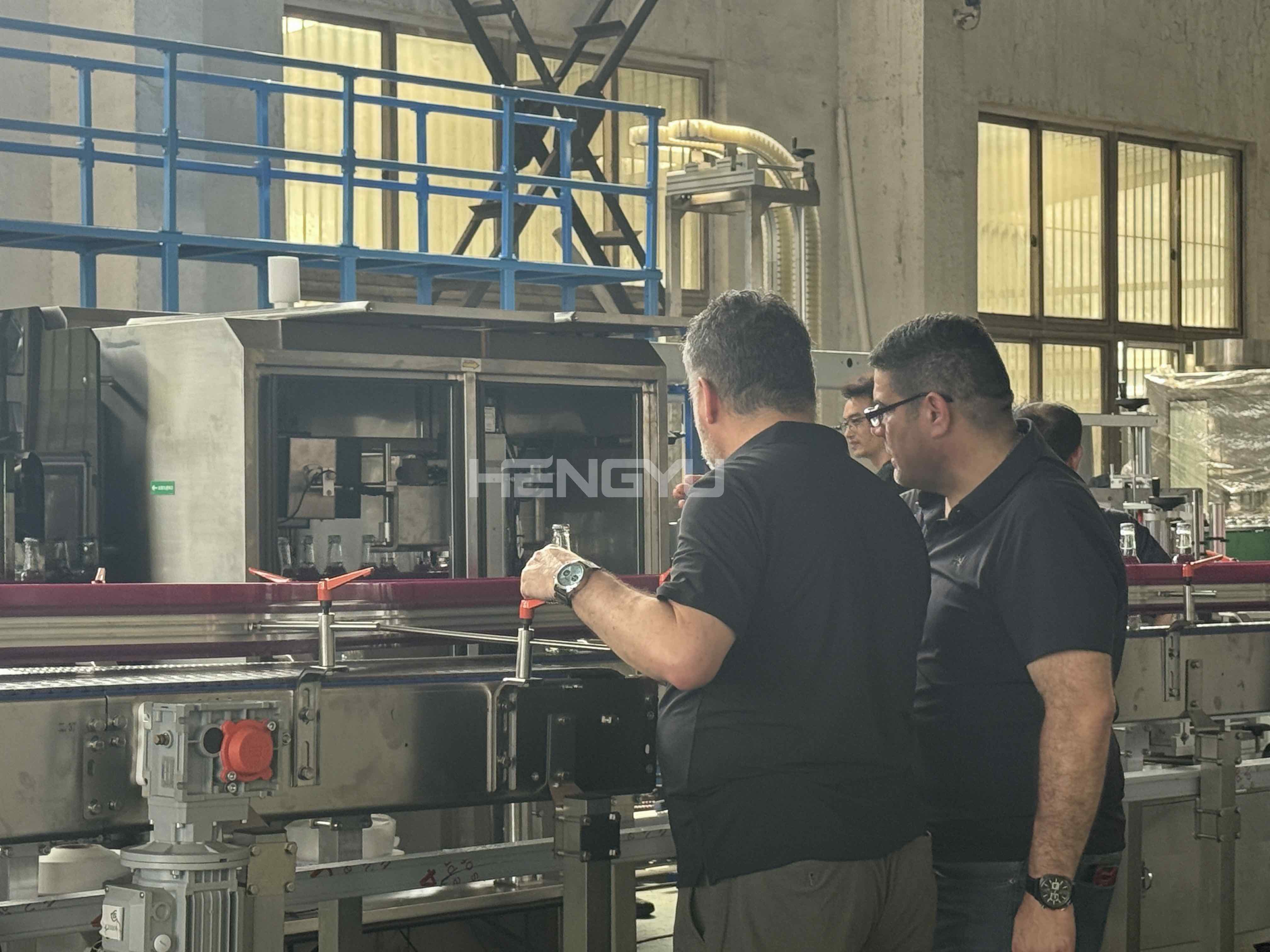
The factory photos from this project show a large integrated production area with stainless-steel conveyors and multiple processing and packaging units connected across the workshop. Bottles move continuously between different sections, while conveyor tracks link the equipment into one coordinated production flow.
For Hengyu, this integration stage is a critical part of project implementation.
Each machine may operate correctly on its own, but problems can still appear when several units are connected. Differences in operating speed, unstable bottle transfer or insufficient accumulation space can lead to repeated stopping once the line begins continuous production.
This is why complete-line commissioning must evaluate the relationship between upstream and downstream equipment rather than focusing only on individual machine specifications.
For the Chile project, the target production capacity of approximately 8,000–10,000 BPH required the entire line to maintain a balanced production rhythm. During testing, the equipment was adjusted as a complete system so that bottles could move smoothly between production stages without unnecessary interruption or accumulation.
Bottle conveying is often one of the less visible parts of a beverage factory, but it has a direct influence on actual line efficiency.
The conveyor system installed for this project uses a continuous layout to connect different processing units. Guide rails, motors and transfer sections must be adjusted according to bottle specifications and the operating speed of the line.
If bottles are transferred too quickly, they may accumulate at downstream equipment. If the conveying speed is too slow, the filling or packaging machine may not receive enough containers to maintain its designed production capacity.
During a complete-line trial, these details can be observed under continuous operating conditions and adjusted before the machinery reaches the customer’s factory.
This is one of the main advantages of factory testing.
Instead of waiting until installation overseas to identify coordination issues, Hengyu can check the operating relationship between the major machines in advance. This helps reduce unnecessary adjustment work during final installation and gives the customer a clearer understanding of how the production line will operate as a complete system.
Carbonated beverages require more controlled production conditions than still beverages.
Because the finished product contains dissolved carbon dioxide, the beverage preparation and filling processes must operate under suitable pressure and temperature conditions. Unstable conditions may lead to excessive foaming, inconsistent filling levels or unnecessary loss of carbonation.
For this reason, the performance of a carbonated beverage line should not be evaluated only by maximum filling speed.
Stable production is equally important.
An 8,000–10,000 BPH line must maintain an appropriate balance between beverage supply, filling speed, bottle movement and downstream packaging. If one section repeatedly stops, the effect can quickly spread through the entire production line.
Hengyu therefore approaches carbonated beverage projects from a complete-line perspective. The filling machine forms the core of the system, but surrounding equipment and conveyor sections must be coordinated with the same production objective.
The August 20 factory trial allowed the project team to observe this interaction under real operating conditions and confirm the continuity of the line before the next project stage.
The images from the factory trial also show downstream processing equipment connected with the conveyor system.
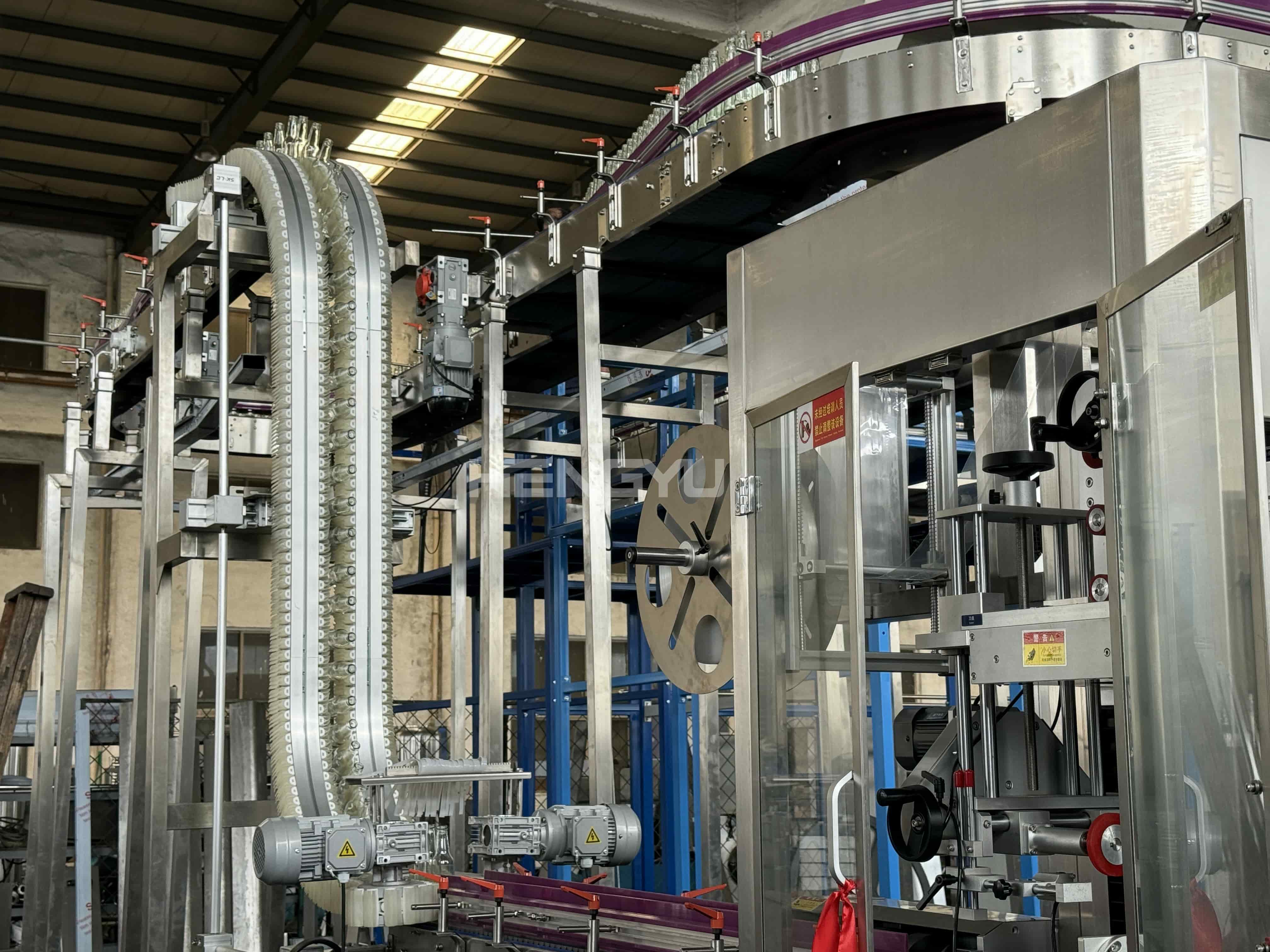
After filling and capping, beverage bottles still need to pass through several stages before they become market-ready finished products. Depending on the customer’s packaging design, these stages may include labeling, coding, product inspection and secondary packaging.
The project photos show equipment used for bottle handling and labeling-related processes, demonstrating that the Chilean project was developed as an integrated production line rather than simply a standalone filler.
This distinction is important for beverage manufacturers planning new factories.
When filling, labeling and packaging machinery are selected separately without considering capacity matching, the actual production output may be limited by the slowest downstream unit. Complete-line engineering can reduce this risk by considering the required output from the beginning of the project.
For an 8,000–10,000 BPH production target, downstream equipment must be capable of receiving and processing bottles at a suitable rate while leaving enough buffer capacity to absorb small fluctuations during continuous production.
The successful trial provided an opportunity to observe these transitions and fine-tune the line before delivery.
For international beverage projects, the distance between the equipment manufacturer and the customer’s factory makes pre-shipment testing especially valuable.
Once machinery is shipped overseas, changes to major equipment arrangements can require more time and coordination. Performing a complete-line trial at the manufacturing site allows many operating details to be checked while engineers, tools and manufacturing resources are readily available.
The process also provides an opportunity to verify mechanical operation, conveyor connections, control logic and the relationship between the major sections of the line.
For Hengyu, factory testing is therefore not simply a demonstration that the machines can be switched on. It is part of preparing the production system for practical use.
The goal is to identify and resolve potential coordination issues before delivery, helping make the subsequent installation and commissioning process at the customer’s factory more efficient.
The Chile carbonated beverage project reached this important milestone successfully on August 20.
For customers investing in beverage machinery, project transparency is important.
A complete production line represents a significant investment, and customers need confidence that the equipment being manufactured can meet the agreed project requirements.
Factory assembly and trial operation provide visible evidence of project progress.
The photos taken during this trial show the production line installed across Hengyu’s workshop, with equipment connected through the conveying system and operating as an integrated line. They also record the inspection and communication process taking place around the equipment during testing.
These real project records reflect an important part of Hengyu’s manufacturing process: equipment is not treated as a collection of separate machines, but as a production system that must eventually operate reliably at the customer’s site.
For overseas customers, this complete-line capability is especially valuable because it allows technical coordination to begin before the equipment leaves China.
Zhangjiagang Hengyu Beverage Machinery Co., Ltd. provides individual machines and complete production line solutions for bottled water, carbonated beverages, juice, tea drinks, canned beverages and other liquid products.
Our project scope can cover beverage preparation, filling, conveying, labeling, packaging and related supporting systems according to the customer’s product, container specifications, target capacity and factory conditions.
The successful factory trial of this 8,000–10,000 BPH carbonated beverage filling line for Chile represents another step forward in Hengyu’s international beverage machinery projects.
With the trial successfully completed, the project will continue toward its next stage, bringing the customer closer to a complete production system ready for commercial beverage manufacturing.
If you are preparing a new carbonated drink factory or upgrading an existing production system, send Hengyu your basic project requirements:
·Beverage type and bottle specifications
·Required production capacity
·Planned labeling and packaging format
Our team can help you evaluate the complete process and prepare a customized production line configuration.
Contact Hengyu Beverage Machinery to discuss your carbonated beverage filling project.
 Hot News
2026-09-11
2026-08-20
2026-08-10
2026-07-15
2026-07-08
2026-07-01

 CN
CN