
 CN
CN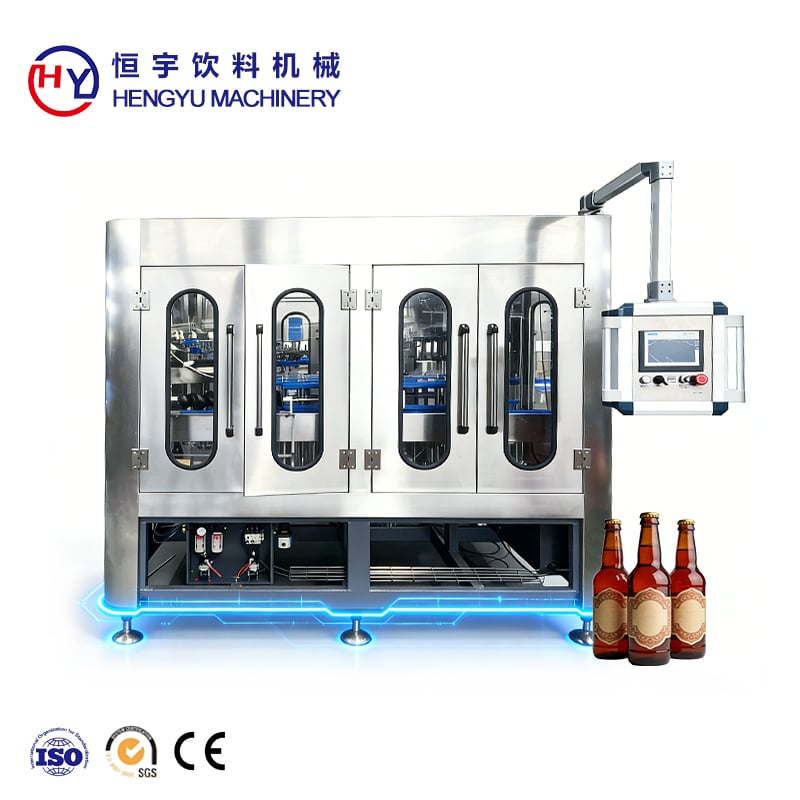
The beverage manufacturing industry has undergone a dramatic transformation over the past decade, and nowhere is this shift more visible than in the way producers approach bottling operations. A modern glass bottle filling machine is no longer a simple mechanical device that moves liquid from one container to another. It is an intelligent, integrated system that combines precision engineering, sensor technology, and programmable controls to deliver consistent output at speeds that manual or semi-automatic methods simply cannot match. As consumer demand grows and margins tighten, the question is no longer whether to automate, but how much value automation can unlock.
Understanding the automation benefits embedded in today's glass bottle filling machine landscape requires looking beyond raw throughput numbers. Automation reshapes how production teams manage quality, labor, waste, compliance, and long-term scalability. From craft breweries scaling up to industrial beverage producers optimizing existing lines, the advantages of automated glass bottle filling are both immediate and compounding over time. This article explores those benefits in depth, offering practical insight into why automation has become the operational standard for serious bottling operations worldwide.
How Automation Transforms Production Speed and Consistency
Higher Output Without Proportional Labor Increases
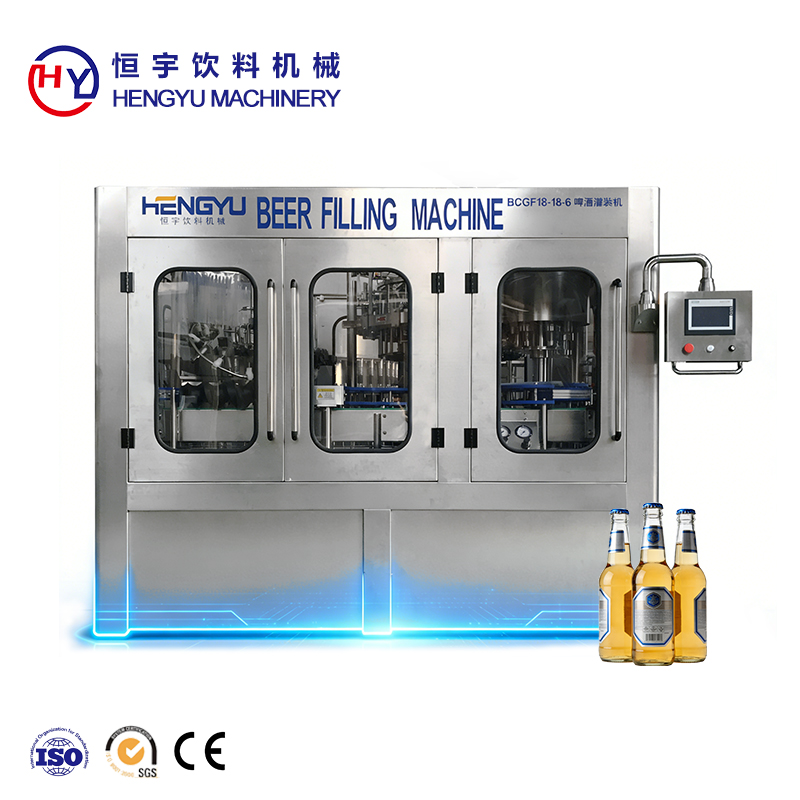
One of the most compelling automation benefits in any glass bottle filling machine is the ability to dramatically increase output without a corresponding increase in headcount. Automated filling lines are designed to operate at sustained high speeds — often processing thousands of bottles per hour — while maintaining the same fill accuracy and seal quality from the first bottle to the last. This capacity to scale production without scaling labor costs fundamentally changes the economics of bottling.
In a manual or semi-automated environment, output is constrained by human endurance, attention span, and shift changes. Workers tire, make errors, and require breaks, all of which introduce variability into the bottling process. An automated glass bottle filling machine eliminates these human performance variables, delivering machine-consistent results across full production runs. The result is a higher effective output rate that can be reliably projected and planned for in advance.
For beverage producers operating in competitive markets, this speed advantage translates directly into market responsiveness. The ability to fulfill large orders quickly, respond to demand spikes, and maintain delivery commitments gives automated operations a structural edge that manual lines simply cannot replicate.
Consistent Fill Accuracy Across Every Bottle
Consistency is not just a quality metric — it is a financial one. In bottled beverage production, even small overfills repeated across thousands of bottles per shift add up to significant product giveaway. Conversely, underfilling creates regulatory risk and consumer dissatisfaction. Automated glass bottle filling machine systems address this directly through closed-loop fill controls, level sensors, and flow meters that adjust in real time to ensure each bottle receives exactly the intended volume.
Modern isobaric filling technology, commonly used in beer and carbonated beverage applications, uses counter-pressure filling principles to maintain carbonation while controlling fill levels with high precision. These mechanisms are integrated seamlessly into automated glass bottle filling machine designs, reducing both product loss and the variability that often plagues high-speed manual operations.
Over the course of a production year, the savings from tighter fill accuracy are substantial. Producers who have transitioned from semi-automatic to fully automated glass bottle filling machine setups frequently report measurable reductions in product giveaway, contributing directly to improved gross margins.
Quality Control and Hygiene Benefits Driven by Automation
Reduced Human Contact and Contamination Risk
Hygiene is non-negotiable in food and beverage production. Every additional point of human contact in a filling process introduces potential contamination risk, however well-trained the workforce may be. Automated glass bottle filling machine systems are engineered to minimize human intervention throughout the filling, capping, and sealing sequence. CIP (Clean-in-Place) systems, automated bottle rinsing before filling, and enclosed filling valve assemblies all work together to maintain strict hygiene standards without requiring constant manual oversight.
This reduced human contact is especially critical for sensitive beverages like beer, wine, and juices, where oxygen exposure or microbial contamination can compromise product quality and shelf life. The automated glass bottle filling machine handles these products within controlled environments, using inert gas purging, counter-pressure valves, and sealed filling chambers to protect product integrity from the first bottle to the last.
From a regulatory standpoint, automated production lines are also easier to validate and audit. Consistent, documented processes with minimal manual touchpoints align well with food safety frameworks such as HACCP and ISO 22000, giving producers a stronger compliance posture.
Real-Time Inspection and Rejection Capabilities
Automation in a glass bottle filling machine does not stop at filling — it extends to inspection. Modern automated lines integrate vision systems, fill-level detectors, and cap presence sensors that evaluate every bottle as it moves through the line. Bottles that fail inspection criteria — whether underfilled, improperly capped, or carrying a detected defect — are automatically rejected without halting the line. This continuous inline quality control is simply not achievable at scale with manual inspection.
The data generated by these inspection systems also has strategic value. Production managers can review rejection trends to identify equipment wear, valve drift, or upstream issues before they escalate into larger problems. Automated glass bottle filling machine systems that log this data enable a proactive maintenance culture rather than a reactive one, reducing unplanned downtime and its associated costs.
For producers supplying to major retail chains or export markets, documented quality control data from automated systems provides credible evidence of process standards, supporting buyer confidence and simplifying audit processes.
Labor Efficiency and Operational Cost Advantages
Redeployment of Labor Toward Higher-Value Tasks
Automation does not eliminate the need for skilled personnel — it redirects their focus. When repetitive, physically demanding tasks on the glass bottle filling machine line are handled by automated systems, human operators are freed to monitor performance, manage changeovers, troubleshoot anomalies, and maintain equipment. This shift from manual labor to supervisory and technical roles increases the overall skill level and value contribution of the workforce on the production floor.
In markets where skilled labor is scarce or expensive, this redeployment effect is financially significant. A single well-trained technician overseeing an automated glass bottle filling machine line can deliver the output that previously required multiple operators. This not only reduces labor costs per unit produced but also reduces the operational risk associated with high employee turnover in repetitive manual roles.
Furthermore, automated systems are not subject to fatigue-related performance degradation. They maintain the same operational parameters at the end of an eight-hour shift as at the beginning, which is a fundamental advantage over manually dependent production models, particularly in multi-shift operations.
Lower Long-Term Operating Costs Through Energy and Waste Reduction
Modern automated glass bottle filling machine designs incorporate energy-efficient motors, variable frequency drives, and optimized mechanical sequences that reduce power consumption compared to older or semi-automatic alternatives. While the upfront capital investment in automation can be significant, the ongoing reduction in energy costs contributes meaningfully to total cost of ownership over a machine's operational life.
Waste reduction is another dimension of operational cost improvement. Automated filling systems generate less product spillage, fewer misfilled bottles, and more precise seal application, all of which reduce raw material and packaging waste. When these savings are calculated across the full volume of annual production, the contribution to profitability is often underestimated at the point of purchase decision.
Glass bottle producers and beverage manufacturers increasingly treat automation not as a capital expenditure to minimize, but as a lever for improving unit economics. The ROI case for an automated glass bottle filling machine strengthens the higher the production volume and the longer the operational horizon considered.
Scalability, Flexibility, and Future-Readiness
Adapting Quickly to Different Products and Bottle Formats
Flexibility is a growing requirement in beverage production. SKU proliferation, contract filling arrangements, and seasonal product variations all demand that production lines adapt quickly to different bottle formats, fill volumes, and product types. Automated glass bottle filling machine systems address this through quick-change tooling, programmable recipe management, and adjustable conveyor and filling head configurations that reduce changeover time significantly compared to manual systems.
This flexibility extends the commercial utility of the equipment investment. A glass bottle filling machine capable of handling multiple bottle formats and beverage types allows producers to service a broader range of customers or product lines without requiring separate dedicated lines. Automated recipe storage means operators can switch between products with minimal setup time, preserving productive capacity.
In contract bottling environments especially, this adaptability is a direct commercial asset. The ability to run different customer SKUs efficiently on the same automated line is a competitive differentiator that directly supports revenue growth.
Integration with Broader Production and Data Ecosystems
Automated glass bottle filling machine systems are increasingly designed with connectivity in mind. Modern filling lines can interface with upstream and downstream equipment — labeling systems, pasteurizers, packing robots, and ERP platforms — to create fully integrated production ecosystems. This integration eliminates data silos, reduces inter-system coordination delays, and gives production managers a real-time view of line performance from a single interface.
The availability of production data from automated filling systems also supports continuous improvement initiatives. OEE (Overall Equipment Effectiveness) tracking, predictive maintenance scheduling, and shift-by-shift performance benchmarking all become practical management tools when the glass bottle filling machine is generating structured operational data in real time.
As Industry 4.0 principles continue to diffuse through food and beverage manufacturing, producers who have invested in automated, data-connected glass bottle filling machine infrastructure will be better positioned to leverage emerging technologies — from AI-driven quality inspection to remote diagnostic support — that will define the next generation of production efficiency.
FAQ
What types of beverages can an automated glass bottle filling machine handle?
Automated glass bottle filling machine systems are engineered to handle a wide variety of beverages including beer, carbonated soft drinks, still water, wine, juice, and spirits. The specific filling technology — isobaric, gravity, or volumetric — is selected based on the carbonation level and viscosity of the product, ensuring optimal fill quality and minimal product degradation during the filling process.
How does automation in a glass bottle filling machine improve food safety compliance?
Automation reduces human intervention points throughout the filling sequence, which directly lowers contamination risk. Integrated CIP systems, automated bottle rinsing, and enclosed filling valve designs help maintain hygienic conditions consistently across production runs. The ability to generate detailed process logs also simplifies compliance documentation for food safety audits and regulatory inspections.
Is the initial investment in an automated glass bottle filling machine justified for smaller producers?
The justification depends on production volume, product mix, and growth trajectory. Even smaller producers can benefit significantly from automation when they factor in reduced labor costs, lower product giveaway, fewer quality rejects, and the operational reliability of consistent machine performance. Many producers find that the total cost of ownership calculation — considering multi-year savings — makes automation financially compelling well below what they initially assumed.
How long does it typically take to recoup the investment in an automated glass bottle filling machine?
Payback periods vary depending on production volume, labor costs in the operating market, and the degree of efficiency improvement over the previous setup. Producers transitioning from semi-automatic to fully automated glass bottle filling machine operations frequently report payback periods in the range of two to four years, with ongoing savings continuing to accumulate across the machine's operational life, which can extend well beyond a decade with proper maintenance.
Table of Contents
- How Automation Transforms Production Speed and Consistency
- Quality Control and Hygiene Benefits Driven by Automation
- Labor Efficiency and Operational Cost Advantages
- Scalability, Flexibility, and Future-Readiness
-
FAQ
- What types of beverages can an automated glass bottle filling machine handle?
- How does automation in a glass bottle filling machine improve food safety compliance?
- Is the initial investment in an automated glass bottle filling machine justified for smaller producers?
- How long does it typically take to recoup the investment in an automated glass bottle filling machine?