
 CN
CN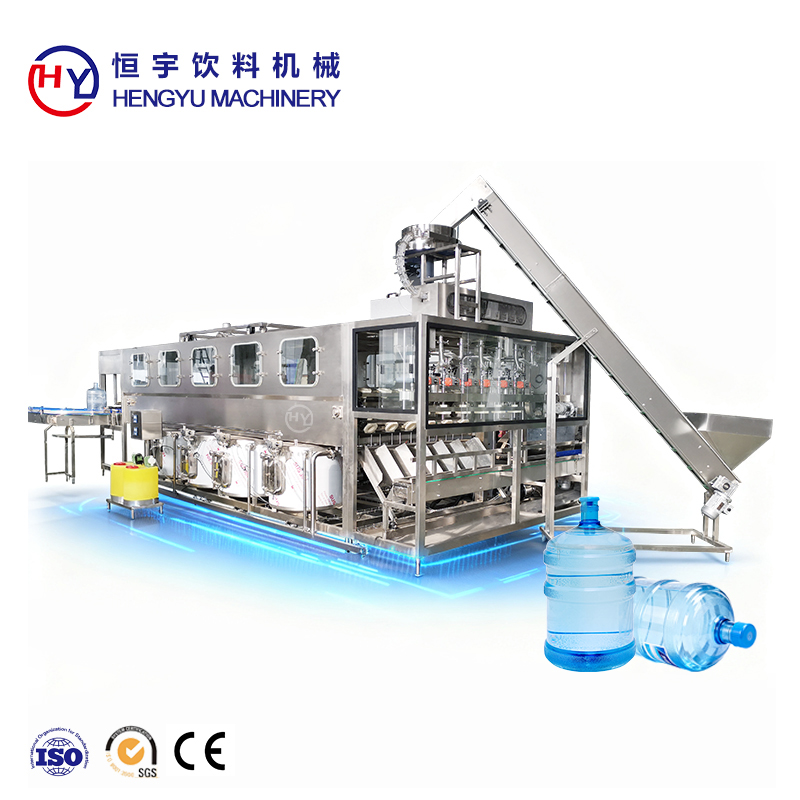
In the beverage and water processing industry, hygiene is not a preference — it is a regulatory requirement and a core operational standard. A gallon filling machine operates at the intersection of product safety, production efficiency, and compliance. Every component that contacts water or liquid must meet strict sanitary criteria, and every workflow step must minimize the risk of contamination. For manufacturers running high-volume bottling lines, understanding exactly what hygiene standards apply to a gallon filling machine is essential to protecting consumers, passing audits, and maintaining brand integrity.
Unlike small-format bottle fillers, a gallon filling machine handles large containers — typically 3-gallon or 5-gallon barrels — that are reused across multiple fill cycles. This reuse cycle introduces unique contamination risks that demand rigorous hygienic design and operational discipline. From material selection and surface finish to CIP (Clean-in-Place) systems and environmental controls, every element of the machine's design and its surrounding environment contributes to final product safety. This article examines the key hygiene standards that govern gallon filling machine selection and operation, and explains why each standard matters in a real production context.
Material and Surface Hygiene Standards
Food-Grade Stainless Steel Requirements
The most fundamental hygiene requirement for any gallon filling machine is that all product-contact surfaces must be constructed from food-grade materials. The industry standard is 304 or 316L stainless steel, both of which offer excellent corrosion resistance, non-reactivity with water and most beverages, and ease of sanitation. For applications involving mineral water, purified water, or alkaline water, 316L stainless steel is preferred because of its higher molybdenum content, which provides enhanced resistance to chloride-based cleaning agents.
The surface finish of product-contact stainless steel is equally important. A mirror-polished or electropolished finish with a roughness average (Ra) of 0.8 µm or lower is the accepted benchmark in hygienic design standards such as EHEDG and 3-A Sanitary Standards. Rough surfaces, weld seams, or pitted areas create microenvironments where bacteria can colonize and resist cleaning. On a gallon filling machine, this applies to filling nozzles, liquid pathways, barrel contact surfaces, and valve internals.
Non-metallic components such as seals, gaskets, and tubing must also comply with food-contact material regulations. Materials like EPDM, silicone, and PTFE are widely used because they are non-toxic, resistant to chemical cleaners, and do not impart taste or odor to the product. Using non-compliant rubber or plastic components — even in small areas — can compromise the entire hygienic integrity of a gallon filling machine.
Drainage Design and Dead Zone Elimination
Hygienic design standards require that all liquid-contact areas on a gallon filling machine drain completely under gravity. Horizontal pipe sections, recessed fittings, and low points in the liquid circuit can retain moisture and create conditions for microbial growth. Compliant machine designs incorporate sloped piping, self-draining valves, and minimal dead zones to ensure that residual liquid does not pool after each production cycle.
Dead legs — sections of piping where liquid can stagnate — are specifically addressed in standards like 3-A 75-01 for filling equipment. The rule of thumb is that the length of any dead leg should not exceed three times the diameter of the pipe. For a high-throughput gallon filling machine, this design principle must be applied across the entire liquid circuit from the product reservoir to the filling nozzle tip.
Barrel Washing and Sanitization Integration
Pre-Wash and Rinse Protocols
Because 3-gallon and 5-gallon containers are reusable, a fully integrated gallon filling machine production line typically incorporates an automatic barrel washing station before the filling stage. These washing systems use hot water, alkaline detergent, and acidic rinse agents to remove protein residues, mineral deposits, biofilm, and odor-causing compounds from the interior of returned barrels. Without this step, even the most hygienic filling head can introduce clean liquid into a contaminated container.
Wash parameters must be validated and consistently maintained. Temperature, contact time, detergent concentration, and mechanical action all contribute to effective cleaning. In a compliant gallon filling machine line, these parameters are typically controlled by a PLC-based system that monitors and logs each cycle. Deviations from set parameters trigger alarms, preventing barrels that have not been properly washed from advancing to the filling stage.
After washing, barrels go through a sterile water rinse and often an ozone or UV sterilization stage. Ozone water and UV light are both recognized as effective non-chemical disinfection methods that leave no chemical residue in the finished product. This is particularly important for natural spring water and purified drinking water applications where taste purity is a key quality indicator alongside microbial safety.
CIP System Standards for the Filling Circuit
The internal liquid circuit of a gallon filling machine — the pipes, valves, tanks, and nozzles that handle product — requires its own systematic cleaning and sanitization through a CIP (Clean-in-Place) process. A compliant CIP system circulates cleaning solutions and sterilizing agents through the entire product circuit without disassembly, saving time while achieving validated microbial reduction targets.
For a gallon filling machine used in drinking water production, the CIP cycle typically includes a caustic wash phase, an acid rinse phase, a clean water flush, and a final sanitization step with ozone water, hot water, or food-grade chemical sanitizer. The duration and temperature of each phase are validated against recognized standards such as ISO 22000 or HACCP-based protocols specific to the water bottling sector.
Properly designed CIP circuits avoid bypasses and non-cleanable areas. All spray nozzles within tanks must achieve full internal surface coverage, and flow velocities in pipes must be sufficient to generate turbulent flow — generally above 1.5 meters per second — which is required for effective mechanical cleaning action. A gallon filling machine that cannot achieve full CIP coverage in all areas is considered non-compliant under most food safety management frameworks.
Filling Environment and Enclosure Standards
Enclosed Filling Zones and Air Quality
The physical environment in which a gallon filling machine operates directly affects the microbiological quality of the filled product. Open filling areas expose product to airborne particulates, dust, and biological contaminants. Modern hygienic filling standards require that the filling zone be enclosed and maintained under positive pressure using filtered air. This prevents external contaminated air from entering the critical zone during the filling operation.
Air supplied to the enclosed filling area of a gallon filling machine typically passes through HEPA (High-Efficiency Particulate Air) filters rated to remove 99.97% of particles at 0.3 microns. Some high-specification installations also incorporate UV air sterilization within the enclosure. Particulate and microbial air quality should be routinely monitored and documented as part of the facility's environmental monitoring program.
The filling enclosure design must also support easy access for cleaning and inspection. Smooth, non-porous internal wall surfaces, stainless steel or food-grade plastic construction, and no horizontal ledges where dust or condensation can accumulate are all design features that support hygienic performance. When evaluating a gallon filling machine, buyers should inspect the enclosure design with the same rigor applied to the machine's liquid circuit.
Operator Hygiene and Access Controls
Even the most technically advanced gallon filling machine can be compromised by human contamination. Operational hygiene protocols for operators working in or near the filling area are a critical component of the overall hygiene standard. These protocols typically require hand washing, glove use, hair nets, dedicated footwear, and health screening for personnel working in product-contact zones.
Access to the filling enclosure itself should be minimized during production. Automation reduces the need for operator contact with the product circuit during filling cycles. However, maintenance procedures — nozzle inspection, gasket replacement, valve servicing — require direct access, and these activities must be governed by documented hygiene procedures that prevent re-contamination after cleaning and before the next production run.
Certification and Regulatory Compliance
Recognized Hygiene Certifications for Gallon Filling Equipment
For export markets and regulated domestic markets, a gallon filling machine must carry documentation demonstrating compliance with recognized hygiene and food safety standards. CE marking in Europe indicates conformity with machinery safety directives, while NSF/ANSI certifications — particularly NSF/ANSI 51 for food equipment materials — are widely recognized in North American markets. These certifications validate that material selection, design, and construction meet established criteria for use in food and beverage production.
In the drinking water sector specifically, the ISO 22000 food safety management standard and Codex Alimentarius guidelines form the regulatory backbone for production hygiene. Facilities operating a gallon filling machine are expected to implement HACCP plans that identify critical control points in the filling process and establish monitoring, corrective action, and verification procedures for each point. Equipment suppliers who can provide compliance documentation aligned with these frameworks give buyers a significant advantage during facility audits.
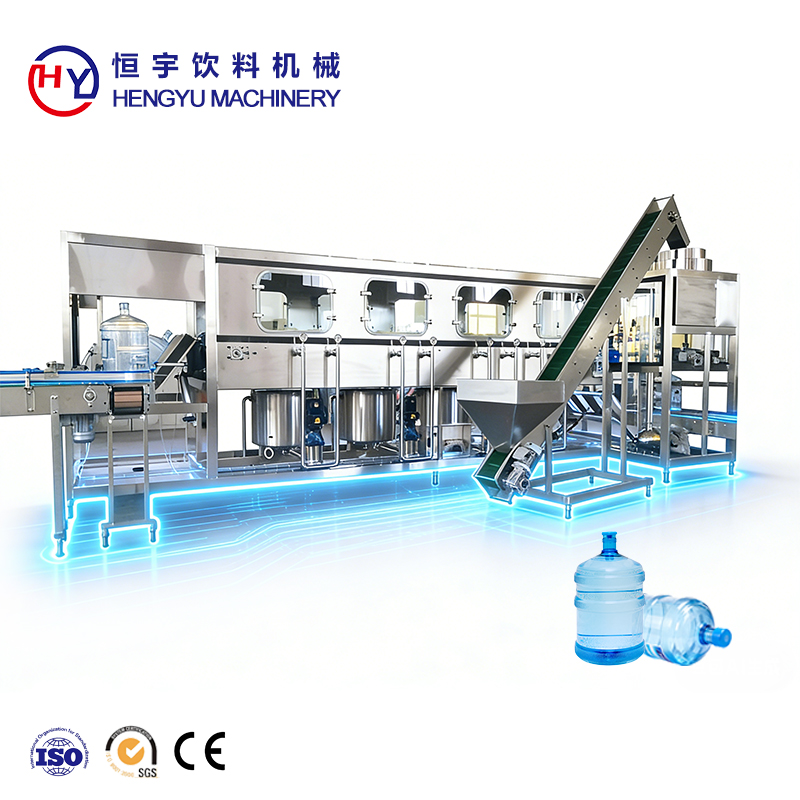
The gallon filling machine designed as a 3-in-1 integrated production line combines barrel washing, filling, and capping in a single hygienic enclosure — a configuration that simplifies compliance by reducing inter-stage exposure and minimizing the number of connection points where contamination could enter the product circuit.
Verification Testing and Ongoing Quality Assurance
Certification and design compliance alone are not sufficient to guarantee hygienic performance over the operational life of a gallon filling machine. Ongoing verification through microbiological testing of filled product, swab testing of product-contact surfaces, and validation of CIP effectiveness is required under most food safety management systems. These tests generate the objective evidence that regulators and retail customers require to confirm that hygiene standards are being maintained in practice.
ATP bioluminescence testing is one commonly used rapid method for surface cleanliness verification on a gallon filling machine. The test detects residual organic matter on surfaces after cleaning by measuring adenosine triphosphate — a molecule present in all biological material. Results are available within seconds, making it a practical tool for pre-production checks and trend monitoring over time.
Regular maintenance schedules, component replacement records, and cleaning validation logs form the documentary backbone of a defensible food safety management system. Operators of a gallon filling machine should ensure that these records are systematically maintained and reviewed, as they provide both internal quality management value and external audit readiness.
FAQ
What materials should the product-contact parts of a gallon filling machine be made from?
Product-contact surfaces on a gallon filling machine should be constructed from food-grade 304 or 316L stainless steel, with a surface finish of Ra 0.8 µm or smoother. Non-metallic components such as seals and gaskets must be made from food-approved materials including EPDM, silicone, or PTFE. These material choices ensure corrosion resistance, ease of sanitation, and compliance with international food contact material regulations.
How often should the internal circuit of a gallon filling machine be cleaned and sanitized?
The CIP cycle frequency for a gallon filling machine depends on production volume, product type, and applicable regulatory requirements. As a general guideline, the full CIP cycle should be performed at the start and end of each production shift, or after any extended production stoppage. Additional sanitization runs may be required when switching between product types or after a maintenance intervention that involved opening the product circuit.
Is ozone sterilization effective for barrel washing in a gallon filling machine line?
Yes, ozone water is widely used and recognized as an effective disinfectant in the barrel washing stage of a gallon filling machine production line. Ozone achieves a broad-spectrum kill of bacteria, viruses, and spores, and it breaks down rapidly into oxygen, leaving no chemical residue in the product. It is considered a cleaner alternative to chemical sanitizers for drinking water applications, where taste and odor neutrality are important product quality parameters.
What certifications should buyers look for when purchasing a gallon filling machine for food-grade applications?
Buyers evaluating a gallon filling machine for food-grade or drinking water applications should look for CE certification, NSF/ANSI 51 material compliance documentation, and supplier-provided evidence of ISO 9001 quality management system certification. For facilities implementing HACCP or ISO 22000, the machine supplier should be able to provide technical documentation supporting the development of HACCP critical control point analysis, including component material data sheets, CIP validation parameters, and surface finish specifications.
Table of Contents
- Material and Surface Hygiene Standards
- Barrel Washing and Sanitization Integration
- Filling Environment and Enclosure Standards
- Certification and Regulatory Compliance
-
FAQ
- What materials should the product-contact parts of a gallon filling machine be made from?
- How often should the internal circuit of a gallon filling machine be cleaned and sanitized?
- Is ozone sterilization effective for barrel washing in a gallon filling machine line?
- What certifications should buyers look for when purchasing a gallon filling machine for food-grade applications?