
 CN
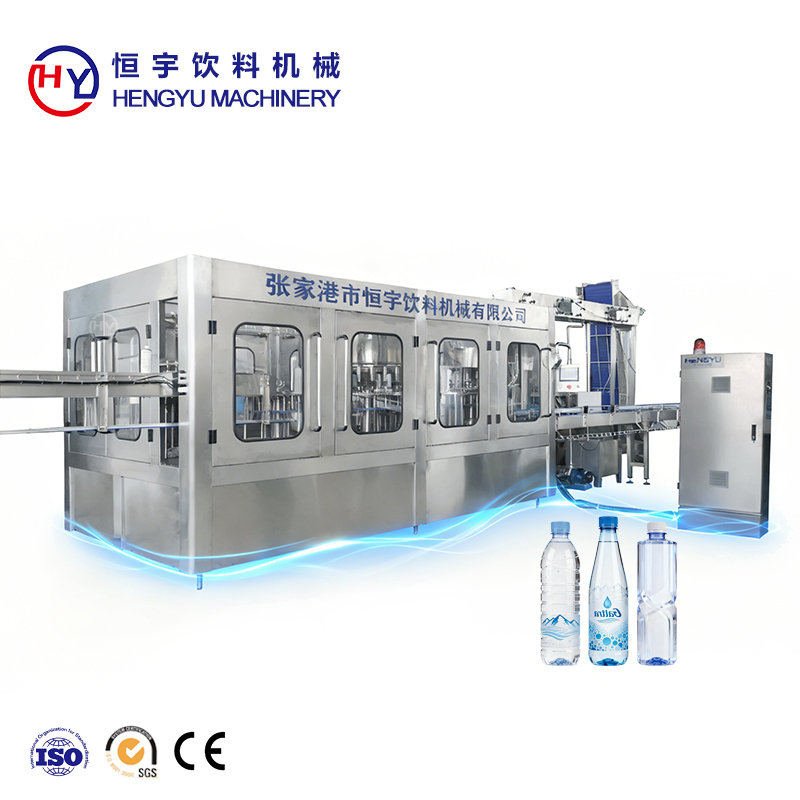
Product loss during manufacturing represents one of the most significant operational challenges in beverage and liquid processing industries. A water filling machine plays a critical role in minimizing waste and maximizing throughput by delivering precise volumetric accuracy with every fill cycle. When production lines operate without proper filling technology, spillage, overflow, and underfilling create cascading losses that impact profitability and customer satisfaction. Understanding how a water filling machine reduces these losses directly connects to improved operational performance and competitive advantage in demanding production environments.

Modern production environments demand equipment that balances speed with accuracy, and a water filling machine accomplishes both objectives simultaneously. By integrating servo-driven filling heads, volumetric measurement systems, and real-time quality monitoring, a water filling machine eliminates the variability inherent in manual or outdated mechanical approaches. The result is a measurable reduction in product loss, improved compliance with industry standards, and enhanced profitability through better resource utilization across your entire production operation.
Precision Volumetric Control and Waste Elimination
How Servo-Driven Technology Ensures Accuracy
A water filling machine equipped with servo-driven filling nozzles delivers exceptional accuracy in each fill cycle, typically maintaining tolerance levels within 0.5 to 1 percent of target volume. This precision eliminates overfilling, which wastes product and creates cleaning challenges, while preventing underfilling that results in customer complaints and regulatory violations. The servo system continuously adjusts flow rates in real-time based on container geometry and liquid viscosity, ensuring consistent results across thousands of fills per hour. When manufacturers switch to a water filling machine with servo technology, they immediately observe reduced spillage around fill stations and decreased product waste in drain systems.
Minimizing Spillage and Overflow Issues
Overflow and spillage represent hidden losses that accumulate throughout production shifts. A water filling machine prevents overflow through intelligent nozzle positioning and automatic level detection that stops filling precisely when containers reach target capacity. Advanced sensors on a water filling machine monitor fill height and detect when containers are misaligned or improperly seated, triggering automatic rejection or repositioning before overflow occurs. This proactive approach eliminates the common problem of bottles overflowing during transport through production conveyors, which historically represented 2 to 5 percent product loss in facilities without modern filling technology.
Production Line Efficiency and Downtime Reduction
Maintaining Consistent Production Throughput
A water filling machine directly impacts overall equipment effectiveness by maintaining consistent cycle times and reducing unexpected stoppages. When filling accuracy varies, production managers must slow line speed to prevent damage and spillage, effectively reducing throughput. Conversely, a water filling machine with proven reliability allows manufacturers to operate at maximum specified speeds because the equipment consistently performs its function without variance. This consistency translates to higher hourly output, reduced changeover time between different container sizes, and fewer corrective maintenance interventions during regular shifts.
Quick Changeover Capabilities
Modern production demands flexibility to accommodate different container sizes and product types throughout the day. A water filling machine designed with quick-change nozzle systems and adjustable fill head carriages enables operators to transition between production runs in minutes rather than hours. This rapid changeover capability reduces idle time and allows manufacturers to respond quickly to market demand without maintaining separate dedicated equipment for each product variant. The reduced transition time directly decreases potential product loss during setup phases, where traditional equipment often results in significant waste as technicians calibrate and test new configurations.
Integration with Quality Control and Compliance Systems
Real-Time Monitoring and Data Capture
A water filling machine equipped with IoT sensors and integrated control systems captures volumetric data from every fill cycle, creating comprehensive production records for compliance and process optimization. Manufacturers can identify fill variance patterns, detect equipment drift before it causes significant losses, and demonstrate regulatory compliance through detailed production logs. This data-driven approach enables predictive maintenance scheduling, preventing unexpected equipment failures that historically result in product waste and production interruptions during emergency repairs.
Automatic Reject and Diversion Systems
A water filling machine integrated with vision systems and weight sensors can automatically identify underfilled or overfilled containers and divert them before they progress to downstream packaging stages. This automatic quality gate prevents defective products from reaching distribution centers, eliminating replacement costs and brand damage from customer complaints. The rejection logic operates at line speed without requiring manual intervention, reducing labor costs while ensuring only compliant products enter inventory. By catching filling errors at the source rather than during final inspection, manufacturers dramatically reduce the cascading waste associated with rework, recalls, and customer returns.
FAQ
What specific product loss percentage does a water filling machine typically eliminate?
A properly configured water filling machine typically reduces product loss by 40 to 60 percent compared to older mechanical or manual systems, depending on baseline conditions and product characteristics. Losses from overflow, underfilling, and spillage during transfer commonly range from 2 to 8 percent in facilities without precision filling technology, so a water filling machine eliminating this waste represents substantial financial impact. The exact percentage varies based on container type, liquid viscosity, production speed, and existing infrastructure, making installation evaluation essential before final ROI projections.
How does a water filling machine handle different container sizes and shapes?
A water filling machine accommodates variable container geometry through adjustable fill head positioning, interchangeable nozzle configurations, and automated height detection systems that adapt to different container profiles. Operators program container specifications into the machine's control interface, allowing the water filling machine to automatically adjust nozzle spacing, fill duration, and height compensation for each product run. This flexibility enables single-line production of multiple SKUs without manual recalibration, significantly reducing the changeover losses that plague facilities dependent on fixed-position equipment.
What maintenance requirements do modern water filling machines demand?
A contemporary water filling machine requires regular preventive maintenance including nozzle cleaning, seal replacement, and servo motor inspection on schedules typically ranging from 500 to 2000 operating hours depending on product type and machine specifications. Scheduled maintenance programs prevent the equipment degradation that causes filling accuracy loss and unexpected breakdowns during production shifts. Manufacturers should establish maintenance protocols outlined in equipment documentation and coordinate with suppliers for spare parts availability and technician training.