
 CN
CN
Root Causes of Glass Breakage at the Infeed Starwheel
Mechanical Stress from Improper Starwheel Timing and Pocket Clearances
The primary catalyst for glass breakage at the infeed starwheel is excessive mechanical stress caused by a mismatch between the container and machine handling components. Even a few milliseconds of timing error means the pocket no longer cradles the bottle—it strikes it, generating concentrated point loads. When combined with incorrect pocket clearance, this transforms smooth transfer into repeated micro-collisions. Industry data shows over 70% of unexplained infeed breakage stems from these calibration errors. The guide rail and starwheel pocket are engineered to create a gradually diminishing gap; any deviation forces the glass into Hertzian contact stress—highly localized pressure that concentrates at the initial impact point rather than distributing across the surface. This creates ideal conditions for fracture. While starwheel design is inherently robust, the absence of a precision setup protocol directly translates to crushing and shearing forces on the bottle sidewall—the weakest structural zone of the container. A single line shutdown due to such failures averages $740 k (Ponemon 2023).
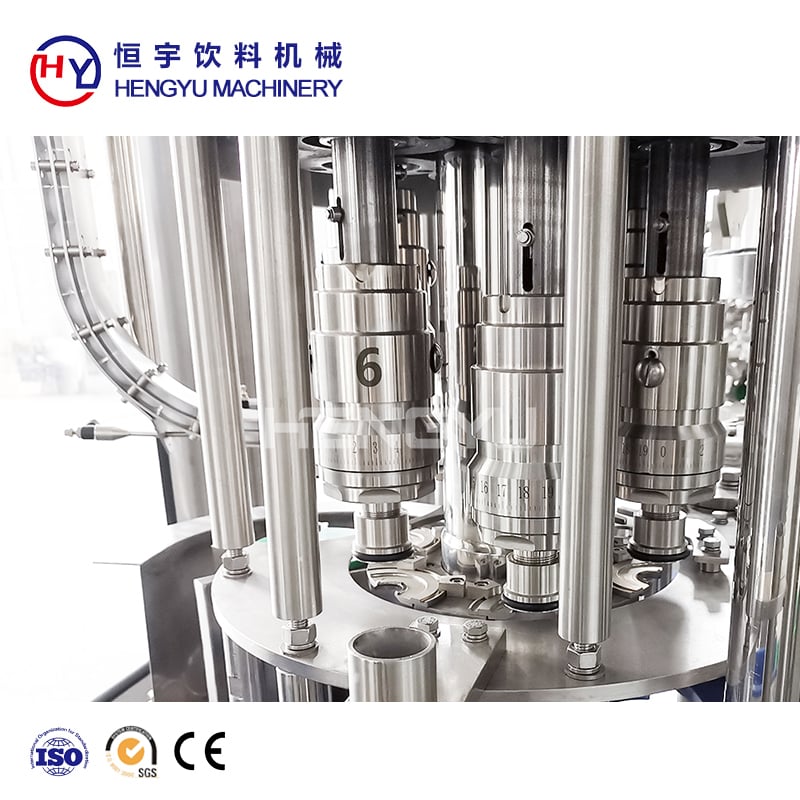
Vibration, Misalignment, and Impact During Bottle Transfer
Beyond direct contact, systemic vibration and misalignment compound stress during transfer. Bottles moving from conveyor to starwheel must achieve perfect speed synchronization; any discrepancy introduces momentary impact energy. High-frequency drive-system vibration further accelerates fatigue through fretting—micro-oscillations between bottle and pocket that initiate surface cracks. A misaligned transfer point compounds this: instead of being guided, the bottle is effectively “tripped” into the pocket, delivering a shock load that tests inherent glass strength. Containers with pre-existing micro-scratches are especially vulnerable—each vibration cycle extends those flaws until they reach critical size and trigger catastrophic failure. This motion isn’t linear—it’s a precisely coordinated rotation requiring the entire infeed system to function as one unit. A single point of misalignment becomes a fracture trigger.
Glass Integrity Failures Exacerbated by Suboptimal Machine Setup
Suboptimal setup doesn’t merely stress flawless containers—it actively exploits inherent glass weaknesses. Minor manufacturing variations—micro-scratches, wall-thickness inconsistencies, or base irregularities—become high-risk factors when machine parameters are poorly calibrated. The synergy between fragile glass and aggressive handling multiplies stress concentration around defects by orders of magnitude. This “strength degradation” means a bottle surviving an initial misfired pass may sustain latent damage, making it 50% more likely to shatter on the next. For example, a slightly uneven bottle base wobbles in a pocket with excessive clearance, creating bending moments that snap the heel—a failure often misdiagnosed as material defect, though its root lies in the machine’s inability to accommodate standard glass tolerances.
Precision Machine Setup to Reduce Pressure on Glass Containers
Precision machine setup is the most direct way to reduce mechanical stress at the infeed starwheel, minimizing glass breakage during bottle handling. Small deviations in clearance or timing can multiply container-wall pressure dramatically.
Optimizing Starwheel Pocket Clearance and Bottle Base Fit
Proper pocket clearance prevents glass-to-metal point-loading while avoiding uncontrolled movement. A 250 ml container typically requires 0.5–0.8 mm, while a 1 L bottle performs best with 1.0–1.5 mm, accommodating thermal expansion and minor diameter variation. Equally critical is full base contact: the bottle must sit flat in the pocket with at least 95% surface engagement for small formats. A rocking bottle shifts stress to a narrow rim, initiating microfractures. Setup should include feeler-gauge verification and confirmation that the bottle base contour matches the pocket floor. When both clearance and base fit are validated at every changeover, operators typically see a 20–30% reduction in infeed breakage.
Synchronizing Conveyor, Starwheel, and Fill Station Timing
Synchronization errors turn gentle transfer into impact events. A 2-millisecond timing mismatch between conveyor delivery speed and starwheel phase can generate lateral force spikes exceeding glass tensile limits. On a 250-ml line running at 120 bottles per minute, capture must occur within ±0.5° of rotational phase. Larger formats require slower speeds—100 bpm for 500-ml and 80 bpm for 1-L—and proportionally wider timing windows. Modern servomotor-driven starwheels with electronic camming maintain lockstep synchronization; retrofitting older lines with resolver-based feedback often cuts impact-related breakage by more than half. High-speed camera verification ensures bottles enter the pocket tangent to the infeed rail—eliminating corner-strike events that propagate star-cracks.
Proven Prevention Strategies for Reliable Bottle Handling
Predictive Maintenance Protocols for Starwheel Components
Preventing infeed breakage demands a shift from reactive repairs to predictive maintenance. Scheduled inspections of pocket clearances, guide wear patterns, and bearing condition reveal early degradation before misalignment or impact forces crack bottles. Tracking mean time between failures (MTBF) for each wear component enables data-driven replacement—avoiding unexpected breakdowns without unnecessary part swaps. Lubrication intervals based on actual machine hours—not calendar dates—reduce friction and preserve smooth transfer. Diagnostic tools like thermal imaging and vibration analysis detect overheating or imbalance in starwheel drives, enabling condition-based interventions. This approach extends component life and safeguards the precise setup essential to protecting glass integrity.
Operator Training and Real-Time Monitoring Best Practices
Equipping operators to recognize early warning signs—such as unusual scuffing or clinking sounds—is a frontline defense against breakage. Standard operating procedures must include visual alignment checks of the infeed starwheel at shift start. Real-time monitoring systems with shaft-mounted sensors track rotation speed and torque, instantly alerting teams to deviations signaling jams or misalignment. Pairing these alerts with immediate corrective actions—like adjusting conveyor speed or pausing for inspection—prevents minor issues from escalating into costly breakage events. Combining trained human vigilance with automated surveillance creates a robust safety net for reliable bottle handling.
FAQ
What is the primary cause of glass breakage at the infeed starwheel?
Excessive mechanical stress due to improper timing and pocket clearance is the main cause. This creates concentrated impact points that lead to glass fractures.
How does vibration and misalignment contribute to glass breakage?
Vibration creates micro-oscillations that extend existing flaws in the container, while misalignment introduces shock loads, further weakening the glass.
What role does machine setup play in preventing glass breakage?
Proper machine setup, such as optimizing pocket clearance and synchronizing timing, reduces stress concentrations on glass containers and prevents breakage.
How can predictive maintenance help address glass integrity issues?
Predictive maintenance protocols reveal wear and alignment issues early, preventing misalignment or impact forces that damage bottles during handling.
What are the best practices for operator training and monitoring?
Training operators to recognize warning signs and using real-time monitoring systems ensures timely intervention, minimizing glass breakage.
Table of Contents
- Root Causes of Glass Breakage at the Infeed Starwheel
- Precision Machine Setup to Reduce Pressure on Glass Containers
- Proven Prevention Strategies for Reliable Bottle Handling
-
FAQ
- What is the primary cause of glass breakage at the infeed starwheel?
- How does vibration and misalignment contribute to glass breakage?
- What role does machine setup play in preventing glass breakage?
- How can predictive maintenance help address glass integrity issues?
- What are the best practices for operator training and monitoring?