
 CN
CN
Why Oxidation Control Is Critical for Wine and Juice Shelf Life
When oxygen enters a glass bottle during filling, it initiates irreversible chemical degradation that directly impacts product quality and marketability. In wine, dissolved oxygen reacts with ethanol to form acetaldehyde—giving an unpleasant bruised apple note—and then converts to acetic acid, the hallmark of vinegar spoilage. Simultaneously, oxidative browning of phenolic compounds strips red wines of their vibrant color and turns white wines an unappealing amber. For juices, oxidation destroys heat-sensitive vitamin C and causes enzymatic browning, leading to off-flavors and a loss of nutritional appeal. Non-enzymatic browning (Maillard reactions) at acidic pH further dulls the product’s bright appearance. Even a single milligram of oxygen per liter can reduce a wine’s shelf life by several months; for a commercial facility, a 0.5% spoilage rate can erase thousands in monthly revenue. For both beverages, shelf life is a continuous race against oxidative decay; every handling step must minimize oxygen pickup, as the chain reaction is irreversible once started. Modern filling technologies focus on inert gas blanketing and real-time dissolved oxygen monitoring to maintain levels below 0.2 mg/L—a threshold critical for preserving long-term quality. Without rigorous oxidation control, the delicate balance of aromas, color, and freshness collapses, turning a carefully crafted product into a wasted investment. Ultimately, oxidation control is the single most critical factor for brand reputation and profitability. Thus, mastering oxidation prevention in wine and juice filling is not an option—it is the foundation of consistent quality and extended shelf life.
Oxygen Exposure Control During Glass Bottle Filling
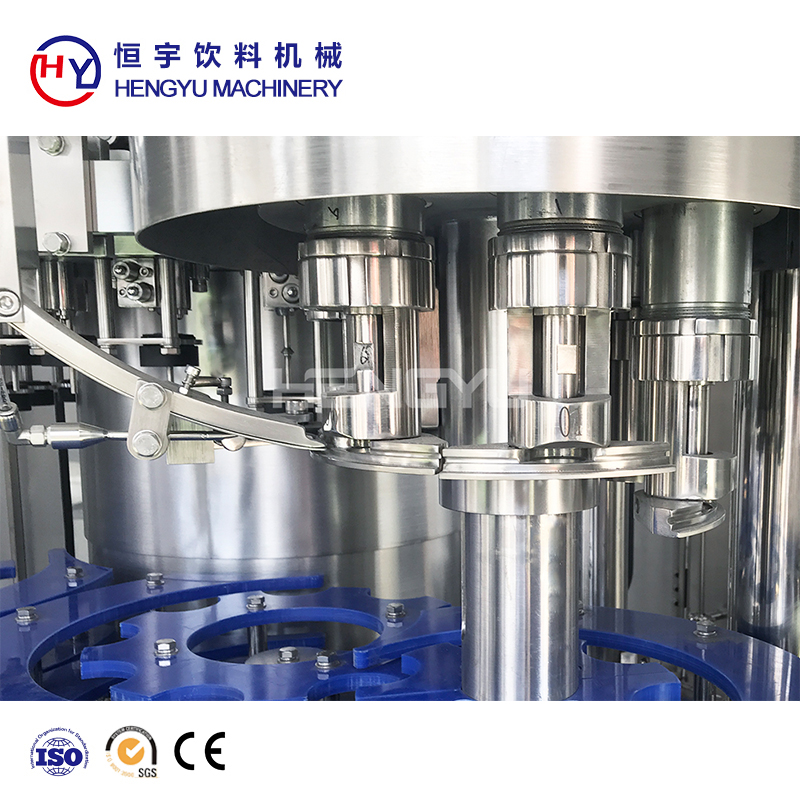
Precision in oxygen management during glass bottle filling directly determines wine and juice stability. Even a few parts per billion (ppb) of oxygen can accelerate browning, flavor loss, and microbial spoilage. While modern lines rely on pre-evacuation and inert gas flushing, real-time measurement turns guesswork into control.
Measuring Dissolved Oxygen (DO) and Headspace Oxygen in Real Time
Inline optical sensors and polarographic probes now measure dissolved oxygen (DO) in the liquid stream with accuracy down to 1 ppb, while headspace analyzers instantly quantify residual oxygen after capping. Target total oxygen pickup (TOP) for sensitive beverages is typically 40–100 ppb; for still wine, DO below 1.0 mg/L and headspace O₂ under 0.5% are recommended. Real-time data lets operators immediately adjust vacuum cycles, gas purge duration, or filler bowl pressure—preventing oxygen ingress before hundreds of bottles are compromised.
The Industry Paradox: Low-O₂ Filling Without Integrated Monitoring Often Fails
Lines designed with double pre-evacuation and counter-pressure filling can theoretically achieve near-zero oxygen introduction. Yet, blind reliance on machinery often backfires. A 2022 survey of still-wine bottling lines found that 28% of runs considered “low-oxygen” exceeded 1.5 mg/L dissolved oxygen, primarily because of undetected gasket leaks or inconsistent vacuum levels during filler index shifts. Without continuous real-time monitoring, transient spikes from filler valve wear, CO₂/N₂ supply interruptions, or bottle-to-bottle variability remain invisible—turning an oxygen-controlled process into a shelf-life lottery.
Inert Gas Strategies for Oxidation Prevention in Wine and Juice Filling
Inert gas application is one of the most effective oxidation prevention techniques in wine and juice filling, directly extending shelf life by limiting oxygen contact. Gases like nitrogen (N₂) and argon (Ar) are chemically stable, colorless, and do not react with beverage components, making them ideal for displacing air in bottles without altering taste. Their strategic use—during filling, after filling, and as a final blanket—creates a robust barrier against oxidative spoilage.
Nitrogen Dosing and Argon Flushing in Bottling Lines
Nitrogen dosing and argon flushing are executed at critical points in the filling line to purge oxygen before capping. Liquid nitrogen dosing, often applied as a micro-drop into the headspace immediately before sealing, expands rapidly, pushing out residual air. Argon, being denser than oxygen, is favored for flushing bottles prior to filling because it settles and blankets the product surface more effectively. A well-tuned N₂ or Ar dosing system can reduce headspace oxygen to below 1.5%, which is crucial for maintaining wine color stability and preserving juice fresh flavors. Effective inert gas flushing lowers dissolved oxygen by up to 80%, delaying the onset of off-flavors for months.
Gas Blankets as Oxidation Barriers in Sealed Glass Bottles
After sealing, a gas blanket functions as an invisible shield between the liquid and any remaining oxygen in the headspace. Nitrogen or argon, layered over the wine or juice surface, prevents oxidative reactions even if the closure allows microscopic gas exchange. For wine, a dense argon blanket is particularly effective because its heavier-than-air nature provides prolonged protection, often extending the drinkability of opened bottles by several weeks in professional settings. In juice bottling, a nitrogen blanket helps retain vitamin C levels and vibrant color, especially for products free of synthetic preservatives. Pairing a gas blanket with an oxygen-scavenging closure further boosts shelf stability, demonstrating that the combination of physical and barrier methods is key to long-term freshness without chemical intervention.
Synergistic Antioxidant Integration for Maximum Shelf Life Protection
SO₂, Ascorbic Acid, and Lysozyme: Roles and Complementary Mechanisms
Sulfur dioxide (SO₂) remains the primary antioxidant in winemaking, acting as both a microbial inhibitor and an oxygen scavenger, while ascorbic acid (vitamin C) rapidly consumes dissolved oxygen, protecting delicate aromas from oxidative browning. Lysozyme, an enzyme that hydrolyzes bacterial cell walls, adds a biological dimension by controlling spoilage organisms that can accelerate oxidation. Their complementary mechanisms create a multi-pronged defense: SO₂ provides sustained antioxidant capacity and antimicrobial activity throughout aging, ascorbic acid offers immediate oxygen scavenging at bottling, and lysozyme targets gram-positive bacteria that would otherwise consume free SO₂ and promote off-flavors. This synergy not only lowers the required total SO₂ dosage but also stabilizes color and flavor in both wine and juice over extended shelf life.
Combining Physical (Gas) and Chemical (Additive) Oxidation Prevention
Integrating inert gas techniques with chemical antioxidants yields a robust oxidation barrier that neither approach alone can achieve. Nitrogen dosing or argon flushing physically displaces oxygen from the headspace and reduces dissolved oxygen to low-ppm levels during filling. However, trace residual oxygen and post-bottling ingress through closures can still trigger oxidative cascades. Here, chemical additives like SO₂ and ascorbic acid act as scavengers, neutralizing the remaining oxygen and its reactive intermediates. The combination ensures that the initial oxygen load is minimized by physical means, while the chemical system mops up any residual oxygen, preventing the slow accumulation of aldehydes and browning pigments. This multi-hurdle strategy is widely adopted in high-quality still wine and juice bottling lines, where even a slight oxidative impact can shorten shelf life by months. Monitoring both dissolved oxygen and free SO₂ levels post-filling confirms that the synergy extends product stability far beyond a single-method approach.
Frequently Asked Questions
Why is oxidation control critical for wine and juice?
Oxidation leads to chemical degradation that impacts product quality, color, flavor, and nutritional value, ultimately reducing shelf life significantly.
What is the ideal dissolved oxygen level during filling?
For wine, DO should remain below 1.0 mg/L, and headspace oxygen should stay under 0.5%. Sensitive beverages typically require TOP levels between 40–100 ppb.
How do inert gases prevent oxidation in bottling?
Inert gases like nitrogen and argon displace oxygen from bottles, reduce dissolved oxygen, and create protective blankets over the product to inhibit oxidative reactions.
What are the roles of SO₂ and ascorbic acid in oxidation prevention?
SO₂ acts as a microbial inhibitor and oxygen scavenger, while ascorbic acid neutralizes oxygen rapidly, protecting against color and flavor degradation.
How can oxygen exposure be monitored during bottling?
Real-time measurement using inline optical sensors and headspace analyzers allows immediate adjustment to minimize oxygen ingress during bottling.