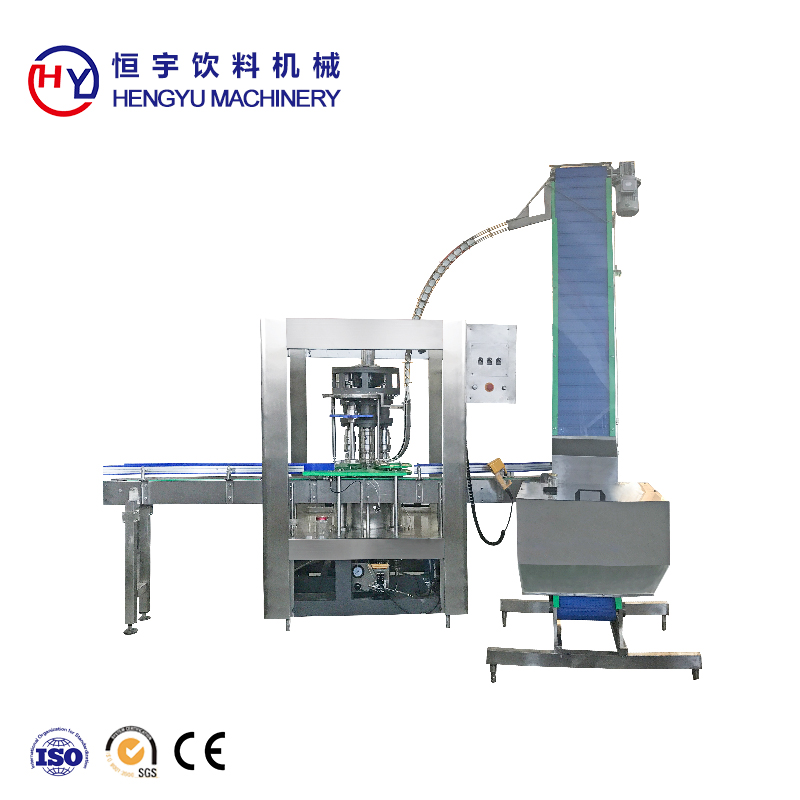
Bottle Capping Machine Price Guide: Cost-Effective Solutions for Automated Packaging

All Categories

bottle capping machine price

Understanding bottle capping machine price requires a comprehensive look at what these automated systems offer to businesses across various industries. A bottle capping machine is an essential piece of equipment designed to securely fasten caps onto bottles with precision and consistency. The bottle capping machine price typically ranges from a few thousand dollars for basic semi-automatic models to over fifty thousand dollars for fully automated high-speed production lines. These machines serve critical functions in manufacturing environments where bottled products require secure sealing to maintain freshness, prevent contamination, and ensure product integrity throughout distribution channels. The main functions of these machines include cap feeding, cap placement, and torque application to achieve proper seal tightness. Modern bottle capping machines utilize advanced technological features such as programmable logic controllers for precise operational control, servo motor systems for accurate torque adjustment, and touch screen interfaces for easy operation. Many models incorporate sensors that detect missing or improperly placed caps, ensuring quality control at every stage. The bottle capping machine price varies based on several factors including production speed capacity, cap type compatibility, automation level, and construction materials. Applications span across pharmaceutical manufacturing, food and beverage production, cosmetics packaging, chemical industries, and personal care product lines. Different cap styles including screw caps, snap-on caps, ROPP caps, and pump dispensers each require specialized capping mechanisms that influence the bottle capping machine price structure. When evaluating investments, manufacturers consider throughput requirements, typically measured in bottles per minute, which directly correlates with pricing. Entry-level machines handle twenty to forty bottles per minute, while industrial-grade systems process several hundred bottles per minute. The bottle capping machine price also reflects build quality, with stainless steel construction commanding premium pricing due to corrosion resistance and longevity, particularly important for industries with strict hygiene standards like pharmaceuticals and food processing.

New Product Recommendations

Investing in bottle capping equipment delivers numerous practical benefits that justify the bottle capping machine price for businesses seeking to optimize their packaging operations. First and foremost, these machines dramatically increase production efficiency by automating a labor-intensive process that would otherwise require significant manual effort. A single operator can oversee machine operations that would typically need multiple workers performing manual capping, resulting in substantial labor cost savings over time. The consistency provided by automated capping ensures every bottle receives identical torque application, eliminating the variability inherent in manual processes where worker fatigue or inconsistent technique can lead to overtightened or undertightened caps. This consistency directly impacts product quality and customer satisfaction, as properly sealed bottles prevent leakage during transportation and storage while maintaining product freshness. The bottle capping machine price becomes particularly attractive when calculating return on investment through reduced product waste. Improperly sealed bottles often result in spoilage, spillage, and customer returns, all of which represent direct financial losses. Automated systems minimize these costly errors through precise calibration and quality monitoring features. Speed advantages cannot be overstated, as modern capping machines operate at rates impossible to achieve manually, enabling businesses to meet growing demand without proportionally increasing workforce size. The bottle capping machine price also covers versatility, with many models offering quick changeover capabilities between different bottle sizes and cap types, providing production flexibility without requiring multiple dedicated machines. Safety improvements represent another significant advantage, as automated capping reduces repetitive strain injuries associated with manual capping operations, decreasing workplace injury claims and associated costs. Hygiene benefits are particularly relevant in food, beverage, and pharmaceutical applications where the bottle capping machine price includes sanitary design features with easy-clean surfaces and minimal product contact points that maintain sterile production environments. Long-term operational costs favor automated systems despite higher initial bottle capping machine price points, as these machines require minimal maintenance when properly serviced and operate reliably for years with consistent performance. Data collection capabilities built into modern machines provide valuable production metrics, enabling managers to track efficiency, identify bottlenecks, and optimize overall packaging line performance. The scalability offered justifies the bottle capping machine price for growing businesses, as modular designs allow capacity expansion through speed adjustments or adding parallel units rather than complete system replacement.

Practical Tips

Glass Bottle Filling Machine vs Plastic Bottle Filling Machine

04

Mar

Glass Bottle Filling Machine vs Plastic Bottle Filling Machine

Material Properties Dictate Core Machine Design Glass fragility and thermal mass: why glass bottle filling machines require reinforced frames, shock-dampened conveyors, and precision neck-handling grippers Working with glass bottles means going th...
View More
How Can Filling Machines Improve Beverage Production Speed

24

Mar

How Can Filling Machines Improve Beverage Production Speed

Filling Machine Type Determines Maximum Throughput Potential Gravity, Isobaric, and Piston Can Filling Machines: Speed vs. Precision Trade-offs Gravity fillers work well for delicate drinks such as juice, processing around 20 to 36 bottles every mi...
View More
Troubleshooting Can Filling Machine Production Issues

21

Mar

Troubleshooting Can Filling Machine Production Issues

Power, Control, and Electrical Faults in Can Filling Machines Machine won't power on: main supply, fuses, and emergency stop circuit checks If the can filling machine won't start at all, the first thing to do is check whether the main power supply ...
View More
Automation Technology in Can Sealing Machines

24

Mar

Automation Technology in Can Sealing Machines

How Automation Enhances Precision and Reliability in Can Sealing Machines Core Automation Components: Servo Drives, Vision Systems, and Closed-Loop Feedback in Modern Can Sealing Machines Today's can sealing equipment reaches incredible levels of p...
View More

Get a Free Quote

Our representative will contact you soon.
Email
Name
Phone/WhatsApp
Required Product
Message
0/1000

bottle capping machine price

Cost-Effectiveness Through Production Optimization

Cost-Effectiveness Through Production Optimization

When evaluating bottle capping machine price considerations, the most compelling selling point centers on long-term cost-effectiveness achieved through optimized production workflows. While the initial investment may seem substantial, businesses quickly realize significant returns through multiple economic advantages that compound over time. The bottle capping machine price must be viewed not as a simple expense but as a strategic investment in operational efficiency that transforms packaging department economics. Manual capping operations require dedicated personnel whose hourly wages, benefits, training costs, and potential overtime expenses accumulate continuously throughout the year. In contrast, an automated capping system operates at consistent speeds without fatigue, breaks, or performance degradation across shifts. The bottle capping machine price typically achieves payback within eighteen to thirty-six months depending on production volume, after which the cost savings directly enhance profit margins. Beyond direct labor reduction, these machines deliver remarkable speed improvements that enable businesses to fulfill larger orders without expanding physical facilities or hiring additional staff. A semi-automatic system handling forty bottles per minute processes twenty-four hundred bottles hourly, while fully automatic lines exceed three hundred bottles per minute, achieving production volumes that would require entire teams of manual workers. The bottle capping machine price reflects engineering that ensures precise torque control, which prevents the costly problems of over-tightening that damages threads or cracks bottles, and under-tightening that causes leakage and product loss. Businesses in beverage industries particularly benefit, as even a small percentage of leaking bottles represents substantial revenue loss when producing thousands of units daily. Quality consistency maintained by automated systems reduces customer complaints, returns, and brand reputation damage, all of which carry hidden costs far exceeding the bottle capping machine price. Additionally, modern machines include diagnostic systems that alert operators to potential issues before they cause production stoppages, minimizing expensive downtime that can halt entire packaging lines. The versatility inherent in adjustable machines means the bottle capping machine price covers equipment capable of handling future product line expansions, eliminating the need for additional capital investments when introducing new bottle sizes or cap styles. Energy efficiency features in contemporary models keep operational costs low, with optimized power consumption that prevents the high electricity bills associated with older equipment designs.
Advanced Technology Integration for Superior Performance

Advanced Technology Integration for Superior Performance

The bottle capping machine price reflects sophisticated technological integration that delivers performance advantages impossible with manual operations or outdated equipment. Modern capping systems incorporate programmable logic controllers that allow operators to store multiple capping parameters for different products, enabling quick changeovers that minimize production downtime between runs. This technological sophistication justifies the bottle capping machine price through flexibility that keeps production lines responsive to market demands and seasonal product variations. Servo motor technology represents a significant advancement included in premium models, providing precise torque control with digital accuracy that ensures each cap receives exactly the specified tightening force. This precision protects product integrity while preventing bottle damage, particularly important for thin-walled containers or delicate glass bottles where excessive force causes breakage. The bottle capping machine price for servo-equipped models includes programmable torque settings adjustable in minute increments, allowing optimization for different cap materials, thread designs, and seal requirements. Touch screen human-machine interfaces have revolutionized operator interaction, replacing complicated mechanical adjustments with intuitive digital controls that reduce training time and operational errors. New employees can learn system operation within hours rather than days, and the graphical interfaces display real-time production data, error messages, and maintenance reminders that keep equipment running at peak efficiency. The bottle capping machine price for models with advanced interfaces includes diagnostic capabilities that troubleshoot problems automatically, often identifying solutions before operators recognize issues exist. Sensor technology embedded throughout modern machines monitors every aspect of the capping process, from detecting bottle presence and cap availability to verifying proper cap placement and confirming seal integrity. Vision systems available in high-end models justify their contribution to the bottle capping machine price by performing quality inspections at production speeds, automatically rejecting improperly capped bottles and maintaining zero-defect output. Integration capabilities allow these machines to communicate with other packaging line equipment through industrial networks, enabling coordinated operation where filling machines, labeling systems, and capping units work in synchronized harmony. The bottle capping machine price for network-capable models includes software that collects production data for analysis, helping managers optimize efficiency, predict maintenance needs, and document quality compliance for regulatory requirements. Stainless steel construction with sanitary design features justifies premium bottle capping machine price points in industries requiring frequent washdowns and strict hygiene protocols, as these materials resist corrosion while meeting food safety and pharmaceutical standards.
Versatility and Scalability for Growing Business Needs

Versatility and Scalability for Growing Business Needs

A critical factor influencing bottle capping machine price decisions involves the versatility and scalability these systems provide to accommodate evolving business requirements. Companies rarely maintain static product lines, and the ability to adapt capping equipment to new bottles, caps, and production volumes without replacing entire machines represents tremendous value that extends far beyond initial purchase considerations. The bottle capping machine price for versatile models includes adjustable components that accommodate wide ranges of bottle diameters and heights, typically handling containers from small pharmaceutical vials to large beverage bottles through simple mechanical adjustments requiring minimal downtime. This adaptability means businesses can introduce new product sizes without incurring additional capital equipment costs, protecting the initial bottle capping machine price investment across multiple product generations. Quick-change features allow operators to switch between different cap types, including continuous thread screw caps, lug caps, snap caps, trigger sprayers, and pump dispensers, often within fifteen to thirty minutes. This flexibility proves invaluable for contract packaging operations serving multiple clients or brands managing diverse product portfolios where production schedules require frequent changeovers. The bottle capping machine price for models with tool-free adjustment systems includes innovative designs where size changes occur through simple position adjustments rather than time-consuming parts replacement, keeping production lines responsive to market opportunities. Modular construction approaches mean businesses can start with basic configurations at entry-level bottle capping machine price points, then add capabilities as production demands increase. Upgrades might include automatic cap feeding systems to replace manual cap loading, reject mechanisms for quality control, or speed increases through enhanced motors and control systems. This scalability protects initial investments while providing growth pathways that avoid the disruption and expense of complete equipment replacement. The bottle capping machine price structure often includes options for future automation integration, where semi-automatic machines designed with expansion in mind can later incorporate conveyor systems, accumulation tables, and inline inspection equipment. Businesses experiencing seasonal demand fluctuations benefit from adjustable-speed capabilities, running machines at lower rates during slow periods to conserve energy and reduce wear, then increasing throughput when orders surge. The bottle capping machine price for variable-speed models includes inverter-driven motors that optimize power consumption while extending equipment lifespan through reduced mechanical stress during lighter production periods. Compatibility with existing packaging line infrastructure represents another versatility advantage, as quality machines feature adjustable heights, configurable infeed and outfeed orientations, and standard conveyor interfaces that integrate seamlessly with current equipment. This compatibility consideration within bottle capping machine price evaluations prevents costly line reconfigurations or space modifications during installation.