
 CN
CN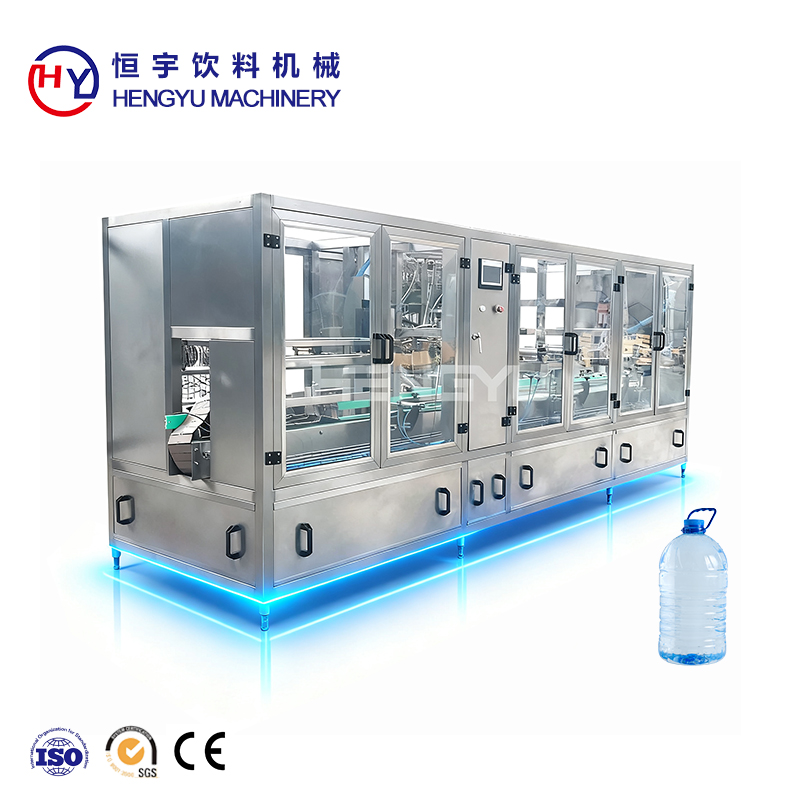
The beverage and water packaging industry has undergone a profound transformation over the past two decades, and nowhere is this shift more visible than in the evolution of the gallon filling machine. What once required extensive manual labor, multiple operator stations, and fragmented production steps has been consolidated into sophisticated, automated production lines capable of handling hundreds of barrels per hour with minimal human intervention. This shift is not simply a technological curiosity — it represents a fundamental rethinking of how bottled water and beverage producers manage quality, throughput, and operational cost.
Understanding how automation has been integrated into the modern gallon filling machine — and why it matters for production planners, plant managers, and procurement specialists — is essential for anyone evaluating equipment upgrades or new facility investments. This article explores the mechanisms, practical benefits, and decision-relevant considerations surrounding automation in today's gallon filling machine technology, from sensing and control systems to integrated washing, filling, and capping functions.

The Core Automation Architecture of a Modern Gallon Filling Machine
Integrated 3-in-1 Production Logic
One of the most significant automation advances in the gallon filling machine industry is the shift toward integrated 3-in-1 production lines. These systems combine barrel washing, water filling, and cap sealing into a single, continuous mechanical workflow rather than treating them as separate, manually connected stations. This integration eliminates the need for operators to physically transfer barrels between process steps, dramatically reducing contamination risk and labor requirements simultaneously.
In a traditional setup, washing, filling, and capping were often performed by different machines with conveyor gaps and human oversight at each transfer point. Modern automated gallon filling machine designs close these gaps by synchronizing all three functions under a unified programmable logic controller (PLC), which coordinates timing, flow rates, and barrel positioning in real time. The result is a leaner, faster, and more hygienic production process that scales more predictably than legacy configurations.
The 3-in-1 architecture also simplifies maintenance scheduling. Because the mechanical systems are interconnected and managed by a shared control platform, fault detection and diagnostic reporting can cover all three operational zones from a single interface. Plant technicians can identify blockages, pressure deviations, or sensor anomalies without having to inspect each machine unit independently, which reduces downtime and improves overall equipment effectiveness (OEE).
PLC and HMI Control Systems
At the heart of every modern gallon filling machine is a programmable logic controller that governs the entire production sequence. PLC-based automation enables the machine to execute precisely timed filling cycles, detect barrel presence or absence, regulate fill volumes with high accuracy, and trigger emergency stops when predefined parameters are exceeded. These capabilities replace what previously required constant operator attention and manual adjustment.
Complementing the PLC is the human-machine interface, or HMI, which provides operators with a visual touchscreen dashboard to monitor machine status, adjust filling parameters, and review production data. The HMI transforms complex electromechanical processes into accessible, actionable information, enabling even relatively inexperienced operators to manage a high-capacity gallon filling machine effectively. This democratization of machine control is a key reason why automated systems are increasingly accessible to mid-sized bottled water producers.
Advanced PLC and HMI configurations also support remote monitoring and data logging, allowing production managers to track cycle counts, efficiency metrics, and fault histories over time. This data infrastructure is foundational for continuous improvement programs and supports predictive maintenance strategies that further reduce unplanned downtime across the gallon filling machine production line.
Washing and Sterilization Automation in Gallon Filling Lines
Automated Barrel Inversion and Rinse Cycles
The washing stage of a gallon filling machine line is among the most labor-intensive in manual operations. Barrels must be inverted, rinsed with pressurized water or sanitizing solution, allowed to drain, and then uprighted before entering the filling zone. Automating this sequence requires precise mechanical handling combined with timed fluid delivery systems that ensure thorough internal cleaning without operator involvement at each cycle.
Modern automated gallon filling machine systems use servo-driven gripper mechanisms and pneumatic inverters to position barrels with consistent force and timing. Nozzle-based rinse systems deliver controlled volumes of purified water or food-grade sanitizer at calibrated pressures, ensuring the interior of every barrel receives equivalent treatment regardless of throughput speed. Sensors detect whether the barrel is properly seated before the rinse cycle begins, preventing incomplete cleaning events that could compromise product safety.
The consistency that automation brings to barrel washing is particularly valuable for producers who must meet food safety certifications or regulatory standards. Manual washing introduces variability — operator fatigue, inconsistent rinse duration, and equipment wear can all result in washing deficiencies. An automated gallon filling machine eliminates these variables, creating a documented, repeatable cleaning record that supports audit readiness and quality management systems.
Chemical Dosing and UV Sterilization Integration
Beyond mechanical rinsing, automation enables precise chemical dosing and ultraviolet sterilization to be embedded directly into the gallon filling machine workflow. Automated dosing systems inject measured quantities of sanitizing compounds into the rinse water at programmable concentrations, ensuring that every barrel receives a correctly dosed treatment without manual mixing or measurement. This not only improves hygiene outcomes but also reduces chemical waste by eliminating the over-application that often occurs in manual processes.
UV sterilization modules can be positioned within the filling zone itself, treating the barrel interior immediately before the fill nozzle engages. Because the sterilization and filling steps occur in rapid succession under a controlled enclosed environment, post-sterilization contamination risk is minimized. The gallon filling machine essentially creates a mini-clean zone around the critical product contact area, a design principle that mirrors pharmaceutical-grade aseptic filling logic applied to the beverage industry.
Precision Filling Mechanisms and Volume Control
Flow Meter-Based Volume Accuracy
Volume accuracy is one of the most commercially significant performance dimensions of any gallon filling machine. Underfilling creates compliance risk and customer dissatisfaction, while overfilling erodes product margins at scale. Manual or semi-automatic filling systems depend on operator judgment and time-based filling, both of which introduce measurement variability. Fully automated systems solve this by integrating inline flow meters that measure actual liquid volume passing through the fill nozzle in real time.
Electromagnetic or Coriolis flow meters provide continuous volumetric feedback to the PLC, which adjusts valve timing to achieve the target fill weight or volume within tight tolerances. On a high-capacity gallon filling machine running at 300 barrels per hour or more, even small per-unit measurement improvements translate into significant material savings and compliance consistency across thousands of production cycles daily. This level of precision simply cannot be replicated at scale through manual operator control.
Flow meter data can also be logged and reported automatically, providing a fill volume record for each barrel that supports traceability requirements in regulated markets. Producers who export to markets with strict net content labeling laws find this automated data capture essential for demonstrating compliance without resource-intensive manual sampling programs.
Anti-Drip and No-Bottle No-Fill Mechanisms
Anti-drip nozzle technology is a detail-level automation feature with meaningful practical impact. In any gallon filling machine operating at speed, residual liquid at the nozzle tip between fill cycles can drip onto the barrel exterior or conveyor, creating hygiene issues, slip hazards, and product loss. Automated anti-drip valves use spring-loaded or pneumatic mechanisms to positively seal the nozzle immediately upon fill completion, preventing any post-fill leakage regardless of line speed.
The no-bottle no-fill function is another critical safety automation in the modern gallon filling machine. Photoelectric or mechanical sensors verify that a barrel is correctly positioned under the fill nozzle before the filling sequence begins. If no barrel is detected, or if the barrel is misaligned, the fill cycle is suppressed automatically. This prevents liquid from being dispensed onto the conveyor or machine chassis, which would create both contamination and equipment maintenance problems.
Capping and Sealing Automation
Automated Cap Sorting and Placement
The capping stage of a gallon filling machine production line introduces its own automation challenges. Caps must be oriented correctly, fed at a rate that matches the line speed, and applied with consistent torque to ensure a hygienic, leak-proof seal. Automated cap sorters use vibratory bowl feeders and orientation tracks to present caps in the correct position without manual loading, maintaining a continuous supply to the capping head even at high throughput rates.
The synchronization between the cap delivery system and the barrel transport mechanism within the gallon filling machine is managed by the PLC, which adjusts feeder speed dynamically in response to line speed changes. This adaptive control prevents cap shortages or surpluses at the application head, both of which can cause line stoppages. The result is a smooth, continuous capping process that contributes to the overall throughput stability of the integrated production line.
Torque Control and Seal Verification
Cap application torque directly affects seal integrity. Insufficient torque leaves caps loose and vulnerable to leakage or contamination ingress during storage and transport. Excessive torque can deform the cap or barrel neck, compromising the seal geometry. Automated gallon filling machine capping heads use servo-controlled torque application with programmable setpoints, ensuring that each cap is applied within the specified torque range regardless of operator variability.
Some advanced gallon filling machine configurations include post-capping verification sensors that detect cap presence, position, and seating integrity before the finished barrel exits the production zone. Barrels that fail verification criteria are automatically diverted for reinspection or rejection, preventing defective units from entering the distribution chain. This automated quality gate significantly reduces field complaints and recall risks without requiring dedicated manual inspection staff at the end of the line.
Throughput Scalability and Operational Efficiency
Speed Ranges and Production Capacity Planning
Automation in the gallon filling machine directly enables scalable throughput. Modern automated lines are engineered for specific capacity ranges — commonly between 150 and 600 barrels per hour depending on the configuration — and can be tuned within those ranges by adjusting PLC parameters rather than requiring physical machine modifications. This flexibility allows producers to match production speed to demand cycles, running at reduced speed during off-peak periods and at full capacity during high-demand seasons without significant operational changes.
For capacity planning purposes, the consistent cycle time of an automated gallon filling machine provides a reliable basis for production scheduling. Unlike manual lines where human pace variation, breaks, and fatigue create throughput uncertainty, automated systems deliver predictable cycle completion rates that simplify inventory planning and distribution logistics. Plant managers can commit to production volume targets with confidence when working from an automated platform.
Labor Reduction and Redeployment
A fully automated gallon filling machine requires significantly fewer direct labor inputs than a manual or semi-automatic line of equivalent capacity. Where a manual line might require five to eight operators for washing, filling, capping, and quality inspection functions, an automated line handling the same throughput may require only one to two operators for oversight, loading, and exception handling. This labor reduction directly impacts unit production cost and reduces the operational complexity associated with shift staffing, training, and turnover management.
Importantly, automation does not eliminate the need for skilled workers — it repositions them. The labor required to operate a modern gallon filling machine shifts from physical, repetitive tasks toward technical oversight, preventive maintenance, and process optimization roles. Producers who invest in operator training alongside equipment investment typically realize stronger returns on their automation investment, as technically capable operators can extract higher efficiency and longer machine life from the gallon filling machine platform.
The business case for automation in gallon filling machine operations ultimately rests on a combination of throughput gain, quality consistency, labor cost reduction, and long-term reliability. When these factors are assessed together in the context of a specific production environment, the financial justification for transitioning to a fully automated gallon filling machine is typically compelling, particularly for producers with sustained daily production volumes above several thousand barrels.
FAQ
What production capacity should I expect from an automated gallon filling machine?
Automated gallon filling machine systems are available across a range of throughput capacities, typically from around 150 to 600 or more barrels per hour depending on the specific model and configuration. A common entry-level automated line operates at approximately 300 barrels per hour, which is sufficient for mid-scale bottled water producers. Capacity selection should be matched to your current and projected daily production volume, accounting for planned downtime and seasonal demand variation.
How does automation in a gallon filling machine affect product hygiene and food safety compliance?
Automation substantially improves hygiene consistency in gallon filling machine operations. Automated washing, sterilization, and filling sequences eliminate the variability introduced by manual handling, ensuring that every barrel receives identical treatment. Features such as enclosed filling zones, automated anti-drip nozzles, and no-bottle no-fill sensors reduce contamination risks at each process stage. Many automated gallon filling machine systems also support data logging functions that create verifiable cleaning and fill records useful for food safety audits and regulatory compliance documentation.
Can an automated gallon filling machine be adapted for different barrel sizes or cap types?
Most modern automated gallon filling machine platforms are designed primarily for standard 5-gallon or 18.9-liter barrel formats, which dominate the bottled water market. However, some systems offer adjustable gripper and nozzle configurations that can accommodate minor barrel size variations. Cap compatibility depends on the capping head design and cap sorter configuration. Producers who require multi-format flexibility should specify this requirement during equipment selection and verify that the proposed gallon filling machine model supports changeover tooling for their intended range of containers and closures.
What maintenance requirements should I plan for with a fully automated gallon filling machine?
Preventive maintenance for an automated gallon filling machine typically includes regular inspection and replacement of fill nozzle seals, lubrication of mechanical drive components, cleaning of sensor surfaces, and periodic calibration of flow meters and torque systems. PLC and HMI systems should be backed up regularly, and software updates applied according to the manufacturer's schedule. Establishing a structured preventive maintenance program based on the machine's operating hour intervals and the manufacturer's service guidelines is the most effective way to sustain high availability and protect the long-term return on investment in automated gallon filling machine technology.
Table of Contents
- The Core Automation Architecture of a Modern Gallon Filling Machine
- Washing and Sterilization Automation in Gallon Filling Lines
- Precision Filling Mechanisms and Volume Control
- Capping and Sealing Automation
- Throughput Scalability and Operational Efficiency
-
FAQ
- What production capacity should I expect from an automated gallon filling machine?
- How does automation in a gallon filling machine affect product hygiene and food safety compliance?
- Can an automated gallon filling machine be adapted for different barrel sizes or cap types?
- What maintenance requirements should I plan for with a fully automated gallon filling machine?