
 CN
CN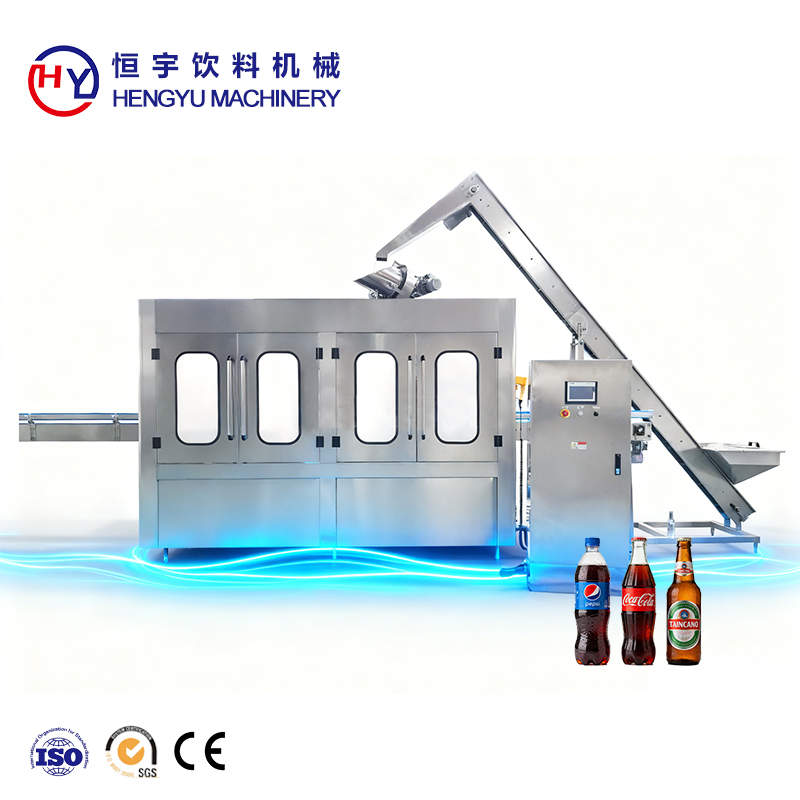
The global carbonated beverage industry demands precision, speed, and hygiene at every stage of production — and no stage is more technically demanding than the filling process itself. A carbonated soft drink filling machine sits at the heart of every high-output beverage line, controlling the delicate balance between pressure, temperature, and liquid flow to preserve carbonation and deliver a consistent product to market. Without the right technology in place, CO2 loss, foaming, and contamination can undermine product quality and erode consumer trust faster than any marketing campaign can recover.
Understanding the engineering principles and operational requirements behind a carbonated soft drink filling machine is essential for any beverage manufacturer looking to invest wisely, scale efficiently, and maintain quality standards that meet regulatory and market expectations. This article explores the core technology, design considerations, operational mechanics, and selection criteria that define modern carbonated beverage filling solutions — providing decision-useful insight for production managers, plant engineers, and business owners operating at any scale.

Core Technology Behind Carbonated Soft Drink Filling
Isobaric Filling Principle
The fundamental technology used in every carbonated soft drink filling machine is isobaric filling, also known as counter-pressure filling. This method works by pre-pressurizing the bottle with CO2 gas to match the pressure inside the filling tank, ensuring that carbonated liquid flows into the container without triggering premature release of dissolved gas. The result is a controlled, foam-free fill that preserves the beverage's carbonation level from tank to bottle.
Isobaric filling requires precise control of pressure differentials at every stage — from the initial CO2 purge of the bottle interior to the final pressure equalization step before the bottle is sealed. Modern carbonated soft drink filling machine designs incorporate electronically controlled pressure valves that adjust in real time based on fill speed, liquid viscosity, and container volume. This level of precision was previously only available on large industrial lines but is now accessible to mid-scale producers as well.
The isobaric method also reduces product waste by minimizing foaming losses during the transition from filling nozzle to bottle. In high-speed operations processing thousands of bottles per hour, even marginal improvements in foam control translate directly into measurable cost savings and more consistent fill volumes across every production run.
Three-in-One Monoblock Design
A widely adopted configuration in the carbonated beverage sector is the three-in-one monoblock system, which integrates rinsing, filling, and capping within a single machine frame. This compact design eliminates the need for separate conveyors and transfer systems between process stages, reducing the risk of contamination and mechanical failure between steps. For carbonated soft drink filling machine applications, this integration is especially valuable because any delay between filling and capping creates an opportunity for CO2 to escape the bottle before it is sealed.
In a three-in-one monoblock, bottles are first rinsed with treated water or a sanitizing solution, then transferred directly to the filling carousel, and then to the capping head — all within a controlled, synchronized environment. The entire sequence is managed by a central programmable logic controller (PLC) that coordinates rotational speed, valve timing, and pressure management across all three stages simultaneously.
This architecture also simplifies the operator interface, reduces floor space requirements, and lowers the total cost of ownership by consolidating maintenance responsibilities into a single system. For manufacturers running multiple product SKUs with different carbonation levels or bottle sizes, the monoblock format offers faster changeover capability than a multi-machine line.
Mechanical and Engineering Specifications
Filling Valve Design and Function
The filling valve is arguably the most critical component in a carbonated soft drink filling machine. It must simultaneously manage liquid flow, CO2 pressure, and vent gas release with millisecond-level timing. The most advanced valve designs use pneumatically actuated stems with stainless steel seats, allowing for fast, repeatable open-and-close cycles that scale consistently across every valve head on the carousel, whether the machine has 12 heads or 48.
Valve geometry also plays a significant role in fill quality. Long-tube valves guide the liquid along the inside wall of the bottle during filling, reducing turbulence and foam formation. Short-tube or open-jet valves are sometimes used for non-carbonated applications but are generally unsuitable for carbonated soft drink filling machine configurations because of the increased agitation they introduce to dissolved CO2.
Hygienic valve design is another key engineering consideration. All surfaces that contact the beverage must meet food-grade standards, typically requiring 316L stainless steel construction, electropolished internal surfaces, and seal materials compliant with FDA or EU food contact regulations. Easy disassembly without tools is an increasingly standard requirement for cleanability and CIP (clean-in-place) compatibility.
Speed, Capacity, and Output Configurations
Production capacity for a carbonated soft drink filling machine is expressed in bottles per hour (BPH) and varies considerably based on container size, carbonation level, and machine configuration. Entry-level systems designed for small craft beverage producers may fill 1,000 to 3,000 BPH, while mid-range industrial machines typically operate between 5,000 and 12,000 BPH. Large-scale systems used by major soft drink manufacturers can exceed 30,000 BPH on a single line.
The number of filling heads on the carousel is the primary variable controlling throughput. A 24-head carbonated soft drink filling machine operating at moderate rotational speed can match the output of a slower 36-head machine at different fill heights, which means that selecting the right head count involves balancing investment cost, maintenance complexity, and actual production demand projections rather than simply maximizing capacity.
Container compatibility is another specification that affects machine selection. Some systems are designed exclusively for PET bottles, while others accommodate glass bottles, aluminum cans, or even multi-format operation. Glass bottle filling for carbonated beverages requires additional mechanical consideration because glass does not flex under pressure the way PET does, meaning that pressure spikes during filling must be controlled more precisely to avoid bottle stress fractures.
Hygiene, Materials, and Compliance Standards
Food-Grade Construction Requirements
Any carbonated soft drink filling machine used in commercial production must be built from materials that meet international food safety standards. The primary structural material for all product-contact surfaces is stainless steel, with 304-grade used for exterior frames and 316L specified for internal wetted components, valves, tanks, and pipework. Stainless steel resists corrosion from acidic beverages, withstands high-pressure CIP cleaning cycles, and does not impart taste or odor to the product.
Seals, gaskets, and O-rings used throughout a carbonated soft drink filling machine must be made from food-approved elastomers such as EPDM, silicone, or PTFE. These materials maintain their integrity under both the chemical environment of carbonated beverages and the thermal stress of sterilization cycles. Incorrect seal material selection is a common cause of premature seal degradation, leakage, and product contamination in poorly specified machines.
Beyond material selection, hygienic design principles require that all surfaces be smooth, crevice-free, and fully drainable to prevent microbial harborage. The EHEDG (European Hygienic Engineering and Design Group) guidelines and 3-A Sanitary Standards provide benchmarks that reputable carbonated soft drink filling machine manufacturers follow to ensure their equipment passes health department inspections and food safety audits.
CE, ISO, and International Certifications
Certification status is a critical evaluation criterion when selecting a carbonated soft drink filling machine, particularly for manufacturers exporting products to regulated markets. CE certification confirms that the machine meets European Union safety directives covering mechanical safety, electrical safety, and noise emission limits. ISO 9001 certification for the manufacturer's quality management system provides assurance that consistent engineering standards are applied across the production of every unit.
In addition to CE and ISO marks, many buyers in the food and beverage sector require their equipment suppliers to demonstrate compliance with local electrical standards (such as UL in North America), compressed air system standards, and sector-specific guidelines. Sourcing a carbonated soft drink filling machine from a manufacturer with documented certification history reduces regulatory risk at market entry and simplifies the insurance and liability documentation process.
Third-party testing and factory acceptance testing (FAT) before shipment are additional quality assurance measures that responsible buyers should insist upon. FAT allows the purchasing team to verify that the machine runs at specified BPH targets, maintains correct fill volumes, operates safely, and integrates properly with upstream and downstream line equipment before the machine leaves the manufacturing facility.
Integration with the Production Line
Upstream and Downstream Compatibility
A carbonated soft drink filling machine does not operate in isolation — it is part of a continuous production ecosystem that includes bottle blowing or depalletizing, labeling, coding, secondary packaging, and palletizing. For the filling machine to function at rated capacity, every upstream and downstream component must be matched in throughput and synchronized in timing. Mismatches in line speed create bottlenecks that reduce effective output and increase the risk of product damage or contamination.
Conveyor systems connecting the filling machine to labelers and secondary packaging equipment must be designed to handle wet bottles without slippage and to maintain bottle orientation without jamming. For carbonated soft drink filling machine lines handling glass containers, air conveyor sections and gentle transfer starwheels are necessary to prevent breakage and reduce the risk of glass contamination entering the product stream.
Integration with carbonation dosing systems upstream is particularly important for beverages where carbonation is added just before filling rather than during syrup preparation. Inline carbonators must deliver pre-mixed product at the correct temperature and CO2 saturation level consistently to ensure that the filling machine operates within its design pressure range. Temperature deviations of even a few degrees can significantly affect CO2 solubility and filling performance.
Automation, Controls, and Data Integration
Modern carbonated soft drink filling machine systems incorporate advanced PLC-based control architectures that allow operators to set and store filling programs for different product recipes, container sizes, and carbonation specifications. Touchscreen HMI panels provide real-time visualization of pressure levels, fill volumes, machine speed, and fault alerts, enabling rapid response to production deviations before they result in significant waste or downtime.
Industry 4.0 connectivity is becoming an increasingly important requirement in new carbonated soft drink filling machine installations. OPC-UA communication protocols allow the filling machine to exchange data with factory-level MES (Manufacturing Execution Systems) and ERP platforms, providing production managers with accurate, real-time output data that feeds into inventory management, quality control, and performance benchmarking processes.
Remote monitoring capabilities, often provided via secure VPN connections, allow equipment manufacturers and engineering service teams to diagnose faults, update software parameters, and guide maintenance staff through troubleshooting procedures without requiring an on-site visit. This capability has become especially valuable for producers in markets where skilled maintenance technicians specializing in carbonated soft drink filling machine technology may not be readily available locally.
Selection Criteria for Beverage Manufacturers
Matching Machine Specifications to Production Goals
Selecting the right carbonated soft drink filling machine begins with an honest assessment of current and projected production volumes, product portfolio complexity, and capital budget. Oversizing a filling machine for current demand locks up capital in idle capacity, while undersizing creates a production ceiling that constrains business growth. The most effective approach is to model filling capacity requirements over a three-to-five-year planning horizon that accounts for seasonal demand peaks, new product launches, and potential market expansion.
Container format flexibility should also be assessed carefully. If the business plan involves transitioning from PET bottles to glass, or introducing new pack sizes, the carbonated soft drink filling machine must be configurable to handle these changes without a full equipment replacement. Format changeover time, ease of adjustment, and the availability of spare format parts from the manufacturer are practical factors that often receive insufficient attention at the selection stage.
Aftersales support infrastructure — including spare parts availability, local service engineers, remote diagnostics capability, and operator training programs — is as strategically important as the technical specification of the machine itself. A carbonated soft drink filling machine that sits idle due to an unavailable spare part or an unresolved software fault can destroy production schedules and commercial commitments in ways that far exceed the cost difference between a well-supported and a poorly-supported machine supplier.
Total Cost of Ownership Considerations
Evaluating a carbonated soft drink filling machine purely on purchase price is a common and costly mistake in capital equipment procurement. The total cost of ownership (TCO) model incorporates installation and commissioning costs, energy consumption, water usage during CIP cycles, consumable seal and gasket replacement intervals, planned maintenance labor hours, and unplanned downtime frequency over a realistic service life of ten to fifteen years.
Energy efficiency is an area where modern carbonated soft drink filling machine designs offer measurable advantages over older technology. Servo-driven filling heads, variable-frequency drives on conveyor motors, and heat recovery systems on CIP circuits can reduce energy consumption by fifteen to twenty-five percent compared to machines built a decade ago. For high-volume operations running two or three shifts per day, these savings represent a substantial return on the incremental investment in more efficient technology.
Water consumption during CIP cleaning is another operational cost that deserves quantification at the selection stage. Machines designed with short internal flow paths, fully drainable tanks, and efficient spray nozzles use less water and cleaning chemistry per cycle than designs with larger dead volumes. Over thousands of cleaning cycles across the machine's service life, efficient CIP design contributes meaningfully to both operational cost reduction and environmental sustainability targets.
FAQ
What is the main difference between a carbonated soft drink filling machine and a still beverage filler?
The primary difference lies in pressure management. A carbonated soft drink filling machine uses isobaric or counter-pressure filling technology to pre-pressurize the container with CO2 before liquid entry, preventing foam formation and CO2 loss. A still beverage filler operates under atmospheric or gravity-feed conditions and does not require this pressurization system, making it mechanically simpler but entirely unsuitable for carbonated products.
What bottle materials can a carbonated soft drink filling machine handle?
Most carbonated soft drink filling machine designs are capable of handling PET bottles, glass bottles, and in some configurations aluminum cans. However, each container type requires specific mechanical adjustments to the filling nozzle, gripper systems, pressure control settings, and capping or seaming heads. Manufacturers should confirm container compatibility and changeover requirements with the equipment supplier before purchase to avoid costly retrofits.
How often does a carbonated soft drink filling machine require cleaning and maintenance?
CIP (clean-in-place) cleaning is typically performed at the end of each production run or shift, and may also be required between product changeovers. The frequency and duration of CIP cycles depend on the product being filled, the production schedule, and regulatory requirements. Planned preventive maintenance intervals for mechanical components such as seals, bearings, and valves are usually defined by the manufacturer and typically occur every three to six months depending on operating hours and throughput intensity.
What certifications should a carbonated soft drink filling machine have for export markets?
For most international markets, CE certification and ISO 9001 quality system certification are the baseline requirements. Depending on the destination market, additional approvals may be required, such as UL or CSA electrical certification for North America, GOST-R for Russia and CIS countries, or specific local food safety equipment standards. Buyers should clarify target market certification requirements before finalizing equipment specifications to ensure customs clearance and regulatory compliance without costly post-purchase modifications.
Table of Contents
- Core Technology Behind Carbonated Soft Drink Filling
- Mechanical and Engineering Specifications
- Hygiene, Materials, and Compliance Standards
- Integration with the Production Line
- Selection Criteria for Beverage Manufacturers
-
FAQ
- What is the main difference between a carbonated soft drink filling machine and a still beverage filler?
- What bottle materials can a carbonated soft drink filling machine handle?
- How often does a carbonated soft drink filling machine require cleaning and maintenance?
- What certifications should a carbonated soft drink filling machine have for export markets?