
 CN
CN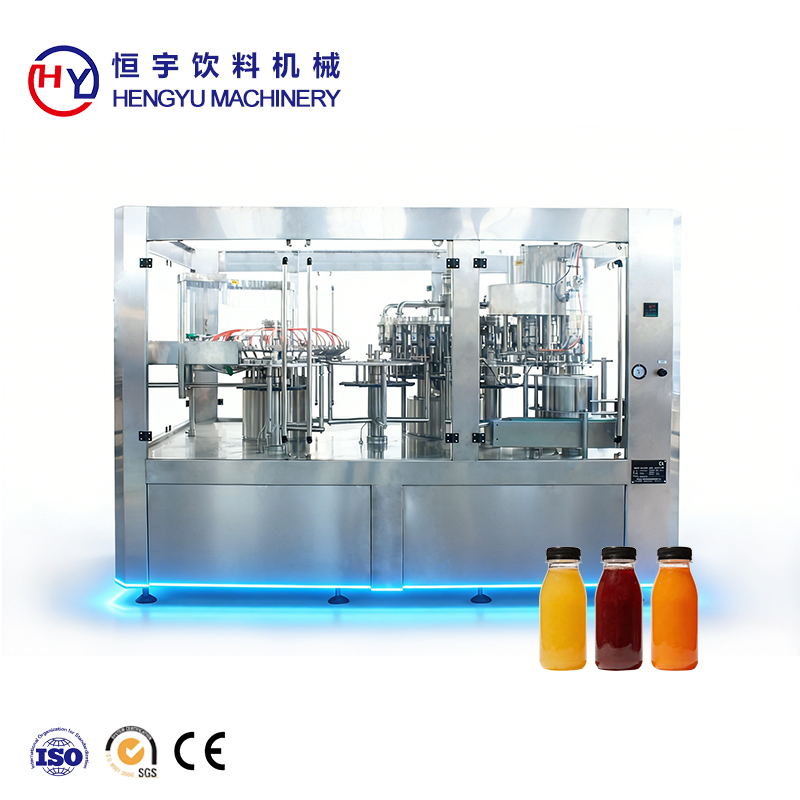
In the beverage manufacturing industry, operational costs are under constant scrutiny, and energy consumption sits at the very center of that conversation. A juice filling production line is one of the most energy-intensive assets on a factory floor, drawing power across multiple stages including rinsing, filling, capping, heating, cooling, and conveyance. As global energy prices remain volatile and sustainability expectations tighten, manufacturers are increasingly focused on how to extract more output per unit of energy consumed without compromising product quality or throughput targets.
This article explores the principles and practical approaches behind energy efficient design as they apply specifically to the juice filling production line context. Understanding what drives energy waste, which mechanical and thermal systems can be optimized, and how intelligent control technologies contribute to sustainable operations gives production engineers and plant managers the knowledge they need to make smarter investment and upgrade decisions. The goal is not simply to reduce utility bills but to build a production architecture that is leaner, more consistent, and competitively resilient over the long term.

Understanding Energy Consumption Across a Juice Filling Production Line
Where Energy Is Actually Spent
Before any energy efficiency improvement can be made, it is essential to map exactly where energy is being consumed within the juice filling production line. The major energy-consuming zones include the hot filling system, the CIP (clean-in-place) circuits, the conveyor drives, the compressed air network, and the refrigeration or cooling tunnels used for temperature management after filling. Each of these zones has its own energy profile and its own set of optimization levers.
Hot filling is particularly demanding because juice must be heated to temperatures typically between 85°C and 95°C to ensure microbial safety, and that thermal energy must be sustained throughout the filling cycle. When the heating system is oversized, poorly insulated, or not equipped with heat recovery mechanisms, a significant portion of that thermal energy is lost to the environment rather than transferred into the product and the bottle. This represents one of the largest sources of avoidable energy loss on any juice filling production line.
Compressed air is another underappreciated energy sink. Many juice filling production lines use pneumatic actuators for valve control, bottle handling, and capping heads. Leaks in the compressed air network, over-pressurized circuits, and inefficient compressors can collectively represent 20 to 30 percent of total electrical energy draw on the line. Addressing compressed air losses alone can produce measurable improvements in the overall energy footprint of the line.
The Relationship Between Line Speed and Energy Intensity
Energy intensity, measured as energy consumed per unit of product output, is heavily influenced by how consistently and efficiently the juice filling production line operates at its design speed. Running a line significantly below its rated capacity while all systems remain fully energized creates a condition where fixed energy loads are spread over fewer units, dramatically increasing the per-bottle energy cost. This is a common but often overlooked source of inefficiency in facilities that operate mixed product schedules with frequent changeovers.
Conversely, pushing a juice filling production line beyond its optimum throughput range to chase short-term output targets can cause temperature drift in the filling zone, require more aggressive CIP cycles, and increase mechanical wear that eventually leads to unplanned downtime. Each unplanned stoppage carries a hidden energy penalty because the line must return to operating temperature and pressure from a partially cooled state. Designing the line to operate efficiently within a realistic and consistent speed range is therefore a foundational energy efficiency strategy.
Thermal Management and Heat Recovery Systems
Recovering Heat from the Filling Process
One of the most impactful energy efficiency improvements available for a juice filling production line is the integration of heat recovery systems into the thermal management architecture. In a standard hot fill setup, product is heated to the required temperature, filled into bottles, and then the bottles pass through a cooling zone where that thermal energy is extracted and typically discharged as waste heat through cooling towers or refrigeration systems. Heat recovery technology captures a portion of that energy and redirects it to preheat incoming product, reducing the load on the primary heating element.
Plate heat exchangers are the most commonly used devices for this purpose in beverage applications. They operate by running the hot outgoing product stream in thermal proximity to the cold incoming stream within a series of thin metal plates, allowing heat transfer without product cross-contamination. When properly sized and maintained, a plate heat exchanger can recover between 70 and 85 percent of the thermal energy that would otherwise be wasted, significantly reducing the steam or electric heating demand of the juice filling production line.
Beyond product-to-product heat recovery, modern juice filling production lines also benefit from hot water recovery systems that capture thermal energy from bottle cooling circuits and repurpose it for CIP pre-rinse water, facility heating, or other utility functions. This cascading use of thermal energy reflects a systems-level approach to efficiency that goes far beyond replacing individual components.
Insulation and Thermal Containment
Even the best heat recovery system cannot compensate for poor thermal containment in the line's pipework, tanks, and filling bowl. Heat losses through inadequately insulated product pipelines and filling valves increase the energy required to maintain the correct filling temperature, which in turn increases the load on heating systems and risks temperature inconsistency across the filling carousel. On a high-speed juice filling production line processing tens of thousands of bottles per hour, even a one-degree deviation in filling temperature can have quality and compliance implications.
Specifying high-quality thermal insulation for all product-contact pipework and hot zones is therefore not merely a comfort measure but a direct energy efficiency investment. Modern insulation materials with low thermal conductivity coefficients maintain product temperature across long pipe runs with minimal energy input. Combined with properly sealed and insulated filler bowls and product tanks, these measures reduce the heating system's duty cycle, extend its service life, and lower energy consumption across the juice filling production line.
Drive Systems and Motion Efficiency
Variable Frequency Drives for Motor Control
Electric motors drive the conveyors, pumps, blowers, and mechanical components that keep a juice filling production line in motion. Traditionally, many of these motors operated at fixed speeds regardless of actual demand, meaning that a conveyor motor running at full power during a partial-capacity production run was consuming far more energy than necessary. Variable frequency drives (VFDs) address this directly by allowing motor speed to be adjusted dynamically in response to real-time production requirements.
When VFDs are applied to conveyor systems, pump circuits, and fan drives on a juice filling production line, the energy savings can be substantial. Because motor power consumption follows a cubic relationship with speed, reducing motor speed by even 20 percent can cut energy draw by nearly 50 percent for that drive. Across an entire line with dozens of motors, the cumulative impact of VFD integration represents a major reduction in electrical energy consumption, with payback periods that are often measurable in months rather than years.
The integration of VFDs also reduces mechanical stress on drive components, decreasing maintenance frequency and extending equipment service intervals. This secondary benefit compounds the direct energy savings by reducing the frequency of stops, starts, and maintenance interventions that each carry their own energy penalty on the juice filling production line.
Conveyor Layout and Mechanical Optimization
The physical layout of a juice filling production line has a direct bearing on how efficiently it consumes energy. Long, convoluted conveyor paths with multiple direction changes and elevation transitions require more drive energy than compact, linear layouts. When designing or retrofitting a juice filling production line for energy efficiency, reviewing the conveyor routing with a focus on eliminating unnecessary length, reducing bottle accumulation zones, and minimizing elevation changes can produce meaningful reductions in conveyor drive energy demand.
Lightweight conveyor components, precision-aligned guide rails, and low-friction belt materials all contribute to reduced drive resistance. When bottles travel with less mechanical resistance, smaller motors can be specified, and those motors operate closer to their optimal efficiency points more consistently. This mechanical efficiency mindset, applied systematically across the juice filling production line, creates a compounding effect that reduces total energy demand without compromising throughput.
Intelligent Control Systems and Process Automation
Automation for Demand-Responsive Operation
Modern juice filling production lines benefit enormously from advanced automation and control systems that enable the line to respond dynamically to changing production conditions. A programmable logic controller (PLC) or distributed control system (DCS) can monitor real-time signals from temperature sensors, flow meters, pressure transducers, and bottle detection systems, using that data to adjust energy-consuming processes in response to actual demand rather than fixed schedules.
For example, when a juice filling production line enters a planned stoppage for a format change, an intelligent control system can automatically reduce the heating system setpoint to a standby temperature, slow conveyor speeds to minimum, and switch the compressed air circuit to a reduced pressure mode. These automated standby protocols prevent the energy waste that occurs when operators manually manage transitions and can reduce idle energy consumption by 30 to 50 percent compared to unmanaged operation.
Energy monitoring dashboards integrated into the control system allow production managers to track energy consumption in real time and identify anomalies that may indicate equipment inefficiency. A sudden increase in heating energy demand, for example, may signal a heat exchanger fouling event that, if left unaddressed, will progressively worsen. Early detection and timely maintenance keep the juice filling production line operating at its designed efficiency level.
CIP Optimization for Energy and Water Efficiency
Clean-in-place systems are a necessary part of hygiene management for any juice filling production line, but they are also significant consumers of hot water, steam, and chemicals. Traditionally, CIP programs ran on fixed time cycles regardless of actual soil load or contamination level, meaning that many CIP cycles consumed more energy and water than was actually required to achieve the desired cleanliness standard. Modern CIP management systems address this by incorporating conductivity and turbidity sensors that allow the control system to end a cleaning phase when cleanliness targets are achieved rather than when a timer expires.
The result is a condition-based CIP approach that can reduce hot water consumption, decrease steam demand, and shorten overall CIP cycle time. On a juice filling production line running multiple product types or operating under high-frequency changeover schedules, these CIP savings accumulate rapidly and represent a meaningful contribution to overall energy efficiency performance. Recovering and reusing CIP rinse water for pre-rinse stages further compounds the resource efficiency benefit.
Design Philosophy for Long-Term Energy Performance
Selecting Equipment with Energy Ratings in Mind
When specifying new equipment for a juice filling production line, energy performance should be evaluated alongside mechanical capability, throughput rating, and hygienic design. Motors with IE3 or IE4 efficiency classifications, pumps selected to operate near their best efficiency point, and compressors with integrated variable speed control all contribute to a lower baseline energy demand from day one. The total cost of ownership calculation for any juice filling production line should include projected energy costs over a ten-year horizon, not just capital acquisition cost.
Equipment suppliers who publish specific energy consumption data per thousand bottles produced provide a more transparent basis for comparison than those who offer only general efficiency claims. Requesting detailed energy audit reports or simulation data during the procurement process encourages transparency and helps buyers make decisions that will deliver genuine long-term savings on the juice filling production line.
Maintenance as an Energy Strategy
An often-overlooked dimension of energy efficiency on a juice filling production line is the direct relationship between maintenance standards and energy consumption. Worn seals allow compressed air and steam to leak. Fouled heat exchangers lose thermal transfer efficiency. Misaligned drive components create friction losses. Each of these maintenance-related issues gradually increases energy consumption without triggering an obvious performance alarm, creating a slow but relentless deterioration in energy efficiency that can go undetected for months.
Implementing a preventive and predictive maintenance program that includes regular energy audits, compressed air leak detection surveys, heat exchanger inspection schedules, and drive alignment checks is one of the most cost-effective ways to maintain the energy efficiency of a juice filling production line at or near its as-built design level. Combining this with real-time energy monitoring creates a feedback loop that sustains energy performance over the full operational life of the line.
FAQ
What is the most energy-intensive stage of a juice filling production line?
The hot filling stage is typically the most energy-intensive part of a juice filling production line. Heating the product to temperatures between 85°C and 95°C and maintaining that temperature throughout the filling cycle requires continuous thermal energy input. When combined with the associated cooling stage, these two thermal processes often account for the majority of total energy consumed by the line, making them the primary focus of heat recovery and insulation improvements.
How do variable frequency drives contribute to energy savings on a juice filling production line?
Variable frequency drives allow electric motors on the juice filling production line to operate at speeds matched to actual demand rather than at fixed full power. Because motor energy consumption decreases with the cube of speed reduction, even moderate speed reductions produce significant energy savings. Applied across conveyor motors, pumps, and blowers throughout the line, VFDs can collectively reduce electrical energy consumption by 25 to 45 percent compared to fixed-speed motor configurations.
How often should energy audits be conducted on a juice filling production line?
A formal energy audit of a juice filling production line should be conducted at least annually, with more frequent monitoring supported by real-time energy metering systems integrated into the line's control architecture. Informal reviews triggered by unexpected increases in utility consumption, changes in product mix, or following significant maintenance events are also advisable. Regular auditing ensures that gradual efficiency deterioration is detected and corrected before it accumulates into substantial cost impact.
Can an existing juice filling production line be retrofitted for energy efficiency improvements?
Yes, most existing juice filling production lines can be retrofitted with meaningful energy efficiency improvements without requiring a full line replacement. Common retrofit upgrades include adding VFDs to conveyor and pump motors, installing plate heat exchangers for thermal recovery, upgrading insulation on product pipework, replacing compressed air fittings to eliminate leaks, and integrating smart energy monitoring systems with the existing control platform. The feasibility and payback period of each retrofit measure depends on the age and configuration of the existing line, but most facilities find that targeted retrofits deliver a positive return within two to four years.
Table of Contents
- Understanding Energy Consumption Across a Juice Filling Production Line
- Thermal Management and Heat Recovery Systems
- Drive Systems and Motion Efficiency
- Intelligent Control Systems and Process Automation
- Design Philosophy for Long-Term Energy Performance
-
FAQ
- What is the most energy-intensive stage of a juice filling production line?
- How do variable frequency drives contribute to energy savings on a juice filling production line?
- How often should energy audits be conducted on a juice filling production line?
- Can an existing juice filling production line be retrofitted for energy efficiency improvements?