
 CN
CN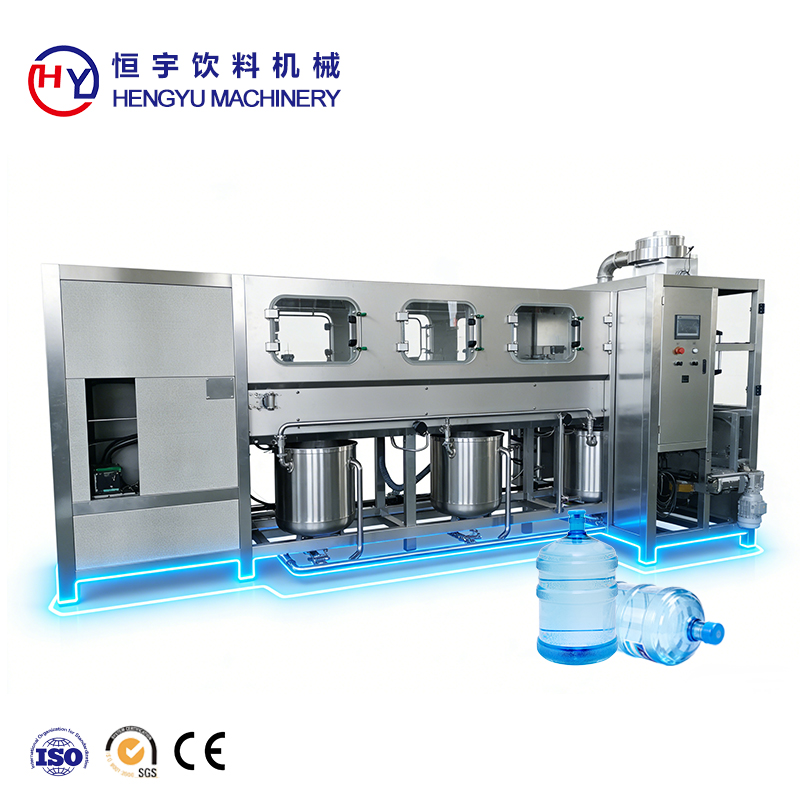
Planning the production capacity of a gallon filling machine is one of the most critical decisions a water bottling operation can make. Whether you are launching a new 5-gallon water bottling line or scaling up an existing facility, understanding how to align machine throughput with real-world demand directly determines your profitability, operational efficiency, and long-term growth potential. Getting this planning wrong can result in costly bottlenecks, idle equipment, or chronic under-supply — all of which eat into margins and damage customer relationships.
Capacity planning for a gallon filling machine is not simply about picking the highest output model available. It is a structured process that demands careful analysis of current demand volumes, projected growth curves, shift scheduling, downtime allowances, upstream and downstream equipment compatibility, and the specific technical specifications of the filling system you intend to deploy. This article walks through the key dimensions of gallon filling machine capacity planning so that decision-makers can build a production line that performs reliably from day one and scales intelligently over time.

Understanding Gallon Filling Machine Output Metrics
Rated Capacity vs. Actual Throughput
Every gallon filling machine comes with a rated capacity — typically expressed as bottles per hour (BPH). For 5-gallon barrel water lines, common rated capacities range from 300 BPH to 1,200 BPH depending on the model and configuration. However, rated capacity represents ideal conditions, not real-world operational averages. Actual throughput is influenced by operator skill, changeover frequency, micro-stoppages, cleaning cycles, and the condition of incoming barrels.
A well-run facility with trained operators, consistent barrel quality, and a properly tuned gallon filling machine can typically achieve between 80% and 90% of rated capacity over a sustained shift. Planning should always use this realistic efficiency factor rather than the nameplate figure. Overestimating output leads to production schedules that cannot be met and downstream distribution failures.
When evaluating a specific gallon filling machine, ask the supplier for OEE (Overall Equipment Effectiveness) benchmarks from comparable installations. This gives a far more reliable baseline than simple rated speed figures. Real-world data from similar production environments is invaluable for setting capacity targets that are both ambitious and achievable.
Shift Structure and Available Production Hours
Capacity planning must translate machine speed into daily, weekly, and monthly output volumes — and that translation depends entirely on how many production hours are available. A single-shift operation running eight hours per day with standard maintenance windows yields far less total volume than a two-shift or three-shift model. For a gallon filling machine rated at 900 BPH, a single-shift operation at 85% efficiency produces approximately 6,120 barrels per day.
Extending to two shifts doubles that figure to roughly 12,240 barrels, while three-shift continuous operation approaches 18,360 barrels per day — assuming adequate planned maintenance time is incorporated. The shift model you select should be driven by your market demand data, not by what the gallon filling machine is theoretically capable of. Operating a high-capacity machine at only 30% utilization is a capital efficiency problem that drives up cost per unit significantly.
It is also essential to build scheduled downtime into your capacity model. A gallon filling machine requires periodic cleaning, sanitization, and preventive maintenance. These activities typically consume between 45 minutes and two hours per shift depending on the filling system design. CIP (Clean-in-Place) capable machines reduce this burden considerably, and their availability should be factored into shift scheduling from the start.
Demand Analysis and Volume Forecasting
Aligning Machine Capacity with Market Demand
Effective capacity planning for a gallon filling machine starts with a rigorous demand analysis. This involves examining current order volumes, seasonal fluctuations, distribution territory size, customer growth projections, and competitive dynamics in your market. A common mistake is to plan capacity around peak-season demand without accounting for the cost impact of carrying that capacity through low-demand periods.
A more balanced approach is to size the gallon filling machine to handle average demand comfortably, with the ability to add a second shift or run overtime to cover peak periods. This keeps utilization rates healthy during the baseline period while providing a buffer for demand spikes. If your peak-to-trough demand ratio exceeds 2:1, you may need to consider flexible staffing models, inventory buffer strategies, or modular line configurations.
Demand forecasting should also account for new customer acquisition targets, expansion into new geographic markets, and any planned product line additions. These growth drivers need to be translated into incremental volume requirements and mapped against the capacity curve of the selected gallon filling machine. Planning a line that reaches full capacity within 18 months of commissioning forces an expensive and disruptive expansion far too soon.
Buffer Capacity and Scalability Planning
Industry best practice recommends building between 20% and 30% buffer capacity into your initial gallon filling machine selection. This buffer absorbs unexpected demand surges, provides headroom for new account wins, and ensures that equipment failures or maintenance events do not immediately disrupt customer supply. A line running at 70–80% of rated capacity has far better reliability characteristics than one consistently pushed to 95% or above.
Scalability planning means choosing a gallon filling machine and surrounding line equipment that can be upgraded or expanded without a complete rebuild. Modular 3-in-1 barrel water production lines, for example, integrate washing, filling, and capping in a single compact unit that can be replicated or supplemented as volumes grow. Evaluating upgrade paths at the time of initial purchase avoids architectural dead ends that force full line replacement at the next capacity threshold.
Consider also the physical infrastructure constraints of your facility — floor space, utilities capacity, compressed air supply, and water treatment throughput. Even if a gallon filling machine can theoretically be upgraded to 1,200 BPH, your facility may only support 600 BPH given its RO water output or electrical load limits. Capacity planning must be holistic, not limited to the filling station alone.
Integration with Upstream and Downstream Equipment
Upstream Barrel Washing and Water Treatment Alignment
A gallon filling machine is only one component in a complete barrel water production line. Its capacity must be matched with upstream barrel washing system throughput, water treatment system output (including reverse osmosis, UV sterilization, and ozone treatment stages), and raw water supply. If the barrel washer can only process 600 barrels per hour but the gallon filling machine is rated at 900 BPH, the overall line will be constrained to 600 BPH regardless of filler speed.
Water treatment capacity is particularly important because RO systems typically produce purified water at a rate that must be pre-stored in buffer tanks to supply the gallon filling machine without interruption. Sizing these buffer tanks correctly ensures that momentary demand spikes at the filler do not starve the line of treated water. A general rule of thumb is to maintain at least 30 minutes of filler buffer volume in treated water storage.
Barrel inspection and rejection rates also affect net line throughput. If your incoming barrel quality results in a 5% rejection rate at the washer, your effective input to the gallon filling machine is reduced accordingly. Tracking these upstream efficiency metrics and incorporating them into capacity models produces far more accurate production forecasts than relying on filler speed alone.
Downstream Capping, Labeling, and Distribution Readiness
Downstream from the gallon filling machine, capping, labeling, and loading operations must keep pace with fill output. An automatic capping machine rated below the filler's speed creates a queuing bottleneck that backs up the entire line. Downstream conveyance systems, including roller conveyors and accumulation tables, need to be engineered to the same throughput standard as the filler itself.
Distribution readiness is a frequently overlooked element of production capacity planning. Even if the gallon filling machine and surrounding equipment operate flawlessly, finished goods need a place to go. Insufficient pallet storage, limited truck loading bays, or delivery fleet constraints can create invisible bottlenecks that manifest as production stoppages. Capacity planning must extend from raw barrel input through to finished product dispatch.
For facilities deploying a fully integrated 3-in-1 production line that combines barrel washing, filling, and capping in a single footprint — such as the gallon filling machine configuration available in the QGF900 series — downstream alignment is somewhat simplified because the core line functions are engineered to operate in synchrony. However, external packaging, labeling, and logistics operations still require independent capacity assessment.
Operational Cost Implications of Capacity Decisions
Capital Cost vs. Unit Production Cost
Selecting a higher-capacity gallon filling machine involves a larger upfront capital investment, but this must be weighed against the unit production cost advantage that higher throughput delivers. Fixed costs — depreciation, facility lease, utilities base load — are spread across a larger volume of output when the machine runs at or near rated speed. This means the cost per filled barrel typically decreases as capacity utilization increases, up to the point where maintenance costs begin to rise from overstress.
A capacity decision that results in chronically low utilization — say, operating a 900 BPH gallon filling machine at only 300 BPH — inflates the cost per unit and undermines the business case for the investment. Conversely, a machine sized too conservatively and constantly operated at maximum speed will accumulate wear faster, drive up maintenance expenditure, and create reliability risks. The optimal capacity point balances these competing cost pressures.
Total cost of ownership analysis should be conducted for each capacity option under consideration. This includes initial purchase price, installation and commissioning costs, annual maintenance and spare parts budgets, energy consumption at various utilization rates, and the cost of any planned capacity upgrades. A gallon filling machine that appears cheaper at purchase may carry significantly higher lifetime operating costs due to energy inefficiency or high consumables consumption.
Labor and Energy Efficiency at Different Output Levels
Labor requirements for a gallon filling machine operation are relatively fixed within a shift — you typically need the same number of line operators whether the machine runs at 60% or 95% capacity. This means labor cost per barrel falls sharply as output volume increases. Maximizing throughput within the quality and equipment limits therefore has a direct positive impact on labor efficiency metrics.
Energy consumption of a gallon filling machine does not scale linearly with output. Many of the electrical loads on a filling line — pumps, conveyors, control systems, lighting — run continuously regardless of fill speed. This means energy cost per barrel also decreases with higher throughput. Understanding the energy consumption profile of a specific gallon filling machine at different speed settings allows planners to model the operational cost impact of various demand scenarios accurately.
Automation level is another variable affecting labor and energy efficiency. Fully automated gallon filling machine lines with servo-driven filling heads, automatic barrel handling, and integrated control systems deliver more consistent output per labor hour than semi-automatic configurations. For high-volume operations, the premium paid for full automation is typically recovered within two to three years through labor savings alone.
FAQ
What output capacity should I plan for when selecting a gallon filling machine?
The right output capacity depends on your current daily order volume, projected 3-year growth, and shift model. As a starting point, calculate your required daily output, divide by available production hours per shift, and apply an 85% efficiency factor to determine the minimum rated BPH you need. Always add 20–30% buffer capacity above this minimum when selecting a gallon filling machine to allow for demand growth and operational flexibility.
How does a 3-in-1 barrel water production line affect capacity planning?
A 3-in-1 line integrates barrel washing, filling, and capping in a synchronized unit, which simplifies throughput matching between these core functions. Capacity planning for this configuration focuses on matching the integrated unit's rated speed with upstream water treatment output and downstream logistics capacity. The internal synchronization of the gallon filling machine with the washer and capper reduces inter-station queuing losses and simplifies operator management.
What maintenance time should be factored into gallon filling machine capacity planning?
Plan for 45 to 120 minutes of scheduled maintenance and sanitation time per shift, depending on whether the gallon filling machine has CIP capability. Daily cleaning of filling nozzles, barrel contact surfaces, and water pathways is non-negotiable in potable water production. Annual planned overhauls typically require one to three days of full line downtime. Build these windows into your production calendar when modeling achievable monthly output volumes.
Can a gallon filling machine capacity be upgraded after installation?
Many modern gallon filling machine systems are designed with upgrade paths in mind, allowing additional filling heads, higher-speed barrel handling systems, or expanded water treatment modules to be added without complete line replacement. However, upgradeability must be confirmed with the equipment supplier before purchase. Facilities should also verify that their civil infrastructure — electrical supply, floor load capacity, water supply — can support a higher-capacity configuration before committing to an upgrade plan.
Table of Contents
- Understanding Gallon Filling Machine Output Metrics
- Demand Analysis and Volume Forecasting
- Integration with Upstream and Downstream Equipment
- Operational Cost Implications of Capacity Decisions
-
FAQ
- What output capacity should I plan for when selecting a gallon filling machine?
- How does a 3-in-1 barrel water production line affect capacity planning?
- What maintenance time should be factored into gallon filling machine capacity planning?
- Can a gallon filling machine capacity be upgraded after installation?