Cold Drink Packing Machine - Advanced Automated Beverage Packaging Solutions

All Categories

cold drink packing machine

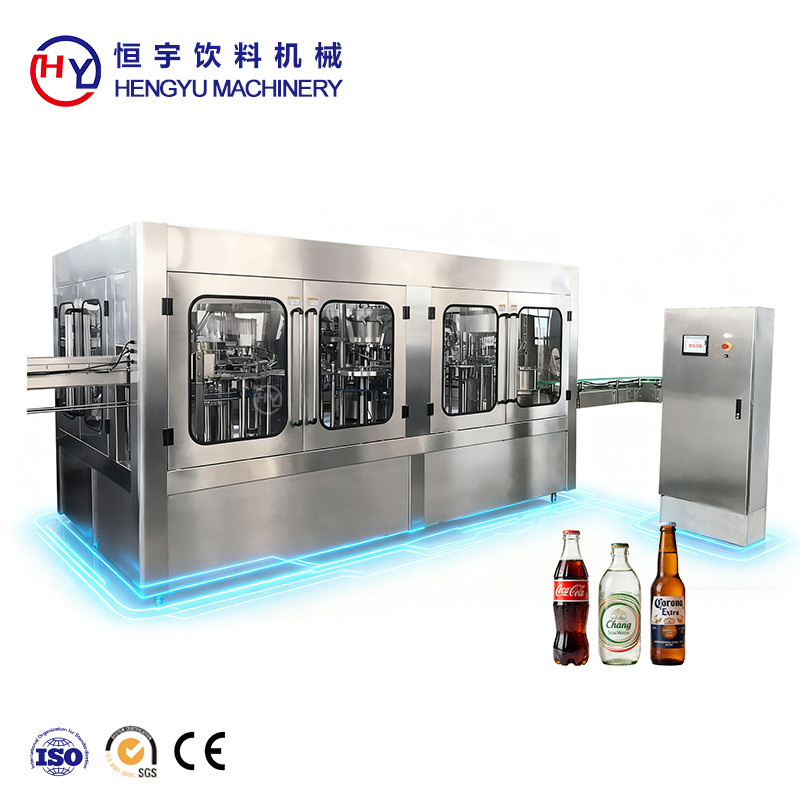
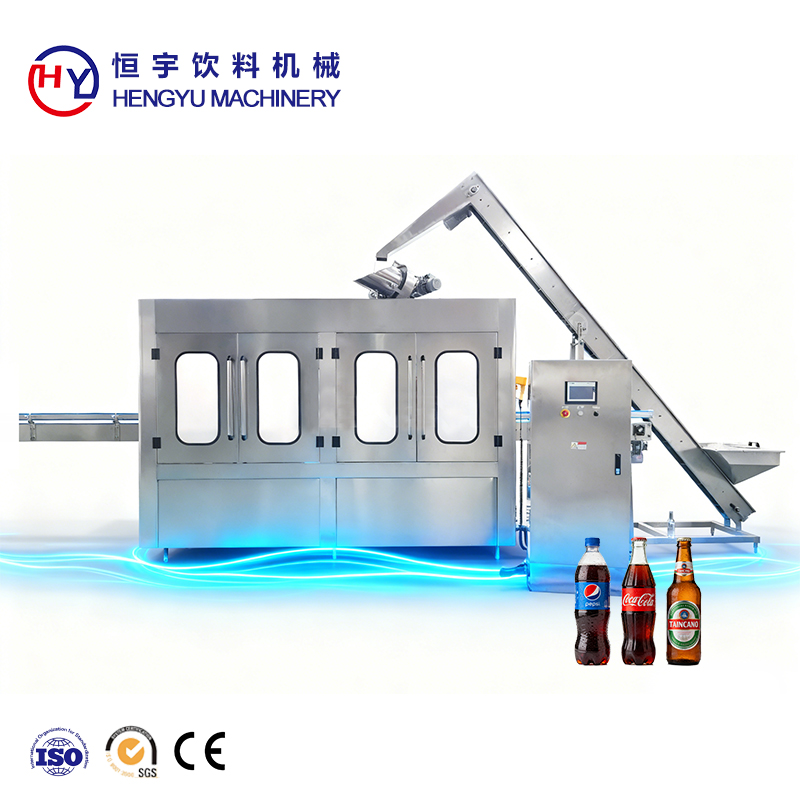
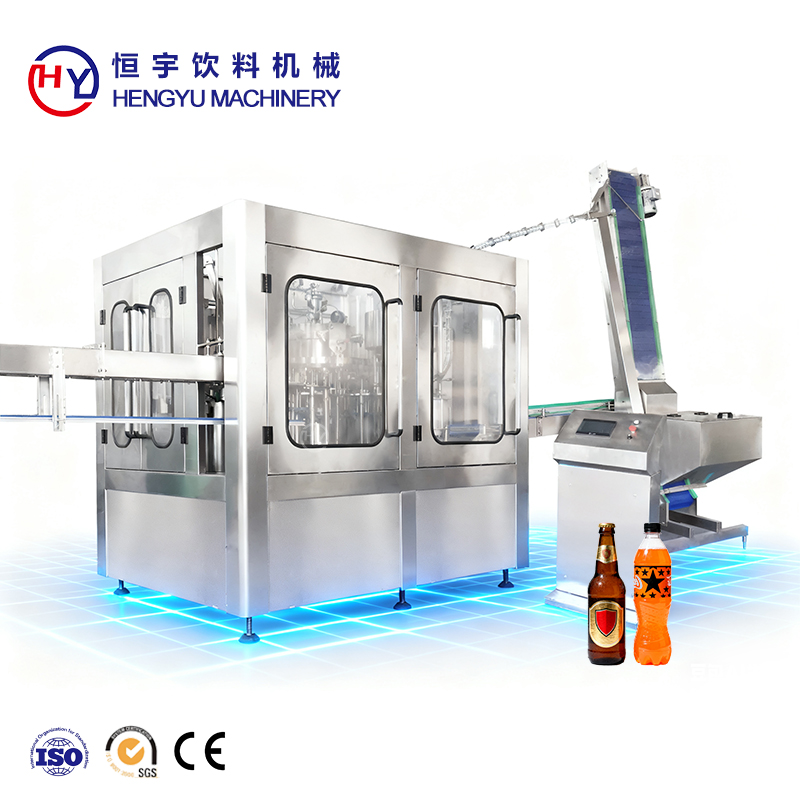
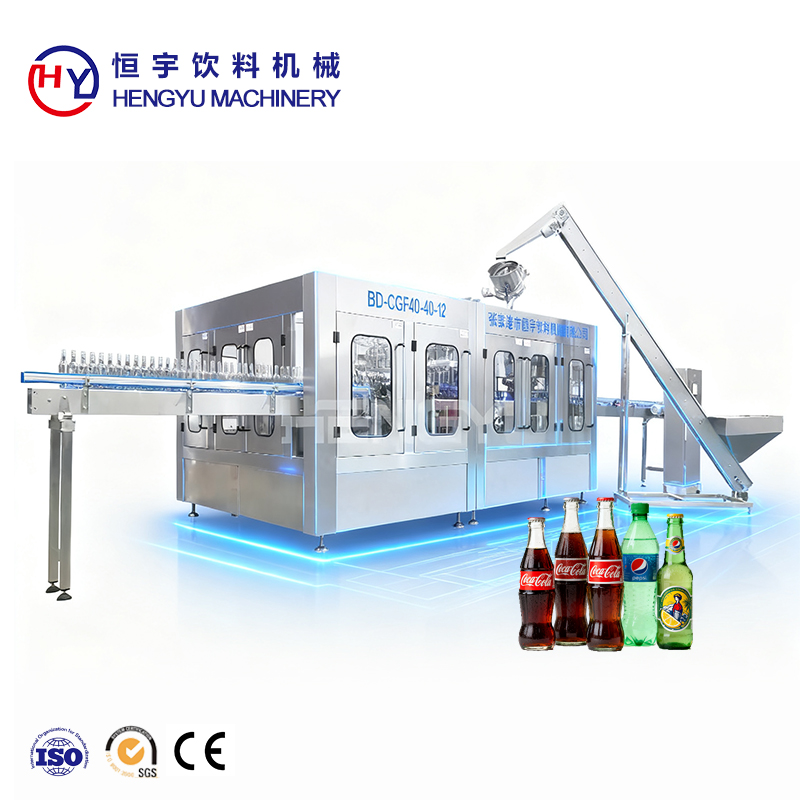
The cold drink packing machine represents a cutting-edge solution designed specifically for beverage manufacturers seeking efficient, reliable, and hygienic packaging operations. This sophisticated equipment automates the entire packaging process for cold beverages, including juices, sodas, energy drinks, bottled water, and flavored milk products. Modern cold drink packing machines integrate multiple functions into a single streamlined system, handling everything from bottle feeding and filling to capping, labeling, and final packaging. These machines utilize advanced sensor technology to ensure precise filling volumes, maintain product quality, and minimize waste throughout the production cycle. The technological framework incorporates programmable logic controllers that allow operators to adjust parameters quickly for different bottle sizes, liquid viscosities, and production speeds. Temperature control systems maintain optimal conditions for cold beverages, preserving freshness and extending shelf life. The machines feature stainless steel construction that meets international food safety standards, ensuring contamination-free operation and easy sanitation. Versatile design accommodations enable the cold drink packing machine to handle various container types, including PET bottles, glass bottles, aluminum cans, and specialized packaging formats. Integration capabilities allow seamless connection with existing production lines, quality control systems, and inventory management software. Applications span across small-scale artisanal beverage producers to large-scale industrial manufacturing facilities. The equipment serves diverse sectors including dairy processing plants, fruit juice manufacturers, carbonated beverage producers, sports drink companies, and mineral water bottling operations. Environmental considerations are built into modern designs, with energy-efficient motors, reduced plastic usage options, and recyclable material compatibility. The cold drink packing machine transforms manual, labor-intensive packaging operations into automated, consistent, and scalable production systems that meet growing market demands while maintaining stringent quality standards.

New Products

Investing in a cold drink packing machine delivers substantial operational improvements that directly impact your bottom line and market competitiveness. First and foremost, these machines dramatically increase production capacity, enabling businesses to package thousands of units per hour compared to manual methods that struggle to reach even a fraction of this output. This speed advantage means you can fulfill larger orders, respond quickly to seasonal demand spikes, and expand your market reach without proportionally increasing labor costs. The consistency achieved through automated packaging ensures every bottle receives exactly the same fill level, cap tightness, and label placement, creating a professional appearance that builds consumer trust and brand reputation. Manual packaging inevitably introduces variations that can lead to customer complaints and regulatory issues, but machinery eliminates these concerns. Cost savings extend beyond labor reduction; the cold drink packing machine minimizes product waste by controlling fill volumes precisely, preventing overfilling that erodes profit margins and underfilling that violates regulations. Material handling efficiency improves as automated systems reduce bottle breakage, cap damage, and label waste compared to human handling. Hygiene standards reach levels impossible with manual operations, as the enclosed system limits human contact with beverages, reducing contamination risks and extending product shelf life. This cleanliness factor becomes increasingly important as food safety regulations tighten globally. Flexibility represents another crucial advantage, as modern machines adjust quickly between different bottle sizes, beverage types, and packaging configurations without extensive downtime or retooling. This adaptability allows manufacturers to diversify product lines and respond to market trends without investing in multiple specialized systems. Worker safety improves significantly when repetitive manual tasks are eliminated, reducing workplace injuries, insurance costs, and employee turnover. The machine handles heavy lifting, repetitive motions, and exposure to cold environments that can strain human workers. Data collection capabilities built into contemporary systems provide valuable insights into production efficiency, maintenance needs, and quality metrics, enabling informed management decisions and continuous improvement initiatives. Scalability ensures that as your business grows, the equipment can accommodate increased volumes through speed adjustments or modular expansions rather than complete replacement. Energy efficiency in newer models reduces utility costs while supporting corporate sustainability goals that increasingly influence consumer purchasing decisions. Return on investment typically materializes within months as labor savings, reduced waste, and increased output combine to offset the initial equipment expenditure. Competitive positioning strengthens when you can offer faster delivery times, consistent quality, and competitive pricing enabled by efficient packaging operations.

Practical Tips

Increasing Capacity in Bottled Water Production Lines

09

Mar

Increasing Capacity in Bottled Water Production Lines

Diagnosing Bottlenecks in Your Bottled Water Production Line Measuring Throughput Gaps: Bottling Speed, Changeover Time, and OEE Analysis To get a handle on where production is falling short, look at three key performance indicators. Start by compa...
View More
How Can Filling Machines Improve Beverage Production Speed

24

Mar

How Can Filling Machines Improve Beverage Production Speed

Filling Machine Type Determines Maximum Throughput Potential Gravity, Isobaric, and Piston Can Filling Machines: Speed vs. Precision Trade-offs Gravity fillers work well for delicate drinks such as juice, processing around 20 to 36 bottles every mi...
View More
Troubleshooting Can Filling Machine Production Issues

21

Mar

Troubleshooting Can Filling Machine Production Issues

Power, Control, and Electrical Faults in Can Filling Machines Machine won't power on: main supply, fuses, and emergency stop circuit checks If the can filling machine won't start at all, the first thing to do is check whether the main power supply ...
View More
Can Filling Machine Capacity Planning Guide

22

Mar

Can Filling Machine Capacity Planning Guide

Understanding Can Filling Machine Capacity: Theory vs. Real-World Performance Why Theoretical Capacity Rarely Matches Effective Output on Can Filling Lines When companies talk about canning speed at 100 cans per minute, they're referring to what ha...
View More

Get a Free Quote

Our representative will contact you soon.
Email
Name
Phone/WhatsApp
Required Product
Message
0/1000

cold drink packing machine

Advanced Automation Technology for Maximum Efficiency

Advanced Automation Technology for Maximum Efficiency

The cold drink packing machine incorporates state-of-the-art automation technology that fundamentally transforms beverage packaging operations from labor-intensive processes into streamlined, intelligent systems. At the core lies a sophisticated programmable logic controller that orchestrates every aspect of the packaging sequence with millisecond precision. This central control unit coordinates bottle feeding mechanisms, filling stations, capping equipment, labeling systems, and discharge conveyors into a synchronized production flow that maximizes throughput while minimizing errors. Touch-screen interfaces provide operators with intuitive control over all parameters, allowing quick adjustments to accommodate different bottle geometries, liquid characteristics, and production speeds without requiring specialized technical knowledge. The automation extends to quality assurance through integrated vision systems that inspect each package for proper fill levels, cap placement, and label alignment, automatically rejecting defective units before they enter distribution channels. Sensor arrays monitor critical variables including liquid temperature, flow rates, pressure levels, and mechanical movements, providing real-time feedback that maintains optimal operating conditions and prevents costly breakdowns. Predictive maintenance algorithms analyze performance data to identify potential issues before they cause unplanned downtime, scheduling service interventions during planned production breaks rather than emergency stoppages. The automation architecture supports remote monitoring capabilities, enabling production managers to oversee operations from any location and receive instant alerts about status changes or anomalies. Recipe management functions store parameters for different products, allowing operators to switch between beverage types with simple menu selections rather than manual recalibration. Batch tracking integration ensures complete traceability from raw materials through finished packages, supporting regulatory compliance and facilitating rapid response if quality issues arise. The sophistication of this automation technology delivers consistency that human operators simply cannot match, ensuring that every cold drink packing machine cycle produces identical results regardless of shift changes, operator experience levels, or production duration. Energy management systems optimize power consumption by adjusting motor speeds and activating components only when needed, reducing operational costs and environmental impact. This comprehensive automation approach transforms the cold drink packing machine from simple equipment into an intelligent production partner that continuously adapts to conditions, self-optimizes performance, and provides actionable insights for ongoing improvement.
Hygienic Design for Superior Product Safety

Hygienic Design for Superior Product Safety

The hygienic design philosophy embedded in modern cold drink packing machines addresses the beverage industry's most critical concern: maintaining absolute product safety and quality throughout the packaging process. Every surface that contacts beverages or packaging materials features pharmaceutical-grade stainless steel construction with electropolished finishes that eliminate microscopic crevices where bacteria could harbor. This material selection exceeds food safety standards established by international regulatory bodies, providing manufacturers with confidence that their packaging operations meet the strictest requirements across global markets. The enclosed system architecture minimizes environmental exposure, creating a controlled atmosphere around filling and capping zones that prevents airborne contaminants from compromising product integrity. Positive pressure systems in critical areas push air outward, preventing external particles from entering sensitive zones even during operation. Clean-in-place capabilities represent a revolutionary advancement in packaging equipment maintenance, allowing complete sanitation without disassembly. Automated cleaning cycles circulate food-grade sanitizing solutions through all product-contact surfaces, reaching areas impossible to clean manually while reducing downtime and eliminating human error in sanitation procedures. Validation systems confirm cleaning effectiveness, documenting that hygiene standards have been achieved before production resumes. Drip-proof designs and sloped surfaces ensure complete drainage during cleaning cycles, preventing residual liquids that could promote microbial growth. Quick-disconnect fittings and tool-free access panels facilitate rapid inspection and verification of cleanliness, supporting quality assurance protocols and regulatory audits. The cold drink packing machine incorporates materials and lubricants certified for incidental food contact, eliminating concerns about contamination from mechanical components. Sealed bearing assemblies and protected drive systems prevent particulate generation that could compromise product purity. Temperature control throughout the packaging process maintains cold chain integrity, preserving beverage quality and extending shelf life by preventing thermal shock or ambient exposure. Sterile filling options accommodate sensitive products requiring aseptic conditions, expanding the range of beverages manufacturers can produce on a single machine platform. Documentation systems automatically record critical control points, time-temperature profiles, and sanitation cycles, creating audit trails that demonstrate compliance with food safety management systems. This comprehensive approach to hygienic design transforms the cold drink packing machine into a protective barrier that safeguards product quality, protects consumer health, and shields manufacturers from liability while building brand reputation through consistently safe, high-quality beverages.
Flexible Configuration for Diverse Production Needs

Flexible Configuration for Diverse Production Needs

The remarkable flexibility engineered into contemporary cold drink packing machines enables beverage manufacturers to adapt rapidly to changing market conditions, consumer preferences, and product portfolios without major capital investments or extended downtime. Modular architecture allows businesses to configure systems precisely matching their current needs while retaining expansion capabilities as production volumes grow. Start with basic filling and capping functions, then add labeling modules, date coding systems, shrink wrapping units, or case packing equipment as business requirements evolve. This scalability protects initial investments while providing clear upgrade paths that accommodate growth trajectories. Container versatility represents a crucial flexibility dimension, with quick-change components enabling the cold drink packing machine to handle dramatically different bottle sizes and shapes within the same production day. Adjustable guides, variable-height filling nozzles, and adaptable gripping mechanisms accommodate containers ranging from small single-serve bottles to large family-size formats without extensive mechanical modifications. Tool-free adjustments reduce changeover times from hours to minutes, maximizing productive capacity and enabling economical short production runs for limited-edition products or test market initiatives. Material compatibility extends beyond traditional PET and glass bottles to include emerging sustainable packaging alternatives, positioning manufacturers to respond to environmental pressures and regulatory changes favoring recyclable or biodegradable materials. Speed variability through variable-frequency drives allows operators to match production rates to downstream equipment capacities, upstream supply rates, or specific product requirements. Delicate beverages containing pulp or active cultures can be packaged at gentler speeds that preserve product characteristics, while standard products can run at maximum throughput. Multiple filling technologies within a single platform accommodate different liquid properties, from thin, free-flowing water to viscous smoothies or carbonated beverages requiring specialized handling. The cold drink packing machine adapts to various cap styles including screw caps, snap caps, sport caps, and pump dispensers, supporting brand differentiation strategies and functional packaging innovations. Labeling flexibility accommodates pressure-sensitive labels, shrink sleeves, wrap-around labels, and front-and-back configurations, enabling distinctive shelf presence across product lines. Integration capabilities with upstream preparation equipment and downstream palletizing systems create complete production cells optimized for specific facility layouts and workflows. Recipe-driven operation stores parameters for dozens of different products, allowing operators to recall proven settings instantly rather than experimenting with adjustments. This comprehensive flexibility transforms the cold drink packing machine from specialized single-purpose equipment into a versatile production asset that adapts to your business rather than constraining your opportunities, supporting diversification strategies, seasonal variations, and innovation initiatives that drive competitive advantage in dynamic beverage markets.