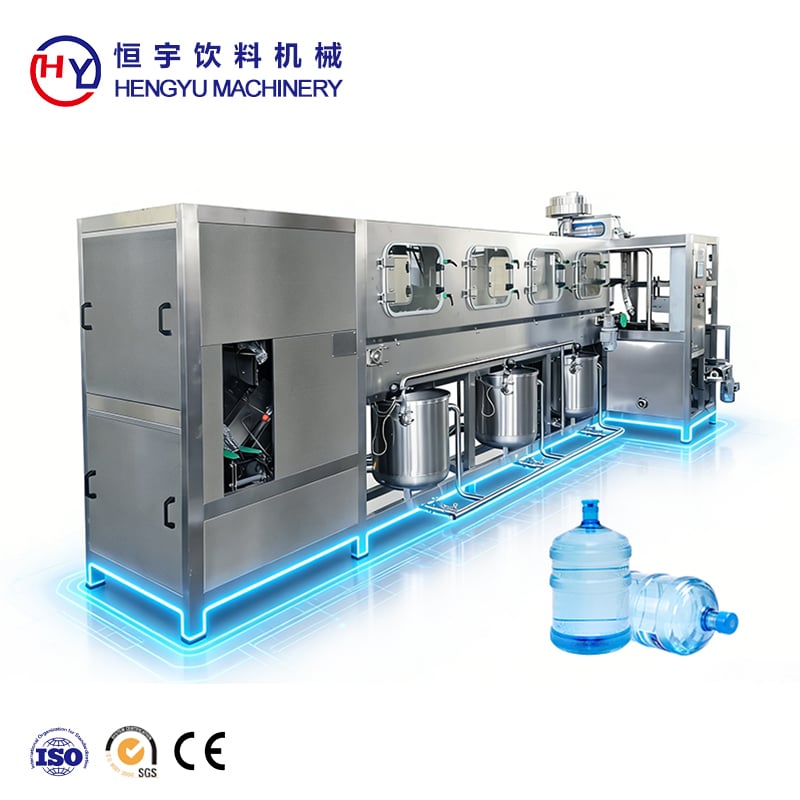
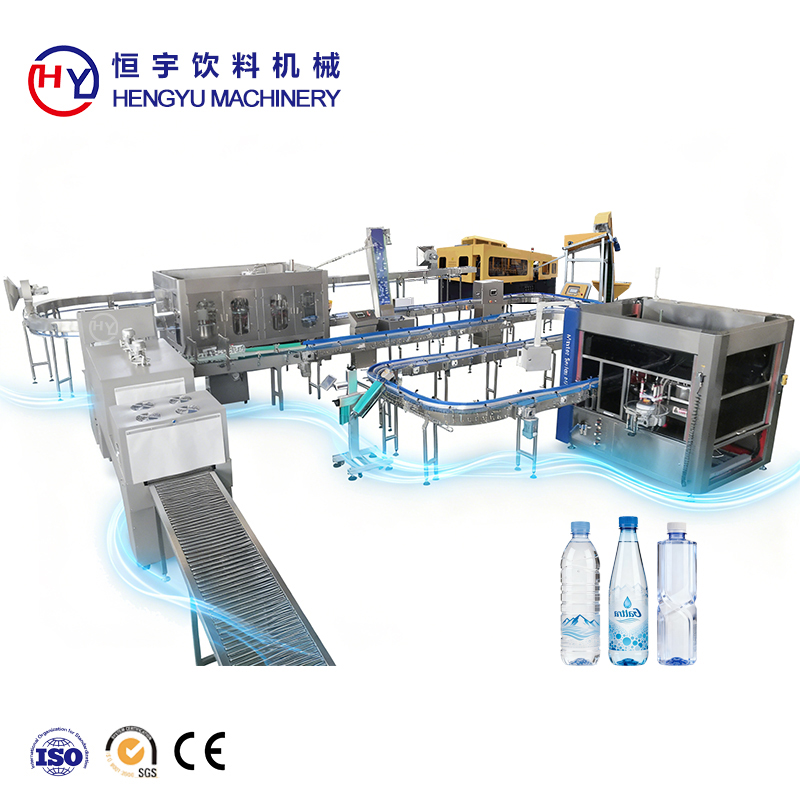
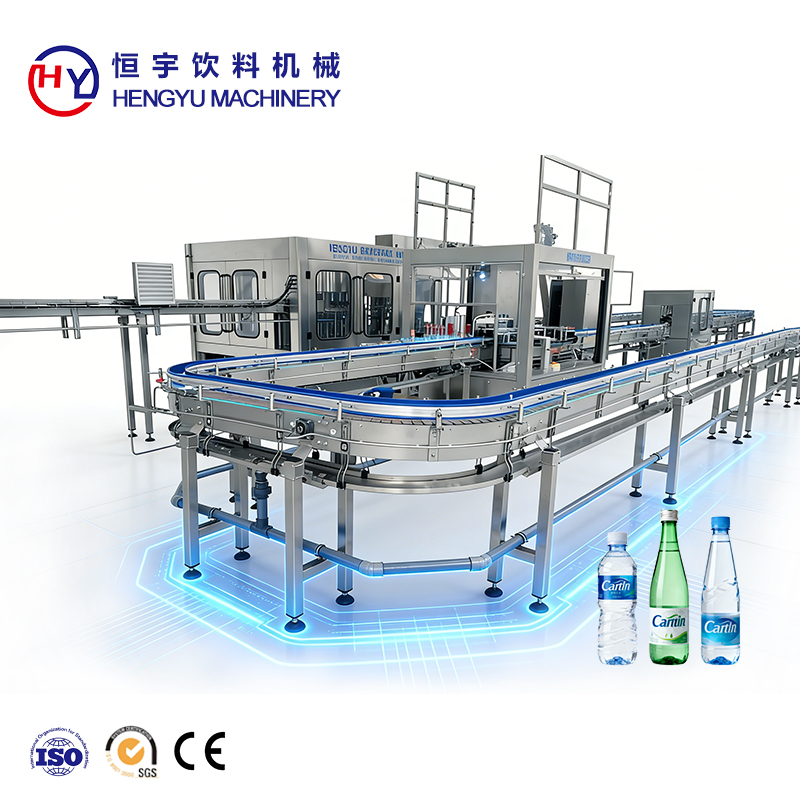
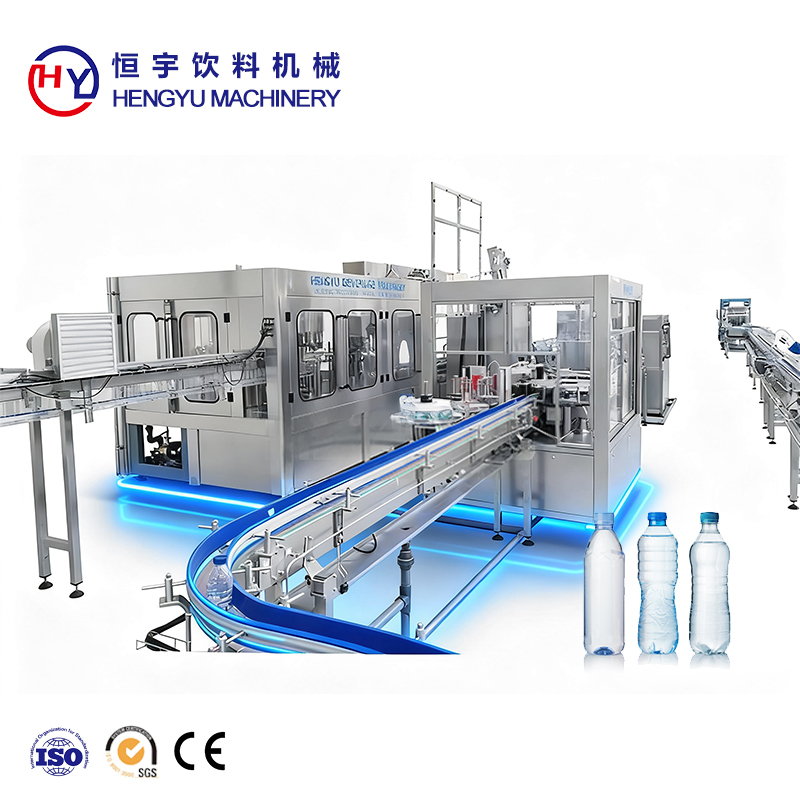
Complete Mineral Water Production Line Solutions - Advanced Bottling Systems for Pure Water Manufacturing

All Categories

mineral water production line

A mineral water production line represents a comprehensive automated system designed to transform raw water sources into purified, bottled mineral water ready for consumer markets. This sophisticated manufacturing solution integrates multiple processing stages, including water treatment, purification, filling, capping, labeling, and packaging operations. Modern mineral water production lines incorporate advanced filtration technologies such as reverse osmosis, ultraviolet sterilization, and ozone treatment to ensure the highest quality standards. The system typically begins with raw water intake, where source water undergoes preliminary filtration to remove large particles and sediments. Subsequently, the water passes through multiple purification stages involving activated carbon filters, sand filters, and membrane filtration units. The mineral water production line maintains precise control over mineral content, ensuring consistent taste and nutritional value in every bottle. Automated filling machines operate at high speeds, accurately dispensing predetermined volumes into various container sizes, from small bottles to large dispensers. The capping mechanism ensures hermetic sealing, preserving freshness and preventing contamination throughout the distribution chain. Labeling systems apply product information, branding elements, and regulatory compliance data with exceptional accuracy. The entire mineral water production line operates under strict hygiene protocols, with stainless steel construction and clean-in-place systems maintaining sanitary conditions. Production capacity varies significantly, with systems available for small-scale operations producing several hundred bottles per hour to industrial installations capable of manufacturing tens of thousands of units hourly. Integration with quality control mechanisms enables real-time monitoring of critical parameters including pH levels, mineral composition, microbiological purity, and packaging integrity, ensuring every product meets stringent safety standards before reaching consumers.

New Product Recommendations

Investing in a mineral water production line delivers substantial operational benefits that directly impact business profitability and market competitiveness. First and foremost, automation reduces labor costs dramatically by eliminating manual handling at numerous production stages, allowing businesses to allocate human resources to supervisory and quality assurance roles rather than repetitive tasks. The consistency achieved through automated processes ensures uniform product quality, building consumer trust and brand loyalty over time. This reliability translates into reduced waste, as precision filling mechanisms minimize overfilling and spillage, directly improving material efficiency and bottom-line savings. Energy efficiency represents another significant advantage, as modern mineral water production lines incorporate smart power management systems that optimize electricity consumption during different operational phases. These systems automatically adjust energy usage based on production demands, reducing utility expenses considerably compared to older manufacturing methods. Scalability offers businesses flexibility to grow without complete equipment overhauls, as modular designs allow capacity expansion through additional units rather than full system replacement. The hygienic design of contemporary mineral water production lines meets international food safety standards, facilitating market access across different regions and regulatory environments. Automated cleaning systems reduce downtime between production runs, maintaining productivity while ensuring microbial safety without extensive manual intervention. Real-time monitoring capabilities enable immediate detection of irregularities, preventing large-scale production losses by addressing issues before they compound. Maintenance requirements decrease significantly due to robust construction and quality components, extending equipment lifespan and protecting capital investments. The speed of modern mineral water production lines accelerates time-to-market, enabling businesses to respond quickly to demand fluctuations and seasonal variations in consumption patterns. Traceability features built into advanced systems provide comprehensive production records, supporting regulatory compliance and facilitating rapid response to quality inquiries. Reduced environmental impact through efficient water usage and recyclable packaging compatibility appeals to environmentally conscious consumers and supports corporate sustainability objectives. The compact footprint of integrated mineral water production lines optimizes facility space utilization, reducing real estate costs and allowing efficient plant layouts that streamline logistics and material flow throughout manufacturing operations.

Tips And Tricks

Glass Bottle Filling Machine vs Plastic Bottle Filling Machine

04

Mar

Glass Bottle Filling Machine vs Plastic Bottle Filling Machine

Material Properties Dictate Core Machine Design Glass fragility and thermal mass: why glass bottle filling machines require reinforced frames, shock-dampened conveyors, and precision neck-handling grippers Working with glass bottles means going th...
View More
Can Filling Machine Technology for Carbonated Beverages

20

Mar

Can Filling Machine Technology for Carbonated Beverages

Isobaric Filling Principles: How Can Filling Machines Preserve Carbonation Under Pressure The Physics of CO₂ Solubility and Why Counter-Pressure Is Non-Negotiable The way carbon dioxide dissolves in drinks basically follows what we call Henry's Law...
View More
Troubleshooting Can Filling Machine Production Issues

21

Mar

Troubleshooting Can Filling Machine Production Issues

Power, Control, and Electrical Faults in Can Filling Machines Machine won't power on: main supply, fuses, and emergency stop circuit checks If the can filling machine won't start at all, the first thing to do is check whether the main power supply ...
View More
Can Filling Machine Capacity Planning Guide

22

Mar

Can Filling Machine Capacity Planning Guide

Understanding Can Filling Machine Capacity: Theory vs. Real-World Performance Why Theoretical Capacity Rarely Matches Effective Output on Can Filling Lines When companies talk about canning speed at 100 cans per minute, they're referring to what ha...
View More

Get a Free Quote

Our representative will contact you soon.
Email
Name
Phone/WhatsApp
Required Product
Message
0/1000

mineral water production line

Advanced Purification Technology Ensures Superior Water Quality

Advanced Purification Technology Ensures Superior Water Quality

The cornerstone of any effective mineral water production line lies in its purification technology, which determines the final product's safety, taste, and mineral composition. Modern systems employ multi-stage filtration processes that systematically remove contaminants while preserving beneficial minerals that contribute to water's nutritional value and characteristic flavor profile. The purification sequence typically begins with mechanical filtration, where sand filters and cartridge filters eliminate suspended solids, sediments, and larger particles that could compromise subsequent treatment stages. Following mechanical filtration, activated carbon filtration removes chlorine, organic compounds, and substances that affect taste and odor, significantly improving water palatability. The reverse osmosis stage represents the most critical purification phase, utilizing semi-permeable membranes to remove dissolved solids, heavy metals, bacteria, and viruses with exceptional efficiency, achieving removal rates exceeding ninety-nine percent for most contaminants. This mineral water production line component operates under controlled pressure, forcing water molecules through microscopic membrane pores while rejecting larger contaminant molecules. Ultraviolet sterilization provides an additional safety layer, exposing water to UV-C radiation that destroys microbial DNA, rendering bacteria, viruses, and other pathogens incapable of reproduction without introducing chemical additives. Ozone treatment systems inject ozone gas into water, providing powerful oxidation that eliminates remaining microorganisms and organic matter while naturally decomposing into oxygen without leaving residues. The mineral water production line incorporates remineralization units that carefully reintroduce essential minerals such as calcium, magnesium, and potassium, creating balanced mineral content that enhances both nutritional value and taste characteristics. Sophisticated monitoring instruments continuously measure critical parameters including total dissolved solids, conductivity, pH levels, and microbial counts, ensuring consistent quality throughout production cycles. This comprehensive approach to purification differentiates premium mineral water production lines from basic systems, guaranteeing products that meet the most stringent international quality standards while maintaining the natural mineral balance that consumers expect from premium bottled water.
High-Speed Automated Filling and Packaging Maximizes Production Efficiency

High-Speed Automated Filling and Packaging Maximizes Production Efficiency

Production efficiency directly determines manufacturing costs and market competitiveness, making the filling and packaging components of a mineral water production line absolutely critical to operational success. Contemporary filling systems utilize precision volumetric or gravimetric filling technologies that deliver exact quantities into each container, minimizing product giveaway while ensuring compliance with legal metrology requirements. Rotary filling machines, the predominant technology in modern mineral water production lines, feature multiple filling valves arranged around a central rotating platform, enabling simultaneous filling of numerous bottles during each rotation cycle. This parallel processing approach dramatically increases throughput compared to linear filling systems, with high-capacity installations achieving speeds exceeding one thousand bottles per minute depending on container size and configuration. The filling valves incorporate sophisticated control mechanisms that adjust filling speed and duration based on container characteristics, accommodating various bottle sizes and materials without manual reconfiguration or extended changeover periods. No-drip nozzle designs prevent product loss and maintain cleanliness, reducing cleaning requirements and minimizing contamination risks throughout production runs. The mineral water production line integrates automated capping systems that apply closures with precise torque specifications, ensuring secure sealing without over-tightening that could damage threads or under-tightening that might compromise product integrity. Induction sealing equipment adds tamper-evident seals to cap liners, providing visible evidence of package integrity that builds consumer confidence and meets regulatory requirements in many markets. Labeling machinery applies self-adhesive labels or shrink sleeves with accurate positioning and consistent application quality, supporting brand presentation and regulatory compliance through clear product information display. Vision inspection systems examine filled bottles for proper fill levels, cap placement, label positioning, and visible defects, automatically rejecting non-conforming products before they enter final packaging stages. The packaging section of the mineral water production line organizes bottles into predetermined configurations, wrapping them with shrink film or placing them into cartons and cases ready for palletization and distribution. Robotic palletizers stack finished products according to programmed patterns, optimizing pallet stability for transportation while maximizing warehouse space utilization through efficient stacking configurations.
Intelligent Control Systems Provide Comprehensive Production Management

Intelligent Control Systems Provide Comprehensive Production Management

The integration of intelligent control systems elevates a mineral water production line from simple mechanical equipment to a sophisticated manufacturing platform capable of autonomous operation, comprehensive monitoring, and data-driven optimization. Programmable logic controllers serve as the operational brain, coordinating all system components through precisely timed sequences that ensure smooth material flow and synchronized operation across treatment, filling, and packaging stages. Human-machine interfaces provide operators with intuitive graphical displays showing real-time production status, equipment conditions, and performance metrics, enabling informed decision-making and rapid response to operational variations. The mineral water production line control system continuously monitors critical process parameters including water temperature, pressure levels, flow rates, treatment chemical concentrations, and environmental conditions within production areas. Automated feedback loops adjust operational parameters in response to detected variations, maintaining optimal performance without manual intervention and compensating for factors such as source water quality fluctuations or ambient temperature changes. Recipe management functionality allows operators to store multiple production configurations corresponding to different product variants, enabling rapid changeovers between bottle sizes, mineral formulations, or packaging formats through simple software selection rather than complex mechanical adjustments. Production data logging creates comprehensive records documenting every aspect of manufacturing operations, supporting quality assurance protocols, regulatory compliance requirements, and continuous improvement initiatives through detailed performance analysis. Predictive maintenance algorithms analyze equipment performance patterns, identifying developing issues before they cause failures and scheduling maintenance activities during planned downtime rather than responding to unexpected breakdowns that disrupt production schedules. Remote connectivity features enable expert technical support personnel to access the mineral water production line control systems from distant locations, providing troubleshooting assistance, software updates, and performance optimization without requiring on-site visits that involve travel time and expenses. Integration with enterprise resource planning systems connects production operations with broader business management functions, enabling coordinated planning of raw material procurement, production scheduling, inventory management, and distribution logistics. Quality management integration automatically correlates production batches with laboratory testing results, facilitating traceability throughout the supply chain and enabling rapid isolation of affected products should quality issues emerge after distribution.