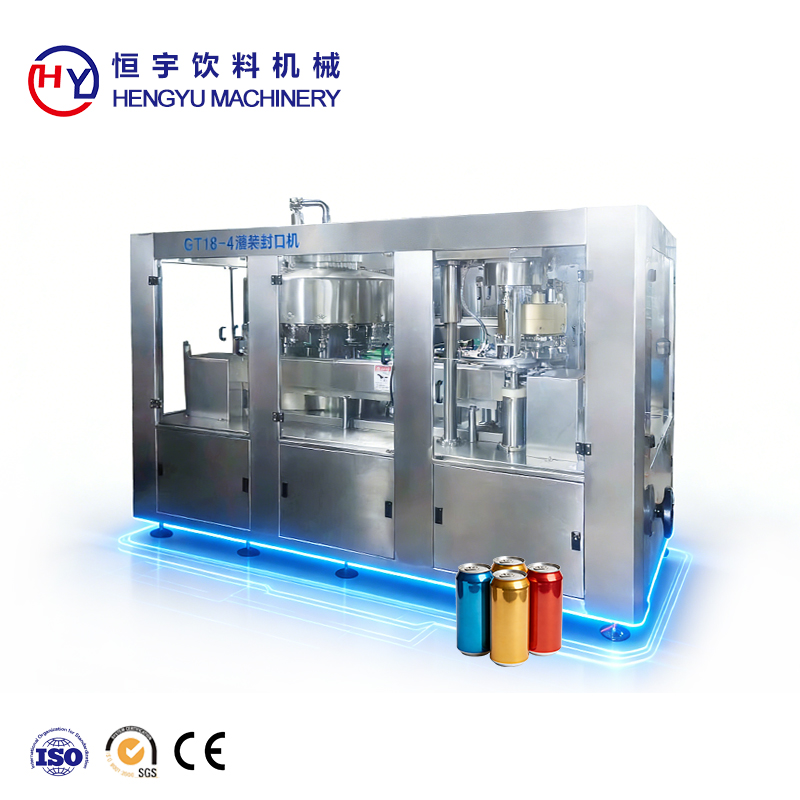
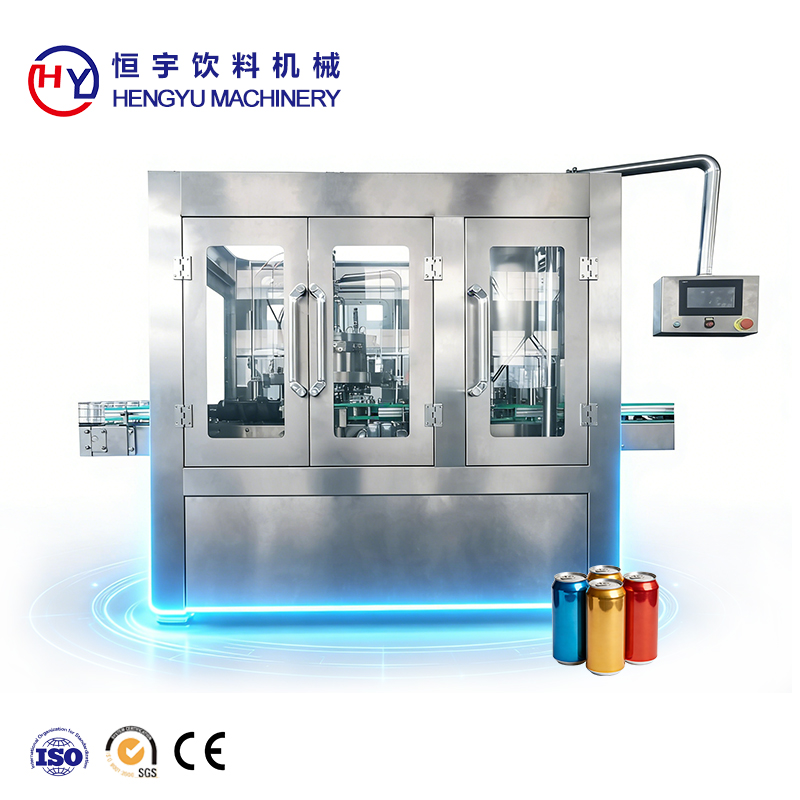
Professional Soda Can Sealer Machine - High-Speed Automated Beverage Packaging Solutions

All Categories

soda can sealer machine

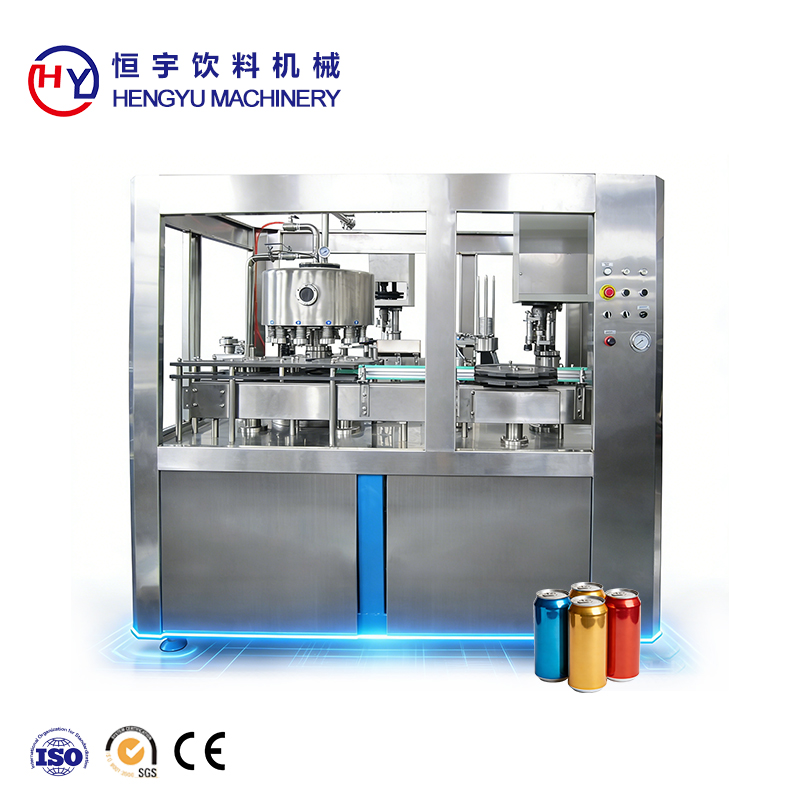
A soda can sealer machine represents essential equipment in the beverage packaging industry, designed to create airtight seals on aluminum or tinplate cans containing carbonated drinks, energy beverages, sparkling water, and other liquid products. This specialized machinery performs the critical function of double-seaming, which involves mechanically interlocking the can body and lid through a precise folding operation that ensures complete hermetic closure. The soda can sealer machine operates through a systematic process where cans are positioned under sealing heads, and rotating chucks apply controlled pressure to form two distinct folds that create a secure, leak-proof seal. Modern sealer machines incorporate advanced technological features including programmable logic controllers that manage sealing parameters, servo motor systems for precise chuck rotation speed, and automated height adjustment mechanisms to accommodate various can sizes ranging from standard 250ml to larger 500ml formats. These machines typically feature stainless steel construction to meet food-grade safety standards and resist corrosion from moisture and cleaning chemicals. The sealing process occurs at high speeds, with industrial models capable of processing between 1200 to 2400 cans per hour depending on configuration and can dimensions. Quality control sensors integrated into contemporary soda can sealer machines monitor seam thickness, tightness, and overall integrity, automatically rejecting defective units to maintain production standards. The equipment finds extensive applications across beverage manufacturing facilities, from small craft soda producers to large-scale commercial bottling operations. Beyond carbonated soft drinks, these versatile machines seal cans containing fruit juices, alcoholic beverages, nutritional supplements, and even non-food products like automotive fluids or aerosols. The machinery's modular design allows integration into complete canning lines alongside filling machines, rinsers, and labeling systems, creating efficient end-to-end packaging solutions that maximize productivity while minimizing manual labor requirements and contamination risks in beverage production environments.

Popular Products

Investing in a soda can sealer machine delivers numerous practical benefits that directly impact your production efficiency and bottom line. First and foremost, these machines dramatically increase your packaging speed compared to manual or semi-automatic alternatives. Where hand-operated systems might seal 200 cans hourly with significant operator fatigue, automated sealer machines process 1200 or more cans in the same timeframe while maintaining consistent quality throughout extended production runs. This acceleration means you fulfill orders faster, reduce labor costs, and increase revenue potential without expanding facility space or hiring additional staff. The consistency these machines provide eliminates the variability inherent in manual operations. Every seal receives identical pressure, timing, and chuck rotation, resulting in uniform product quality that protects your brand reputation and reduces customer complaints about leaking or improperly sealed containers. This reliability translates to less product waste, as defective seals that cause spillage or spoilage become rare occurrences rather than regular production losses. Another significant advantage involves the extended shelf life your products achieve through proper sealing. The hermetic closure created by precision sealing machinery prevents oxygen ingress, maintains carbonation levels, and blocks microbial contamination, allowing your beverages to remain fresh for months without preservatives or refrigeration during distribution and retail display. This extended viability expands your potential market reach to distant locations and reduces returns from retailers dealing with expired inventory. The machines also enhance workplace safety by reducing repetitive strain injuries associated with manual sealing operations. Automated systems handle the physical demands of the sealing process, allowing operators to focus on monitoring and quality assurance rather than performing exhausting manual tasks. Furthermore, modern sealer machines offer remarkable flexibility, quickly adjusting to accommodate different can sizes through simple changeover procedures that take minutes rather than hours. This adaptability allows you to diversify your product line, offering various package sizes to meet different market segments without investing in multiple specialized machines. The machines require minimal maintenance when properly operated, with durable components engineered for millions of sealing cycles before replacement becomes necessary. Routine cleaning and occasional lubrication represent the primary maintenance tasks, keeping operational costs low and unexpected downtime rare. Energy efficiency represents another practical advantage, as contemporary models consume relatively modest electrical power while delivering high output, contributing to sustainable operations and reduced utility expenses. The compact footprint of many sealer machines allows integration even into smaller production facilities where space comes at a premium, democratizing professional packaging capabilities for businesses at various scales from startup craft beverage companies to established regional distributors expanding their operations.

Tips And Tricks

Glass Bottle Filling Machine vs Plastic Bottle Filling Machine

04

Mar

Glass Bottle Filling Machine vs Plastic Bottle Filling Machine

Material Properties Dictate Core Machine Design Glass fragility and thermal mass: why glass bottle filling machines require reinforced frames, shock-dampened conveyors, and precision neck-handling grippers Working with glass bottles means going th...
View More
How to Choose a Glass Bottle Filling Machine for Beverage Production

06

Mar

How to Choose a Glass Bottle Filling Machine for Beverage Production

Match Filling Technology to Beverage Type and Sensitivity Counter-Pressure Fillers for Carbonated Beverages and Beer Carbonated drinks like soda, sparkling water and beer need careful filling techniques to keep their fizz intact while avoiding exc...
View More
How Bottled Water Production Lines Maintain Product Safety

12

Mar

How Bottled Water Production Lines Maintain Product Safety

Regulatory Foundations and the Multi-Barrier Safety Framework FDA, EPA, and ISO Standards Specific to Bottled Water Production Lines The bottled water industry works within a pretty strict set of regulations. The FDA has these things called Good Ma...
View More
Can Sealing Machine Maintenance Tips

23

Mar

Can Sealing Machine Maintenance Tips

Daily and Weekly Preventive Maintenance for Your Can Sealing Machine Essential Daily Checks: Belt Tension, Sealing Bar Alignment, and Tape Head Cleanliness Starting every shift with a quick check on belt tension makes all the difference. If belts a...
View More

Get a Free Quote

Our representative will contact you soon.
Email
Name
Phone/WhatsApp
Required Product
Message
0/1000

soda can sealer machine

Superior Sealing Technology for Perfect Product Protection

Superior Sealing Technology for Perfect Product Protection

The soda can sealer machine employs sophisticated double-seaming technology that creates exceptionally secure closures essential for preserving beverage quality and safety. This sealing method involves two distinct mechanical operations that fold the can end and body flange together in overlapping layers, forming a five-layer seam that provides complete hermetic protection against external contamination and internal pressure loss. The process begins when the can positions beneath the sealing head, where a precisely engineered seaming chuck descends and centers the lid onto the can body opening. The first operation roll then engages, rotating around the can circumference while applying calibrated pressure that folds the lid curl and body flange together at approximately ninety degrees, creating the initial interlock. Immediately following, the second operation roll completes the seal by tightening and flattening this initial fold into a compact, interlocked configuration that compresses gasket compound within the seam structure. This compound, typically applied to the lid curl during manufacturing, flows under pressure to fill microscopic gaps, creating an impermeable barrier that maintains carbonation and prevents oxygen from degrading beverage flavor or causing spoilage. The precision required for this operation demands exceptional mechanical accuracy, which modern sealer machines achieve through hardened steel components machined to tolerances measured in hundredths of millimeters. Advanced models incorporate digital controls that allow operators to adjust seaming parameters including chuck pressure, rotation speed, and roll positioning to optimize seal quality for different can materials, lid designs, and product characteristics. The machines feature interchangeable tooling sets that accommodate standard industry can formats while maintaining this precision across different sizes. Quality assurance mechanisms built into premium soda can sealer machines include automatic seam thickness measurement systems that verify each seal meets specifications, with statistical process control capabilities that track trends and alert operators to developing issues before defects occur. This proactive monitoring prevents costly production runs of improperly sealed products that would require disposal or reprocessing. The sealing heads themselves represent marvels of mechanical engineering, designed to withstand millions of sealing cycles while maintaining accuracy, with sealed bearings protecting critical components from moisture and contamination. For beverage producers, this superior sealing technology translates directly into reduced product losses from leakage, extended shelf life that opens new distribution channels, and consumer confidence in product integrity that builds brand loyalty and repeat purchases in competitive markets where packaging quality significantly influences purchasing decisions.
High-Speed Automated Operation Maximizing Production Efficiency

High-Speed Automated Operation Maximizing Production Efficiency

Modern soda can sealer machines deliver exceptional production capacity through sophisticated automation that eliminates bottlenecks in beverage packaging operations. These systems integrate seamlessly into complete canning lines, receiving filled containers from upstream equipment and delivering sealed products to downstream labeling or packaging stations without manual intervention. The automation begins with precision can handling systems that position containers with exact alignment beneath sealing heads, ensuring consistent placement that prevents jamming and enables reliable seal formation. Conveyor systems featuring timing screws or starwheel configurations space cans at optimal intervals, synchronizing product flow with the machine cycling rate to maintain steady throughput. Depending on configuration, sealer machines operate as rotary systems with multiple sealing heads arranged around a central turret, or as inline models with sequential sealing stations, each design optimized for specific production volumes and facility layouts. Rotary configurations excel at maximum speed applications, with some industrial models featuring eight or more sealing heads simultaneously processing cans as the turret rotates continuously, achieving output rates exceeding 2000 units per hour. These high-capacity systems incorporate sophisticated motion control using servo motors that precisely coordinate turret rotation with sealing head descent, chuck engagement, and can transfer, maintaining perfect timing throughout operation. Inline configurations offer advantages for smaller production volumes or limited floor space, with simpler mechanical systems that reduce initial investment while still providing substantial automation benefits over manual alternatives. The control systems governing these automated operations utilize programmable logic controllers with intuitive touchscreen interfaces that allow operators to select predefined programs for different can sizes, adjust speed parameters to match upstream equipment capabilities, and monitor real-time performance metrics including units processed, cycle times, and rejection rates. Advanced diagnostic functions identify specific issues when faults occur, displaying clear messages that guide troubleshooting and minimize downtime. Safety interlocks prevent operation when guards are open or when potential hazards exist, protecting personnel while maintaining productivity. The automated nature of soda can sealer machines dramatically reduces labor requirements, with a single operator capable of supervising multiple machines simultaneously rather than manually sealing cans individually. This efficiency transforms production economics, allowing businesses to scale output without proportionally increasing workforce size. The consistent operating speed eliminates the variability in manual operations where fatigue, distraction, or skill differences create fluctuating output rates. For growing beverage companies, this automation provides a clear pathway to increased market share by ensuring production capacity matches demand growth without requiring facility expansion or complex workforce management.
Versatile Design Accommodating Diverse Production Requirements

Versatile Design Accommodating Diverse Production Requirements

The exceptional versatility built into contemporary soda can sealer machines makes them valuable investments for beverage producers with varied product portfolios or evolving market strategies. These machines accommodate multiple can sizes through quick-changeover systems that allow operators to switch between different container formats in minimal time, typically requiring only simple adjustments to sealing head height, chuck diameter, and guide rail spacing. Premium models feature tool-free adjustment mechanisms with clearly marked scales or digital readouts that enable precise setup, while stored recipes in the control system automatically recall optimal parameters for each can size, eliminating guesswork and reducing setup errors. This flexibility proves particularly valuable for craft beverage producers and regional bottlers who package products in various sizes to serve different market segments, from compact 200ml cans for convenience stores to larger 473ml formats for retail grocery chains. The machines handle both standard diameter cans and specialty slim or sleek designs that beverage companies adopt to differentiate products on crowded retail shelves. Beyond size versatility, soda can sealer machines work effectively with different can materials including aluminum alloys of various thicknesses and tinplate steel containers, adjusting sealing pressure and chuck speed to optimize seal formation for each material's specific properties. This material compatibility allows producers to select packaging based on cost considerations, sustainability goals, or product requirements without equipment limitations constraining decisions. The sealing technology accommodates various lid designs including standard pop-top ends, full-aperture easy-open lids, and specialized closures for products requiring pour spouts or resealable features. Sanitary design principles incorporated throughout the machine construction facilitate rapid cleaning between production runs when switching between different beverages or flavors, with stainless steel surfaces, minimal crevices where product residue might accumulate, and removable components that disassemble for thorough washing. This cleanability proves essential for food safety compliance and prevents flavor cross-contamination that could compromise product quality. Some advanced soda can sealer machines offer modular configurations where additional sealing heads can be added as production volumes increase, providing a scalable solution that grows with business needs rather than requiring complete equipment replacement when capacity expansion becomes necessary. The machines integrate with various production line configurations including straight-through layouts, L-shaped arrangements for space-constrained facilities, and circular rotary systems for maximum density. Connection options for upstream filling equipment and downstream handling systems use industry-standard interfaces, simplifying integration regardless of equipment brands or vintages. This interoperability reduces implementation complexity and allows producers to optimize their complete packaging line by selecting best-in-class components from different manufacturers. For businesses exploring new beverage categories or responding to changing consumer preferences, this versatility provides the agility to pivot product offerings quickly without substantial capital investment in specialized equipment, maintaining competitive responsiveness in dynamic markets where trends shift rapidly and successful companies adapt their portfolios to capture emerging opportunities.