Water Bottle Packaging Machine - Automated Filling and Bottling Solutions for Efficient Production

All Categories

water bottle packaging machine

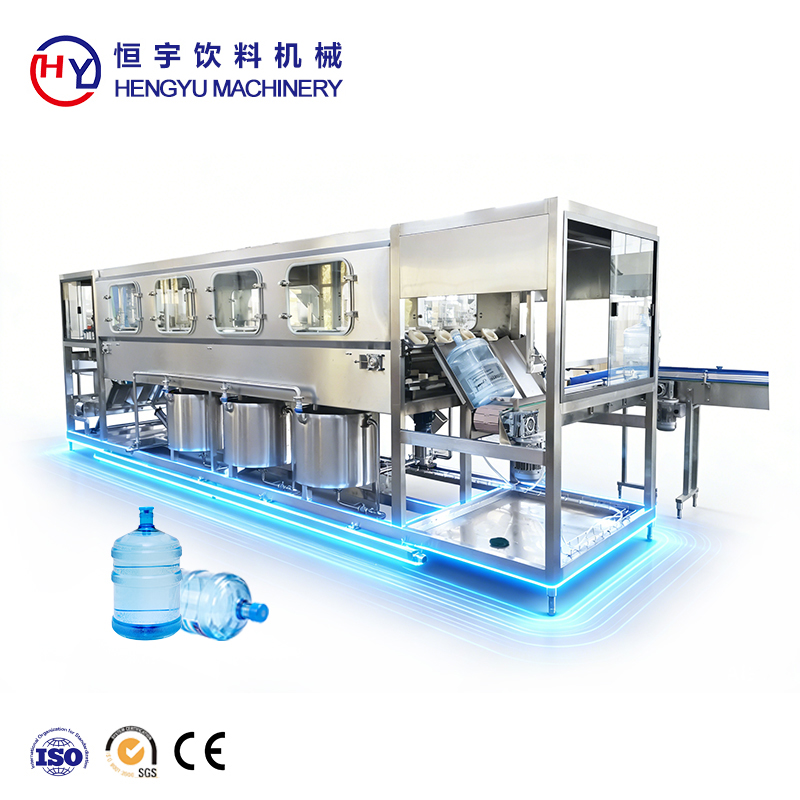
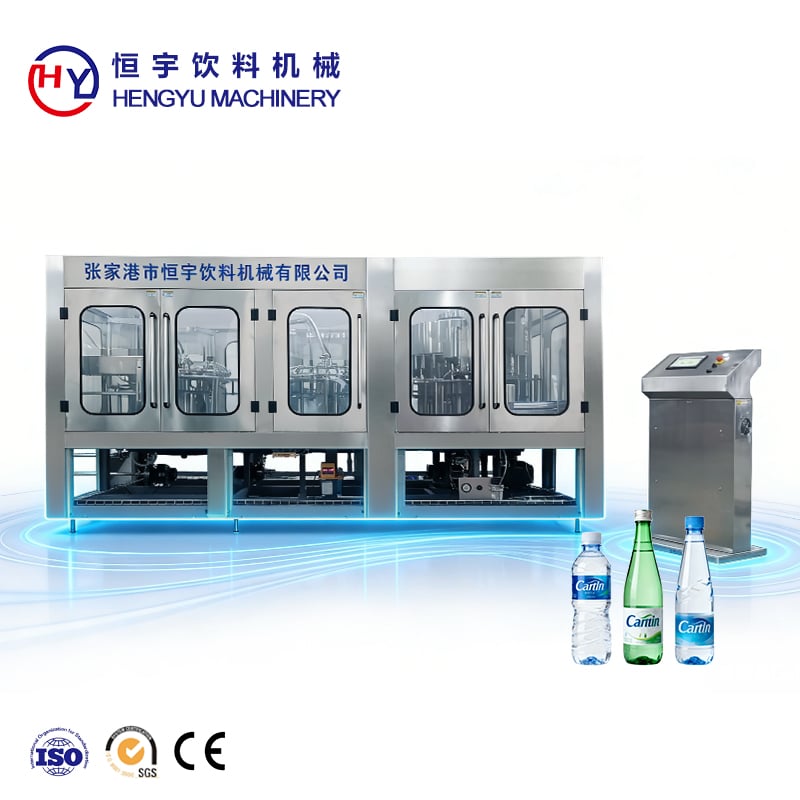
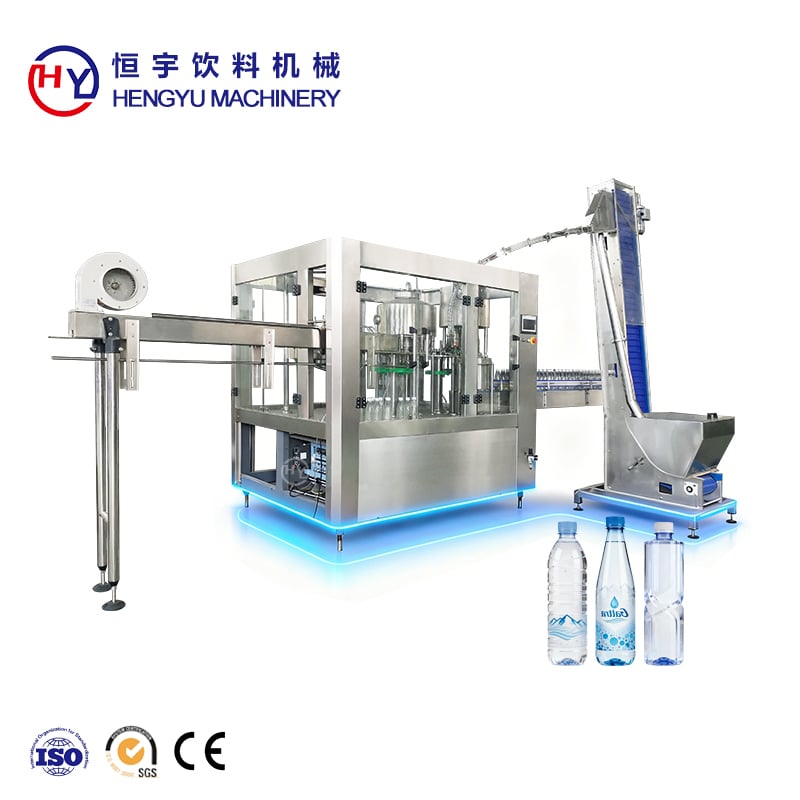
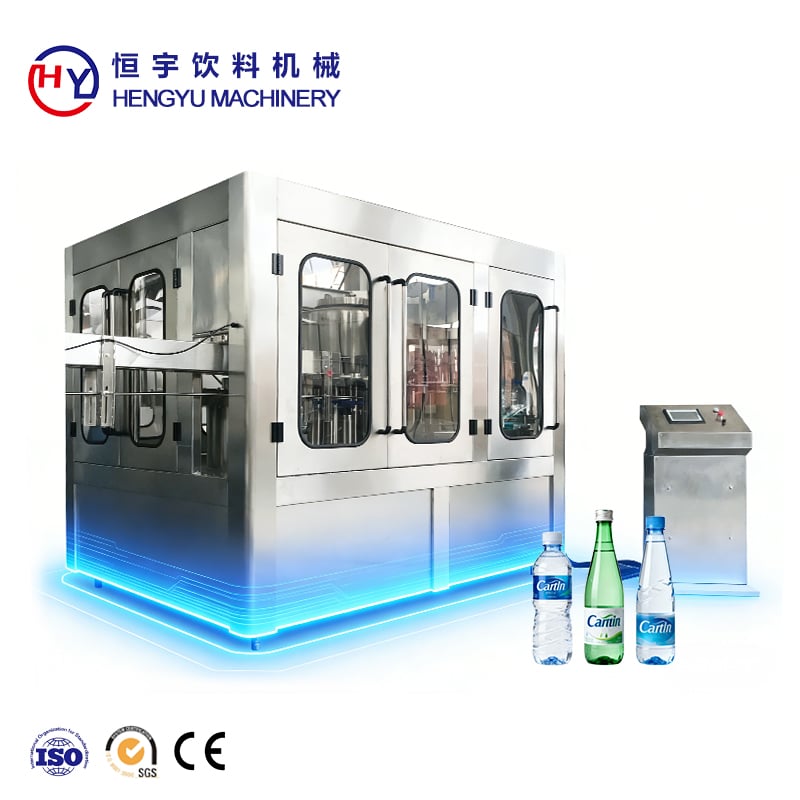
A water bottle packaging machine represents an essential automated solution designed to streamline the bottling and packaging process for beverage manufacturers and production facilities. This sophisticated equipment handles multiple stages of the packaging workflow, from filling bottles with water to sealing, labeling, and preparing products for distribution. Modern water bottle packaging machines integrate advanced technology to ensure precision, efficiency, and consistency throughout the production cycle. These systems accommodate various bottle sizes, materials including PET plastic and glass, and production volumes ranging from small-scale operations to large industrial manufacturing plants. The primary functions encompass automatic bottle feeding, rinsing to remove contaminants, precise liquid filling with accurate volume control, capping to secure bottle tops, labeling for branding and product information, and final packaging into boxes or shrink-wrap configurations. Technological features include programmable logic controllers that allow operators to adjust settings for different bottle specifications, touch-screen interfaces for intuitive operation, servo motor systems ensuring smooth and accurate movements, quality inspection sensors that detect defects or improper fills, and stainless steel construction meeting food-grade safety standards. The water bottle packaging machine employs sensors and monitoring systems to maintain consistent filling levels, prevent spillage, and reject defective units automatically. Integration capabilities allow these machines to connect with existing production lines, creating seamless workflows from water purification through final packaging. Applications span diverse sectors including mineral water bottling plants, purified drinking water facilities, flavored water production, alkaline water manufacturing, and pharmaceutical-grade water packaging. The versatility of these machines makes them suitable for startups entering the beverage market as well as established corporations expanding production capacity. By automating labor-intensive tasks, the water bottle packaging machine reduces human error, increases output speed, and maintains hygiene standards critical in beverage production environments.

New Product Releases

Investing in a water bottle packaging machine delivers substantial practical benefits that directly impact your bottom line and operational efficiency. First and foremost, automation dramatically increases production speed compared to manual packaging methods. While hand-filling and capping bottles limits output to hundreds of units per shift, automated systems process thousands of bottles hourly, enabling businesses to meet growing market demands and fulfill larger orders without expanding workforce size. This acceleration in throughput translates to faster order fulfillment and improved customer satisfaction. Cost reduction represents another compelling advantage. Although initial investment requires capital, the machine pays for itself through decreased labor expenses, reduced product waste, and lower error rates. Automated systems dispense precise water volumes, eliminating overfilling that wastes product and underfilling that fails quality standards. Consistency in production ensures every bottle meets specifications, protecting brand reputation and reducing customer complaints or returns. The water bottle packaging machine enhances workplace safety by minimizing repetitive manual tasks that cause strain injuries among workers. Employees transition from physically demanding bottle handling to supervisory roles monitoring machine performance, creating safer working conditions and reducing injury-related costs. Hygiene standards improve significantly with automated equipment. Stainless steel components resist bacterial growth, enclosed filling chambers prevent airborne contamination, and automated cleaning cycles maintain sanitary conditions between production runs. These features prove essential when producing drinking water products where purity directly affects consumer health. Flexibility stands out as a major practical benefit. Modern machines adjust quickly between different bottle sizes, allowing manufacturers to diversify product lines without purchasing separate equipment for each variation. This adaptability supports seasonal product changes, special edition releases, and market testing of new bottle formats. Scalability enables businesses to start with basic configurations and upgrade capacity as operations grow, protecting initial investments while accommodating expansion. Energy efficiency in contemporary models reduces utility costs through optimized motor systems and standby modes during idle periods. Maintenance requirements remain manageable with modular component designs allowing quick replacement of worn parts without extended downtime. User-friendly interfaces minimize training time for operators, enabling staff to achieve proficiency quickly and reducing the learning curve associated with complex industrial equipment. Data tracking capabilities in advanced water bottle packaging machines provide valuable production metrics, helping managers identify bottlenecks, optimize workflows, and make informed decisions about operational improvements. Real-time monitoring alerts operators to issues before they cause significant problems, preventing costly production stoppages. The professional appearance of machine-packaged products enhances marketability, as uniform labeling, consistent fill levels, and secure sealing present a quality image that attracts retailers and consumers alike.

Tips And Tricks

Increasing Capacity in Bottled Water Production Lines

09

Mar

Increasing Capacity in Bottled Water Production Lines

Diagnosing Bottlenecks in Your Bottled Water Production Line Measuring Throughput Gaps: Bottling Speed, Changeover Time, and OEE Analysis To get a handle on where production is falling short, look at three key performance indicators. Start by compa...
View More
How Bottled Water Production Lines Maintain Product Safety

12

Mar

How Bottled Water Production Lines Maintain Product Safety

Regulatory Foundations and the Multi-Barrier Safety Framework FDA, EPA, and ISO Standards Specific to Bottled Water Production Lines The bottled water industry works within a pretty strict set of regulations. The FDA has these things called Good Ma...
View More
How Can Filling Machines Improve Beverage Production Speed

24

Mar

How Can Filling Machines Improve Beverage Production Speed

Filling Machine Type Determines Maximum Throughput Potential Gravity, Isobaric, and Piston Can Filling Machines: Speed vs. Precision Trade-offs Gravity fillers work well for delicate drinks such as juice, processing around 20 to 36 bottles every mi...
View More
Troubleshooting Can Filling Machine Production Issues

21

Mar

Troubleshooting Can Filling Machine Production Issues

Power, Control, and Electrical Faults in Can Filling Machines Machine won't power on: main supply, fuses, and emergency stop circuit checks If the can filling machine won't start at all, the first thing to do is check whether the main power supply ...
View More

Get a Free Quote

Our representative will contact you soon.
Email
Name
Phone/WhatsApp
Required Product
Message
0/1000

water bottle packaging machine

Precision Filling Technology Ensures Product Quality and Reduces Waste

Precision Filling Technology Ensures Product Quality and Reduces Waste

The precision filling technology integrated into modern water bottle packaging machines represents a game-changing feature that directly addresses one of the most critical challenges in beverage production: maintaining accurate fill volumes across thousands of bottles while minimizing product loss. This sophisticated system employs multiple sensors and control mechanisms working in concert to deliver exact liquid quantities to each container. Flow meters continuously monitor the volume of water passing through filling nozzles, providing real-time data to the control system that makes instantaneous adjustments to valve positions. This closed-loop feedback mechanism compensates for variations in water pressure, temperature fluctuations that affect liquid density, and differences in bottle positioning. The result is remarkable consistency, with fill accuracy typically within plus or minus one percent of target volumes, far exceeding manual filling capabilities. For manufacturers, this precision translates to significant economic advantages. Overfilling represents pure profit loss, as businesses essentially give away product beyond the labeled volume. When multiplied across millions of bottles annually, even small overfills create substantial financial impact. Conversely, underfilling risks regulatory violations, customer dissatisfaction, and potential legal consequences. The water bottle packaging machine eliminates these concerns through reliable volumetric control. Beyond financial benefits, precision filling enhances brand reputation by ensuring customers receive consistent value with every purchase. The technology adapts to various bottle shapes and sizes without compromising accuracy, supporting product diversification strategies. Anti-drip nozzles prevent spillage during the filling process, maintaining clean bottle exteriors that require less post-fill cleaning and present better on retail shelves. The filling system incorporates programmable recipes storing parameters for different product specifications, allowing operators to switch between bottle sizes or water types with simple touchscreen commands rather than manual recalibration. This flexibility proves invaluable for manufacturers producing multiple product lines or accommodating custom orders. Sanitary design principles govern the construction of filling components, with stainless steel contact surfaces, easily accessible cleaning points, and CIP (clean-in-place) compatibility ensuring the water bottle packaging machine maintains the highest hygiene standards required for potable water production.
High-Speed Automation Maximizes Production Capacity and Labor Efficiency

High-Speed Automation Maximizes Production Capacity and Labor Efficiency

High-speed automation functionality within water bottle packaging machines fundamentally transforms production economics by exponentially increasing output while simultaneously reducing per-unit labor costs. Modern systems operate at impressive speeds, with entry-level models handling 1,200 to 3,000 bottles per hour and industrial-grade equipment processing 10,000 to 36,000 bottles hourly depending on bottle size and configuration. This automation replaces manual operations that might achieve 50 to 100 bottles per hour per worker, representing production increases of twenty to three hundred times when comparing automated systems to manual processes. The economic implications extend beyond simple output numbers. Higher production volumes enable manufacturers to negotiate better rates with suppliers through bulk purchasing, reduce per-unit overhead costs by spreading fixed expenses across more products, and capture market opportunities requiring large order fulfillment that manual operations cannot satisfy. The water bottle packaging machine operates continuously with minimal supervision, maintaining consistent speed throughout shifts without fatigue-related slowdowns that affect human workers. This reliability ensures predictable production schedules and dependable delivery commitments to customers. Labor efficiency improvements manifest in multiple ways. Fewer workers accomplish greater output, allowing businesses to redirect human resources toward value-added activities like quality management, maintenance, innovation, and business development rather than repetitive physical tasks. The skill level required shifts from manual dexterity to technical monitoring, often resulting in higher job satisfaction and reduced employee turnover. Training requirements decrease as intuitive touchscreen interfaces replace complex manual techniques, enabling new operators to achieve productivity quickly. Automation also addresses labor availability challenges facing many industries, reducing dependence on large workforces that may be difficult to recruit or retain in competitive employment markets. The continuous operation capability of automated water bottle packaging machines supports multi-shift production schedules, allowing facilities to maximize equipment utilization across 16 or 24-hour daily operations. Quick changeover features minimize downtime between different bottle formats, maintaining high overall equipment effectiveness percentages. Synchronized components work in choreographed sequences, with bottle unscrambling, filling, capping, labeling, and packing stations operating simultaneously on different units, creating efficient production flow. The automation includes quality inspection integrated into the production line, with sensors detecting improperly filled bottles, missing caps, or labeling errors, automatically rejecting defective units without slowing the overall process. This inline quality control maintains output integrity without requiring separate inspection stations or additional personnel.
Versatile Configuration Options Accommodate Diverse Production Requirements

Versatile Configuration Options Accommodate Diverse Production Requirements

Versatile configuration options represent a defining characteristic of contemporary water bottle packaging machines, providing manufacturers with adaptable solutions that grow alongside business needs and respond to changing market demands. This flexibility begins with modular design architectures allowing customers to select specific functional components matching their current requirements while maintaining expansion pathways for future enhancement. Basic configurations might include filling and capping stations suitable for startups or specialized producers, while comprehensive systems integrate rinsing, filling, capping, labeling, date coding, inspection, and cartoning functions in continuous production lines. The water bottle packaging machine accommodates various bottle materials including PET plastic, HDPE, glass, and aluminum, with adjustable handling systems that grip containers gently to prevent damage while maintaining secure control throughout processing. Bottle size flexibility proves particularly valuable, as machines adjust to handle containers ranging from small 250-milliliter personal-size bottles to large 5-gallon jugs, often through simple mechanical adjustments or program changes rather than requiring complete equipment replacement. This adaptability supports product portfolio expansion without proportional capital investment increases. Filling technology options include gravity filling for still water, pressure filling for faster processing, and specialized systems for carbonated or hot-fill applications, allowing manufacturers to diversify into different beverage categories using the same core equipment platform. Labeling versatility accommodates wraparound labels, front-and-back panel labels, shrink sleeves, and pressure-sensitive stickers, supporting varied branding approaches and promotional campaigns. The machine interfaces with different packaging formats at the output stage, feeding bottles into cardboard cases, plastic-wrapped bundles, or display-ready packaging configurations according to distribution requirements. Control systems offer multiple automation levels, from semi-automatic operation requiring some manual intervention suitable for smaller operations, to fully automatic systems running independently with minimal supervision appropriate for high-volume manufacturers. Integration capabilities allow the water bottle packaging machine to connect with upstream water treatment and purification equipment and downstream palletizing and warehouse management systems, creating comprehensive production ecosystems. Customization extends to facility-specific requirements, with machines designed for available floor space, configured for left-to-right or right-to-left bottle flow matching existing layouts, and built to voltage and electrical standards matching regional power infrastructure. Sanitation features adapt to regulatory requirements across different markets and product types, with pharmaceutical-grade construction available for medical applications and food-grade specifications standard for beverage production. Software customization includes multilingual interfaces supporting international operations, recipe storage for different product specifications, production data logging for quality documentation, and remote connectivity enabling technical support and predictive maintenance. This comprehensive versatility ensures the water bottle packaging machine remains a relevant, productive asset throughout its operational lifespan, adapting to business evolution rather than becoming obsolete as requirements change.