Gallon Filling Machine: Precision Automated Solutions for High-Capacity Liquid Packaging

All Categories

gallon filling machine

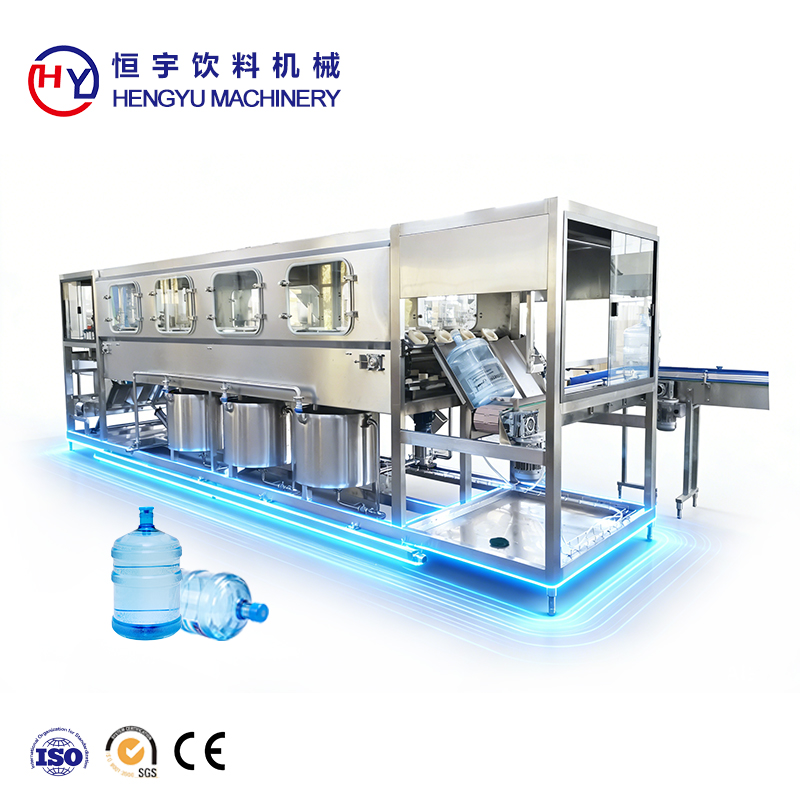
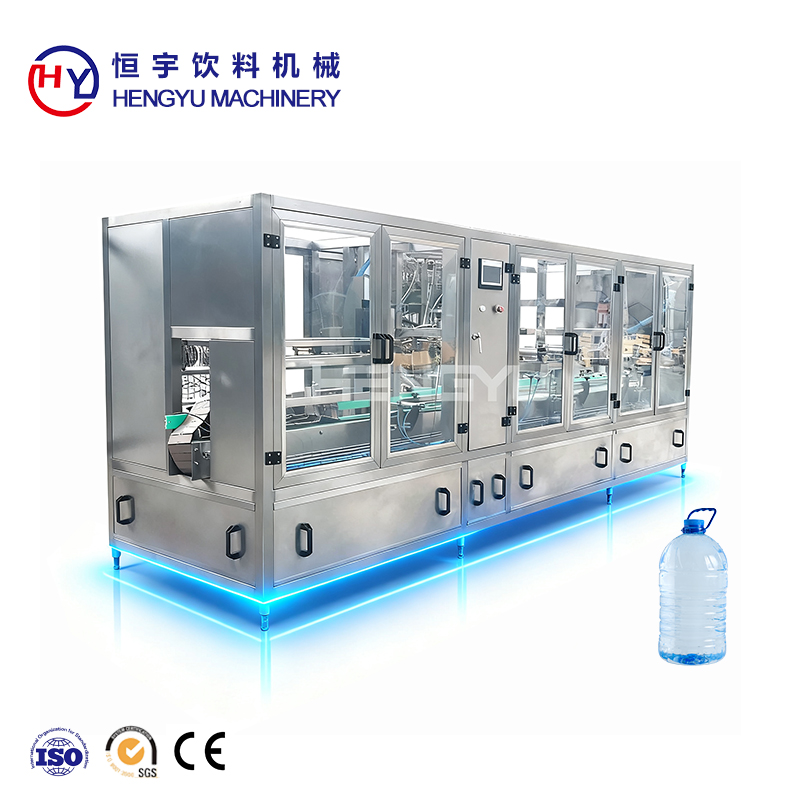
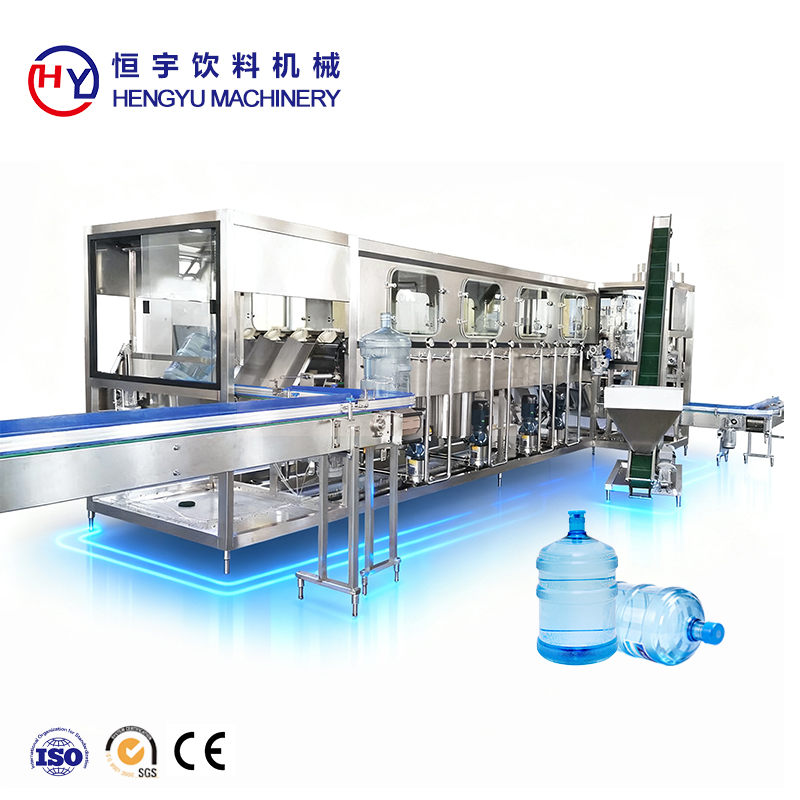
A gallon filling machine represents a sophisticated automated solution designed specifically for efficiently filling large-capacity containers, typically ranging from one to five gallons. This industrial equipment serves as a cornerstone in modern production lines across multiple sectors, delivering precise volumetric dispensing while maintaining exceptional speed and accuracy. The gallon filling machine incorporates advanced control systems that regulate flow rates, monitor fill levels, and ensure consistent product delivery throughout continuous operation. These machines accommodate various liquid viscosities, from thin water-like substances to thick oils and chemicals, making them versatile assets for diverse manufacturing environments. The technological framework integrates programmable logic controllers, servo motors, and digital sensors that work harmoniously to achieve optimal performance. Modern gallon filling machine models feature intuitive touchscreen interfaces that allow operators to adjust parameters quickly, store multiple product recipes, and monitor real-time production data. The construction typically employs food-grade stainless steel or corrosion-resistant materials, ensuring durability and compliance with industry hygiene standards. Automatic nozzle positioning systems accommodate different container sizes without requiring manual adjustments, significantly reducing changeover time between production runs. The gallon filling machine can operate in semi-automatic or fully automatic modes, depending on production requirements and budget considerations. Key applications span the beverage industry for water and juice packaging, chemical manufacturing for detergents and solvents, pharmaceutical production for bulk liquids, automotive sectors for lubricants and coolants, and agricultural businesses for pesticides and fertilizers. Integration capabilities allow seamless connection with upstream and downstream equipment such as conveyors, capping machines, and labeling systems, creating comprehensive packaging solutions that maximize operational efficiency and minimize labor costs.

New Product Releases

Investing in a gallon filling machine delivers substantial operational improvements that directly impact your bottom line. First, these systems dramatically increase production speed compared to manual filling methods, enabling businesses to fill hundreds or thousands of gallons per hour depending on the model selected. This acceleration means you can fulfill larger orders faster, respond to market demand more effectively, and scale operations without proportionally increasing workforce size. The precision offered by automated gallon filling machine technology eliminates the inconsistencies inherent in human operation, ensuring every container receives exactly the specified amount. This accuracy reduces product giveaway, where overfilling wastes valuable materials and cuts into profit margins. Conversely, underfilling risks regulatory non-compliance and customer dissatisfaction. The consistent fill levels protect your brand reputation while optimizing raw material usage. Labor cost reduction represents another significant advantage, as one operator can oversee multiple gallon filling machine units simultaneously, freeing personnel for other value-added tasks. This efficiency becomes particularly valuable in markets facing workforce shortages or rising wage pressures. The machines also enhance workplace safety by minimizing direct human contact with potentially hazardous chemicals, corrosive substances, or heavy containers. Automated systems reduce the physical strain associated with repetitive lifting and pouring, decreasing workplace injury rates and associated compensation claims. Flexibility stands as a crucial benefit, with modern gallon filling machine equipment accommodating different container shapes, sizes, and materials without extensive reconfiguration. This adaptability supports product line diversification and seasonal variations without requiring separate dedicated equipment for each product. The digital control systems maintain detailed production records automatically, providing valuable data for quality assurance, inventory management, and regulatory compliance documentation. These audit trails prove invaluable during inspections or when investigating production anomalies. Maintenance requirements remain manageable due to robust engineering and readily available replacement components. The return on investment typically materializes within months as increased throughput and reduced waste compound over time. Environmental benefits also emerge through precise dispensing that minimizes spills and contamination, supporting sustainability initiatives while reducing cleanup costs. The gallon filling machine further improves product quality by maintaining sanitary conditions through closed-system filling that prevents airborne contamination. Temperature control features preserve product integrity for heat-sensitive formulations. Overall, these advantages combine to create a compelling business case for automation that strengthens competitive positioning in demanding markets.

Tips And Tricks

Glass Bottle Filling Machine vs Plastic Bottle Filling Machine

04

Mar

Glass Bottle Filling Machine vs Plastic Bottle Filling Machine

Material Properties Dictate Core Machine Design Glass fragility and thermal mass: why glass bottle filling machines require reinforced frames, shock-dampened conveyors, and precision neck-handling grippers Working with glass bottles means going th...
View More
Increasing Capacity in Bottled Water Production Lines

09

Mar

Increasing Capacity in Bottled Water Production Lines

Diagnosing Bottlenecks in Your Bottled Water Production Line Measuring Throughput Gaps: Bottling Speed, Changeover Time, and OEE Analysis To get a handle on where production is falling short, look at three key performance indicators. Start by compa...
View More
Troubleshooting Can Filling Machine Production Issues

21

Mar

Troubleshooting Can Filling Machine Production Issues

Power, Control, and Electrical Faults in Can Filling Machines Machine won't power on: main supply, fuses, and emergency stop circuit checks If the can filling machine won't start at all, the first thing to do is check whether the main power supply ...
View More
Can Sealing Machine Maintenance Tips

23

Mar

Can Sealing Machine Maintenance Tips

Daily and Weekly Preventive Maintenance for Your Can Sealing Machine Essential Daily Checks: Belt Tension, Sealing Bar Alignment, and Tape Head Cleanliness Starting every shift with a quick check on belt tension makes all the difference. If belts a...
View More

Get a Free Quote

Our representative will contact you soon.
Email
Name
Phone/WhatsApp
Required Product
Message
0/1000

gallon filling machine

Advanced Precision Technology Ensures Perfect Fill Every Time

Advanced Precision Technology Ensures Perfect Fill Every Time

The cornerstone of any effective gallon filling machine lies in its precision measurement and control technology, which transforms the filling process from an approximate manual task into an exact science. Modern systems employ multiple technological approaches to achieve exceptional accuracy, including volumetric piston fillers, time-pressure filling methods, flow meter systems, and load cell weight-based filling. Each methodology offers distinct advantages for specific product characteristics and production requirements. Volumetric piston gallon filling machine designs utilize precision-machined cylinders and pistons that draw exact product volumes and dispense them into containers with repeatability typically within plus or minus one percent. This mechanical precision remains unaffected by viscosity changes or temperature fluctuations that might impact other filling methods. Flow meter technology integrates sophisticated sensors that measure actual liquid volume passing through the filling nozzles in real-time, with the programmable controller adjusting valve timing to compensate for any variations. This dynamic calibration ensures consistent fills even when product density shifts or supply pressure varies. Weight-based systems using load cells provide the ultimate accuracy by actually measuring the final filled container weight and comparing it against target specifications. The gallon filling machine controller makes instantaneous corrections if deviations occur, learning from each cycle to optimize subsequent fills. These precision systems dramatically reduce the standard deviation in fill weights across production runs, ensuring regulatory compliance with net content labeling requirements while minimizing both overfill waste and underfill risks. The financial impact proves substantial when multiplied across thousands of containers daily. For example, reducing overfill by just two percent on a product line filling ten thousand gallons daily translates to saving two hundred gallons of product, which compounds to significant annual savings. Beyond cost reduction, precision filling protects brand integrity by ensuring customers consistently receive full value, preventing the negative perceptions and potential legal issues associated with short-fills. The technological sophistication extends to self-diagnostic capabilities that alert operators to potential accuracy drift before it affects product quality, with calibration routines that maintain performance over extended periods. Integration with quality management systems enables automated documentation of fill accuracy for every production batch, creating comprehensive compliance records without additional labor. This precision technology represents a fundamental value proposition that distinguishes modern automated gallon filling machine equipment from legacy systems or manual processes.
Versatile Design Accommodates Multiple Products and Containers

Versatile Design Accommodates Multiple Products and Containers

The adaptability of contemporary gallon filling machine systems addresses a critical challenge facing modern manufacturers: the need to efficiently handle diverse product portfolios without maintaining separate dedicated equipment for each variant. This versatility manifests across multiple dimensions, creating operational flexibility that supports business growth and market responsiveness. Container compatibility represents the first layer of adaptability, with adjustable filling heads, nozzle heights, and conveyor configurations that accommodate different gallon container formats including round bottles, square jugs, jerry cans, and bag-in-box systems. Tool-free adjustment mechanisms enable operators to switch between container types in minutes rather than hours, minimizing downtime during changeovers. The gallon filling machine engineering accounts for various container materials such as HDPE plastic, PET, glass, and metal, each requiring different handling characteristics to prevent damage during the filling process. Product versatility extends the utility further, as quality systems handle both thin liquids like water with viscosities around one centipoise and thick products like honey or liquid detergents exceeding ten thousand centipoise. This range requires sophisticated nozzle designs that prevent dripping with thin products while facilitating complete drainage of viscous formulations. Temperature control systems integrated into advanced gallon filling machine models enable filling of products requiring heated dispensing, such as certain waxes or food oils, as well as cold-filling for heat-sensitive formulations. Chemical compatibility receives careful attention through material selection, with product contact parts available in various grades of stainless steel, FDA-approved plastics, or specialized alloys that resist corrosion from aggressive chemicals. Recipe management systems store multiple product configurations including fill volumes, filling speeds, settling times, and other parameters, allowing operators to switch between products through simple touchscreen selections. This programmability proves invaluable for contract packaging operations serving multiple clients or manufacturers with seasonal product variations. The modular architecture of modern gallon filling machine equipment supports incremental capability expansion, with options to add filling heads, integrate automatic capping, incorporate nitrogen purging for oxygen-sensitive products, or implement clean-in-place systems for efficient sanitization. This scalability protects capital investments by allowing businesses to start with essential capabilities and expand functionality as production demands evolve. The versatility extends to integration possibilities, as standardized communication protocols enable the gallon filling machine to connect with enterprise resource planning systems, warehouse management software, and production monitoring platforms. This connectivity creates intelligent production environments where filling operations respond dynamically to inventory levels, order priorities, and quality data. The comprehensive versatility delivered by modern gallon filling machine technology eliminates the traditional compromise between specialization and flexibility, enabling manufacturers to achieve both optimal performance for current products and readiness for future opportunities.
Robust Construction Delivers Reliable Long-Term Performance

Robust Construction Delivers Reliable Long-Term Performance

The durability and reliability engineered into quality gallon filling machine systems represent critical but often underappreciated value drivers that significantly impact total cost of ownership and operational continuity. Industrial filling environments present demanding conditions including continuous operation cycles, exposure to chemicals, temperature extremes, and the mechanical stresses of high-speed production. Manufacturers address these challenges through thoughtful material selection, structural design, and component quality that ensure sustained performance over years of intensive use. The foundation begins with heavy-duty frames constructed from welded stainless steel that provides both corrosion resistance and structural rigidity to maintain precise alignment of critical components even under continuous vibration and loading. Premium gallon filling machine models specify food-grade stainless steel throughout product contact areas, meeting stringent hygiene standards while resisting degradation from acidic, alkaline, or solvent-based products. Mechanical components including pumps, valves, and actuators come from established industrial suppliers known for reliability, with generous safety factors that prevent premature wear even in demanding applications. Sealed bearings, corrosion-resistant fasteners, and protective coatings on electrical components extend maintenance intervals and reduce unplanned downtime. The electrical and control systems incorporate industrial-grade programmable logic controllers, heavy-duty contactors, and properly rated wiring that withstand the electrical noise and environmental conditions typical in production facilities. Redundant safety circuits protect both operators and equipment from hazardous conditions, with emergency stops, overload protection, and fault monitoring that prevent minor issues from escalating into major failures. Preventive maintenance accessibility receives careful consideration during gallon filling machine design, with strategic component placement that facilitates inspection, cleaning, and replacement without requiring extensive disassembly. Color-coded connections, clearly labeled adjustment points, and comprehensive documentation support both routine maintenance and troubleshooting, reducing dependence on specialized technicians for minor issues. The reliability extends to consistent performance over extended production runs, with thermal management systems that prevent overheating during continuous operation and vibration dampening that maintains accuracy even at maximum speeds. Quality manufacturers back their gallon filling machine products with comprehensive warranties, readily available spare parts, and technical support that minimizes the risk of extended production interruptions. The financial implications of reliability prove substantial when considering the costs associated with unplanned downtime including lost production, expedited shipping to meet customer commitments, and the labor inefficiency of technicians and operators standing idle during repairs. A reliable gallon filling machine typically achieves uptime exceeding ninety-five percent, translating to minimal disruption in production schedules and consistent order fulfillment. The robust construction also contributes to residual value, as well-maintained equipment retains functionality and market value for potential resale or repurposing as business needs evolve. This long-term reliability transforms the gallon filling machine from a simple capital expense into a strategic asset that supports sustained competitive advantage through operational excellence.