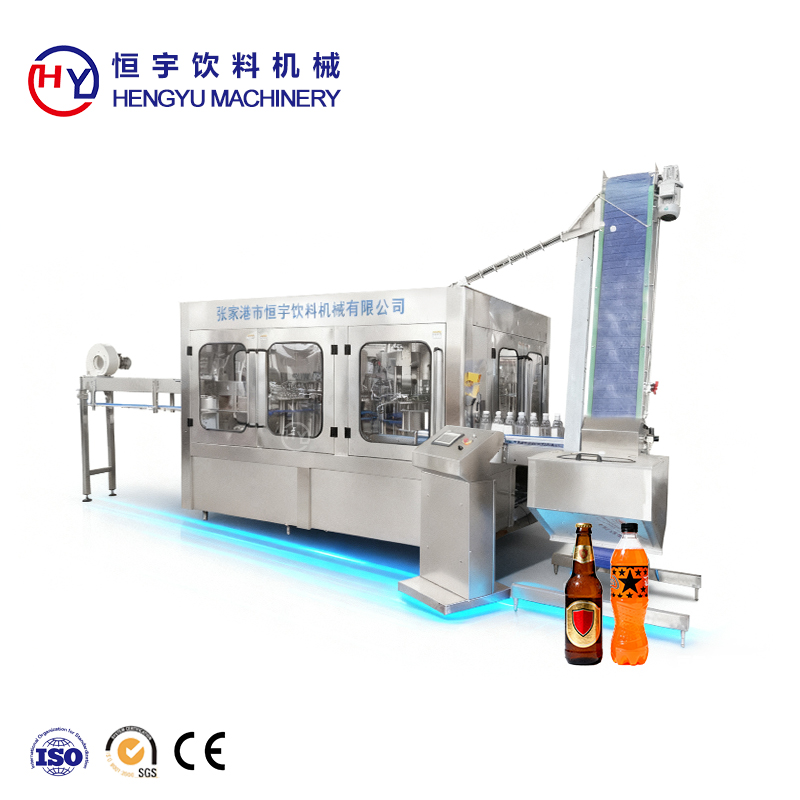
Automatic Soda Bottling Plant - Advanced Solutions for Beverage Production Efficiency

All Categories

automatic soda bottling plant

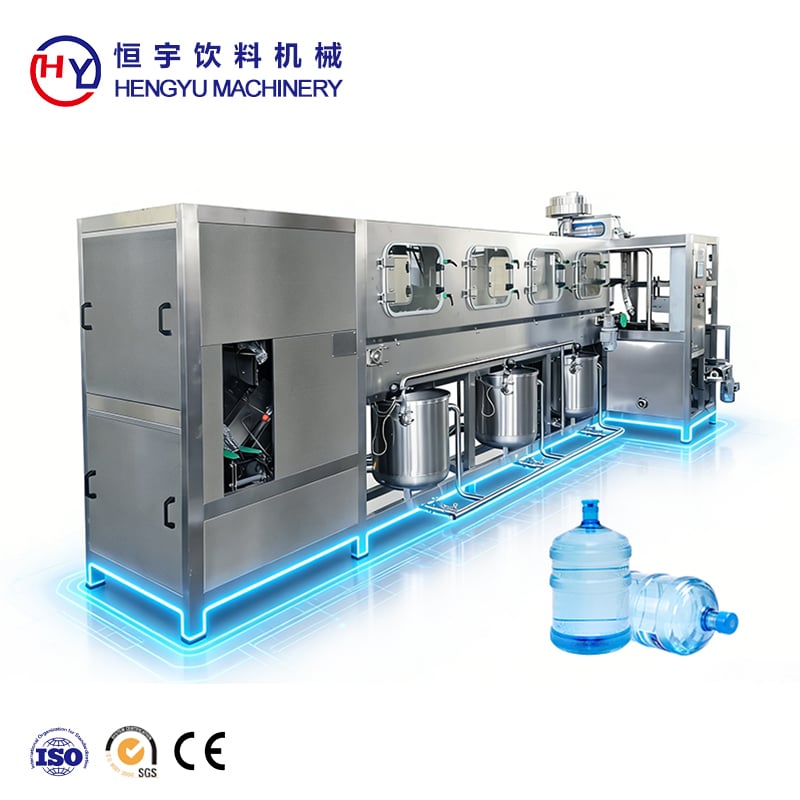
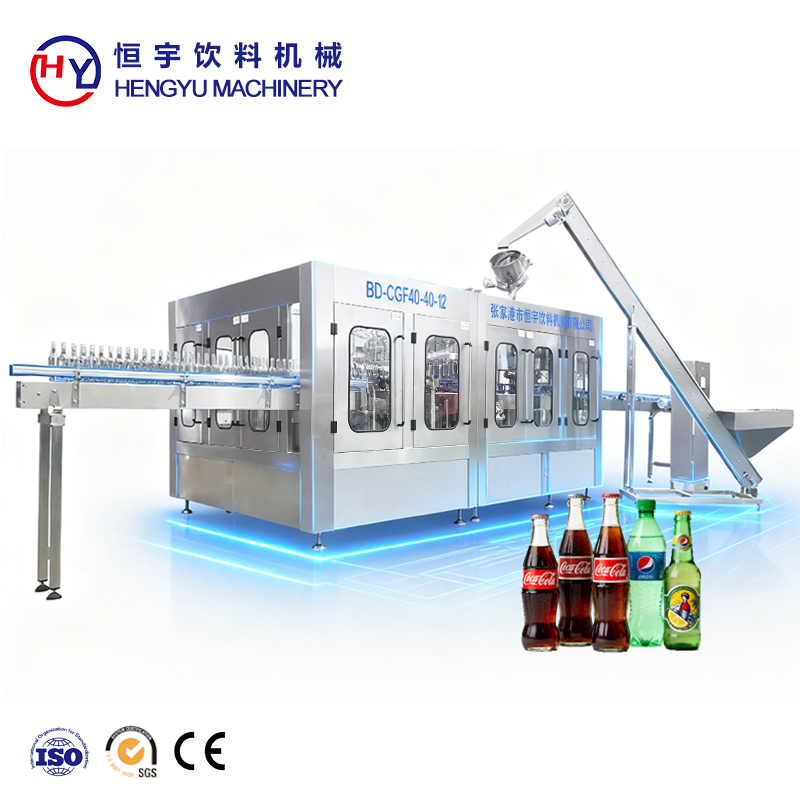
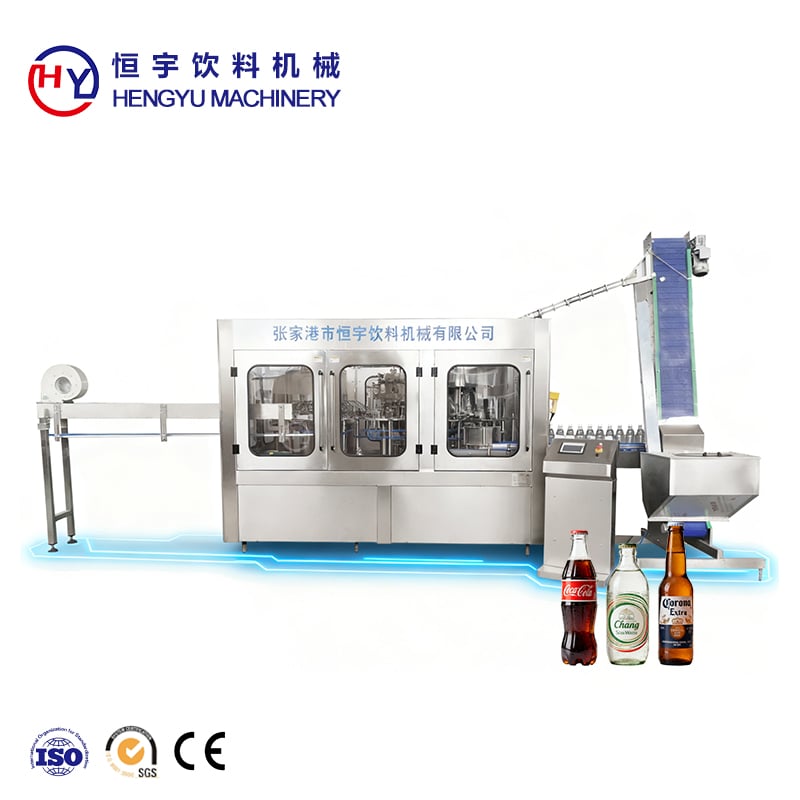
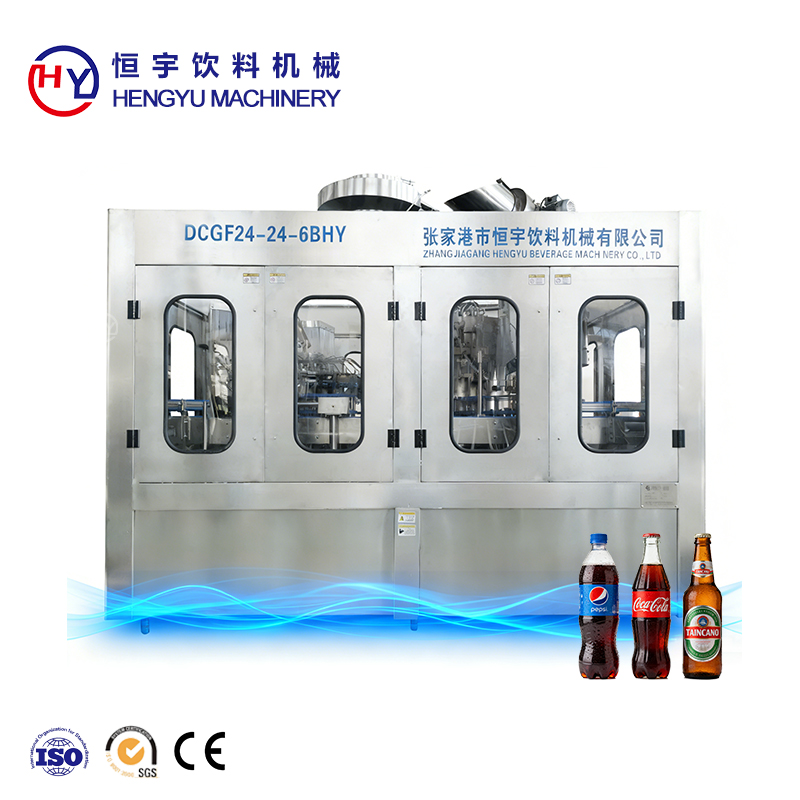
An automatic soda bottling plant represents a comprehensive manufacturing solution designed to streamline the entire beverage production process from raw materials to finished packaged products. This sophisticated system integrates multiple processing stages including water treatment, carbonation, filling, capping, labeling, and packaging into one seamless operation. The automatic soda bottling plant utilizes advanced control systems that monitor and adjust parameters in real-time, ensuring consistent product quality throughout production runs. Modern facilities incorporate stainless steel construction throughout critical contact points, maintaining hygiene standards while resisting corrosion from acidic beverages. The main functions encompass precise syrup mixing ratios, controlled carbonation levels, accurate fill volumes, and secure cap application. Technological features include programmable logic controllers that manage production speeds, servo-driven filling mechanisms for accuracy, automated quality inspection systems using cameras and sensors, and integrated cleaning-in-place systems that sanitize equipment without disassembly. These plants handle various bottle sizes and materials including PET plastic, glass, and aluminum cans with quick changeover capabilities. Production capacities range from small-scale operations processing 3000 bottles per hour to large industrial systems exceeding 50000 units hourly. Applications span commercial beverage manufacturers, contract bottling facilities, startup drink companies, and established brands expanding production capacity. The automatic soda bottling plant serves carbonated soft drinks, sparkling water, energy drinks, and flavored soda products across diverse market segments. Integration with upstream ingredient preparation and downstream warehousing systems creates complete production ecosystems. Remote monitoring capabilities allow operators to track performance metrics, identify potential issues before they cause downtime, and optimize efficiency parameters. These automated systems significantly reduce manual labor requirements while increasing output consistency and reducing contamination risks inherent in human handling.

Popular Products

Investing in an automatic soda bottling plant delivers substantial operational improvements that directly impact your bottom line. First and foremost, production speed increases dramatically compared to manual or semi-automated operations, allowing you to meet growing market demand without proportional increases in labor costs. The precision filling mechanisms waste less product by delivering exact volumes repeatedly, translating to thousands of dollars saved annually on raw materials. Consistency becomes a hallmark of your brand as every bottle receives identical treatment regarding carbonation levels, fill volumes, and cap torque, eliminating the variation that manual processes introduce. Labor costs decrease substantially since automated systems require minimal supervision, typically needing only two to three operators for lines that would previously require ten or more workers. This workforce efficiency allows you to redirect human resources toward quality control, sales, and business development activities that drive growth. Reduced contamination risks protect your brand reputation as automated systems minimize human contact with products, decreasing microbial introduction opportunities and extending shelf life. The automatic soda bottling plant operates with remarkable reliability, running extended shifts without fatigue-related errors that human workers inevitably experience. Maintenance becomes predictable through scheduled servicing rather than reactive repairs, reducing unexpected downtime that disrupts delivery schedules and disappoints customers. Flexibility allows rapid product changeovers, enabling you to respond quickly to seasonal demands or launch limited-edition flavors without extensive reconfiguration delays. Energy efficiency has improved significantly in modern systems, with optimized motors, heat recovery systems, and intelligent power management reducing utility expenses. Traceability features track every bottle through the production process, providing documentation that satisfies regulatory requirements and facilitates rapid response if quality issues emerge. Scalability means your initial investment grows with your business, as modular designs allow capacity expansion by adding stations rather than replacing entire systems. Quality documentation happens automatically with integrated sensors recording critical parameters, eliminating manual logbook entries prone to errors or omissions. Space utilization improves through vertical integration and compact designs that produce more output per square foot than older equipment configurations. Return on investment typically occurs within two to four years as savings from reduced labor, decreased waste, and increased production capacity accumulate. Employee safety improves as workers avoid repetitive motion injuries and dangerous manual tasks like heavy lifting or working near moving machinery. The professional appearance of consistently produced products enhances retailer confidence and consumer perception, supporting premium pricing strategies that improve profit margins.

Practical Tips

Increasing Capacity in Bottled Water Production Lines

09

Mar

Increasing Capacity in Bottled Water Production Lines

Diagnosing Bottlenecks in Your Bottled Water Production Line Measuring Throughput Gaps: Bottling Speed, Changeover Time, and OEE Analysis To get a handle on where production is falling short, look at three key performance indicators. Start by compa...
View More
How Bottled Water Production Lines Maintain Product Safety

12

Mar

How Bottled Water Production Lines Maintain Product Safety

Regulatory Foundations and the Multi-Barrier Safety Framework FDA, EPA, and ISO Standards Specific to Bottled Water Production Lines The bottled water industry works within a pretty strict set of regulations. The FDA has these things called Good Ma...
View More
Can Filling Machine Capacity Planning Guide

22

Mar

Can Filling Machine Capacity Planning Guide

Understanding Can Filling Machine Capacity: Theory vs. Real-World Performance Why Theoretical Capacity Rarely Matches Effective Output on Can Filling Lines When companies talk about canning speed at 100 cans per minute, they're referring to what ha...
View More
Automation Technology in Can Sealing Machines

24

Mar

Automation Technology in Can Sealing Machines

How Automation Enhances Precision and Reliability in Can Sealing Machines Core Automation Components: Servo Drives, Vision Systems, and Closed-Loop Feedback in Modern Can Sealing Machines Today's can sealing equipment reaches incredible levels of p...
View More

Get a Free Quote

Our representative will contact you soon.
Email
Name
Phone/WhatsApp
Required Product
Message
0/1000

automatic soda bottling plant

Advanced Precision Filling Technology Ensures Zero Waste and Perfect Consistency

Advanced Precision Filling Technology Ensures Zero Waste and Perfect Consistency

The automatic soda bottling plant incorporates state-of-the-art filling technology that revolutionizes how beverages reach containers with unprecedented accuracy and reliability. At the heart of this system lies servo-controlled filling valves that meter liquid with tolerances measured in milliliters, ensuring every single bottle contains the exact specified volume regardless of production speed or environmental conditions. This precision matters tremendously because underfilling violates regulatory standards and disappoints consumers, while overfilling directly reduces profitability by giving away free product with every unit. Traditional gravity-fed or time-based filling methods struggle with consistency as liquid viscosity changes with temperature or carbonation levels fluctuate, but modern automated systems compensate for these variables in real-time through sophisticated sensor feedback loops. The filling stations employ magnetic flowmeters or mass-based measurement systems that detect actual liquid volume rather than relying on indirect timing calculations prone to drift and error. This technology becomes particularly valuable when producing carbonated beverages where foam generation complicates filling operations, as the automatic soda bottling plant uses counter-pressure filling techniques that pre-pressurize bottles before liquid introduction, minimizing turbulence and preserving carbonation levels that define product quality. Multi-head filling configurations allow simultaneous bottle filling, dramatically increasing throughput while maintaining individual control over each station for optimal accuracy. The system automatically adjusts for different bottle sizes through programmable recipes stored in the control system, eliminating manual recalibration between production runs and reducing changeover time from hours to minutes. Hygienic design considerations ensure all product-contact surfaces utilize food-grade stainless steel with sanitary welded connections that prevent bacterial harborage points, while automated cleaning cycles sanitize the entire filling circuit without disassembly, maintaining microbiological safety standards essential for beverage production. Leak detection systems immediately identify improperly sealed bottles, automatically rejecting them from the production line before they reach packaging stages, protecting brand reputation and preventing retailer complaints. The precision filling technology reduces product giveaway typically by two to three percent compared to older systems, which translates directly to significant cost savings when multiplied across millions of bottles annually, often funding the equipment investment through waste reduction alone within the first several years of operation.
Intelligent Automation Systems Maximize Uptime and Minimize Operating Costs

Intelligent Automation Systems Maximize Uptime and Minimize Operating Costs

The automatic soda bottling plant distinguishes itself through comprehensive automation that extends far beyond simple mechanical repetition, incorporating artificial intelligence and predictive analytics that optimize performance continuously. Programmable logic controllers serve as the central nervous system, coordinating dozens of subsystems including conveyor speeds, filling timing, capping torque, labeling position, and quality inspection in perfect synchronization that prevents bottlenecks and maximizes line efficiency. These control systems collect thousands of data points every second, analyzing trends that reveal developing issues long before they cause production stoppages, allowing maintenance teams to address potential problems during scheduled downtime rather than experiencing costly emergency breakdowns. Human-machine interfaces provide operators with intuitive touchscreen controls displaying real-time production metrics, alarm histories, and troubleshooting guidance that reduces the specialized knowledge previously required to run complex bottling equipment. Remote connectivity enables technical support specialists to access your system from anywhere in the world, diagnosing issues and sometimes implementing solutions without travel delays that previously meant days of lost production waiting for expert assistance. The automatic soda bottling plant incorporates vision inspection systems using high-resolution cameras and image processing algorithms that examine every bottle for fill level accuracy, cap presence and alignment, label position and readability, and product clarity at speeds exceeding human capability by orders of magnitude. Reject mechanisms automatically remove defective units without stopping the main production line, sorting them into separate collection areas for analysis and disposal while maintaining continuous flow of acceptable products. Automated lubrication systems deliver precise amounts of food-grade lubricants to critical wear points on programmed schedules, extending component life and preventing the premature failures that occur when manual lubrication gets overlooked during busy production periods. Energy management features reduce power consumption by ramping motor speeds up or down based on actual demand rather than running continuously at maximum capacity, while standby modes minimize electricity use during production pauses without requiring lengthy restart sequences. Statistical process control algorithms identify quality trends before they exceed specification limits, alerting operators to adjust parameters proactively rather than discovering problems only after producing batches of out-of-spec product requiring disposal. The integration of these intelligent systems reduces operating costs through decreased labor requirements, extended equipment lifespan, reduced energy consumption, minimized product waste, and improved overall equipment effectiveness that keeps your automatic soda bottling plant running productively rather than sitting idle.
Comprehensive Sanitation Systems Guarantee Product Safety and Regulatory Compliance

Comprehensive Sanitation Systems Guarantee Product Safety and Regulatory Compliance

Food safety represents the foundation of any successful beverage business, and the automatic soda bottling plant addresses this critical requirement through integrated sanitation systems that maintain the highest hygiene standards throughout production operations. Clean-in-place technology allows complete sanitization of all product-contact surfaces including tanks, piping, valves, and filling heads without disassembly, using precisely controlled sequences of water rinses, chemical cleaning solutions, and final sanitizing agents that eliminate microbial contamination risks. The system automatically documents cleaning cycles with time-stamped records showing temperatures achieved, chemical concentrations used, and durations maintained, providing the verification documentation that regulatory auditors require and quality assurance managers depend upon for process validation. Stainless steel construction throughout the liquid pathway resists corrosion from acidic beverages and harsh cleaning chemicals while providing smooth, non-porous surfaces that prevent bacterial attachment and biofilm formation that compromise product safety. Sanitary design principles eliminate dead legs, ensure proper drainage, and provide adequate slope on all horizontal surfaces so that cleaning solutions reach every area and liquids drain completely rather than creating stagnant pools where microorganisms proliferate. The automatic soda bottling plant incorporates bottle rinsing stations that invert containers and blast them with filtered air or sterile water immediately before filling, removing dust, debris, and potential contaminants introduced during transportation and storage. Air filtration systems provide positive pressure in filling areas, preventing airborne contaminants from entering open bottles during the vulnerable moment between rinsing and capping when product remains exposed to the environment. Automated cap sterilization using ultraviolet light or chemical sanitizers ensures closures arrive at the capping station free from microbiological contamination that could spoil products after sealing. The system maintains detailed production records tracking raw material lot numbers, production dates and times, and equipment settings for every batch, enabling rapid trace-back if quality issues emerge in the marketplace and facilitating targeted recalls that minimize scope and cost compared to situations where tracking documentation proves inadequate. Validation protocols demonstrate that the automatic soda bottling plant consistently achieves critical control points including pasteurization temperatures if applicable, cleaning effectiveness, and fill accuracy, providing the documented evidence that food safety management systems require. These comprehensive sanitation capabilities protect consumer health, preserve brand reputation, ensure regulatory compliance, and prevent the devastating financial and reputational consequences of product recalls or foodborne illness outbreaks traced to contaminated beverages.