Automatic Water Packing Machine - Advanced Bottling Solutions for Efficient Production

All Categories

automatic water packing machine

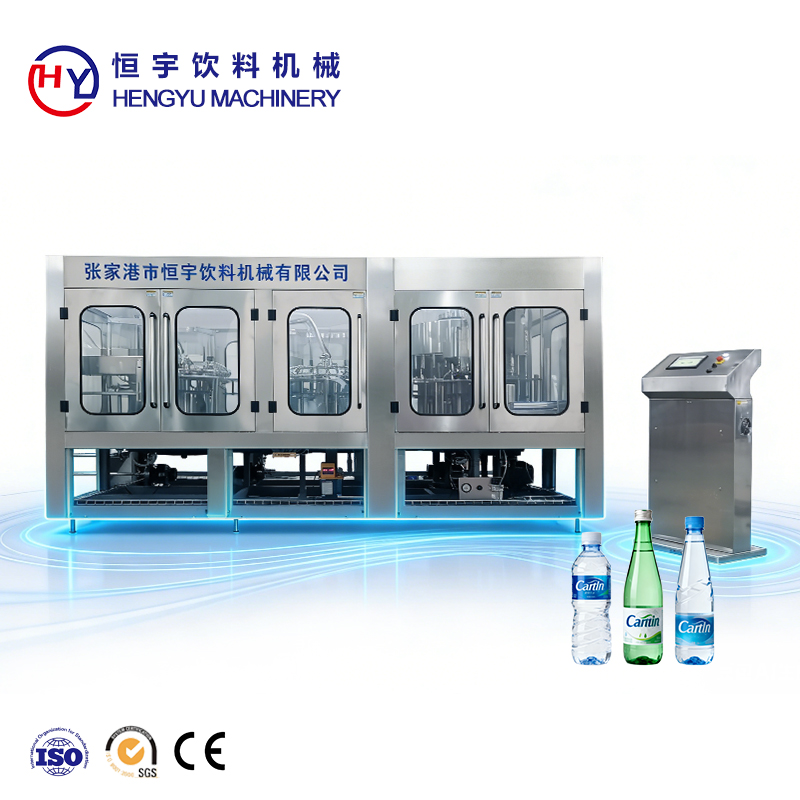
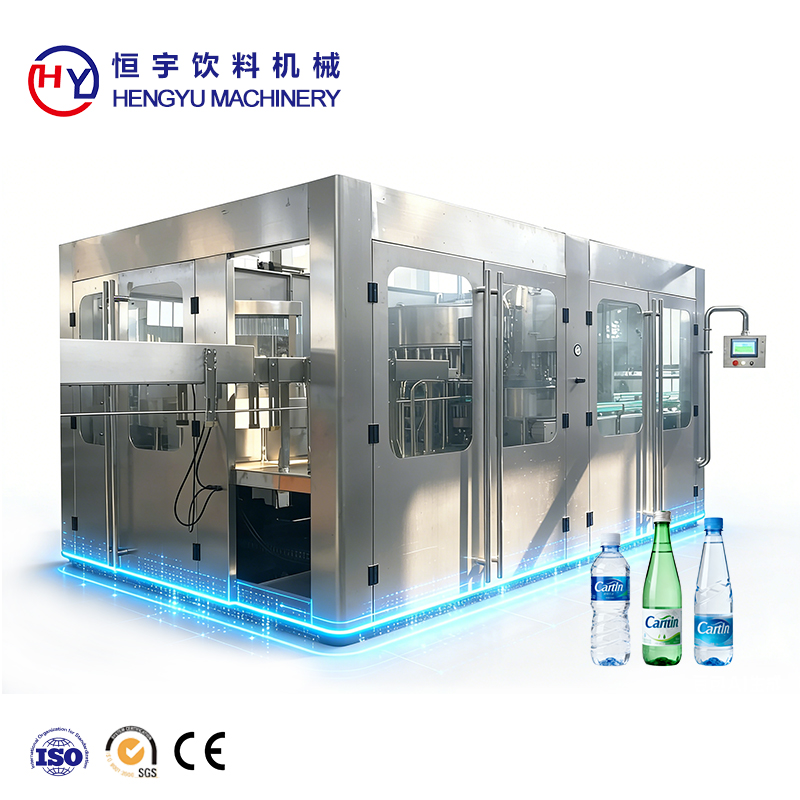
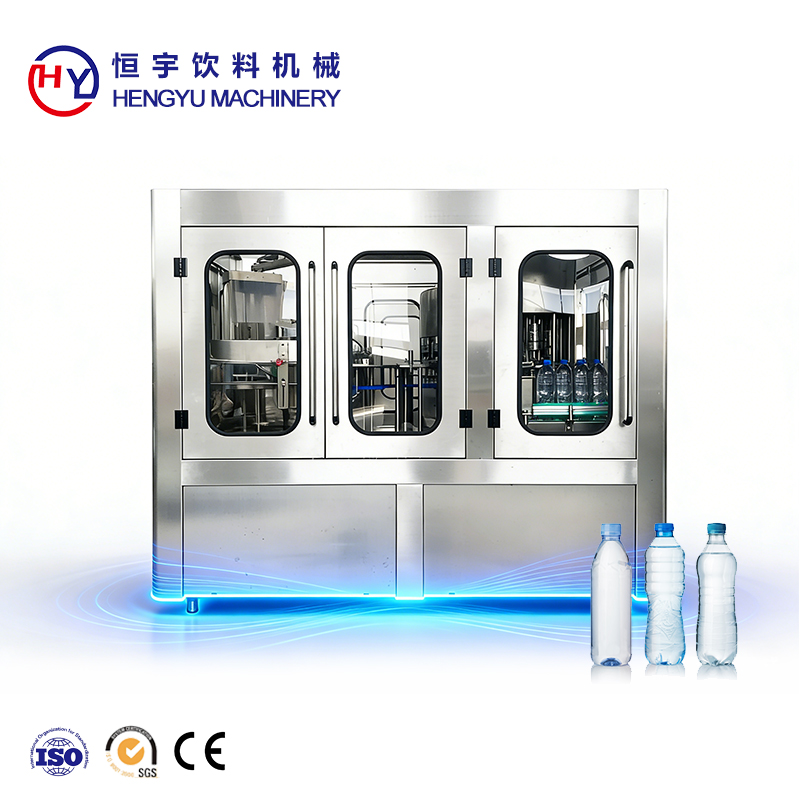
The automatic water packing machine represents a revolutionary advancement in beverage packaging technology, designed specifically to streamline the bottling and packaging process for drinking water products. This sophisticated equipment integrates multiple operational stages into one seamless production line, transforming raw materials into finished packaged products ready for distribution. The primary functions of an automatic water packing machine encompass bottle rinsing, filling, capping, labeling, and final packaging, all executed with minimal human intervention. These machines utilize advanced programmable logic controllers and precision sensors to maintain consistent quality throughout the production cycle. The technological features incorporated into modern automatic water packing machines include servo motor systems for accurate bottle positioning, flow meter technology for precise liquid measurement, and ultraviolet sterilization chambers to ensure product safety. Many models feature touchscreen interfaces that allow operators to monitor production metrics in real-time, adjust parameters quickly, and troubleshoot issues efficiently. The filling mechanisms employ either gravity-based, pressure-based, or vacuum-based systems depending on bottle specifications and production requirements. Automatic water packing machines find extensive applications across various sectors of the beverage industry, from small-scale mineral water producers to large multinational bottling corporations. These systems accommodate diverse bottle sizes ranging from compact personal-use containers to large commercial dispensers. Manufacturing facilities producing spring water, purified water, mineral water, and flavored water varieties all benefit from implementing automatic water packing machine technology. The equipment proves particularly valuable in regions with high water consumption rates where production efficiency directly impacts market competitiveness. Additionally, pharmaceutical companies utilize these machines for packaging sterile water solutions, while the hospitality industry relies on them for producing branded bottled water. The versatility of automatic water packing machines extends to handling different packaging materials including PET bottles, glass containers, and eco-friendly biodegradable options, making them indispensable assets in contemporary beverage production environments.

Popular Products

Investing in an automatic water packing machine delivers substantial practical benefits that directly impact your bottom line and operational efficiency. First and foremost, these machines dramatically increase production speed compared to manual or semi-automatic alternatives. Where traditional methods might process hundreds of bottles per hour, an automatic water packing machine can handle thousands, enabling you to meet growing market demand without proportionally expanding your workforce. This acceleration translates into faster order fulfillment and improved customer satisfaction. The consistency achieved through automation eliminates the variability inherent in manual operations. Every bottle receives exactly the same fill level, every cap tightens to the same specification, and every label applies in the identical position. This uniformity enhances brand perception and reduces customer complaints about underfilled or improperly sealed products. Labor cost reduction represents another compelling advantage of adopting automatic water packing machine technology. While the initial investment requires capital, the ongoing savings from reduced staffing needs create positive returns within reasonable timeframes. Fewer workers are needed on the production floor, and those who remain can focus on supervisory roles rather than repetitive manual tasks. This shift improves workplace safety by minimizing worker exposure to repetitive strain injuries and reducing accidents associated with manual handling of heavy containers. The precision of automatic water packing machines also minimizes product waste. Accurate filling systems ensure that you use exactly the amount of water needed without overfilling, which accumulates into significant savings across millions of bottles annually. Similarly, the reduction in damaged products from handling errors preserves both the product itself and the packaging materials. Maintenance requirements for modern automatic water packing machines have decreased substantially due to improved component quality and predictive maintenance features. Many systems now alert operators to potential issues before breakdowns occur, allowing for scheduled maintenance that prevents costly production interruptions. Hygiene standards improve considerably with automatic water packing machines because human contact with the product decreases substantially. Enclosed filling chambers, automated sanitization cycles, and sterile environment controls ensure that water products meet stringent health regulations. This advantage proves particularly crucial when seeking certifications or expanding into markets with rigorous safety requirements. Flexibility represents yet another practical benefit, as contemporary automatic water packing machines accommodate multiple bottle formats with minimal changeover time. You can switch between different product lines throughout the day, responding quickly to market fluctuations without maintaining separate equipment for each variation. Energy efficiency has improved in recent automatic water packing machine generations, with optimized motors and intelligent power management systems reducing electricity consumption per unit produced. This environmental consideration also yields cost savings while supporting corporate sustainability initiatives that increasingly influence consumer purchasing decisions.

Latest News

Glass Bottle Filling Machine vs Plastic Bottle Filling Machine

04

Mar

Glass Bottle Filling Machine vs Plastic Bottle Filling Machine

Material Properties Dictate Core Machine Design Glass fragility and thermal mass: why glass bottle filling machines require reinforced frames, shock-dampened conveyors, and precision neck-handling grippers Working with glass bottles means going th...
View More
How Can Filling Machines Improve Beverage Production Speed

24

Mar

How Can Filling Machines Improve Beverage Production Speed

Filling Machine Type Determines Maximum Throughput Potential Gravity, Isobaric, and Piston Can Filling Machines: Speed vs. Precision Trade-offs Gravity fillers work well for delicate drinks such as juice, processing around 20 to 36 bottles every mi...
View More
Can Filling Machine Technology for Carbonated Beverages

20

Mar

Can Filling Machine Technology for Carbonated Beverages

Isobaric Filling Principles: How Can Filling Machines Preserve Carbonation Under Pressure The Physics of CO₂ Solubility and Why Counter-Pressure Is Non-Negotiable The way carbon dioxide dissolves in drinks basically follows what we call Henry's Law...
View More
Troubleshooting Can Filling Machine Production Issues

21

Mar

Troubleshooting Can Filling Machine Production Issues

Power, Control, and Electrical Faults in Can Filling Machines Machine won't power on: main supply, fuses, and emergency stop circuit checks If the can filling machine won't start at all, the first thing to do is check whether the main power supply ...
View More

Get a Free Quote

Our representative will contact you soon.
Email
Name
Phone/WhatsApp
Required Product
Message
0/1000

automatic water packing machine

Advanced Integration Technology for Seamless Production Flow

Advanced Integration Technology for Seamless Production Flow

The modern automatic water packing machine distinguishes itself through sophisticated integration technology that creates an uninterrupted production flow from empty bottles to finished packaged products. This comprehensive integration represents far more than simply connecting individual machines; it involves intelligent synchronization where each component communicates with others to optimize overall system performance. The bottle feeding system employs precision timing mechanisms that ensure containers enter the filling station at exact intervals, preventing collisions while maximizing throughput. Sensors positioned throughout the automatic water packing machine continuously monitor bottle presence, orientation, and quality, automatically rejecting defective containers before they enter critical filling stages. This proactive quality control prevents contamination and reduces waste from processing unusable bottles. The filling technology itself utilizes multi-head configurations where numerous bottles fill simultaneously, with each filling valve independently controlled to compensate for variations in bottle positioning or internal pressure. Temperature monitoring systems integrated into the automatic water packing machine ensure that water maintains optimal conditions throughout processing, as temperature fluctuations can affect fill accuracy and product quality. The capping mechanism synchronizes perfectly with filling completion, applying closures with calibrated torque that prevents both insufficient sealing and over-tightening that might damage bottle threads. Downstream integration connects labeling equipment that applies product information with registration accuracy, ensuring labels align properly regardless of production speed variations. The control architecture of an advanced automatic water packing machine employs networked programmable controllers that share data instantaneously, enabling the system to make micro-adjustments that maintain quality standards even as conditions change. Production data flows to centralized monitoring systems where managers track efficiency metrics, identify bottlenecks, and plan maintenance activities based on actual equipment performance rather than arbitrary schedules. This integration extends to inventory management systems that automatically signal when packaging materials require replenishment, preventing production stoppages from material shortages. The seamless nature of properly integrated automatic water packing machine systems means that operational complexity remains hidden from end users, who interact with intuitive interfaces while the technology handles intricate coordination tasks. Investment in integration technology pays dividends through reduced training requirements, as operators need not understand complex mechanical relationships to effectively run production. The reliability improvements from integration cannot be overstated, as coordinated systems experience fewer failures than collections of independent machines that must be manually synchronized.
Precision Engineering for Consistent Quality Output

Precision Engineering for Consistent Quality Output

Precision engineering forms the foundation of every reliable automatic water packing machine, ensuring that each produced unit meets exacting quality standards regardless of production volume or duration. The engineering precision begins with the structural framework constructed from materials selected for dimensional stability across temperature ranges and resistant to corrosion from moisture exposure inherent in water packaging environments. Filling valves manufactured to micron-level tolerances deliver identical volumes bottle after bottle, utilizing flow measurement technology that adjusts valve opening duration to compensate for pressure variations in water supply lines. This precision matters tremendously in competitive markets where regulatory compliance requires fill levels within narrow tolerances and consumer expectations demand visible consistency across product batches. The bottle handling components of an automatic water packing machine feature precision-machined guides and grippers designed to accommodate containers gently yet securely, preventing deformation of thin-walled PET bottles while maintaining positive control throughout processing stages. Timing mechanisms employ high-resolution encoders that track shaft positions to fractional degrees, enabling the automatic water packing machine to coordinate movements with repeatability that manual operations cannot approach. Servo motor technology has transformed precision capabilities in modern automatic water packing machines, replacing older pneumatic and mechanical cam systems with electronically controlled actuators capable of complex motion profiles. These servo systems accelerate smoothly, maintain exact speeds, and decelerate gently, reducing mechanical stress while improving cycle times. The precision extends to cap application where torque monitoring ensures each closure tightens to specifications that prevent leakage without over-stressing bottle neck finishes. Quality inspection systems integrated into precision automatic water packing machines employ vision technology and weight verification that detect anomalies invisible to human operators, automatically diverting non-conforming products without interrupting production flow. Calibration procedures built into sophisticated automatic water packing machines allow quick verification of critical parameters, with some systems performing self-calibration routines during startup sequences. The accumulation of precision across multiple process stages means that the overall quality output from an automatic water packing machine substantially exceeds what individual high-quality components could achieve without systematic integration. Maintenance of precision requires proper installation on foundations that minimize vibration and thermal movement, factors that automatic water packing machine manufacturers address through detailed installation specifications. Long-term precision retention depends on component quality, which explains why reputable automatic water packing machine manufacturers utilize bearings, seals, and wearing parts from established suppliers with proven performance records. The business value of precision engineering manifests in reduced quality complaints, lower rejection rates, and enhanced brand reputation that commands premium pricing in crowded beverage markets.
Operational Efficiency Through Intelligent Automation

Operational Efficiency Through Intelligent Automation

The operational efficiency delivered by an intelligent automatic water packing machine transforms production economics through multiple interconnected mechanisms that reduce costs while increasing output capabilities. Intelligent automation begins with adaptive control algorithms that monitor production variables and adjust machine parameters in real-time to maintain optimal performance despite changing conditions. When water temperature varies, the automatic water packing machine compensates by modifying fill timing; when bottle dimensions fall within tolerance ranges but differ slightly, positioning systems adjust automatically rather than requiring manual intervention. This responsiveness eliminates the production losses that occur in less sophisticated systems where operators must halt operations to make adjustments manually. Energy efficiency represents a significant component of operational efficiency in modern automatic water packing machines, with variable frequency drives that match motor speeds to actual workload requirements rather than running continuously at maximum capacity. During brief production pauses, intelligent automatic water packing machines enter low-power modes that maintain critical functions while reducing energy consumption, then resume full operation seamlessly when production continues. Predictive maintenance capabilities embedded in intelligent automatic water packing machines monitor component performance patterns and alert maintenance personnel to developing issues before failures occur, transforming maintenance from reactive crisis management to planned activities scheduled during non-production periods. This predictive approach dramatically reduces the catastrophic failures that result in extended downtime and emergency repair costs. The data analytics capabilities of intelligent automatic water packing machines provide unprecedented visibility into production performance, identifying efficiency opportunities that remain hidden without systematic measurement. Operators receive actionable insights about which factors most significantly impact throughput, enabling focused improvement efforts that deliver measurable results. Remote monitoring and diagnostic capabilities allow automatic water packing machine manufacturers and specialized technicians to assess system performance without physical presence, reducing response times for technical support and enabling expert guidance during troubleshooting. The integration of intelligent automatic water packing machines with enterprise resource planning systems creates closed-loop control where production schedules automatically adjust based on actual output rates and inventory levels update in real-time as products complete packaging. Training requirements decrease substantially with intelligent automatic water packing machines because sophisticated interfaces guide operators through procedures with contextual help and visual aids, while the automation handles complex decision-making that previously required experienced judgment. Recipe management systems in intelligent automatic water packing machines store parameters for different products and package configurations, enabling rapid changeovers through automated adjustments rather than manual setup procedures prone to errors. The cumulative effect of these efficiency enhancements means that facilities operating intelligent automatic water packing machines achieve productivity levels previously requiring substantially larger equipment investments and workforce commitments.