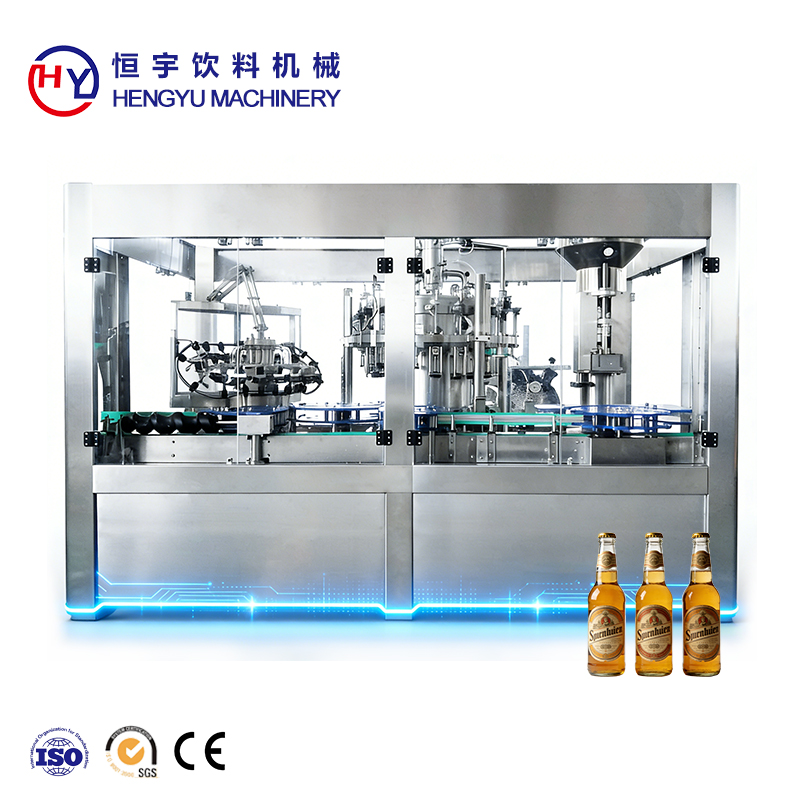
Professional Beer Bottling Machine Solutions - Automated Filling Equipment for Breweries

All Categories

beer bottling machine

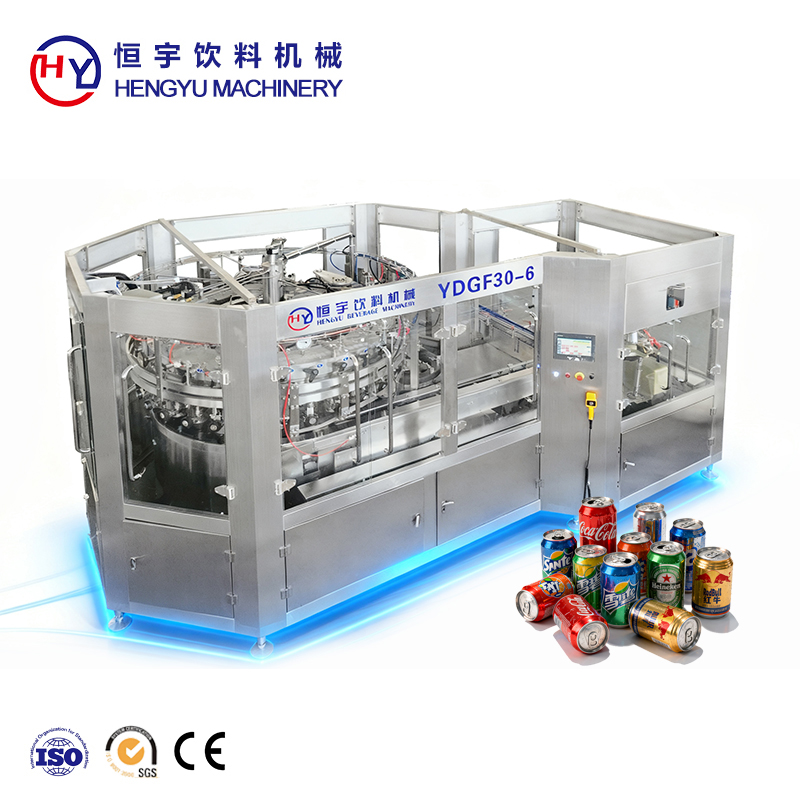
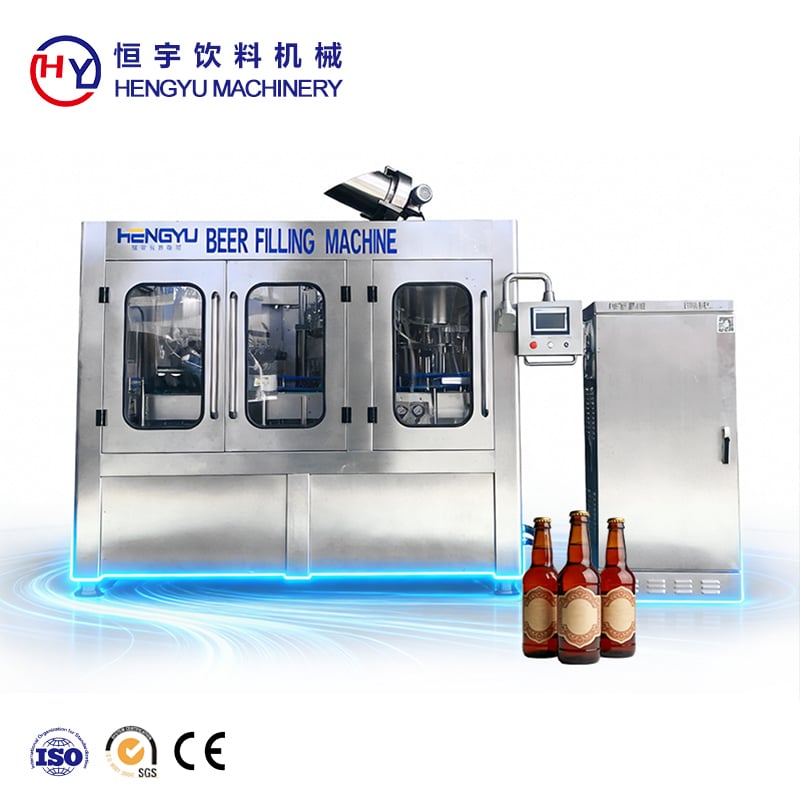
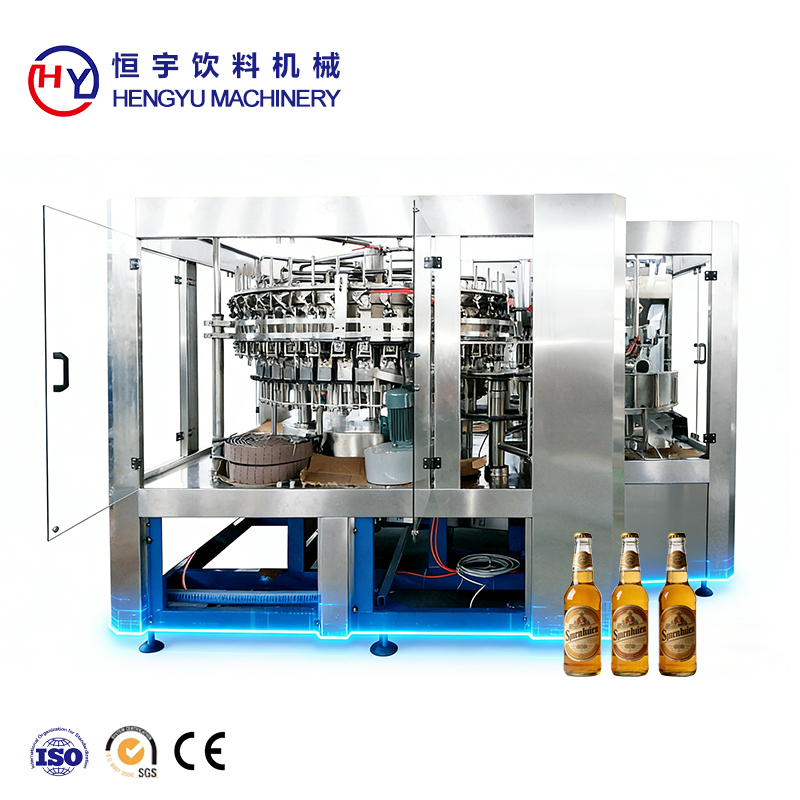
A beer bottling machine represents essential equipment for breweries of all sizes, designed to automate the process of filling, capping, and sealing beer bottles with precision and efficiency. This specialized machinery handles the complete bottling workflow, from receiving empty containers to delivering finished, sealed products ready for distribution. Modern beer bottling machines integrate multiple operational stages into a seamless production line, including bottle rinsing, filling, crown capping or screw capping, labeling, and quality inspection. The equipment accommodates various bottle sizes and formats, from standard 330ml bottles to larger 750ml formats, providing flexibility for different product lines. Advanced sensor technology monitors fill levels to ensure consistency across every bottle, while automated controls maintain optimal speed and accuracy throughout production runs. The beer bottling machine employs food-grade materials throughout its construction, meeting stringent hygiene standards required in beverage production. Stainless steel components resist corrosion and simplify cleaning procedures, essential for maintaining product quality and preventing contamination. Many systems incorporate counter-pressure filling technology, which minimizes oxygen exposure and preserves carbonation levels, crucial factors in maintaining beer freshness and flavor profiles. The machinery typically includes adjustable settings that allow operators to switch between different bottle types and production requirements with minimal downtime. Integration capabilities enable the beer bottling machine to connect with upstream brewing equipment and downstream packaging systems, creating an efficient end-to-end production environment. Safety features protect operators while maintaining continuous operation, and user-friendly interfaces reduce training time for new staff members. Whether serving craft breweries producing small batches or large-scale operations handling thousands of bottles per hour, these machines deliver reliable performance that directly impacts production capacity, product quality, and overall profitability in the competitive beverage industry.

Popular Products

Investing in a beer bottling machine delivers immediate improvements to production efficiency by automating manual tasks that previously consumed significant labor hours and introduced human error into the bottling process. The machinery processes hundreds or thousands of bottles hourly depending on the model, dramatically increasing output compared to manual or semi-automated methods, which directly translates to higher revenue potential and faster market response times. Consistency stands as another major benefit, as the equipment fills each bottle to precisely the same level, applies caps with uniform torque, and maintains identical standards across entire production runs, eliminating the variations that occur with manual bottling and ensuring every customer receives the same quality experience. Cost savings accumulate through reduced labor requirements, as a single operator can monitor automated equipment that would otherwise require multiple workers, and through decreased product waste, since accurate filling mechanisms prevent overfilling and spillage that erode profit margins. The beer bottling machine protects product quality by minimizing oxygen exposure during filling, preserving carbonation levels that define beer characteristics, and maintaining strict hygiene standards that prevent contamination, factors that directly influence customer satisfaction and brand reputation. Operational flexibility allows producers to adapt quickly to changing market demands, switching between bottle sizes or adjusting production speeds without major reconfiguration, enabling responsive business strategies that capitalize on seasonal trends or promotional opportunities. Enhanced safety features protect workers from repetitive strain injuries associated with manual bottling while reducing accident risks through automated handling of heavy containers and hot liquids. The machinery offers scalability that grows with business expansion, as modular designs permit capacity upgrades without replacing entire systems, protecting initial investments while supporting long-term growth objectives. Improved traceability through digital monitoring systems provides real-time production data, helping managers identify bottlenecks, optimize workflows, and maintain quality control documentation required for regulatory compliance. Reduced downtime results from robust construction and predictable maintenance schedules that prevent unexpected failures during critical production periods. The professional presentation achieved through consistent bottling enhances brand image, as uniform fill levels and properly applied caps signal quality to retailers and consumers, supporting premium pricing strategies. Environmental benefits emerge from reduced waste and more efficient resource utilization, aligning with sustainability goals that increasingly influence consumer purchasing decisions. Finally, the beer bottling machine provides competitive advantages by enabling faster order fulfillment, supporting larger contract opportunities, and establishing the operational credibility required to expand distribution networks into new markets and retail channels.

Tips And Tricks

Glass Bottle Filling Machine vs Plastic Bottle Filling Machine

04

Mar

Glass Bottle Filling Machine vs Plastic Bottle Filling Machine

Material Properties Dictate Core Machine Design Glass fragility and thermal mass: why glass bottle filling machines require reinforced frames, shock-dampened conveyors, and precision neck-handling grippers Working with glass bottles means going th...
View More
How Can Filling Machines Improve Beverage Production Speed

24

Mar

How Can Filling Machines Improve Beverage Production Speed

Filling Machine Type Determines Maximum Throughput Potential Gravity, Isobaric, and Piston Can Filling Machines: Speed vs. Precision Trade-offs Gravity fillers work well for delicate drinks such as juice, processing around 20 to 36 bottles every mi...
View More
Can Filling Machine Technology for Carbonated Beverages

20

Mar

Can Filling Machine Technology for Carbonated Beverages

Isobaric Filling Principles: How Can Filling Machines Preserve Carbonation Under Pressure The Physics of CO₂ Solubility and Why Counter-Pressure Is Non-Negotiable The way carbon dioxide dissolves in drinks basically follows what we call Henry's Law...
View More
Can Filling Machine Capacity Planning Guide

22

Mar

Can Filling Machine Capacity Planning Guide

Understanding Can Filling Machine Capacity: Theory vs. Real-World Performance Why Theoretical Capacity Rarely Matches Effective Output on Can Filling Lines When companies talk about canning speed at 100 cans per minute, they're referring to what ha...
View More

Get a Free Quote

Our representative will contact you soon.
Email
Name
Phone/WhatsApp
Required Product
Message
0/1000

beer bottling machine

Advanced Counter-Pressure Filling Technology Preserves Beer Quality

Advanced Counter-Pressure Filling Technology Preserves Beer Quality

The implementation of counter-pressure filling technology within modern beer bottling machines represents a critical advancement for maintaining beverage quality from production through consumption. This sophisticated method addresses one of the most challenging aspects of beer bottling: preserving carbonation while preventing oxidation that compromises flavor profiles. The process works by pre-pressurizing each bottle with carbon dioxide before introducing the beer, creating an environment where the liquid transfers smoothly without agitation or foam formation. As beer flows into the pressurized bottle, the CO2 atmosphere prevents dissolved gases from escaping, maintaining the precise carbonation levels that brewers carefully developed during fermentation and conditioning. This controlled environment dramatically reduces oxygen exposure, the primary culprit in beer degradation, which causes off-flavors, color changes, and shortened shelf life. Traditional gravity filling methods allow atmospheric oxygen to contact the product, beginning oxidation immediately and limiting product freshness windows. Counter-pressure systems eliminate this vulnerability, extending shelf life significantly and ensuring consumers experience beer exactly as brewers intended, whether the bottle opens days or months after packaging. The technology proves particularly valuable for hop-forward styles like IPAs, where oxidation rapidly diminishes the aromatic compounds that define these popular varieties. For bottle-conditioned beers, maintaining carbonation consistency ensures proper refermentation in the package, critical for traditional styles and specialty releases. The precision of counter-pressure filling also eliminates the variability that frustrates quality control efforts, as each bottle receives identical treatment regardless of production speed or environmental conditions. Modern beer bottling machines incorporate programmable controls that adjust pressure parameters automatically based on beer style, temperature, and carbonation levels, removing guesswork from the process. Sensors continuously monitor fill heights and pressures, making real-time adjustments that maintain standards without operator intervention. This automation proves invaluable during extended production runs where attention fatigue might compromise manual operations. The gentle filling action reduces foam production, minimizing product loss and eliminating the mess associated with overflow, factors that directly impact production costs and workplace cleanliness. For businesses targeting quality-conscious consumers and premium market segments, counter-pressure filling provides the technical foundation for competitive differentiation, enabling confident freshness claims and supporting brand positioning based on superior product characteristics.
Flexible Configuration Adapts to Diverse Production Requirements

Flexible Configuration Adapts to Diverse Production Requirements

The adaptability engineered into contemporary beer bottling machines delivers exceptional value by accommodating the varied operational needs that characterize modern brewing businesses. This flexibility manifests across multiple dimensions, starting with bottle format versatility that allows seamless transitions between different container sizes and styles without major equipment modifications. Production lines can switch from standard 330ml bottles to 500ml formats or specialty 750ml bottles through simple adjustment procedures, often completed in minutes rather than hours, enabling breweries to respond quickly to market opportunities or seasonal demand fluctuations. Quick-change components designed into modern systems facilitate these transitions, with tool-free adjustments replacing the time-consuming reconfiguration required by older equipment generations. This capability proves particularly valuable for craft breweries producing diverse product portfolios, where small-batch specialty releases complement core offerings, requiring frequent format changes that would be impractical with rigid single-format systems. Speed adjustability represents another crucial flexibility dimension, as beer bottling machines offer variable production rates that match current demand without sacrificing efficiency. During peak seasons, operators can maximize throughput to meet elevated order volumes, while slower periods permit reduced speeds that accommodate smaller batches without the waste associated with minimum run quantities on high-speed-only equipment. This scalability extends to business growth scenarios, where modular machine architectures support capacity expansion through component additions rather than complete system replacement, protecting initial capital investments while accommodating increased production requirements. The integration flexibility built into modern designs enables beer bottling machines to connect with various upstream and downstream equipment types, from different filling tank configurations to diverse labeling and packaging systems, creating cohesive production lines despite component variety. This interoperability proves essential when upgrading partial sections of existing operations or incorporating specialized equipment for unique product requirements. Material compatibility extends operational range further, as machines handle different bottle materials including standard glass, lightweight glass variants, and specialized containers, each requiring distinct handling characteristics to prevent breakage and ensure proper sealing. Cap format flexibility accommodates crown caps, twist-offs, swing tops, and cork-and-cage closures, enabling breweries to match packaging styles with brand positioning and target market preferences. Digital control systems provide recipe storage functionality that saves specific parameter sets for different products, enabling one-touch changeovers that recall all settings automatically, eliminating setup errors and reducing transition time. This programmability supports consistent quality across production runs separated by weeks or months, as saved parameters ensure identical conditions regardless of operator memory or experience levels. For contract bottling operations serving multiple clients, this flexibility creates significant competitive advantages by accommodating diverse specifications within a single production facility, maximizing equipment utilization and revenue potential.
Robust Hygiene Design Ensures Product Safety and Regulatory Compliance

Robust Hygiene Design Ensures Product Safety and Regulatory Compliance

The hygienic engineering principles incorporated into professional beer bottling machines address the critical importance of product safety and regulatory compliance in beverage production. Stainless steel construction throughout product-contact surfaces provides inherent antimicrobial properties while resisting corrosion from acidic beer compositions and aggressive cleaning chemicals, ensuring long-term sanitation integrity that protects both product quality and consumer health. The material selection follows food-grade specifications that meet international standards including FDA requirements and European Union regulations, providing documentation trails that satisfy inspection authorities and support export certifications. Surface finish quality receives particular attention, with polished interiors eliminating crevices where microorganisms might harbor between production runs, and welded joints employing sanitary techniques that create smooth, gap-free connections resistant to contamination accumulation. The beer bottling machine design incorporates clean-in-place capabilities that automate sanitation procedures, circulating cleaning solutions through all product-contact areas without disassembly requirements, dramatically reducing labor time while ensuring thorough, consistent treatment that manual cleaning cannot match. Programmable wash cycles apply specific chemical concentrations, temperatures, and contact times validated to achieve required microbial reduction levels, creating documented processes that support quality management systems and regulatory audits. Drainage design ensures complete liquid evacuation after cleaning, preventing residual pooling that could harbor bacteria or dilute subsequent product batches, a consideration particularly important in craft brewing environments where diverse beer styles flow through shared equipment. Bottle rinsing stations integrated into the production line remove particulates and contaminants from containers before filling, using filtered water or sterile air to clean interiors immediately prior to product introduction, addressing contamination risks from storage and handling. Air filtration systems supplying pneumatic components and pressurization functions employ HEPA-grade media that removes microorganisms and particles, preventing airborne contamination during the filling process when bottles are most vulnerable. Temperature control capabilities built into modern systems support hot-fill applications when required, and maintain optimal operating temperatures that discourage microbial growth during production, adding another defense layer to comprehensive hygiene strategies. The enclosed design of complete bottling systems minimizes environmental exposure, protecting products from airborne contaminants, insects, and foreign material introduction that can occur in open processing environments. Transparent guarding provides operator visibility while maintaining protective barriers, and interlocked access points prevent operation when guards are open, ensuring hygiene protocols cannot be bypassed during production pressure situations. Validation documentation provided with professional beer bottling machines includes material certifications, microbial challenge study results, and cleaning protocol effectiveness data that support HACCP plan development and regulatory submission requirements. For breweries pursuing organic certifications, kosher designations, or other specialized credentials, equipment hygiene capabilities often determine qualification eligibility, making robust sanitary design an essential business enabler rather than merely a regulatory checkbox.