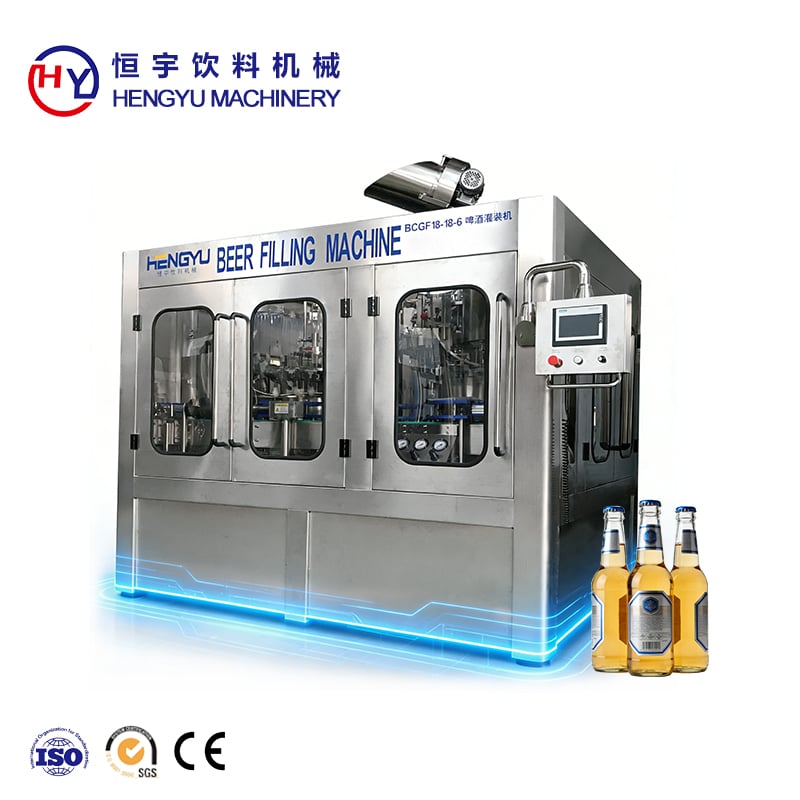
Automatic Beer Filling Machine - Advanced Bottling Solutions for Breweries

All Categories

automatic beer filling machine

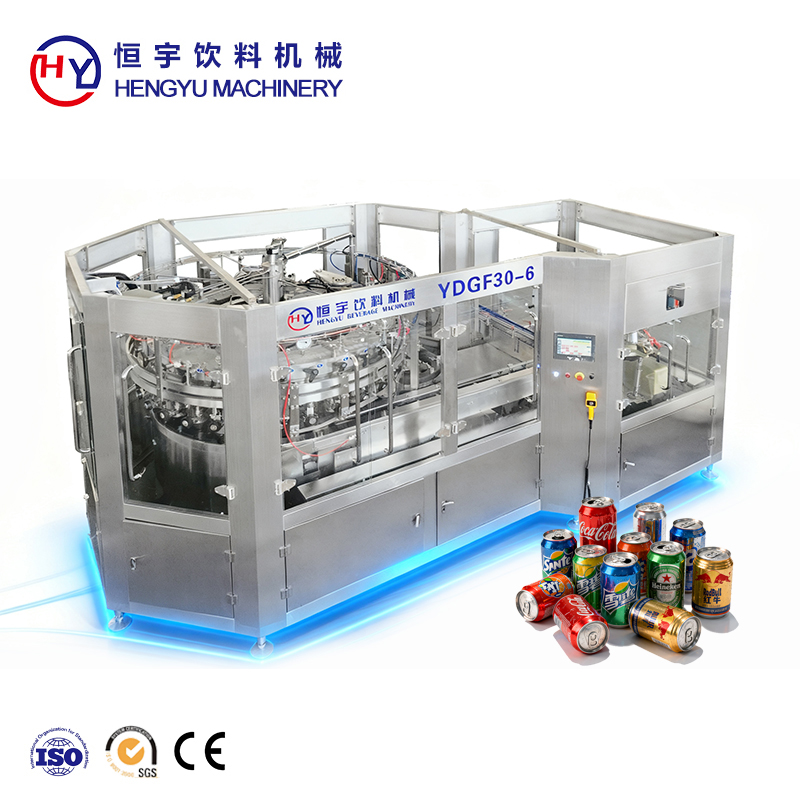
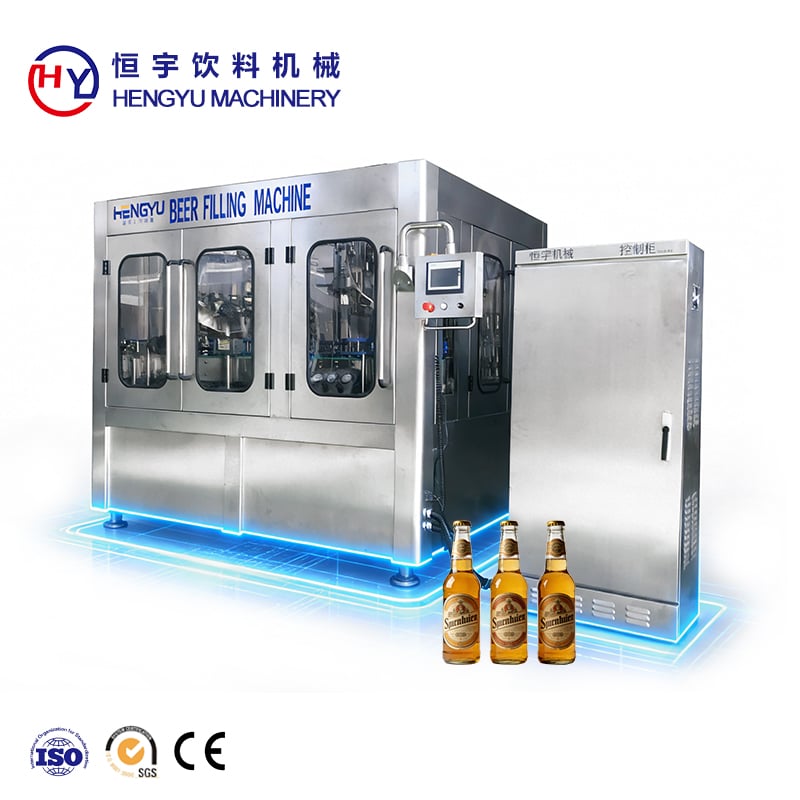
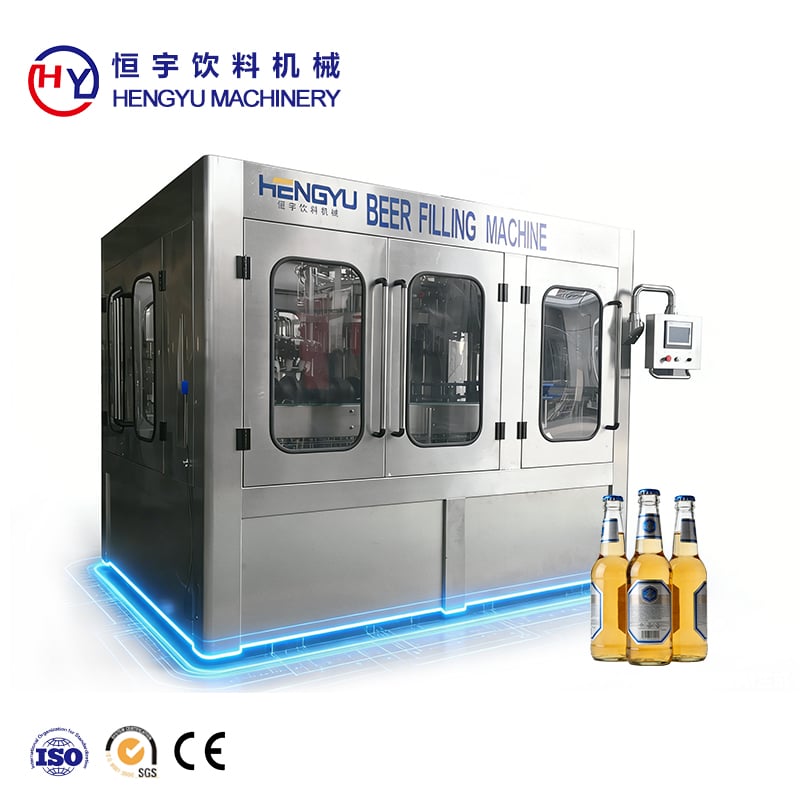
An automatic beer filling machine represents a sophisticated packaging solution designed specifically for breweries and beverage production facilities seeking efficient, hygienic, and precise bottling operations. This advanced equipment streamlines the entire beer filling process, from container handling through capping and labeling, ensuring consistent quality while maximizing production output. Modern automatic beer filling machines incorporate cutting-edge technology that maintains the integrity of beer throughout the packaging process, preserving carbonation levels, flavor profiles, and freshness that consumers expect. These systems handle various container types including glass bottles, aluminum cans, and PET bottles with remarkable versatility. The primary functions encompass automatic bottle feeding, rinsing, filling, capping, and discharge operations, all orchestrated through programmable logic controllers that ensure seamless coordination between different stages. Technological features include precision flow meters that guarantee accurate fill volumes, minimizing product waste and ensuring regulatory compliance. Advanced servo motor systems provide smooth, controlled movements that prevent foam generation and spillage during the filling process. The machines employ isobaric filling principles, maintaining constant pressure throughout the operation to preserve carbonation and prevent oxidation. Stainless steel construction throughout contact surfaces ensures sanitary conditions and easy cleaning, meeting strict food safety standards required in beverage production. Touch-screen interfaces allow operators to monitor performance metrics, adjust parameters, and troubleshoot issues efficiently. Applications span craft breweries, microbreweries, medium-scale production facilities, and large industrial brewing operations. Whether packaging limited-edition specialty beers or high-volume mainstream brands, the automatic beer filling machine adapts to diverse production requirements. The equipment proves invaluable for businesses transitioning from manual operations to automated systems, significantly reducing labor costs while improving consistency and hygiene standards that define professional brewing operations in today's competitive marketplace.

New Product Recommendations

The automatic beer filling machine delivers transformative benefits that directly impact your bottom line and operational efficiency. First and foremost, production speed increases dramatically compared to manual or semi-automatic systems, allowing you to fulfill larger orders and respond quickly to market demand without compromising quality. This enhanced throughput means you can scale your business operations effectively as your customer base expands. Labor cost reduction stands as another compelling advantage, as automation eliminates the need for multiple workers dedicated to repetitive filling tasks, freeing your team to focus on quality control, recipe development, and customer service activities that truly differentiate your brand. Consistency becomes your trademark when using an automatic beer filling machine, as every bottle receives precisely the same volume with identical carbonation retention, eliminating the variations inherent in manual filling that can lead to customer dissatisfaction and product returns. Hygiene standards elevate substantially because the closed-system design minimizes human contact with the product, reducing contamination risks that threaten both product quality and consumer safety. The stainless steel construction resists bacterial growth and simplifies sanitation procedures, ensuring compliance with health regulations that govern beverage production. Product waste decreases significantly through accurate volumetric control and gentle handling mechanisms that prevent spillage and foam overflow, protecting your profit margins by ensuring maximum yield from each brewing batch. Flexibility proves invaluable as these machines accommodate different bottle sizes and types through quick-change components, enabling you to diversify your product line without substantial additional investment in separate equipment. Energy efficiency incorporated into modern designs reduces operational costs while supporting environmental sustainability goals that increasingly influence consumer purchasing decisions. Maintenance requirements remain manageable thanks to modular construction that simplifies component replacement and preventive service procedures, minimizing unexpected downtime that disrupts production schedules. Real-time monitoring capabilities provide immediate feedback about performance metrics, allowing you to identify and address potential issues before they escalate into costly problems. The professional presentation achieved through consistent fills and proper capping enhances your brand image, helping your products stand out on crowded retail shelves. Return on investment typically materializes within reasonable timeframes as labor savings, reduced waste, and increased production capacity combine to offset the initial equipment purchase. Quality assurance becomes more reliable because automated systems eliminate human error factors that occasionally compromise product specifications despite best intentions and training efforts.

Latest News

Glass Bottle Filling Machine vs Plastic Bottle Filling Machine

04

Mar

Glass Bottle Filling Machine vs Plastic Bottle Filling Machine

Material Properties Dictate Core Machine Design Glass fragility and thermal mass: why glass bottle filling machines require reinforced frames, shock-dampened conveyors, and precision neck-handling grippers Working with glass bottles means going th...
View More
Increasing Capacity in Bottled Water Production Lines

09

Mar

Increasing Capacity in Bottled Water Production Lines

Diagnosing Bottlenecks in Your Bottled Water Production Line Measuring Throughput Gaps: Bottling Speed, Changeover Time, and OEE Analysis To get a handle on where production is falling short, look at three key performance indicators. Start by compa...
View More
How Bottled Water Production Lines Maintain Product Safety

12

Mar

How Bottled Water Production Lines Maintain Product Safety

Regulatory Foundations and the Multi-Barrier Safety Framework FDA, EPA, and ISO Standards Specific to Bottled Water Production Lines The bottled water industry works within a pretty strict set of regulations. The FDA has these things called Good Ma...
View More
Can Filling Machine Capacity Planning Guide

22

Mar

Can Filling Machine Capacity Planning Guide

Understanding Can Filling Machine Capacity: Theory vs. Real-World Performance Why Theoretical Capacity Rarely Matches Effective Output on Can Filling Lines When companies talk about canning speed at 100 cans per minute, they're referring to what ha...
View More

Get a Free Quote

Our representative will contact you soon.
Email
Name
Phone/WhatsApp
Required Product
Message
0/1000

automatic beer filling machine

Precision Filling Technology That Preserves Beer Quality

Precision Filling Technology That Preserves Beer Quality

The automatic beer filling machine employs sophisticated precision filling technology specifically engineered to maintain the delicate characteristics that define exceptional beer. At the heart of this capability lies the isobaric filling system, which maintains consistent pressure throughout the filling cycle to prevent carbonation loss that would result in flat, unappealing beer. This pressurized environment ensures that dissolved carbon dioxide remains in solution rather than escaping as foam or gas bubbles during transfer from storage tanks to individual containers. The filling valves incorporate advanced designs that create gentle, controlled flow patterns, minimizing turbulence that could trigger excessive foam formation or introduce oxygen into the product. Oxygen exposure represents one of the most significant threats to beer quality, causing oxidation reactions that produce stale flavors and reduce shelf life considerably. By maintaining an oxygen-free filling environment, the automatic beer filling machine protects the fresh, vibrant taste profiles that brewmasters carefully craft during the brewing process. Precision flow meters integrated into each filling station measure volume with exceptional accuracy, typically within tolerances of plus or minus one milliliter, ensuring regulatory compliance and customer satisfaction. This accuracy prevents underfilling that could trigger legal issues or customer complaints, while also eliminating overfilling that wastes product and erodes profit margins unnecessarily. The temperature control systems maintain optimal filling temperatures that balance carbonation retention with efficient production speeds, as temperature significantly influences how carbon dioxide behaves in liquid suspension. Programmable parameters allow operators to customize filling protocols for different beer styles, recognizing that highly carbonated Belgian ales require different handling than nitrogen-infused stouts or lightly carbonated session beers. Automatic level detection systems employ optical sensors or capacitive technology to verify that each container receives the proper fill height, rejecting any bottles that fall outside acceptable specifications before they proceed to capping stations. This quality control integration prevents defective products from reaching consumers, protecting brand reputation and reducing the costs associated with returns, complaints, and potential recalls. The combination of these technological features creates a filling environment that respects the craftsmanship invested in brewing while delivering the consistency and efficiency that modern beverage businesses require to compete effectively in dynamic markets.
Streamlined Operations Through Intelligent Automation

Streamlined Operations Through Intelligent Automation

The automatic beer filling machine revolutionizes production workflows through intelligent automation that orchestrates multiple complex operations with remarkable precision and coordination. The system begins with automatic bottle feeding mechanisms that draw containers from bulk storage, orienting them correctly and spacing them precisely as they enter the production line. This eliminates the manual handling bottleneck that limits throughput in traditional operations, allowing continuous flow that matches the pace of modern brewing capacity. Integrated rinsing stations prepare containers immediately before filling, removing dust, debris, or potential contaminants that could compromise product purity or introduce off-flavors. The rinsing process employs filtered water or sterilizing solutions appropriate for the container type and cleanliness requirements, with programmable cycle times that balance thoroughness against production speed objectives. Following rinsing, containers move seamlessly to filling stations where the precision technology discussed previously delivers exact volumes consistently. The transition between stations occurs with synchronized timing controlled by programmable logic controllers that monitor the position and status of every container throughout the system. This coordination prevents collisions, jams, or gaps in the production flow that would reduce overall equipment effectiveness. After filling, automatic capping mechanisms apply closures with calibrated torque that ensures proper sealing without damaging threads or causing leaks. The capping stations accommodate various closure types including crown caps for traditional bottles, twist-off caps for convenience-oriented packaging, and specialized closures for cans or unique container formats. Sensors verify that caps are present and properly applied before containers advance to subsequent stations, maintaining the quality assurance that protects brand reputation. Labeling integration allows for complete packaging automation, applying front labels, back labels, and neck labels with precise registration that presents a professional appearance. The entire system operates through an intuitive touch-screen interface that displays real-time production data including current speed, container counts, efficiency metrics, and any fault conditions requiring operator attention. This visibility empowers production managers to optimize performance continuously, identifying opportunities for improvement and responding quickly to any deviations from expected parameters. Automated cleaning-in-place systems facilitate sanitation between production runs, circulating cleaning solutions through all product-contact surfaces without requiring extensive disassembly. This capability supports the product changeovers necessary when packaging multiple beer varieties while maintaining the hygiene standards essential for beverage production. Emergency stop systems and safety interlocks protect operators from moving components, ensuring workplace safety while allowing efficient access for routine adjustments and maintenance procedures.
Scalable Investment That Grows With Your Business

Scalable Investment That Grows With Your Business

The automatic beer filling machine represents a scalable investment that accommodates business growth trajectories while delivering immediate operational improvements. Entry-level configurations suit craft breweries and startup operations producing several hundred bottles per hour, providing automation benefits without requiring the capital investment associated with industrial-scale systems. These compact machines occupy reasonable floor space while incorporating the essential technologies that distinguish automatic operation from manual processes. As production volumes increase and market success generates expansion capital, modular designs allow for capacity upgrades through additional filling stations, faster conveyor systems, and enhanced automation features. This scalability protects your initial investment by ensuring that equipment purchased during early growth stages remains relevant and functional as your operation matures. The alternative approach of purchasing undersized equipment that quickly becomes inadequate wastes resources and disrupts operations during rushed replacement projects. Conversely, over-investing in excessive capacity strains finances and leaves expensive equipment underutilized during the critical early years when cash flow management determines survival. The automatic beer filling machine addresses this challenge through flexible configurations that match current needs while preserving future expansion pathways. Production versatility extends beyond volume considerations to encompass container variety, as quick-change components allow the same machine to handle different bottle sizes, can formats, or specialty packaging without requiring separate dedicated lines. This versatility proves particularly valuable for craft breweries that differentiate themselves through diverse product portfolios including limited releases, seasonal offerings, and experimental styles that attract enthusiast consumers. The ability to package these varied products efficiently prevents the compromise of either limiting your creative range or investing in multiple specialized systems. Training requirements remain manageable because intuitive interfaces and logical operational sequences enable new operators to achieve competency relatively quickly. Comprehensive documentation and technical support from reputable manufacturers provide resources that facilitate troubleshooting and optimization efforts. Spare parts availability ensures that maintenance needs do not create extended downtime that disrupts customer commitments and revenue generation. The total cost of ownership calculation should consider not only the purchase price but also installation costs, ongoing maintenance expenses, energy consumption, and the labor savings achieved through automation. When evaluated comprehensively across multi-year timeframes, the automatic beer filling machine typically demonstrates compelling financial returns that justify the investment through measurable improvements in production capacity, product consistency, waste reduction, and labor efficiency. Market competitiveness increasingly demands the quality consistency and professional packaging that automated systems deliver, making this investment essential rather than optional for breweries committed to sustainable growth and market leadership within their segments.