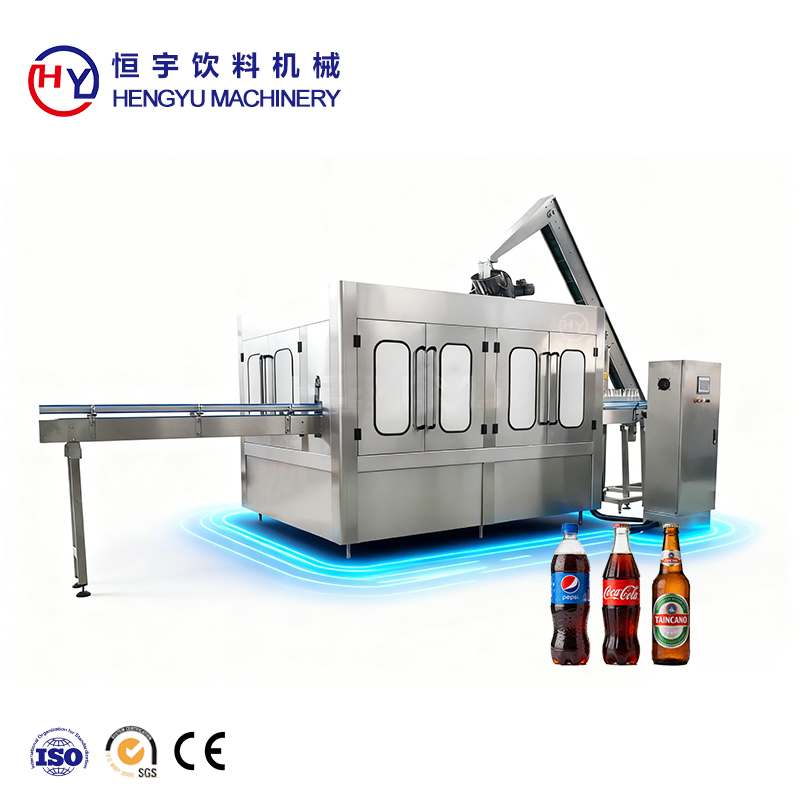
Carbonated Water Filling Machine - Advanced Bottling Solutions for Sparkling Beverage Production

All Categories

carbonated water filling machine

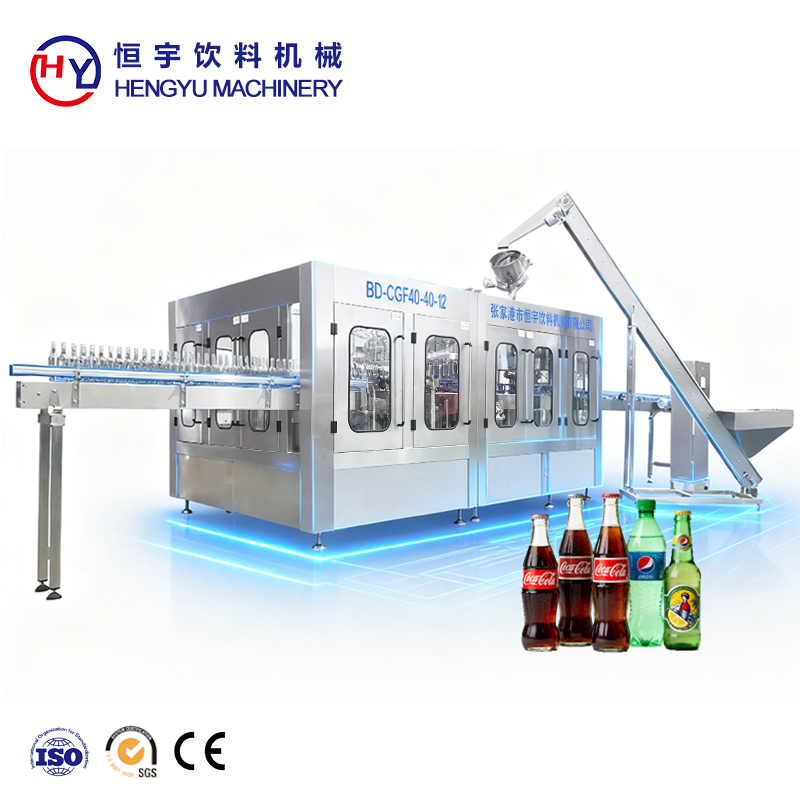
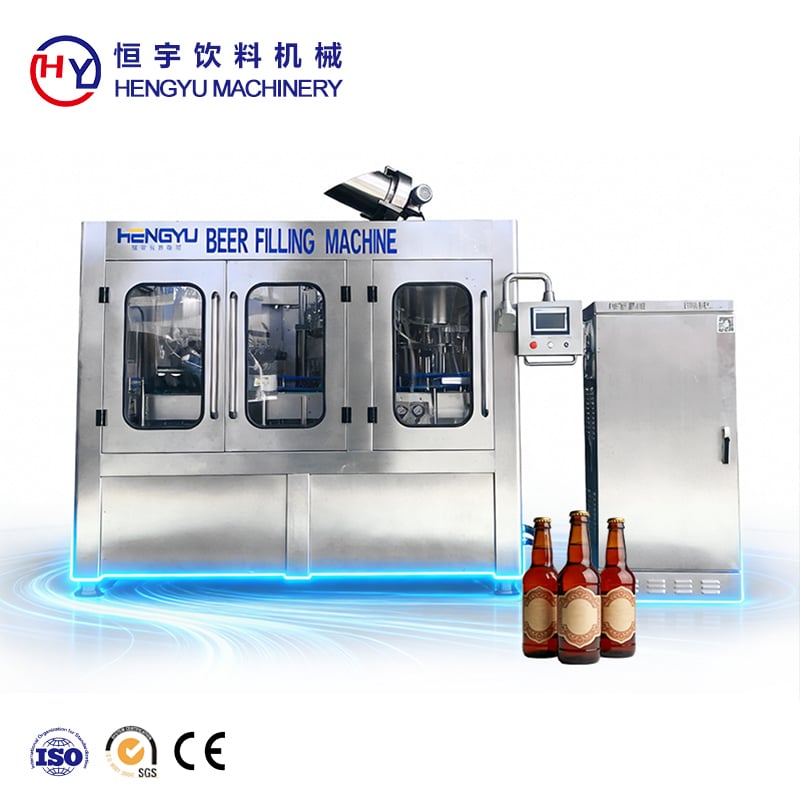
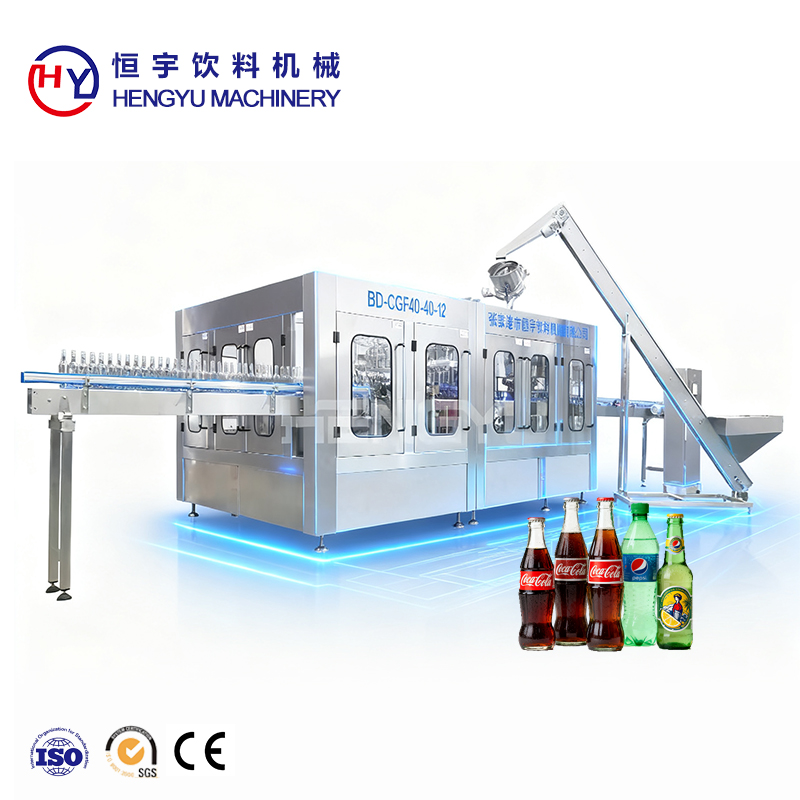
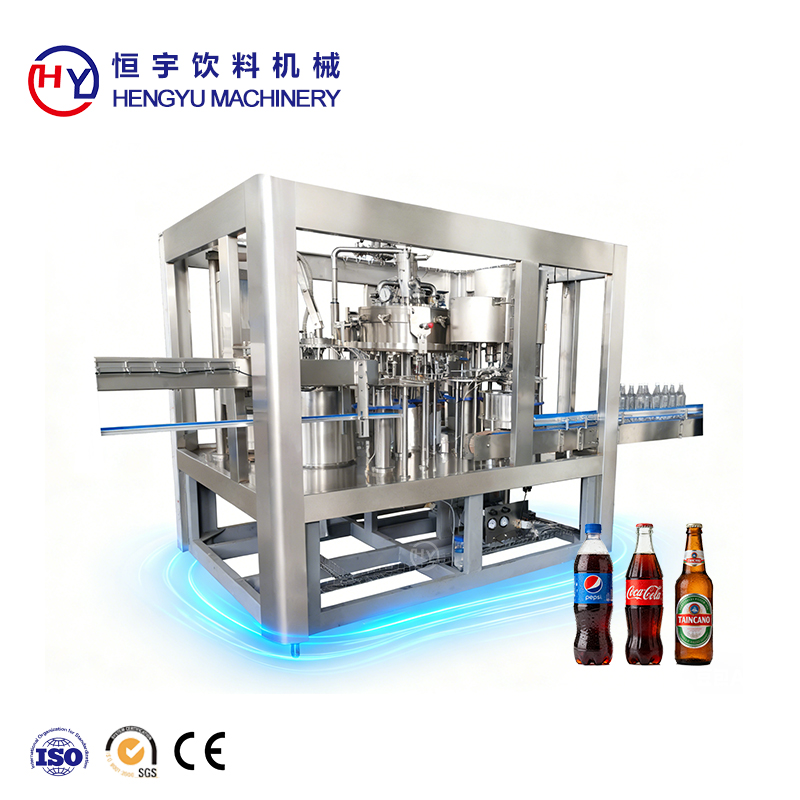
A carbonated water filling machine represents an essential piece of equipment in the beverage manufacturing industry, designed specifically to handle the unique challenges of filling products that contain dissolved carbon dioxide gas under pressure. This sophisticated machinery automates the entire process of transferring carbonated beverages from storage tanks into individual bottles or cans while maintaining the carbonation levels that give these drinks their distinctive fizz and refreshing quality. The primary function of a carbonated water filling machine involves precise liquid measurement, pressure control during filling operations, and secure sealing to prevent gas escape. Modern systems integrate multiple stations that work in synchronized harmony, including bottle rinsing units, filling valves with counter-pressure technology, and capping mechanisms that ensure airtight closure. The technological features of these machines showcase advanced engineering solutions such as programmable logic controllers that allow operators to adjust filling speeds, volumes, and pressure parameters according to different product specifications. Isobaric filling technology stands as a cornerstone feature, where bottles are first pressurized with carbon dioxide to match the pressure inside the filling tank, preventing premature gas release and foam formation during the liquid transfer process. Sensor systems monitor fill levels with exceptional accuracy, ensuring consistent product volumes across thousands of units per hour. Applications for carbonated water filling machines extend across various beverage sectors, from sparkling water production facilities to soft drink manufacturers, energy drink companies, and carbonated juice processors. These machines accommodate different container formats including PET bottles ranging from small 250ml sizes to large 2-liter formats, glass bottles for premium products, and aluminum cans for convenient consumption. Production capacities vary significantly, with systems available for small craft beverage producers operating at 1000 bottles per hour to industrial-scale operations filling 40000 units hourly. The versatility of carbonated water filling machines makes them indispensable for businesses aiming to deliver consistent quality while maximizing production efficiency in an increasingly competitive beverage market.

Popular Products

Investing in a carbonated water filling machine delivers substantial benefits that directly impact your production efficiency, product quality, and bottom line profitability. First and foremost, these machines dramatically increase your output capacity compared to manual filling methods, allowing your business to scale operations and meet growing market demand without proportionally increasing labor costs. A single automated system can replace an entire team of workers while maintaining consistent operation for extended periods, translating to significant savings in wages, training expenses, and human resource management. The precision offered by carbonated water filling machines ensures that every container receives exactly the right amount of product, eliminating overfilling waste that drains profits and underfilling issues that could lead to customer dissatisfaction or regulatory compliance problems. This accuracy becomes particularly valuable when dealing with expensive ingredients or operating on thin profit margins where every milliliter counts toward your annual financial performance. Quality consistency represents another major advantage, as machines eliminate the variability inherent in human operations. Each bottle maintains identical carbonation levels, preventing some products from going flat while others become over-carbonated, which means your brand delivers the same refreshing experience to every customer regardless of when or where they purchase your beverage. This reliability builds consumer trust and strengthens brand loyalty over time. The hygienic benefits of automated carbonated water filling machines cannot be overstated in an industry where contamination risks can lead to costly product recalls, legal liabilities, and irreparable brand damage. Modern systems feature stainless steel construction with smooth surfaces that resist bacterial growth, automated cleaning-in-place systems that sanitize equipment without disassembly, and minimal human contact with the product throughout the filling process. These sanitation advantages help you maintain strict food safety standards and pass regulatory inspections with confidence. Flexibility in production represents yet another practical benefit, as contemporary carbonated water filling machines allow quick changeovers between different bottle sizes, product formulations, and fill volumes through simple adjustments rather than complete equipment replacement. This adaptability enables your business to respond rapidly to market trends, test new product concepts without massive capital investment, and optimize production schedules to match seasonal demand fluctuations. Energy efficiency in modern equipment designs reduces your operational costs while supporting corporate sustainability initiatives that increasingly matter to environmentally conscious consumers. Advanced systems incorporate servo motors that consume power only during active movements, heat recovery systems that reuse thermal energy, and optimized mechanical designs that accomplish more work with less energy input. Finally, the data collection capabilities of computerized carbonated water filling machines provide valuable insights into your production performance, identifying bottlenecks, tracking efficiency metrics, and enabling continuous improvement initiatives that keep your operation competitive in a challenging marketplace.

Practical Tips

Increasing Capacity in Bottled Water Production Lines

09

Mar

Increasing Capacity in Bottled Water Production Lines

Diagnosing Bottlenecks in Your Bottled Water Production Line Measuring Throughput Gaps: Bottling Speed, Changeover Time, and OEE Analysis To get a handle on where production is falling short, look at three key performance indicators. Start by compa...
View More
How Bottled Water Production Lines Maintain Product Safety

12

Mar

How Bottled Water Production Lines Maintain Product Safety

Regulatory Foundations and the Multi-Barrier Safety Framework FDA, EPA, and ISO Standards Specific to Bottled Water Production Lines The bottled water industry works within a pretty strict set of regulations. The FDA has these things called Good Ma...
View More
Troubleshooting Can Filling Machine Production Issues

21

Mar

Troubleshooting Can Filling Machine Production Issues

Power, Control, and Electrical Faults in Can Filling Machines Machine won't power on: main supply, fuses, and emergency stop circuit checks If the can filling machine won't start at all, the first thing to do is check whether the main power supply ...
View More
Can Filling Machine Capacity Planning Guide

22

Mar

Can Filling Machine Capacity Planning Guide

Understanding Can Filling Machine Capacity: Theory vs. Real-World Performance Why Theoretical Capacity Rarely Matches Effective Output on Can Filling Lines When companies talk about canning speed at 100 cans per minute, they're referring to what ha...
View More

Get a Free Quote

Our representative will contact you soon.
Email
Name
Phone/WhatsApp
Required Product
Message
0/1000

carbonated water filling machine

Advanced Isobaric Filling Technology Preserves Perfect Carbonation

Advanced Isobaric Filling Technology Preserves Perfect Carbonation

The cornerstone feature that distinguishes professional carbonated water filling machines from standard liquid packaging equipment lies in their sophisticated isobaric filling technology, a specialized process engineered specifically to maintain optimal carbon dioxide saturation throughout the transfer operation. This innovative approach addresses the fundamental challenge of carbonated beverage production where the dissolved gas naturally wants to escape from the liquid when exposed to lower pressure environments, creating excessive foam, inconsistent carbonation levels, and product waste. The isobaric filling system operates by first introducing pressurized carbon dioxide gas into empty containers before any liquid enters, raising the internal bottle pressure to match exactly the pressure maintained in the filling bowl reservoir. This pressure equalization creates an environment where the carbonated water experiences no pressure differential as it flows from the holding tank into the container, meaning the dissolved carbon dioxide remains stable within the liquid rather than rapidly expanding into bubbles and foam. The filling valves then open to allow liquid transfer while continuously monitoring and adjusting pressures to maintain this delicate equilibrium throughout the entire filling cycle. Once the preset volume reaches completion, the system executes a carefully controlled pressure release sequence that gradually reduces bottle pressure in stages rather than sudden decompression, further minimizing carbonation loss. This technological sophistication delivers immense value to beverage producers by ensuring that products leaving the filling line contain the same carbonation intensity as the bulk liquid in storage tanks, guaranteeing that consumers experience the intended fizz and mouthfeel that define your product quality standards. The commercial implications extend beyond quality consistency to include reduced product loss from foam-overs that contaminate equipment and require cleanup, decreased carbon dioxide consumption since less gas escapes during filling operations, and improved production speeds because operators can run machines at optimal rates without triggering foam-related stoppages. For businesses competing in premium carbonated water segments where discerning consumers notice subtle quality differences, this technology provides a competitive advantage that justifies the investment through superior product performance and enhanced brand reputation in the marketplace.
Modular Design Enables Scalable Production Growth

Modular Design Enables Scalable Production Growth

Forward-thinking beverage entrepreneurs recognize that business needs evolve over time, making equipment flexibility a critical consideration when selecting carbonated water filling machines for their operations. The modular design philosophy incorporated into contemporary filling systems directly addresses this reality by constructing machines from interchangeable components that can be added, removed, or upgraded without replacing the entire production line. This architectural approach begins with a basic mainframe structure engineered to accommodate expansion, featuring standardized mounting points, common electrical interfaces, and unified control systems that seamlessly integrate additional modules as production requirements increase. A startup company might initially purchase a configuration with twelve filling heads capable of producing 3000 bottles per hour, perfectly matching their early market penetration phase volumes. As distribution expands and demand grows, the same base machine accepts additional filling valve modules that increase capacity to eighteen heads and 4500 bottles hourly, accomplished through a relatively simple installation process rather than purchasing completely new equipment. This scalability extends beyond just filling stations to include integrated components such as bottle unscramblers that orient containers for entry into the line, rinsing stations that clean bottles before filling, capping units that apply closures with precise torque specifications, labeling machines that apply brand identification, and accumulation conveyors that buffer products between process stages. Each element connects through standardized interfaces that maintain compatibility across product generations, protecting your equipment investment against premature obsolescence. The financial advantages of modular carbonated water filling machines become apparent when comparing capital expenditure scenarios. Traditional fixed-capacity equipment forces businesses into difficult decisions where they either purchase excessive capacity that sits idle during early operations, wasting capital that could fund marketing or product development, or they buy minimal systems that quickly become bottlenecks requiring expensive replacement as the business grows. Modular systems eliminate this dilemma by allowing incremental capacity investments timed precisely with revenue growth, improving cash flow management and reducing financial risk. The technical benefits include simplified maintenance procedures since standardized modules mean spare parts inventory covers multiple machine sections, technicians develop deep familiarity with repeating components rather than learning completely different systems, and troubleshooting becomes more efficient when problems can be isolated to specific modules. This design philosophy also facilitates technology adoption, enabling businesses to upgrade specific machine sections with latest-generation components while retaining functional elements, thus modernizing production capabilities at manageable costs rather than facing all-or-nothing equipment replacement decisions that strain budgets and disrupt operations.
Automated Quality Control Systems Ensure Consistent Product Excellence

Automated Quality Control Systems Ensure Consistent Product Excellence

Quality assurance represents a non-negotiable priority in beverage manufacturing where reputation and regulatory compliance depend on delivering safe, consistent products with every production run. Modern carbonated water filling machines address this imperative through integrated automated quality control systems that continuously monitor critical parameters, detect deviations from specifications, and implement corrective actions without human intervention. These intelligent systems employ multiple sensor technologies strategically positioned throughout the filling process to gather real-time data about every aspect of production. Fill level sensors utilize various detection methods including capacitive, optical, or ultrasonic technologies to verify that each container receives the precise volume specified in the recipe formulation, automatically rejecting underfilled or overfilled units before they proceed to capping stations. Pressure transducers constantly measure the carbonation levels during filling operations, ensuring that the isobaric process maintains correct parameters and alerting operators immediately if pressure drops suggest carbonation loss or equipment malfunction. Vision systems equipped with high-resolution cameras and advanced image processing algorithms inspect bottles at multiple stages, identifying containers with physical defects like cracks or deformities that could compromise package integrity, detecting foreign materials that somehow entered the filling area, and verifying that caps are properly positioned and seated with correct orientation. Weight checking systems provide another verification layer by measuring finished product mass and comparing results against target specifications with precision exceeding manual methods, catching cumulative errors that might escape individual container inspection. The value these automated quality control features deliver extends far beyond simple defect detection to encompass comprehensive production intelligence that empowers better business decisions. The data collected feeds into statistical process control systems that analyze trends over time, identifying subtle drifts in performance before they escalate into quality problems requiring production stoppages or product recalls. Operators receive dashboards displaying key performance indicators such as reject rates by category, efficiency percentages, and downtime causes, enabling them to prioritize improvement initiatives based on quantified impact rather than subjective impressions. Traceability systems log every measured parameter associated with specific production batches, creating detailed records that satisfy regulatory documentation requirements and provide invaluable information if quality investigations become necessary. For beverage companies building brands in competitive markets, these automated quality systems provide confidence that every carbonated water product reaching consumers meets exacting standards, protecting brand reputation and customer loyalty. The economic benefits include reduced waste from quality defects, minimized risk of expensive recalls that devastate profitability and consumer trust, and optimized production efficiency through data-driven process improvements that incrementally enhance performance. Perhaps most significantly, automated quality control systems enable smaller operations to achieve quality consistency previously accessible only to large corporations with extensive quality assurance departments, democratizing excellence and empowering entrepreneurial beverage companies to compete effectively against established industry players.