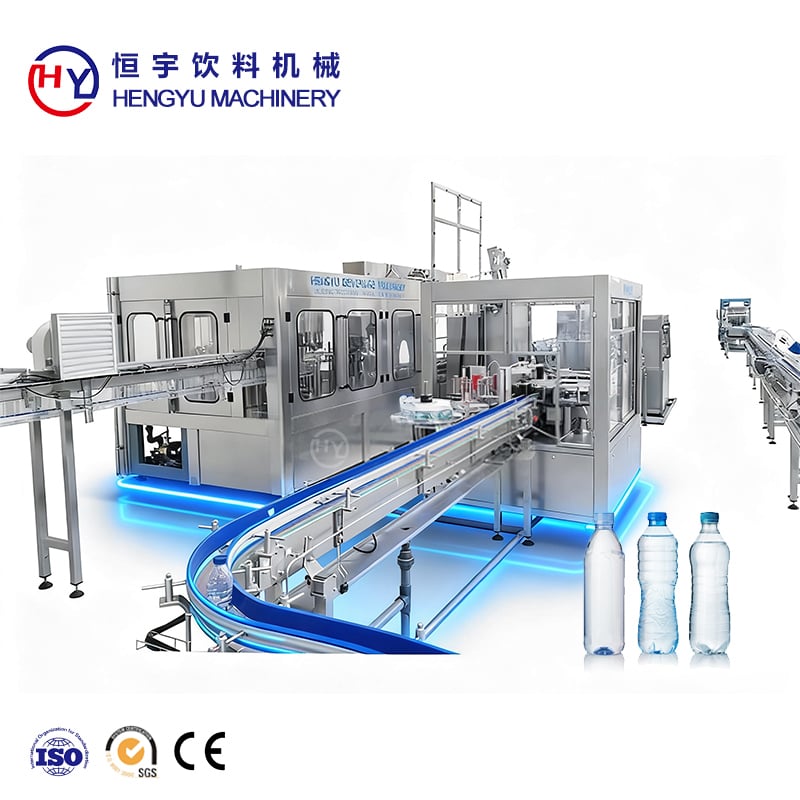
Drinking Water Bottle Packing Machine - Advanced Automated Packaging Solutions for Beverage Production

All Categories

drinking water bottle packing machine

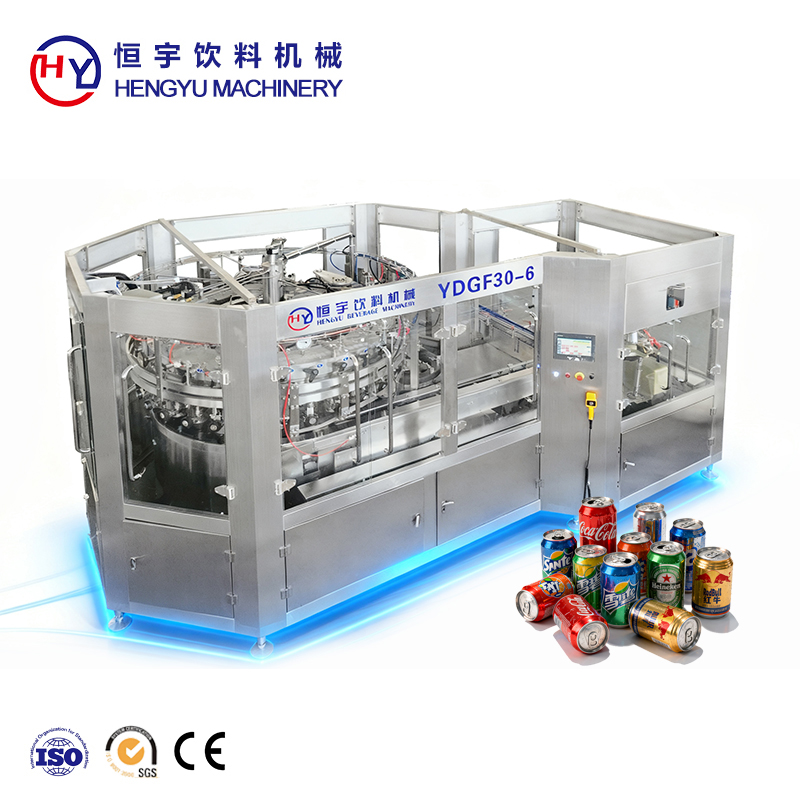
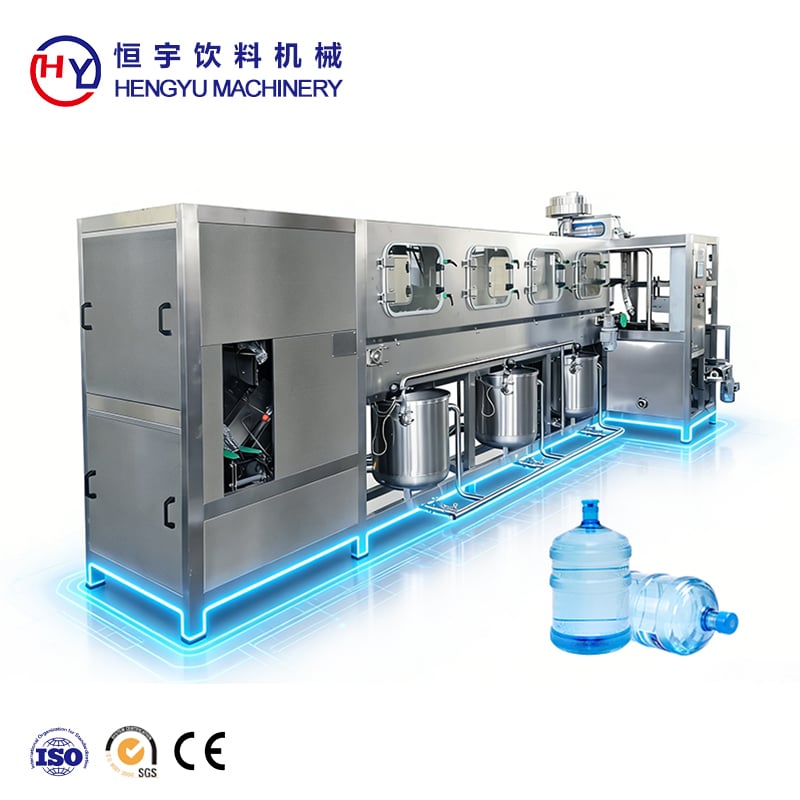
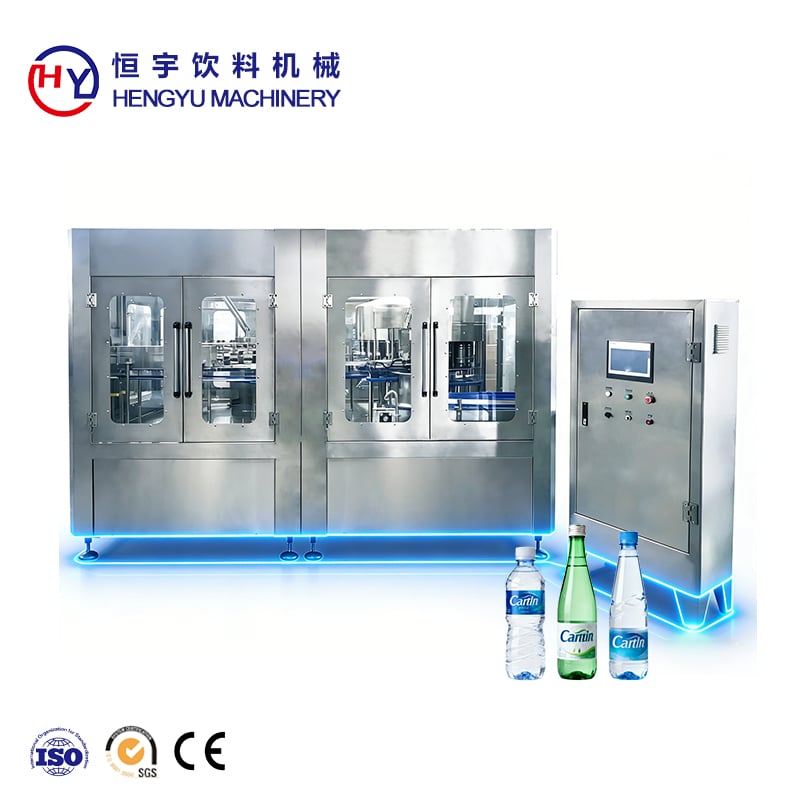
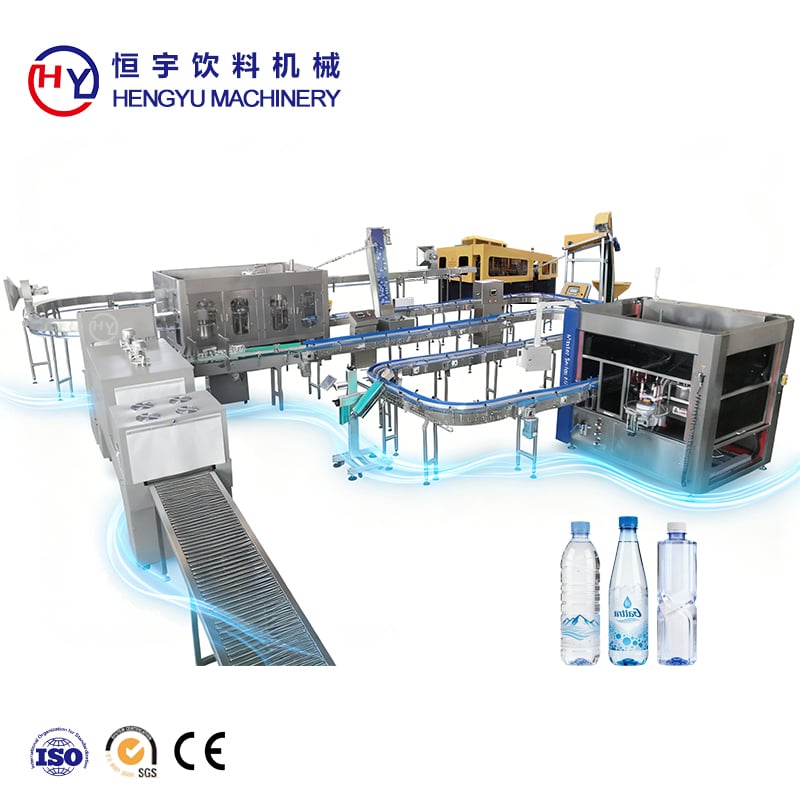
The drinking water bottle packing machine represents a sophisticated automated solution designed to streamline the packaging process for bottled water products in beverage manufacturing facilities. This essential equipment integrates multiple operational stages into a cohesive system that handles bottles from the moment they exit the filling line until they are securely packaged and ready for distribution. Modern drinking water bottle packing machines employ advanced mechanical engineering combined with intelligent control systems to ensure consistent performance and reliability throughout continuous production cycles. These machines accommodate various bottle sizes ranging from small individual servings to large gallon containers, making them versatile assets for production facilities of different scales. The primary function involves grouping filled bottles according to predetermined configurations, wrapping them securely using appropriate packaging materials such as shrink film or corrugated cardboard, and preparing them for palletization. The technological framework incorporates servo motors for precise movement control, programmable logic controllers for operational sequencing, and human-machine interfaces that allow operators to monitor and adjust parameters in real time. Safety features are built into every drinking water bottle packing machine to protect workers and prevent damage to products during the packaging cycle. The equipment typically includes photoelectric sensors for bottle detection, automatic rejection systems for defective items, and emergency stop mechanisms. Production facilities utilizing these machines benefit from reduced labor requirements, minimized packaging material waste, and improved consistency in package appearance and quality. The modular design of contemporary drinking water bottle packing machines enables manufacturers to customize configurations based on specific production requirements, available floor space, and integration needs with existing conveyor systems. With global demand for packaged drinking water continuing to rise, investing in reliable packing machinery has become crucial for businesses seeking to maintain competitive advantage through operational efficiency and product presentation excellence.

New Product Recommendations

Investing in a drinking water bottle packing machine delivers numerous practical benefits that directly impact your bottom line and operational efficiency. First and foremost, these machines dramatically increase packaging speed compared to manual methods, enabling your facility to process thousands of bottles per hour depending on the model capacity. This acceleration in throughput means you can fulfill larger orders faster, respond to market demand more effectively, and generate revenue at a significantly higher rate. The consistency provided by automated packing machinery ensures every package meets the same quality standards, eliminating the variations that occur with manual labor. Your customers receive uniformly packaged products that present a professional appearance on retail shelves, strengthening brand reputation and consumer confidence. Labor cost reduction represents another significant advantage, as one drinking water bottle packing machine typically replaces multiple workers previously required for manual packing operations. This reallocation of human resources allows you to deploy staff to other value-added activities while reducing ongoing payroll expenses and associated benefits costs. The precision engineering inherent in these machines minimizes packaging material waste by applying exactly the right amount of film or cardboard needed for secure packaging. Over time, these material savings accumulate into substantial cost reductions that improve profit margins. Workplace safety improves considerably when you implement automated packing systems, as workers no longer perform repetitive motions that lead to strain injuries or handle heavy bottle cases continuously throughout shifts. The ergonomic benefits translate to fewer workplace injury claims, reduced insurance premiums, and improved employee satisfaction and retention. Modern drinking water bottle packing machines offer remarkable flexibility, allowing quick changeovers between different bottle sizes and packaging configurations without extensive downtime. This adaptability enables you to diversify your product offerings and respond to seasonal demand fluctuations or special promotional packaging requirements. The integration capabilities of these machines mean they connect seamlessly with upstream filling equipment and downstream palletizing systems, creating an efficient production line with minimal manual intervention points. Real-time monitoring features provide valuable data about production rates, downtime incidents, and maintenance needs, empowering you to make informed decisions about operational improvements. Energy efficiency in contemporary models helps reduce utility costs while supporting environmental sustainability initiatives that increasingly matter to consumers and regulatory bodies. The return on investment for a drinking water bottle packing machine typically materializes within a reasonable timeframe as the cumulative savings from labor, materials, and increased production capacity offset the initial capital expenditure. Finally, having reliable automated packing equipment positions your business for scalable growth, providing the infrastructure needed to expand production volumes as your market presence increases.

Practical Tips

Glass Bottle Filling Machine vs Plastic Bottle Filling Machine

04

Mar

Glass Bottle Filling Machine vs Plastic Bottle Filling Machine

Material Properties Dictate Core Machine Design Glass fragility and thermal mass: why glass bottle filling machines require reinforced frames, shock-dampened conveyors, and precision neck-handling grippers Working with glass bottles means going th...
View More
Increasing Capacity in Bottled Water Production Lines

09

Mar

Increasing Capacity in Bottled Water Production Lines

Diagnosing Bottlenecks in Your Bottled Water Production Line Measuring Throughput Gaps: Bottling Speed, Changeover Time, and OEE Analysis To get a handle on where production is falling short, look at three key performance indicators. Start by compa...
View More
Can Filling Machine Technology for Carbonated Beverages

20

Mar

Can Filling Machine Technology for Carbonated Beverages

Isobaric Filling Principles: How Can Filling Machines Preserve Carbonation Under Pressure The Physics of CO₂ Solubility and Why Counter-Pressure Is Non-Negotiable The way carbon dioxide dissolves in drinks basically follows what we call Henry's Law...
View More
Can Filling Machine Capacity Planning Guide

22

Mar

Can Filling Machine Capacity Planning Guide

Understanding Can Filling Machine Capacity: Theory vs. Real-World Performance Why Theoretical Capacity Rarely Matches Effective Output on Can Filling Lines When companies talk about canning speed at 100 cans per minute, they're referring to what ha...
View More

Get a Free Quote

Our representative will contact you soon.
Email
Name
Phone/WhatsApp
Required Product
Message
0/1000

drinking water bottle packing machine

Advanced Automation Technology Ensures Consistent High-Speed Performance

Advanced Automation Technology Ensures Consistent High-Speed Performance

The technological sophistication embedded within modern drinking water bottle packing machines represents a quantum leap forward in packaging automation, delivering unmatched performance consistency and operational reliability. At the core of these systems lies a network of precision-engineered components working in perfect synchronization to execute complex packaging sequences with remarkable accuracy. Servo-driven mechanisms provide the fine motor control necessary for gentle yet secure handling of bottles, preventing damage while maintaining rapid cycle times that keep pace with high-volume filling operations. The programmable logic controllers governing machine operations can be configured to accommodate virtually any packaging pattern or bottle arrangement, from simple six-pack configurations to complex multi-layer cases with intricate stacking patterns. This flexibility means a single drinking water bottle packing machine can adapt to changing production requirements without requiring separate equipment for different package formats. Intelligent sensors continuously monitor every stage of the packing process, detecting bottle presence, verifying proper positioning, and confirming secure wrapping before packages advance to the next production stage. These feedback mechanisms enable the system to self-correct minor deviations automatically, maintaining consistent output quality without operator intervention. The touch-screen interface provides intuitive access to all operational parameters, allowing production supervisors to adjust speeds, change packaging configurations, or troubleshoot issues through clearly presented diagnostic information. Recipe storage functionality enables operators to save specific settings for different product runs, then recall them instantly when switching between bottle sizes or packaging styles, dramatically reducing changeover time and eliminating setup errors. The integration architecture of contemporary drinking water bottle packing machines supports communication protocols that connect with enterprise resource planning systems, providing real-time production data for inventory management and quality assurance purposes. Predictive maintenance capabilities analyze operational patterns to forecast when components may require service, scheduling maintenance during planned downtime rather than experiencing unexpected production interruptions. The robust construction using corrosion-resistant materials ensures these machines withstand the humid environments typical in beverage production facilities while maintaining precise operational tolerances over years of continuous service. Energy management features optimize power consumption by adjusting motor speeds according to actual production demands rather than running at maximum capacity constantly, reducing electricity costs while extending component service life through reduced mechanical stress.
Versatile Packaging Capabilities Accommodate Diverse Production Requirements

Versatile Packaging Capabilities Accommodate Diverse Production Requirements

The exceptional versatility built into modern drinking water bottle packing machines provides manufacturers with unprecedented flexibility to meet diverse market demands and packaging preferences without investing in multiple specialized systems. These adaptable machines handle an impressive range of bottle geometries including cylindrical, square, and contoured shapes across a wide spectrum of volumes from compact 250-milliliter bottles to substantial five-gallon containers. The adjustable framework accommodates different bottle heights and diameters through tool-free mechanical adjustments that production staff can complete in minutes rather than hours, maximizing productive uptime when transitioning between product runs. This quick-change capability proves invaluable for facilities producing multiple bottle sizes or serving customers with varied packaging specifications, enabling economical short-run production that would be impractical with less flexible equipment. The drinking water bottle packing machine can apply various packaging materials according to product positioning and cost considerations, including polyethylene shrink film for tamper-evident wrapping, corrugated trays for added stability during transport, or combination packages using both materials for optimal protection. Film thickness and tension settings adjust across a wide range to accommodate different material specifications, ensuring proper sealing and appearance regardless of supplier or material composition changes. Grouping configurations can be programmed for virtually any arrangement pattern, from simple side-by-side layouts to complex nested configurations that optimize pallet density and reduce shipping costs per unit. The modular architecture allows manufacturers to start with a basic configuration then add capabilities as production demands grow, incorporating features like automatic tray forming, top load stabilization, or integrated labeling without replacing the core machinery. Multi-lane operation options enable a single drinking water bottle packing machine to process multiple product streams simultaneously, effectively multiplying throughput within the same floor space footprint. Height-adjustable conveyors ensure compatibility with existing production line elevations, facilitating integration into established facilities without extensive structural modifications. The versatility extends to packaging orientation, with machines capable of handling bottles in upright, inverted, or horizontal positions depending on downstream handling requirements or specific product characteristics. This comprehensive adaptability means your investment in a drinking water bottle packing machine remains relevant and productive even as your product portfolio evolves, market preferences shift, or distribution channels impose new packaging requirements, providing long-term value that justifies the capital investment.
Operational Efficiency Delivers Measurable Cost Savings and Quality Improvements

Operational Efficiency Delivers Measurable Cost Savings and Quality Improvements

The operational efficiency achieved through implementing a drinking water bottle packing machine creates tangible financial benefits that extend far beyond simple labor substitution, touching every aspect of the packaging operation from material utilization to product quality. Precision application of packaging materials eliminates the overuse common in manual operations where workers apply extra film or use oversized cartons to ensure adequate protection, with material savings typically ranging from fifteen to thirty percent depending on previous practices. These reductions in consumable costs accumulate rapidly in high-volume production environments, often representing tens of thousands of dollars annually in direct expense reduction. The consistent tension and sealing provided by automated systems ensure packages maintain integrity throughout distribution channels, dramatically reducing product damage claims and the associated costs of replacements, customer service interventions, and brand reputation impact. Quality consistency represents another dimension of operational efficiency, as every package produced by a drinking water bottle packing machine meets identical standards for appearance, protection level, and dimensional accuracy. This uniformity enhances retail presentation, simplifies inventory management through standardized package dimensions, and supports automated warehouse systems that rely on predictable package characteristics. The elimination of human variability from the packing process means production quality remains constant regardless of shift timing, personnel changes, or production volume fluctuations that might affect worker fatigue in manual operations. Downtime reduction contributes significantly to overall efficiency gains, as modern drinking water bottle packing machines feature diagnostic systems that identify potential issues before they cause production stoppages, while component accessibility enables rapid maintenance interventions when service becomes necessary. The data collection capabilities embedded in these systems provide management with detailed insights into production efficiency metrics including actual versus theoretical output rates, rejection frequencies, and specific causes of production interruptions. This information empowers continuous improvement initiatives by identifying bottlenecks, revealing training opportunities, and quantifying the impact of process modifications. Energy efficiency in contemporary models reduces operational costs while supporting corporate sustainability commitments that increasingly influence purchasing decisions among environmentally conscious consumers. The compact footprint of modern drinking water bottle packing machines optimizes facility space utilization, allowing manufacturers to maintain or increase production capacity without expensive building expansions. Clean-in-place features and sanitary design principles minimize cleaning time and ensure compliance with food safety regulations, reducing the risk of contamination incidents that could necessitate costly product recalls. The cumulative effect of these efficiency improvements creates a compelling economic case for automation investment, with most facilities achieving complete cost recovery within two to four years while simultaneously improving product quality and workplace safety.