Beverage Filling Machine Solutions - Advanced Automated Filling Systems for Efficient Production

All Categories

beverage filling machine

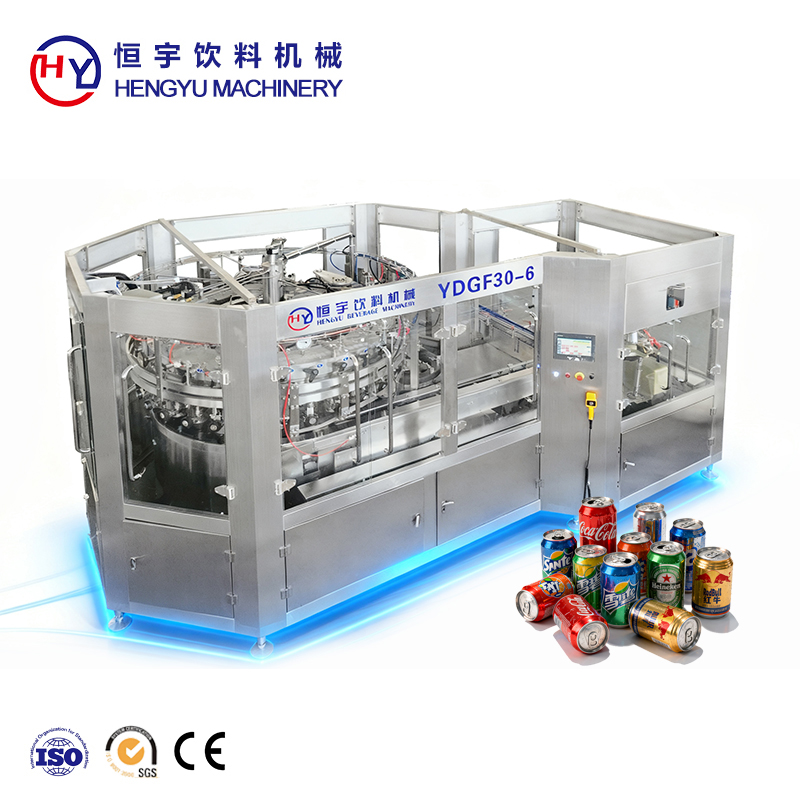
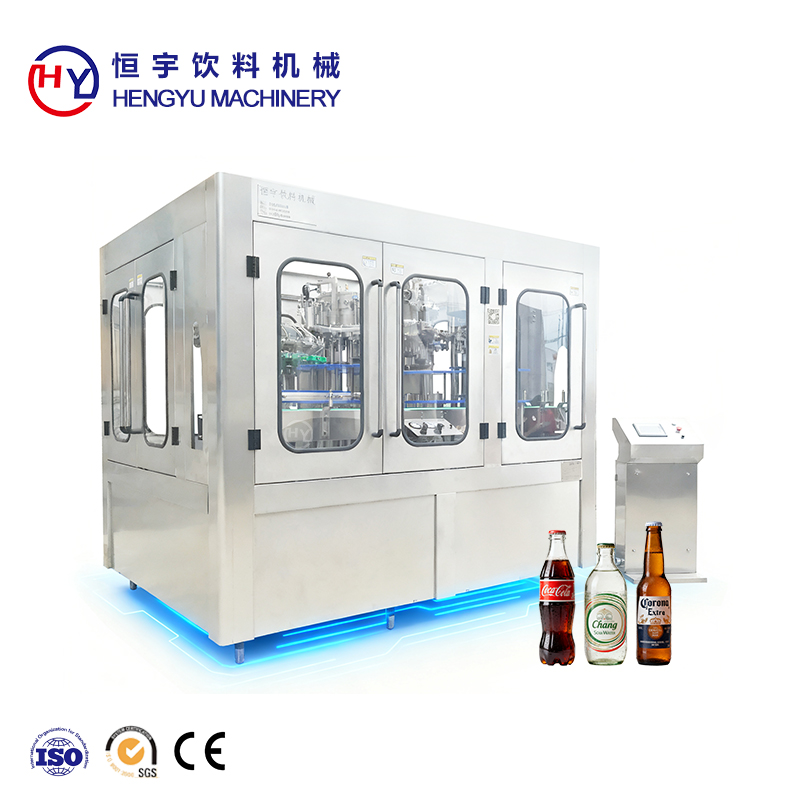
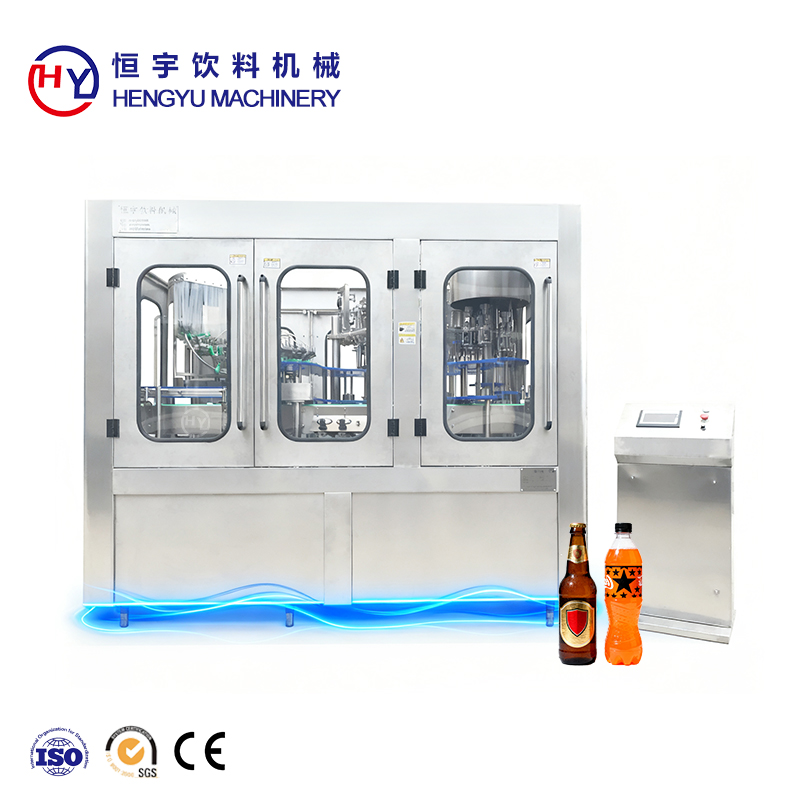
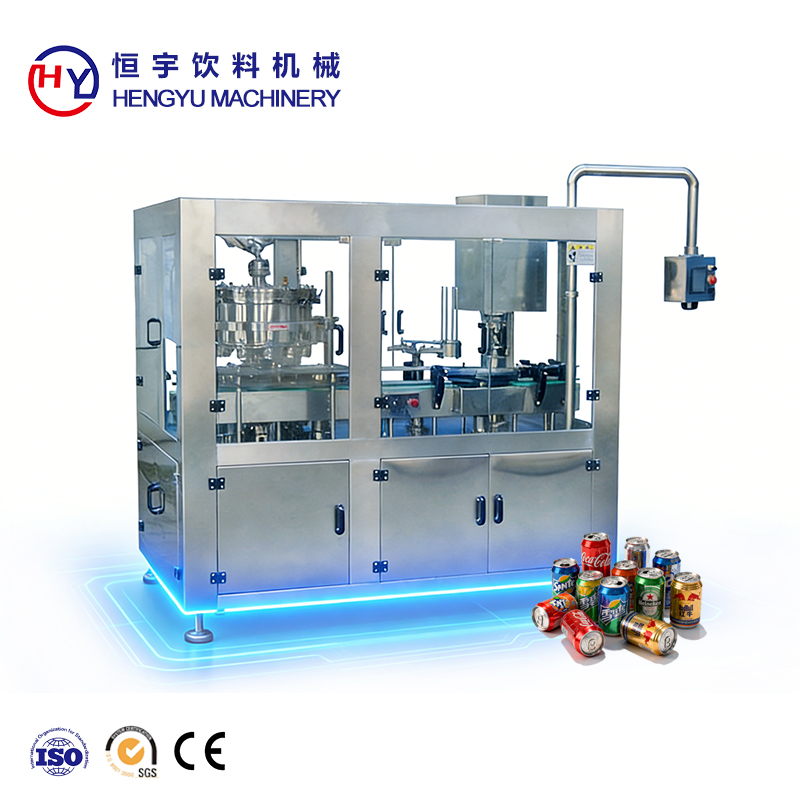
A beverage filling machine represents essential equipment designed to automate the process of filling various liquid products into containers such as bottles, cans, pouches, and cartons. This sophisticated machinery plays a crucial role in modern beverage production facilities, handling everything from water and soft drinks to juices, dairy products, alcoholic beverages, and energy drinks. The primary function of a beverage filling machine centers on transferring precise quantities of liquid from bulk storage tanks into individual containers while maintaining product quality, hygiene standards, and production efficiency. These machines incorporate advanced control systems that regulate filling volumes, speeds, and timing to ensure consistency across thousands of units per hour. Technological features include programmable logic controllers that allow operators to adjust parameters for different product types and container sizes, servo-driven mechanisms for precise movement control, and flow meters that monitor liquid volumes in real-time. Many modern beverage filling machines integrate automated cleaning-in-place systems that sanitize internal components without disassembly, reducing downtime between production runs. The equipment often includes multiple filling heads operating simultaneously to maximize throughput, with capabilities ranging from small-scale operations processing hundreds of bottles per hour to industrial systems handling tens of thousands of units. Applications span across numerous beverage industry sectors including bottled water plants, carbonated soft drink manufacturers, juice processing facilities, dairy operations, breweries, wineries, and sports drink producers. The versatility of beverage filling machines allows manufacturers to handle products with varying viscosities, carbonation levels, temperatures, and chemical properties. Container compatibility extends from small single-serve bottles to large multi-gallon containers, accommodating glass, plastic, aluminum, and composite materials. Integration capabilities enable these machines to connect seamlessly with upstream and downstream equipment such as rinsing systems, capping machines, labeling units, and packaging lines, creating comprehensive automated production environments that minimize manual intervention and human error while maximizing operational efficiency and product safety.

New Products

Modern beverage filling machines deliver substantial benefits that directly impact your bottom line and operational success. First, these systems dramatically increase production speed compared to manual filling methods, allowing your facility to meet growing market demands without proportionally increasing labor costs. A single automated beverage filling machine can replace multiple workers while maintaining consistent output throughout shifts, eliminating fatigue-related slowdowns and enabling your business to fulfill larger orders within tighter deadlines. Precision represents another critical advantage, as these machines deliver exact fill volumes with minimal variation, typically within fractions of a millimeter. This accuracy reduces product giveaway where you overfill containers and lose profit, while simultaneously preventing underfilling that could lead to regulatory violations and customer dissatisfaction. The consistency achieved by beverage filling machines ensures every customer receives the same product experience, strengthening brand reputation and reducing complaint rates. Hygiene and safety improvements stand as paramount benefits, particularly for consumable products where contamination poses serious health risks. Automated systems minimize human contact with beverages during the filling process, reducing contamination pathways while enclosed designs protect products from environmental pollutants. Stainless steel construction and smooth surfaces facilitate thorough cleaning, helping you maintain compliance with food safety regulations and pass inspections confidently. Flexibility adds considerable value as most beverage filling machines allow quick changeovers between product types and container formats. You can switch from filling small bottles to large containers, or from water to juice, often within minutes rather than hours, enabling your facility to respond rapidly to market trends and customer preferences without investing in separate dedicated equipment for each product line. Cost savings accumulate through multiple channels including reduced labor expenses, decreased product waste, lower rejection rates, minimized downtime, and improved energy efficiency compared to older equipment. While the initial investment requires careful consideration, most operators experience payback periods measured in months rather than years when accounting for all operational improvements. Reliability of modern beverage filling machines means fewer unexpected breakdowns that halt production and create delivery delays. Robust construction using quality components and proven engineering principles results in equipment that operates continuously with minimal maintenance requirements. Scalability represents a forward-looking advantage, as modular designs allow you to start with capacity matching current needs then expand by adding filling heads or upgrading components as your business grows, protecting your investment while avoiding overcapacity costs in early operational stages. Quality control features embedded within beverage filling machines provide real-time monitoring and automatic rejection of improperly filled containers, catching problems immediately rather than discovering issues after products reach warehouses or customers. This proactive approach saves money on recalls and protects your brand image from damage associated with defective products reaching the market.

Tips And Tricks

How Bottled Water Production Lines Maintain Product Safety

12

Mar

How Bottled Water Production Lines Maintain Product Safety

Regulatory Foundations and the Multi-Barrier Safety Framework FDA, EPA, and ISO Standards Specific to Bottled Water Production Lines The bottled water industry works within a pretty strict set of regulations. The FDA has these things called Good Ma...
View More
Can Filling Machine Technology for Carbonated Beverages

20

Mar

Can Filling Machine Technology for Carbonated Beverages

Isobaric Filling Principles: How Can Filling Machines Preserve Carbonation Under Pressure The Physics of CO₂ Solubility and Why Counter-Pressure Is Non-Negotiable The way carbon dioxide dissolves in drinks basically follows what we call Henry's Law...
View More
Can Filling Machine Capacity Planning Guide

22

Mar

Can Filling Machine Capacity Planning Guide

Understanding Can Filling Machine Capacity: Theory vs. Real-World Performance Why Theoretical Capacity Rarely Matches Effective Output on Can Filling Lines When companies talk about canning speed at 100 cans per minute, they're referring to what ha...
View More
Can Sealing Machine Maintenance Tips

23

Mar

Can Sealing Machine Maintenance Tips

Daily and Weekly Preventive Maintenance for Your Can Sealing Machine Essential Daily Checks: Belt Tension, Sealing Bar Alignment, and Tape Head Cleanliness Starting every shift with a quick check on belt tension makes all the difference. If belts a...
View More

Get a Free Quote

Our representative will contact you soon.
Email
Name
Phone/WhatsApp
Required Product
Message
0/1000

beverage filling machine

Advanced Precision Filling Technology for Zero Waste Operations

Advanced Precision Filling Technology for Zero Waste Operations

The precision filling technology incorporated into modern beverage filling machines represents a revolutionary advancement that transforms production economics and product quality. At the core of this technology lies sophisticated sensor systems that measure liquid levels with extraordinary accuracy, typically achieving precision within plus or minus 0.5 percent of target volumes. This precision stems from multiple technological components working in concert, including high-resolution flow meters that continuously monitor liquid velocity and volume, pressure sensors that detect variations in filling dynamics, and vision systems that optically verify fill levels after completion. The control algorithms processing this sensor data make instantaneous adjustments to valve positions, pump speeds, and timing parameters, compensating for variables such as temperature fluctuations, viscosity changes, and container dimensional variations that would cause inconsistencies in simpler systems. For beverage manufacturers, this precision directly translates into significant cost savings by virtually eliminating product giveaway, the industry term for excess product dispensed beyond labeled quantities. When multiplied across millions of containers annually, even slight overfilling representing mere milliliters per unit accumulates into substantial financial losses, often totaling tens of thousands of dollars for medium-sized operations. Precision filling technology recaptures these losses while simultaneously ensuring compliance with regulatory requirements that mandate accurate quantity declarations and impose penalties for systematic underfilling. Beyond financial benefits, precision filling enhances customer satisfaction by delivering consistent product experiences where every purchase contains exactly the amount expected, building trust and encouraging repeat business. The technology adapts to various filling principles including gravity filling for non-carbonated beverages, pressure filling for carbonated products, and vacuum filling for specialized applications, each optimized for specific product characteristics. Servo-driven mechanisms provide the mechanical precision necessary to execute the control system's commands, positioning valves and nozzles with repeatability measured in micrometers and executing timing sequences with millisecond accuracy. This mechanical precision proves especially valuable during high-speed operations where filling cycles complete in fractions of a second, leaving no margin for error. Modern beverage filling machines equipped with this advanced technology also feature self-calibration routines that automatically verify and adjust system accuracy at regular intervals, maintaining performance standards without requiring manual intervention or production stoppages. Diagnostic capabilities built into the precision systems continuously monitor component performance, predicting maintenance needs before failures occur and providing detailed data logs that help operators optimize settings for each product formulation and container type, creating a continuously improving production environment that maximizes both efficiency and quality.
Seamless Integration with Complete Production Line Automation

Seamless Integration with Complete Production Line Automation

The integration capabilities of contemporary beverage filling machines establish them as central components within fully automated production ecosystems that streamline operations from raw material intake through finished product packaging. These machines feature standardized communication protocols and mechanical interfaces that enable them to connect seamlessly with upstream equipment such as bottle unscrambling systems, rinsing machines, and conveyors, as well as downstream operations including capping equipment, labeling systems, coding devices, inspection units, and case packing machinery. This connectivity creates synchronized production flows where each machine communicates its operational status, adjusts speeds to match line throughput, and responds to issues occurring anywhere in the system. When a beverage filling machine integrates properly within a complete line, the entire operation functions as a single coordinated unit rather than a collection of independent machines, dramatically improving overall equipment effectiveness and reducing the labor required for supervision and intervention. Control system integration allows operators to manage entire production lines from centralized human-machine interfaces, monitoring fill levels, production counts, quality metrics, and maintenance alerts for all connected equipment simultaneously rather than moving between individual machine controls. This centralized oversight enables faster problem identification and resolution while providing comprehensive data collection that supports informed decision-making about production optimization, maintenance scheduling, and capacity planning. The mechanical integration aspects prove equally important, with beverage filling machines designed to accept containers at consistent spacing and orientation from upstream conveyors and deliver filled containers in precise positioning for subsequent operations. Timing systems synchronize the movements of all line components, ensuring bottles arrive at each station exactly when needed and eliminating the backups or gaps that reduce throughput in poorly coordinated systems. Modern integration also encompasses recipe management systems where operators can store parameters for different products and container types, then switch between them through simple interface selections that automatically reconfigure not just the beverage filling machine but all associated equipment including rinsers, cappers, and labelers to match the selected product specifications. This integration dramatically reduces changeover times from hours to minutes, enabling manufacturers to economically produce smaller batch sizes and offer greater product variety without sacrificing efficiency. Data integration represents another crucial dimension, with beverage filling machines contributing detailed production information to manufacturing execution systems and enterprise resource planning platforms that track inventory usage, calculate production costs, schedule maintenance activities, and generate regulatory compliance documentation. This data flow eliminates manual record-keeping errors and provides real-time visibility into operations for management teams who can monitor production remotely and make informed decisions based on actual performance metrics rather than estimates or delayed reports. The communication standards employed by integrated beverage filling machines typically include industrial Ethernet protocols, OPC unified architecture, and other open standards that ensure compatibility with equipment from multiple manufacturers, protecting your investment by avoiding vendor lock-in while providing flexibility to select best-in-class components for each production function and upgrade individual elements as technology advances without requiring complete system replacements.
Hygienic Design Standards Ensuring Product Safety and Regulatory Compliance

Hygienic Design Standards Ensuring Product Safety and Regulatory Compliance

Hygienic design principles embedded in premium beverage filling machines address the critical importance of product safety in an industry where contamination poses serious public health risks and regulatory violations carry severe consequences including recalls, fines, facility closures, and irreparable brand damage. These machines incorporate specialized construction approaches that eliminate potential contamination pathways while facilitating thorough cleaning and sanitization between production runs. Material selection forms the foundation of hygienic design, with food-grade stainless steel serving as the primary construction material for all product-contact surfaces due to its non-porous nature, corrosion resistance, and ability to withstand aggressive cleaning chemicals and high-temperature sanitization without degrading or leaching contaminants into beverages. The specific steel grades used meet stringent standards established by food safety authorities, typically 316L stainless for superior corrosion resistance in acidic beverage environments. Surface finishes receive careful attention with polishing to specified roughness averages that prevent bacterial adhesion while enabling complete drainage of cleaning solutions, avoiding the residual moisture that creates breeding grounds for microorganisms. Geometric design eliminates horizontal surfaces where liquids pool, incorporating slopes that promote complete drainage, and avoids crevices, threads, and dead spaces where product residues accumulate beyond the reach of cleaning processes. Sanitary connection systems replace traditional threaded fittings with tri-clamp and other hygienic coupling methods that provide smooth continuous surfaces without gaps where contaminants harbor. Modern beverage filling machines integrate automated cleaning-in-place systems that circulate cleaning solutions and sanitizers through internal pathways, dissolving residues and eliminating microorganisms without requiring disassembly of components, dramatically reducing the time and labor associated with hygiene maintenance while achieving more consistent and thorough cleaning than manual methods. These systems employ precisely controlled sequences of water rinses, detergent washes, sanitizer applications, and final rinses at specified temperatures, concentrations, and durations validated to achieve target microbial reduction levels. Validation protocols document that cleaning procedures consistently achieve sanitary conditions, providing the evidence required for regulatory inspections and certification audits. Enclosure designs on hygienic beverage filling machines protect product zones from environmental contamination by creating positive-pressure clean areas where filtered air continuously flows outward, preventing airborne particles, insects, and other contaminants from entering critical spaces. Drip-proof and wash-down construction allows facility cleaning procedures to include equipment exteriors without damaging electrical components or creating moisture intrusion issues that compromise food safety. Component selection emphasizes parts specifically manufactured for food processing applications, including pharmaceutical-grade seals, FDA-approved lubricants for mechanisms near product zones, and certified materials throughout. Accessibility features facilitate inspection and verification activities, with strategically positioned sight glasses, sample ports, and removable panels that allow quality assurance personnel to visually examine internal conditions and collect samples for microbiological testing without contaminating product or compromising equipment integrity. Documentation packages accompanying hygienic beverage filling machines include material certifications, surface finish specifications, cleaning validation studies, and compliance declarations referencing applicable regulations from authorities such as FDA, EHEDG, and 3-A Sanitary Standards, providing the evidence manufacturers need to demonstrate due diligence in food safety programs and satisfy regulatory inspectors that equipment meets current good manufacturing practices for beverage production environments.