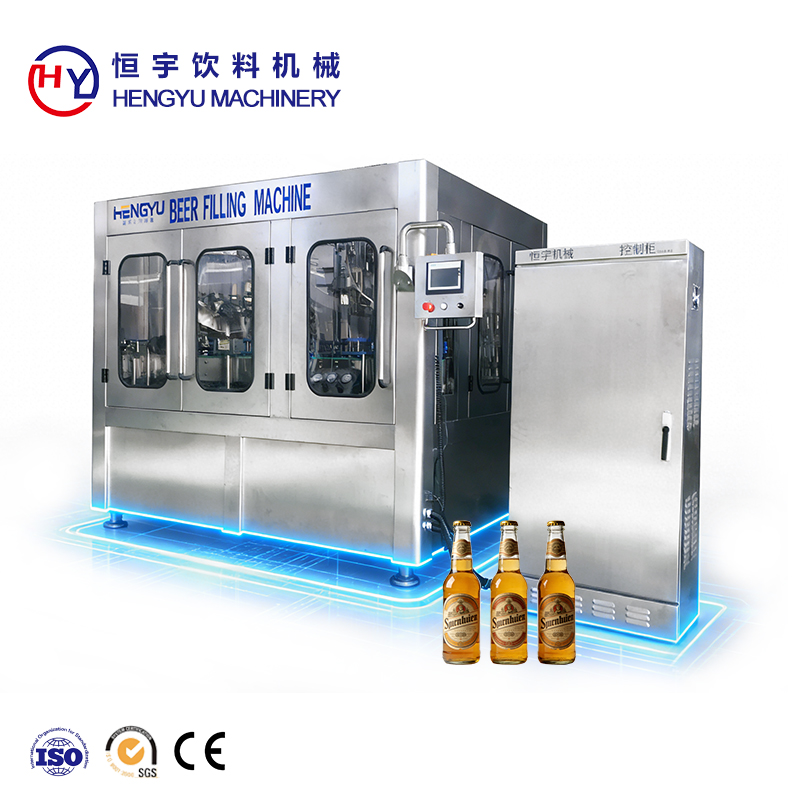
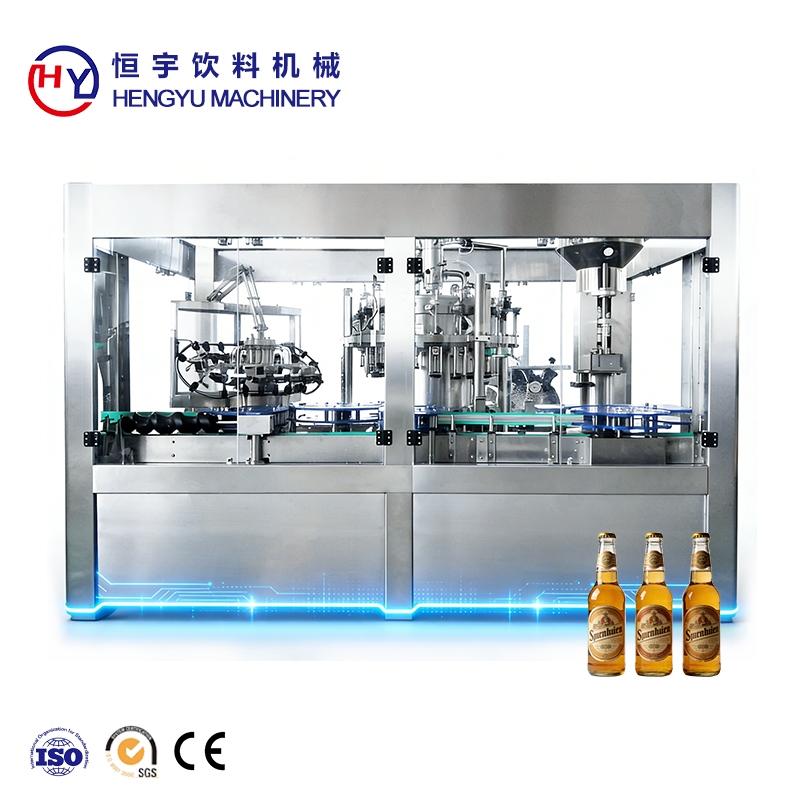
Beer Bottle Filling Equipment - Advanced Automated Bottling Solutions for Breweries

All Categories

beer bottle filling equipment

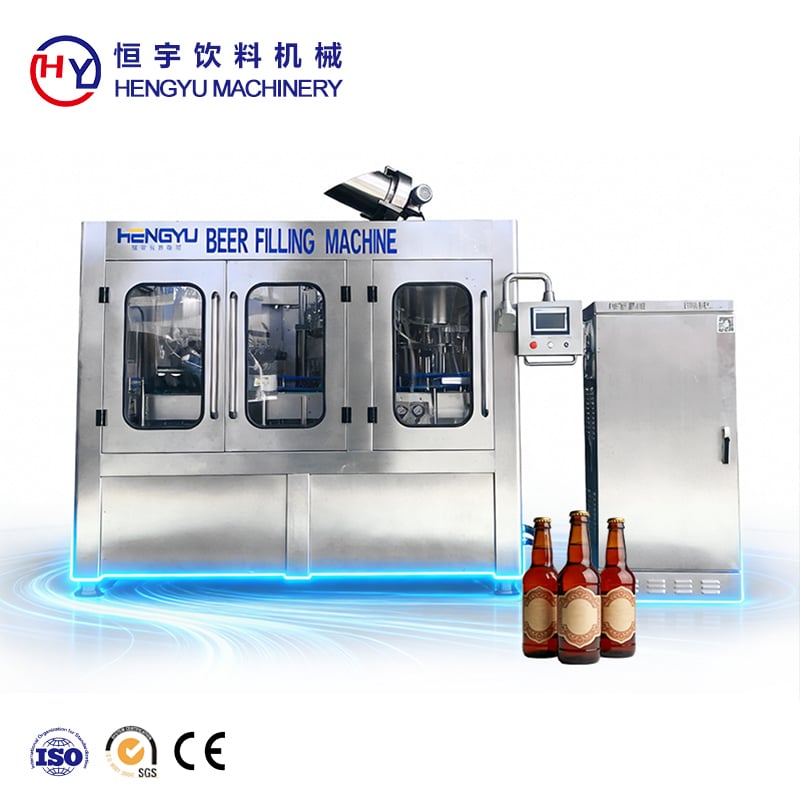
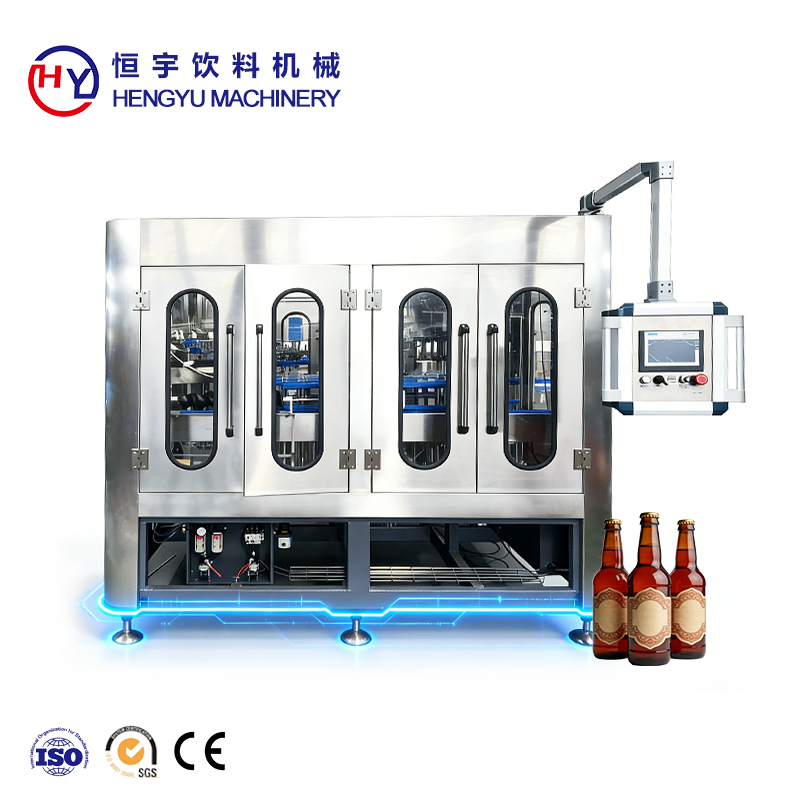
Beer bottle filling equipment represents a sophisticated automated solution designed specifically for breweries and beverage production facilities seeking to package their products efficiently and hygienically. This specialized machinery streamlines the entire bottling process, from container handling through filling to capping, ensuring consistent quality and production speed. Modern beer bottle filling equipment integrates advanced technology to handle various bottle sizes and shapes, accommodating the diverse packaging needs of craft breweries, microbreweries, and large-scale beer production plants. The primary functions of beer bottle filling equipment encompass bottle rinsing, precise liquid filling, crown capping, labeling preparation, and quality inspection. These machines utilize pressure-sensitive filling valves that minimize foam formation while maintaining the beer's carbonation levels, preserving the beverage's taste and quality. The technological features include programmable logic controllers that allow operators to adjust filling speeds, volumes, and operating parameters through intuitive touchscreen interfaces. Stainless steel construction ensures durability and meets strict sanitary standards required in beverage production. The equipment employs servo-driven motors for accurate bottle positioning and controlled filling cycles, reducing product waste and maximizing efficiency. Flow meters and level sensors guarantee precise fill volumes, maintaining consistency across thousands of bottles per hour. Applications for beer bottle filling equipment extend across various production scales, from small craft operations producing several hundred bottles hourly to industrial facilities capable of filling tens of thousands of bottles each hour. Breweries use this equipment to bottle ales, lagers, stouts, IPAs, and specialty beers, with machines easily transitioning between different product types through simple parameter adjustments. The equipment proves invaluable for businesses aiming to scale production while maintaining product integrity, meeting regulatory compliance standards, and reducing labor costs associated with manual bottling operations.

New Product Recommendations

Investing in beer bottle filling equipment delivers substantial practical benefits that directly impact your production efficiency and bottom line. First, automation dramatically increases your output capacity, allowing you to fill hundreds or thousands of bottles per hour compared to manual methods that might achieve only dozens. This production speed enables you to meet growing market demand, fulfill larger orders, and expand your distribution channels without proportionally increasing labor costs. The equipment operates continuously with minimal supervision, freeing your staff to focus on other critical brewery operations such as brewing, quality control, and customer service. Second, consistency becomes a hallmark of your bottled products when using dedicated beer bottle filling equipment. Each bottle receives precisely the same volume of beer, maintaining uniform fill levels that enhance product presentation and customer satisfaction. This precision eliminates overfilling that wastes product and increases costs, while preventing underfilling that might violate labeling regulations and disappoint customers. The controlled filling process also preserves carbonation levels consistently, ensuring every bottle delivers the intended taste experience your brewers crafted. Third, hygiene standards reach professional levels with equipment designed specifically for beverage production. Stainless steel contact surfaces resist corrosion and bacterial growth, while automated cleaning-in-place systems sanitize the equipment thoroughly between production runs. This sanitary approach minimizes contamination risks that could spoil entire batches, protecting your brand reputation and reducing costly product recalls. Fourth, labor cost savings accumulate significantly over time as the equipment requires fewer operators than manual bottling lines. One or two trained technicians can oversee operations that previously required a full team, reducing payroll expenses while improving workplace safety by eliminating repetitive manual tasks that cause fatigue and injury. Fifth, flexibility allows you to adapt quickly to market opportunities. Modern beer bottle filling equipment handles various bottle sizes and types through simple adjustments, enabling you to offer different packaging options without purchasing separate machinery for each format. This versatility supports product line expansion and seasonal offerings that capitalize on consumer trends. Finally, the professional appearance and consistent quality of machine-filled bottles enhance your brand image, making your products more competitive on retail shelves and justifying premium pricing that improves profit margins.

Latest News

Glass Bottle Filling Machine vs Plastic Bottle Filling Machine

04

Mar

Glass Bottle Filling Machine vs Plastic Bottle Filling Machine

Material Properties Dictate Core Machine Design Glass fragility and thermal mass: why glass bottle filling machines require reinforced frames, shock-dampened conveyors, and precision neck-handling grippers Working with glass bottles means going th...
View More
Increasing Capacity in Bottled Water Production Lines

09

Mar

Increasing Capacity in Bottled Water Production Lines

Diagnosing Bottlenecks in Your Bottled Water Production Line Measuring Throughput Gaps: Bottling Speed, Changeover Time, and OEE Analysis To get a handle on where production is falling short, look at three key performance indicators. Start by compa...
View More
How Bottled Water Production Lines Maintain Product Safety

12

Mar

How Bottled Water Production Lines Maintain Product Safety

Regulatory Foundations and the Multi-Barrier Safety Framework FDA, EPA, and ISO Standards Specific to Bottled Water Production Lines The bottled water industry works within a pretty strict set of regulations. The FDA has these things called Good Ma...
View More
Troubleshooting Can Filling Machine Production Issues

21

Mar

Troubleshooting Can Filling Machine Production Issues

Power, Control, and Electrical Faults in Can Filling Machines Machine won't power on: main supply, fuses, and emergency stop circuit checks If the can filling machine won't start at all, the first thing to do is check whether the main power supply ...
View More

Get a Free Quote

Our representative will contact you soon.
Email
Name
Phone/WhatsApp
Required Product
Message
0/1000

beer bottle filling equipment

Precision Volumetric Filling Technology Ensures Perfect Consistency

Precision Volumetric Filling Technology Ensures Perfect Consistency

The cornerstone advantage of professional beer bottle filling equipment lies in its precision volumetric filling technology, which revolutionizes how breweries maintain product consistency and quality control. This sophisticated system employs multiple sensors and control mechanisms working in harmony to deliver exact predetermined volumes into each bottle, eliminating the variations inherent in manual filling methods. The technology utilizes electronic flow meters that measure liquid passing through the filling valves in real-time, automatically adjusting valve timing to compensate for variables such as liquid temperature, viscosity changes, and pressure fluctuations. This dynamic adjustment capability ensures that whether you are filling the first bottle of the day or the ten-thousandth, each container receives precisely the same amount of beer within tolerances of mere milliliters. For brewery owners, this precision translates directly into multiple business advantages. Product giveaway, the industry term for overfilling beyond labeled volumes, represents a hidden cost that accumulates substantially across large production runs. By eliminating unnecessary overfilling, beer bottle filling equipment can save thousands of dollars monthly in product costs for medium-sized operations, with savings scaling proportionally for larger facilities. Simultaneously, the equipment prevents underfilling that could trigger regulatory penalties or erode customer trust when consumers notice inconsistent fill levels. The precision filling technology also plays a crucial role in maintaining the sensory qualities that define your beer's character. Controlled fill rates minimize turbulence and foam formation during the filling process, preserving carbonation levels that contribute to mouthfeel and aroma release. The equipment's ability to maintain consistent headspace, the gap between liquid surface and bottle closure, ensures uniform pressure conditions that affect carbonation retention during storage and transportation. Furthermore, this technology integrates seamlessly with quality assurance protocols, as the equipment's control systems log detailed data for every bottle filled, creating audit trails that demonstrate compliance with production standards and facilitate rapid identification of any process deviations requiring attention.
Automated Sanitation Systems Guarantee Food Safety Compliance

Automated Sanitation Systems Guarantee Food Safety Compliance

Modern beer bottle filling equipment incorporates comprehensive automated sanitation systems that address one of the beverage industry's most critical concerns: maintaining impeccable hygiene standards throughout production processes. These integrated cleaning-in-place systems represent a transformative advancement over manual cleaning methods, providing thorough, repeatable sanitization that eliminates human error and ensures consistent food safety compliance. The sanitation system typically includes multiple spray nozzles strategically positioned throughout the equipment's liquid pathway, programmable cleaning cycles that sequence various cleaning agents and rinse water at controlled temperatures and pressures, and validation sensors that confirm cleaning effectiveness before production resumes. For brewery operators, these automated sanitation capabilities deliver peace of mind alongside practical operational benefits. Contamination represents an existential threat to beverage producers, as bacterial or wild yeast infections can spoil entire production batches, necessitate costly product recalls, damage brand reputation irreparably, and potentially expose businesses to liability claims. Beer bottle filling equipment with robust sanitation systems dramatically reduces these risks by ensuring that every surface contacting your product undergoes thorough cleaning according to predetermined protocols that meet or exceed regulatory standards. The automation aspect proves equally valuable, as manual cleaning processes suffer from inconsistency depending on operator training, fatigue levels, and time pressures. Automated systems execute identical cleaning procedures every time, documenting each cycle for quality assurance records and regulatory audits. The time efficiency of automated sanitation also improves production scheduling flexibility. Traditional manual cleaning might require several hours of downtime between production runs or product changeovers, whereas automated systems complete comprehensive cleaning cycles in fractions of that time, maximizing equipment utilization rates. Additionally, these systems reduce chemical consumption through optimized usage patterns, lowering operating costs while supporting environmental sustainability initiatives. The validation capabilities built into advanced sanitation systems provide objective verification that cleaning has achieved required standards, using conductivity sensors to confirm rinse water purity and temperature monitors to verify thermal sanitization effectiveness, creating documented evidence of due diligence that protects your business in regulatory inspections.
Modular Scalability Supports Business Growth and Product Diversification

Modular Scalability Supports Business Growth and Product Diversification

Perhaps the most strategically valuable characteristic of contemporary beer bottle filling equipment is its modular scalability, which aligns equipment capabilities with evolving business needs as breweries grow and diversify their product portfolios. This design philosophy recognizes that beverage businesses rarely remain static, instead experiencing growth phases, market expansions, and product line extensions that demand operational flexibility. Modular equipment architecture allows breweries to start with core filling functionality appropriate for current production volumes, then systematically add complementary modules as business requirements expand, protecting initial capital investments while avoiding the limitations of outgrowing equipment prematurely. The practical implementation of modularity manifests in several dimensions. Capacity scaling enables operators to increase production speed by adding filling heads to existing equipment frames, potentially doubling or tripling output without replacing the entire system. A craft brewery might initially install an eight-head filler suitable for regional distribution, then expand to sixteen or twenty-four heads as their market presence grows, reusing control systems, frame structures, and auxiliary components while adding only the incremental filling stations required. Functional modularity allows integration of additional process stations into the production line as product offerings diversify. A brewery focusing initially on standard bottle formats might later add modules for handling specialty bottles, cans, or growlers, creating a versatile packaging line that supports multiple product formats without maintaining completely separate equipment sets. This flexibility proves particularly valuable for seasonal offerings and limited releases that require packaging format variations. The modularity extends to automation sophistication as well, with basic systems offering manual controls suitable for hands-on operation, while upgrade paths incorporate advanced features like automatic changeover systems, integrated quality inspection, downstream labeling and packing integration, and enterprise software connectivity for production monitoring and inventory management. This graduated automation approach allows breweries to match technological complexity with operational readiness, avoiding overwhelming novice operators with unnecessary complexity while providing clear pathways to enhanced capabilities as staff expertise develops. Financial benefits of modular scalability include more manageable capital expenditures distributed over time as business revenues grow, rather than massive upfront investments that strain cash flow. Equipment longevity improves as core components remain relevant despite business evolution, and resale values hold stronger when equipment demonstrates expansion capabilities attractive to other growing breweries.