Recently, a Chilean client delegation made their first trip to our factory, focusing on inspecting our 18,000 BPH bottled water filling production line. This visit fostered in-depth communication and mutual trust, ultimately leading to a formal cooperation agreement. It marks a key breakthrough in our expansion into the Latin American bottled water equipment market and lays a solid foundation for broader regional development.
Upon arrival, our professional technical team warmly received the clients and guided them on a comprehensive tour of the production workshop’s core areas. The Chilean market’s demand for efficient, stable bottled water production equipment has been on the rise, and our 18,000 BPH line—designed for medium-to-large scale operations—had already caught their attention through preliminary technical exchanges. The team focused on explaining the complete production process, from water treatment to final palletizing, ensuring the clients understood every critical link.
The first stop on the tour was the water treatment system, widely regarded as the backbone of bottled water quality and safety. By adopting a comprehensive multi-stage purification process — including sediment filtration, activated carbon adsorption, ultrafiltration, and reverse osmosis — the system is able to effectively eliminate impurities, bacteria, heavy metals, residual chlorine, and other potentially harmful substances. This rigorous treatment ensures that every drop of water meets not only Chile’s strict food safety regulations but also internationally recognized drinking water standards.
During the visit, the clients carefully examined each stage of the system, showing particular interest in filtration efficiency, filter lifespan, replacement cycles, and the accuracy of monitoring and testing procedures. They raised practical questions about operational consistency, maintenance schedules, and quality control protocols. Our technical team responded with clear and detailed explanations, supported by real-time water quality data, laboratory testing records, and live monitoring dashboards. We also outlined preventive maintenance strategies and long-term stability measures designed to guarantee consistent performance over time, which helped strengthen the clients’ confidence and secure their initial trust in the system.
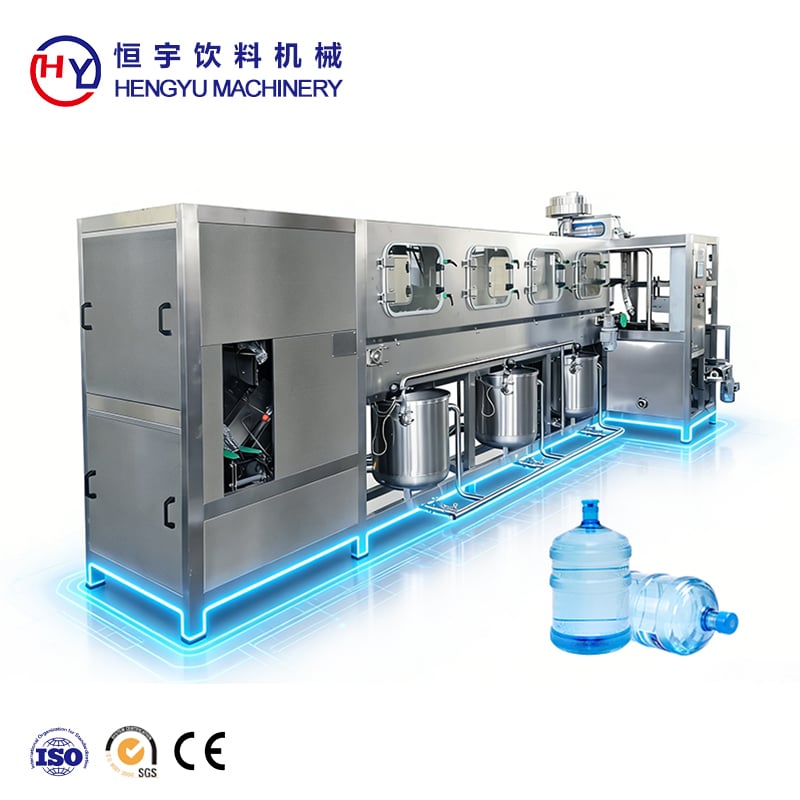
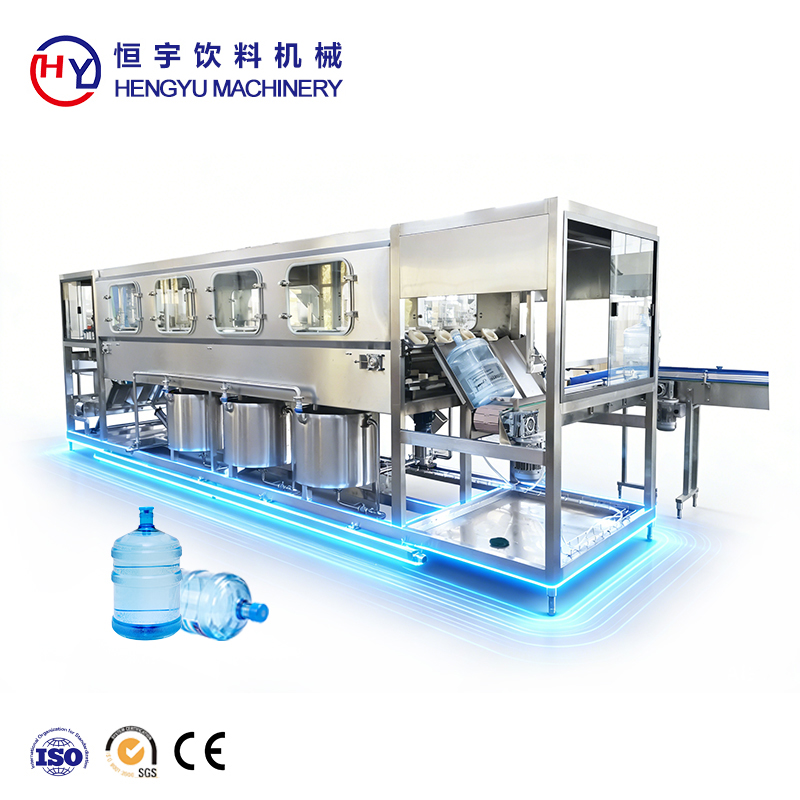
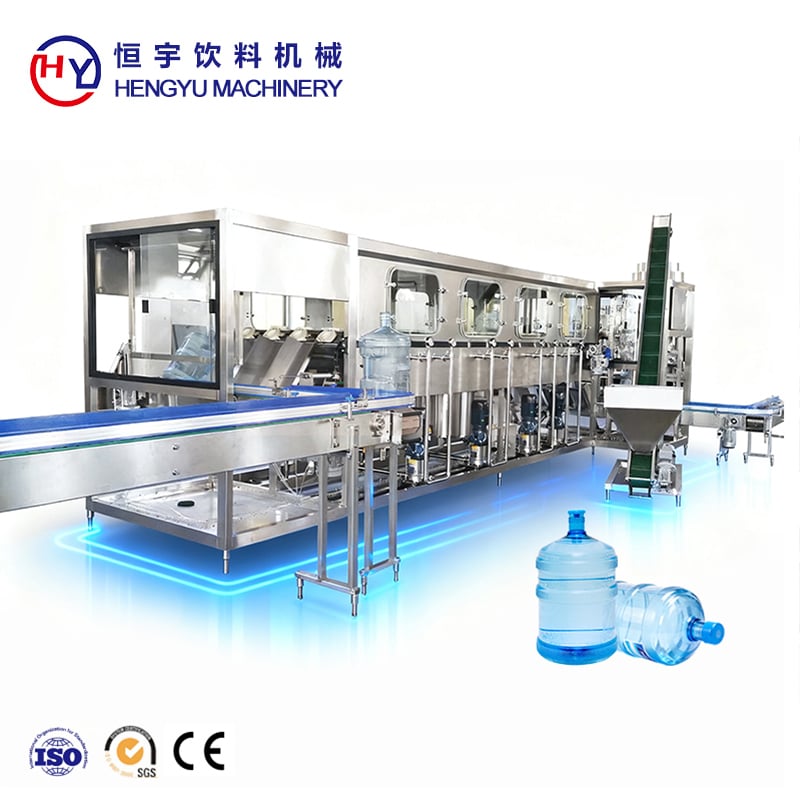
Next, the clients explored the core equipment: the integrated washing, filling, and sealing 3-in-1 machine. Combining three key processes, it optimizes efficiency and saves floor space—ideal for the client’s planned factory layout. The washing module uses high-pressure pure water spray and ultrasonic cleaning to sterilize empty bottles. The filling module employs gravity filling with precise flow valves, matching the 18,000 BPH capacity with a filling error rate below 0.2%. The capping module features automatic cap feeding and torque control, preventing leakage. The clients were impressed by the seamless process transition and automation level, noting the equipment’s stability.
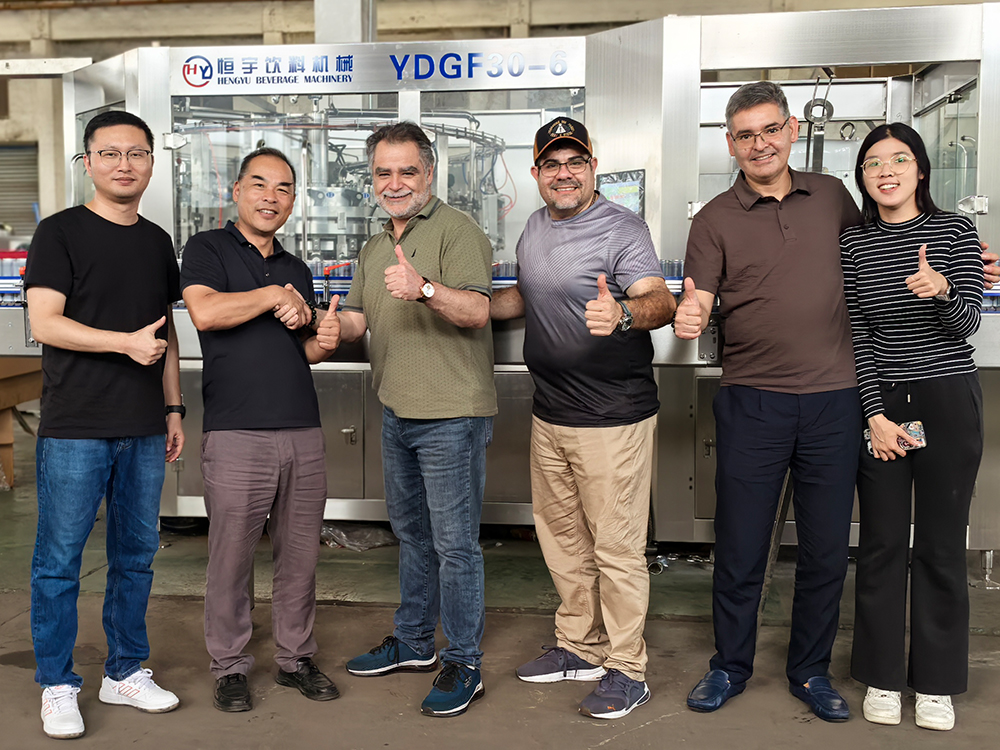
Subsequently, the team introduced subsequent process equipment: labeling machine, laser coding machine, film wrapping machine, and palletizer. The labeling machine uses servo control for accurate labeling on various bottle shapes, supporting quick label changes. The laser coding machine applies non-contact, ink-free marking (production dates, batch numbers), aligning with Chile’s environmental standards. The film wrapping machine uses heat-shrinkable film for bundle packaging, enhancing product integrity. The robotic palletizer stacks products efficiently, operating 24/7 to reduce labor costs.
Beyond equipment, the team highlighted the quality control system and core component advantages. Key parts (pumps, valves, sensors) are sourced from international brands, ensuring long-term stability. Our quality management covers raw material inspection, assembly, and finished product testing, with all equipment undergoing 48-hour continuous operation tests before delivery.
A live operation demonstration was arranged to showcase the production line’s full performance under real working conditions. From water treatment and bottle blowing to filling, labeling, packing, and final palletizing, the entire process operated automatically with smooth coordination between each stage. The system ran efficiently at the designed capacity of 18,000 BPH, clearly demonstrating stable output without delays, congestion, or operational bottlenecks.
Throughout the demonstration, the clients closely observed key operating parameters displayed on the control interface, took photos and videos for internal review, and asked detailed questions regarding energy efficiency, routine maintenance, system reliability, and after-sales service arrangements. They were particularly interested in long-term operating costs and technical support responsiveness.
Our team provided clear and data-driven answers. We highlighted that the line achieves approximately 12% lower energy consumption compared with similar equipment on the market, contributing to reduced operational expenses. The equipment is designed with a maintenance interval of up to six months, minimizing downtime while ensuring stable performance. In terms of service support, we offer 24/7 online consultation, rapid remote troubleshooting, emergency on-site support within 72 hours, and comprehensive free technical training for operators and maintenance staff. These advantages reinforced the clients’ confidence in the line’s efficiency, reliability, and long-term service value.
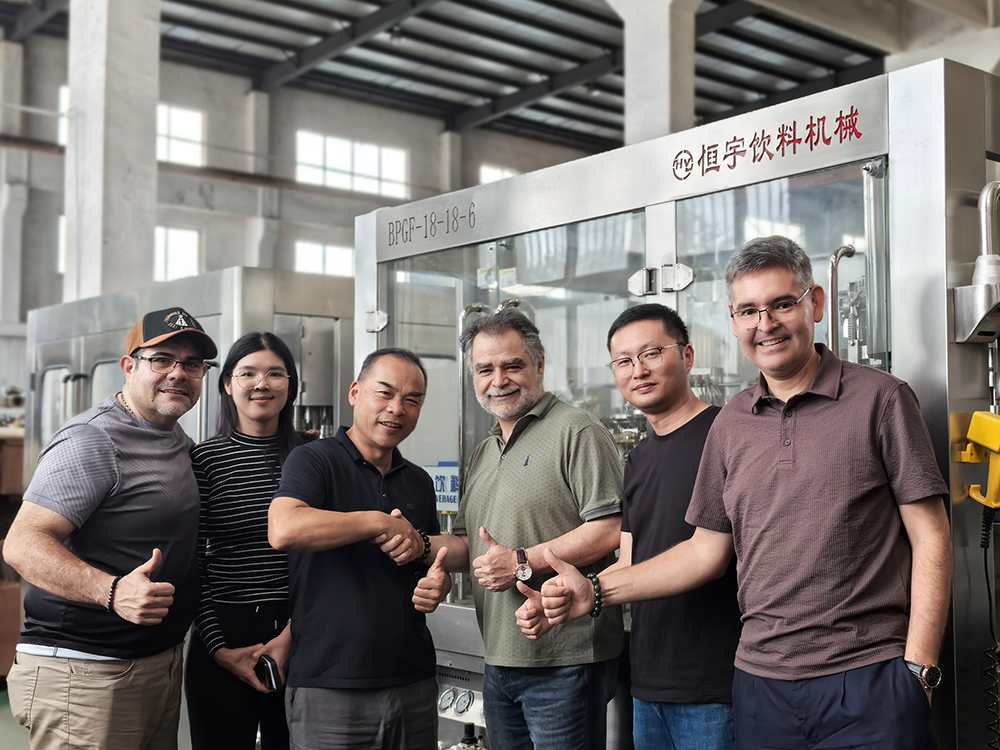
After the inspection and discussions, the Chilean clients expressed high recognition. A representative commented: “We compared global manufacturers, but your line’s rational design, stable performance, integration, and thoughtful service perfectly match our needs. The live demo proved its reliability—we’re confident in this cooperation.” The two parties then signed a formal agreement, covering the 18,000 BPH line, installation, commissioning, and training.
This cooperation reflects our equipment’s international competitiveness and opens doors in Latin America. Driven by rising living standards and health awareness, the region’s bottled water industry offers huge potential for high-quality equipment. This deal serves as a brand showcase, boosting our regional influence and attracting potential clients.
In the future, we’ll uphold “quality first, customer-centric” principles, investing in R&D to optimize product efficiency and reliability. We’ll strengthen after-sales support to provide timely technical assistance. With this cooperation as a starting point, we aim to deepen our Latin American footprint, achieve win-win results with more clients, and expand our global brand reputation.
 Hot News
2026-09-20
2026-09-11
2026-08-20
2026-08-10
2026-07-15
2026-07-08

 CN
CN