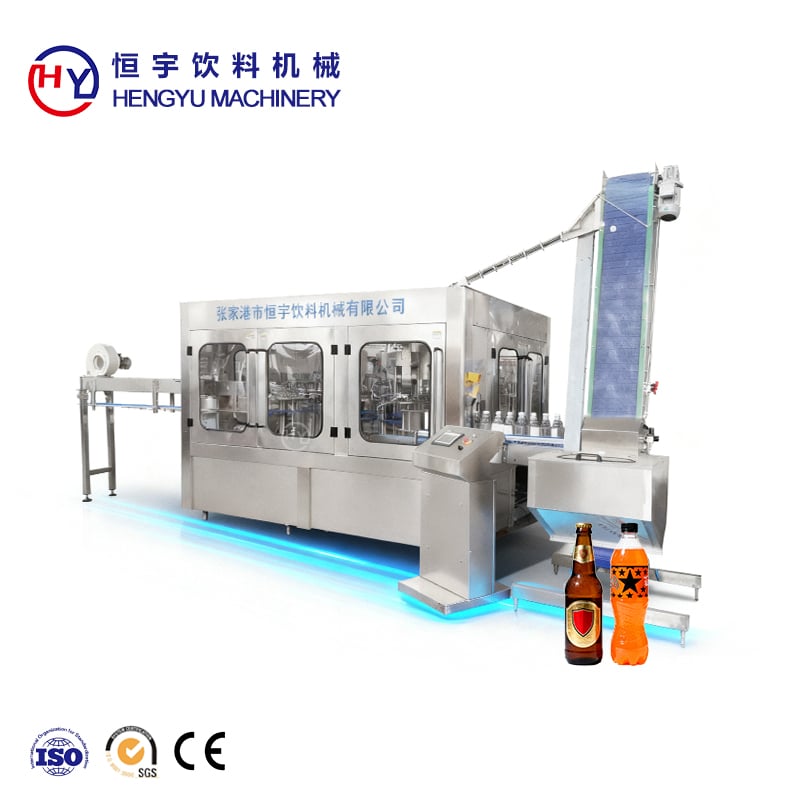
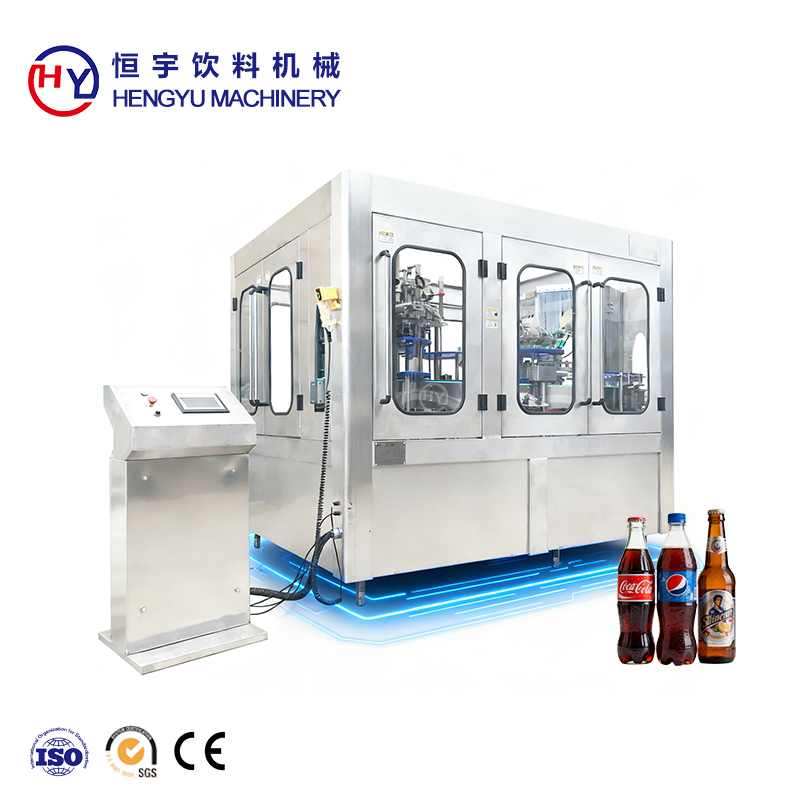
Carbonated Beverage Filling Machine - Advanced Automated Solutions for Efficient Drink Production

All Categories

carbonated beverage filling machine

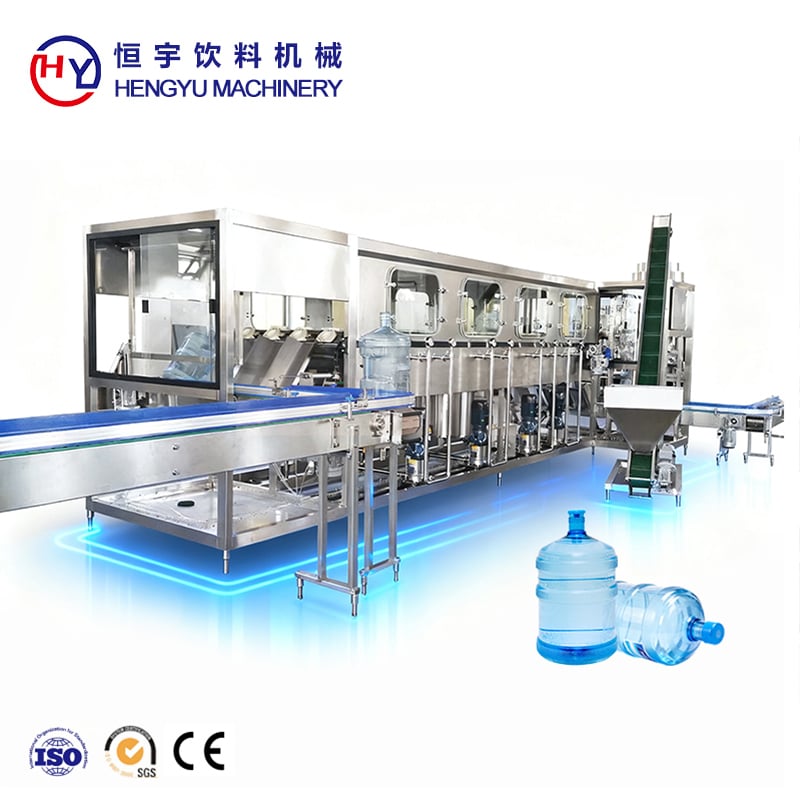
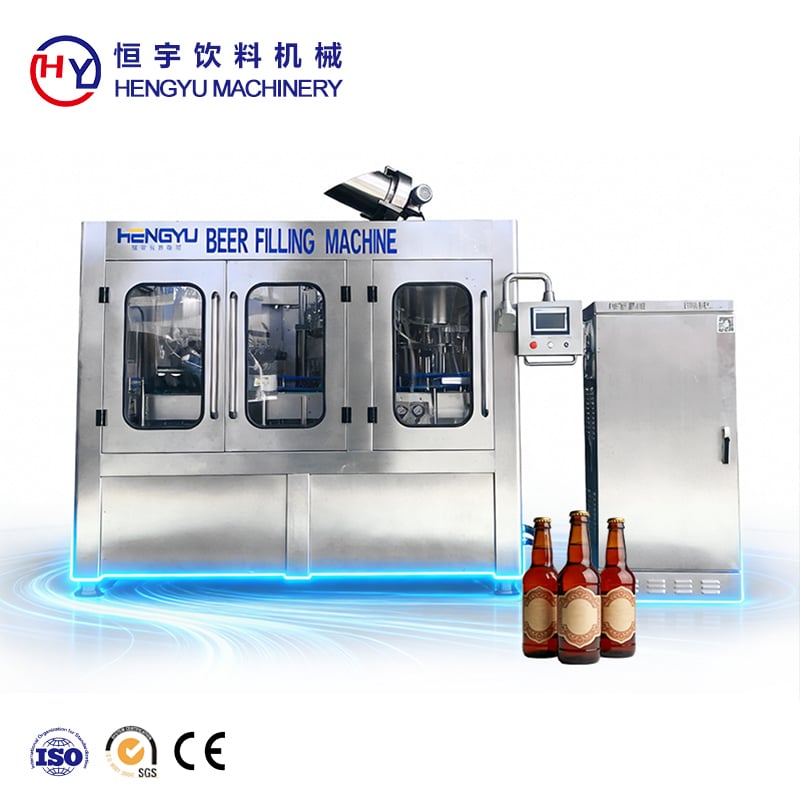
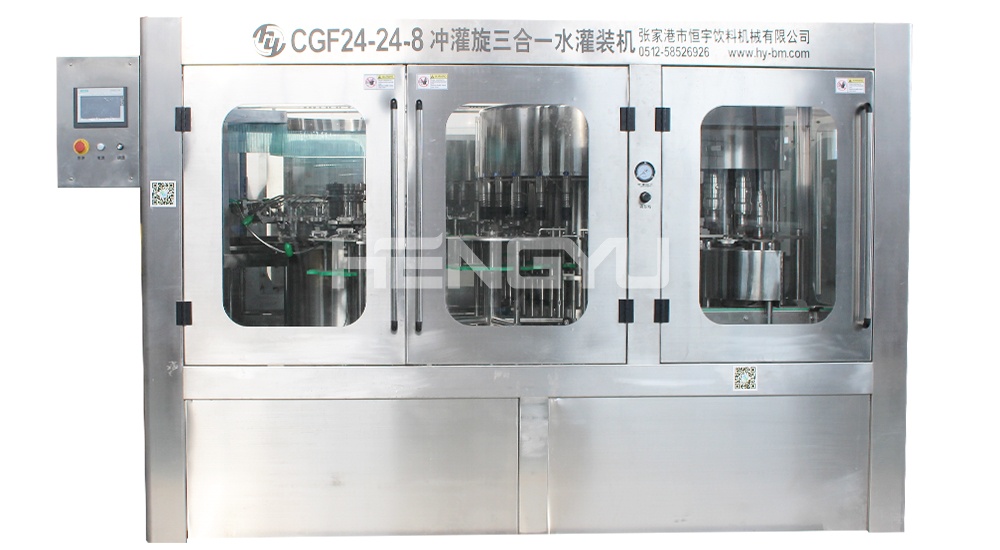
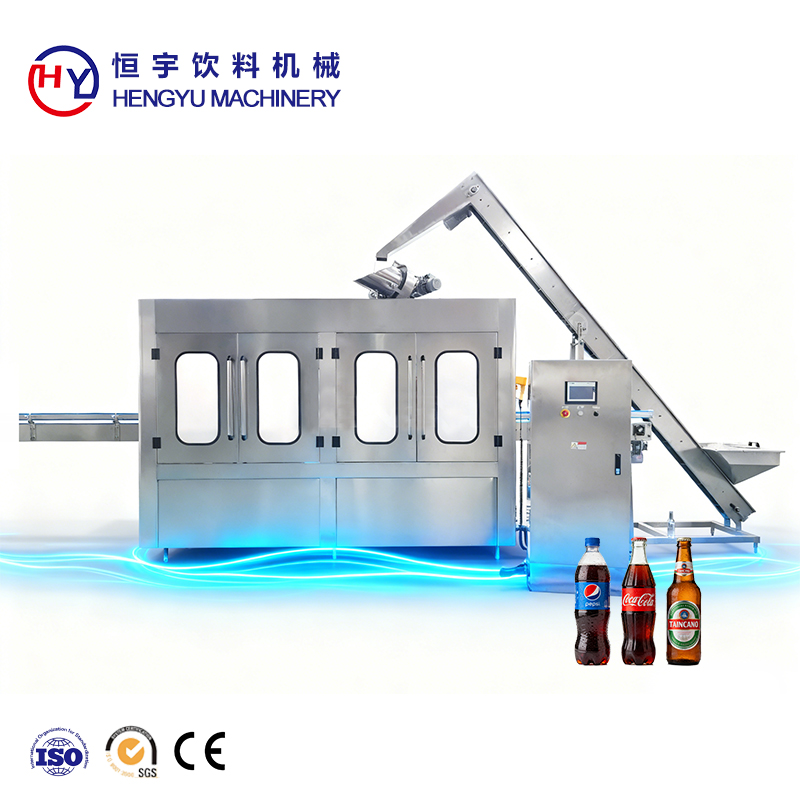
The carbonated beverage filling machine represents a sophisticated automated solution designed specifically for packaging fizzy drinks such as sodas, sparkling water, energy drinks, and carbonated juice beverages. This specialized equipment handles the complete filling process from bottle rinsing through capping, ensuring that carbonation levels remain optimal throughout production. The primary function of a carbonated beverage filling machine involves precisely controlling liquid flow while maintaining CO2 saturation under pressure to prevent gas loss and preserve product quality. Modern carbonated beverage filling machines integrate multiple operational stages including bottle depalletizing, air conveying, automated rinsing with sterile water, isobaric filling technology, crown capping or screw capping mechanisms, date coding, labeling, and final packaging. Technological features include advanced PLC control systems that monitor every production parameter in real-time, touch-screen interfaces for simplified operation, servo-driven filling valves that ensure accuracy within milliliters, and specialized stainless steel construction meeting food-grade sanitation standards. The isobaric filling principle stands as the cornerstone technology, where bottles are pre-pressurized with CO2 before liquid entry, preventing foam formation and carbonation escape during the filling cycle. These machines accommodate various bottle formats from glass to PET plastic containers ranging from small 200ml bottles to large 2-liter formats, offering remarkable flexibility for beverage manufacturers. Speed capabilities vary across models, with high-capacity carbonated beverage filling machines processing up to 36,000 bottles per hour for large-scale operations, while compact versions serve smaller production requirements at 2,000 to 6,000 bottles hourly. Applications span across beverage manufacturing facilities, from multinational soft drink corporations to craft soda producers, brewery operations adding carbonated products, and contract packaging companies serving multiple beverage brands. The equipment proves essential wherever consistent carbonation levels, production efficiency, hygiene standards, and minimal product waste matter most to business success.

New Products

Investing in a carbonated beverage filling machine delivers substantial operational improvements that directly impact your bottom line and market competitiveness. First and foremost, these machines dramatically increase production speed compared to manual or semi-automated methods, allowing businesses to fulfill larger orders, meet seasonal demand spikes, and expand market reach without proportional labor cost increases. The precision engineering ensures every bottle receives exactly the right amount of liquid with consistent carbonation strength, eliminating the quality variations that damage brand reputation and create customer dissatisfaction. This accuracy translates directly into reduced product waste since overfilling costs you money while underfilling risks regulatory penalties and customer complaints. The automated nature of carbonated beverage filling machines significantly reduces labor requirements, freeing your team members for quality control, machine supervision, and other value-adding activities rather than repetitive manual filling tasks. This efficiency extends beyond staffing as the equipment operates continuously with minimal downtime when properly maintained, maximizing your production hours and return on equipment investment. Hygiene represents another critical advantage since these machines feature enclosed filling environments, automated cleaning-in-place systems, and food-grade materials that prevent contamination risks associated with manual handling. For businesses pursuing organic certification or premium market positioning, this sanitation capability proves invaluable. The carbonated beverage filling machine also provides remarkable flexibility, adapting to different bottle sizes and shapes through changeover procedures that typically require only minor adjustments and minimal downtime. This versatility enables you to diversify your product portfolio, test new package formats, and respond to market trends without purchasing entirely new equipment. Energy efficiency has improved substantially in modern designs, with optimized motors, reduced air consumption, and heat recovery systems that lower utility costs across extended production runs. The sophisticated monitoring systems alert operators to potential issues before they cause production stoppages, enabling preventive maintenance that avoids costly emergency repairs and lost production time. Furthermore, the consistent quality output helps maintain strong relationships with retailers and distributors who value reliable supply and product consistency. Smaller businesses particularly benefit from scalable entry-level carbonated beverage filling machines that provide professional results without enterprise-level capital requirements, creating pathways to compete against established brands. The equipment also enhances workplace safety by reducing manual lifting, minimizing exposure to cleaning chemicals, and incorporating emergency stop mechanisms and protective guards. Long-term value emerges through durable construction that withstands rigorous daily operation for years, with many manufacturers offering decade-long service lives when equipment receives proper care, making the initial investment economically sound over extended periods.

Tips And Tricks

How to Choose a Glass Bottle Filling Machine for Beverage Production

06

Mar

How to Choose a Glass Bottle Filling Machine for Beverage Production

Match Filling Technology to Beverage Type and Sensitivity Counter-Pressure Fillers for Carbonated Beverages and Beer Carbonated drinks like soda, sparkling water and beer need careful filling techniques to keep their fizz intact while avoiding exc...
View More
Increasing Capacity in Bottled Water Production Lines

09

Mar

Increasing Capacity in Bottled Water Production Lines

Diagnosing Bottlenecks in Your Bottled Water Production Line Measuring Throughput Gaps: Bottling Speed, Changeover Time, and OEE Analysis To get a handle on where production is falling short, look at three key performance indicators. Start by compa...
View More
Can Filling Machine Capacity Planning Guide

22

Mar

Can Filling Machine Capacity Planning Guide

Understanding Can Filling Machine Capacity: Theory vs. Real-World Performance Why Theoretical Capacity Rarely Matches Effective Output on Can Filling Lines When companies talk about canning speed at 100 cans per minute, they're referring to what ha...
View More
Automation Technology in Can Sealing Machines

24

Mar

Automation Technology in Can Sealing Machines

How Automation Enhances Precision and Reliability in Can Sealing Machines Core Automation Components: Servo Drives, Vision Systems, and Closed-Loop Feedback in Modern Can Sealing Machines Today's can sealing equipment reaches incredible levels of p...
View More

Get a Free Quote

Our representative will contact you soon.
Email
Name
Phone/WhatsApp
Required Product
Message
0/1000

carbonated beverage filling machine

Advanced Isobaric Filling Technology Ensures Perfect Carbonation

Advanced Isobaric Filling Technology Ensures Perfect Carbonation

The isobaric filling technology incorporated into modern carbonated beverage filling machines represents a breakthrough that solves the fundamental challenge of maintaining carbonation during the bottling process. Understanding this feature requires recognizing that carbon dioxide naturally wants to escape from liquid when pressure decreases, creating foam, reducing fizz quality, and wasting product. Traditional filling methods struggle with this physics problem, but isobaric systems elegantly address it through pressure equalization. The process begins when empty bottles enter the filling station and undergo counter-pressure treatment where CO2 gas pressurizes the bottle interior to match the pressure inside the filling tank holding your carbonated beverage. This pressure synchronization creates an environment where liquid can flow into bottles without experiencing the pressure differential that triggers gas release and foaming. As the filling valve opens, your beverage flows smoothly into the pre-pressurized bottle maintaining its full carbonation strength exactly as formulated. This controlled environment continues throughout the filling cycle, with precision sensors monitoring pressure levels and making microsecond adjustments to maintain optimal conditions. Once the predetermined fill level is reached, the system carefully releases the excess CO2 pressure before the bottle exits the filling station, employing gradual decompression that prevents sudden gas expansion which could still cause foaming even after filling completes. The technical sophistication extends to specialized valve designs featuring multiple sealing points and smooth internal pathways that minimize turbulence as liquid enters bottles. Material selection plays a crucial role with components fabricated from stainless steel alloys that resist corrosion from acidic beverages and maintain structural integrity under constant pressure cycling. For your business, this technology translates into beverages that taste exactly as intended when customers open them weeks or months after production, with the satisfying fizz and mouthfeel that defines quality carbonated drinks. The consistency proves particularly valuable for premium products where customers expect perfection with every purchase, and the reduced product loss from foam overflow directly improves your profit margins on every production run. Additionally, the enclosed nature of isobaric filling protects your beverage from oxygen exposure which can degrade flavors and reduce shelf life, providing a dual preservation benefit that extends product freshness and reduces returns from quality complaints.
Comprehensive Automation Reduces Labor Costs While Boosting Output

Comprehensive Automation Reduces Labor Costs While Boosting Output

The comprehensive automation integrated throughout carbonated beverage filling machines fundamentally transforms production economics by replacing labor-intensive manual processes with computer-controlled precision operations that run consistently hour after hour. Modern systems incorporate automation across every production stage beginning with bottle handling where robotic depalletizers remove containers from shipping pallets and orient them correctly for the production line without human intervention. Air conveyors then transport bottles through the system using precisely calibrated air pressure that moves containers smoothly while preventing damage to lightweight PET plastic bottles that might crack or deform under mechanical handling. The rinsing station operates automatically, inverting bottles and directing sterilized water jets to remove any dust or particles before filling, with programmable spray duration and water pressure settings that adapt to different bottle sizes. The filling operation itself represents the automation pinnacle where each filling head operates independently under PLC control, monitoring fill levels through advanced sensors that detect liquid height optically or through conductivity measurement, stopping flow at the exact moment specifications are met. Capping systems automatically sort closures, position them perfectly over filled bottles, and apply precise torque that seals containers without cross-threading caps or applying excessive force that might damage bottle finishes. Throughout these processes, the carbonated beverage filling machine continuously monitors dozens of parameters including line speed, filling accuracy, cap presence, liquid temperature, and carbonation pressure, automatically adjusting operations to maintain target specifications or alerting operators when manual intervention becomes necessary. The human-machine interface presents all this information on intuitive touchscreens where operators can modify settings, review production statistics, and access diagnostic information without specialized programming knowledge. This automation delivers quantifiable labor savings since a single trained operator can supervise equipment that would otherwise require five to ten workers performing manual filling, capping, and quality checks, dramatically reducing your per-unit labor costs and improving competitiveness. The consistency of automated operations eliminates human factors like fatigue, distraction, or training variations that cause quality fluctuations in manual production environments. Speed advantages compound over time as the carbonated beverage filling machine maintains steady output rates throughout shifts without breaks, slowdowns, or the productivity variations inherent in human workers, enabling you to fulfill contracts that would be impossible with manual methods. The equipment also creates safer working environments by removing employees from repetitive strain tasks and exposure to potential hazards like chemical cleaning agents or mechanical pinch points. From a business growth perspective, automation provides scalability since increasing production requires equipment rather than proportional workforce expansion with all the associated recruitment, training, and management complexity that labor scaling entails.
Exceptional Flexibility Accommodates Diverse Product Lines and Packaging Formats

Exceptional Flexibility Accommodates Diverse Product Lines and Packaging Formats

The exceptional flexibility engineered into modern carbonated beverage filling machines empowers businesses to diversify their product portfolios and respond rapidly to market opportunities without investing in multiple specialized equipment systems. This adaptability manifests across multiple dimensions starting with container versatility where the same machine handles glass bottles, PET plastic bottles, and aluminum cans through mechanical adjustments that accommodate different heights, diameters, and structural characteristics. The filling carousel and conveyor systems feature tool-free adjustment mechanisms where operators modify guide rails, star wheels, and container positioning elements by loosening simple clamps and sliding components to new positions marked with clear measurement scales. Container size flexibility proves particularly valuable for beverage businesses exploring market segmentation strategies, enabling you to offer single-serve 250ml bottles for convenience stores, standard 500ml packages for supermarkets, and family-size 1.5-liter or 2-liter bottles for value-conscious shoppers, all produced on the same carbonated beverage filling machine with changeover procedures typically completed within thirty to sixty minutes. Product formulation flexibility represents another dimension where the equipment handles different carbonation levels, liquid viscosities, and ingredient compositions including beverages with pulp particles, added vitamins, or natural ingredients that might settle during storage. The filling system accommodates these variations through programmable parameters that adjust filling speeds, pre-pressure levels, and valve timing to optimize results for each specific formulation. Closure versatility extends the flexibility advantages as modern machines work with crown caps, screw caps, sports caps, and specialized closures through interchangeable capping heads that mount onto the same basic turret mechanism. This capability allows beverage producers to differentiate products through packaging innovation, using premium closures for high-end product lines and standard closures for value offerings without equipment limitations constraining marketing strategies. Production volume flexibility addresses the reality that demand fluctuates seasonally and grows over time, with carbonated beverage filling machines offering speed adjustment capabilities that let you run slower during off-peak periods to reduce wear and energy consumption, then accelerate to maximum capacity during high-demand seasons. Modular design philosophies adopted by leading manufacturers enable future expansion where additional filling heads, faster conveyors, or enhanced control systems can be integrated as your business grows, protecting your initial equipment investment while providing a clear upgrade path. The flexibility extends to integration capabilities where these machines connect seamlessly with upstream processes like syrup mixing and carbonation systems, and downstream operations including labeling, coding, shrink wrapping, and palletizing equipment, creating comprehensive production lines tailored to your specific operational requirements. For contract packagers serving multiple beverage brands, this flexibility proves essential since quick changeovers between different products minimize downtime and maximize billable production hours. Even businesses focused on a single product benefit from the format flexibility when exploring new markets, testing package innovations, or responding to retailer requests for specific packaging configurations that differentiate their private label offerings from competitors.