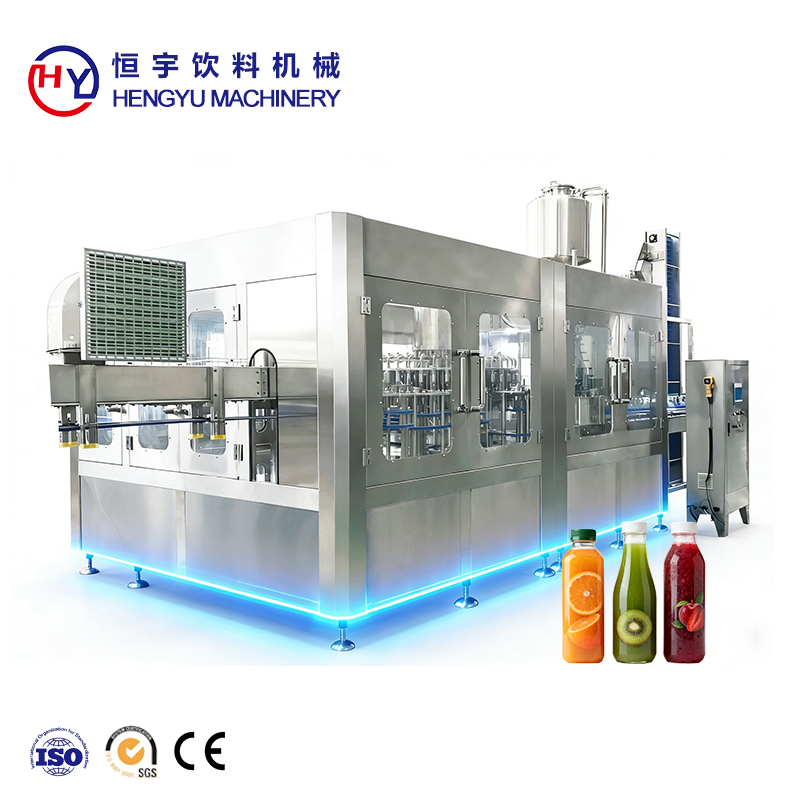
Professional Fruit Juice Filling Machine - High Efficiency Automated Juice Bottling Solutions

All Categories

fruit juice filling machine

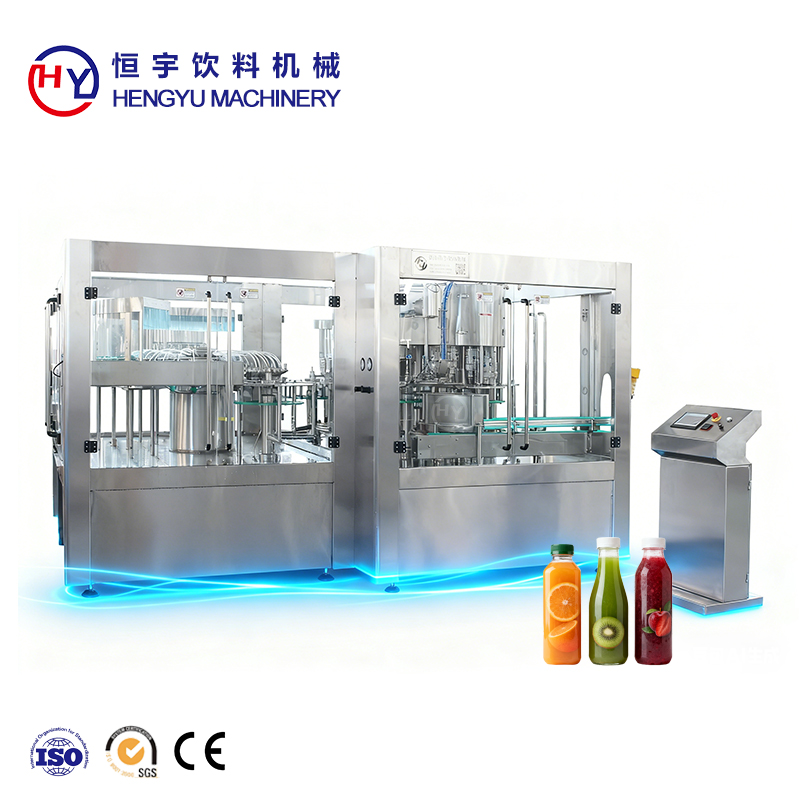
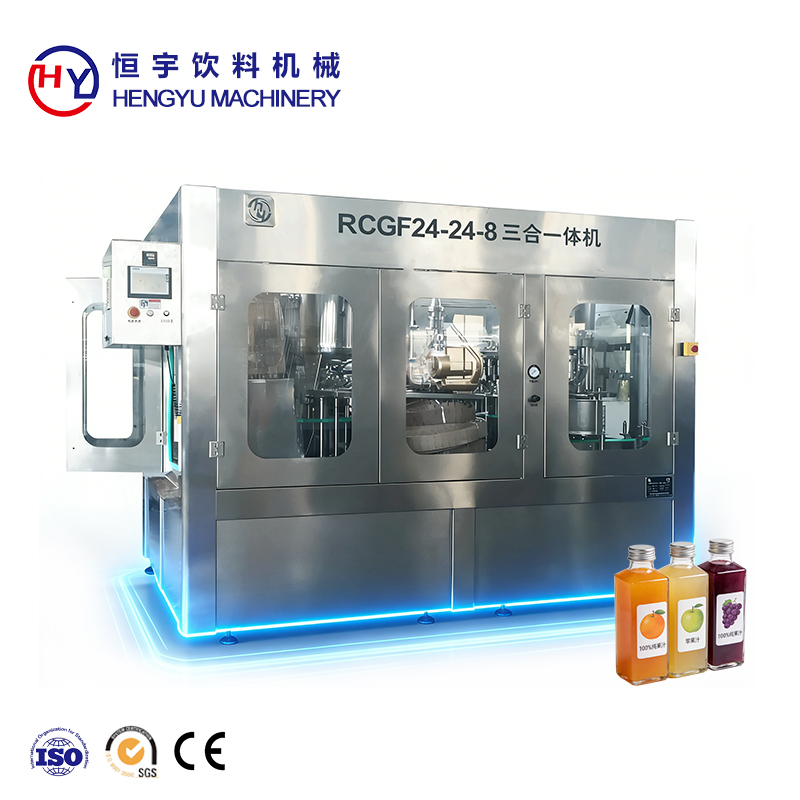
A fruit juice filling machine represents an essential piece of equipment designed specifically for packaging various types of fruit juices into bottles, containers, or pouches with precision and efficiency. This automated system streamlines the entire filling process, from container handling to sealing, ensuring that juice products maintain their freshness, flavor, and nutritional value throughout the packaging cycle. Modern fruit juice filling machines incorporate advanced technology to handle different viscosities, from thin apple juice to thick mango pulp beverages, making them versatile solutions for beverage manufacturers of all sizes. The machine typically consists of several integrated components including a bottle washing system, filling station, capping mechanism, and labeling unit, all working in synchronized harmony to deliver consistent results. These systems employ sophisticated control panels that allow operators to adjust filling volumes, speeds, and parameters according to specific product requirements. The fruit juice filling machine operates using either volumetric, gravity, or pressure filling methods, each suited to different juice characteristics and production demands. Built with food-grade stainless steel construction, these machines comply with strict hygiene standards and food safety regulations, preventing contamination and ensuring product integrity. The automation reduces human contact with the product, minimizing bacterial exposure and extending shelf life. From small-scale operations producing craft juices to large industrial facilities manufacturing thousands of bottles per hour, fruit juice filling machines adapt to various production capacities. They accommodate multiple container sizes and shapes, providing flexibility for manufacturers who produce diverse product lines. The integration of sensors and quality control mechanisms ensures accurate fill levels, reducing product waste and maintaining consistency across every bottle. By investing in a reliable fruit juice filling machine, manufacturers enhance their production efficiency, reduce labor costs, and improve overall product quality, positioning themselves competitively in the growing beverage market.

New Product Releases

Investing in a fruit juice filling machine delivers numerous practical benefits that directly impact your business profitability and operational efficiency. First and foremost, these machines dramatically increase production speed compared to manual filling methods, enabling you to process hundreds or even thousands of bottles per hour depending on the model capacity. This acceleration in output allows you to meet higher market demands, fulfill larger orders, and ultimately grow your business revenue without proportionally increasing labor costs. The precision offered by automated filling systems ensures that every container receives the exact amount of juice specified, eliminating underfilling that leads to customer dissatisfaction and overfilling that wastes valuable product. This accuracy translates directly into cost savings by maximizing the number of sellable units produced from each batch of juice. The consistent quality maintained by a fruit juice filling machine helps build brand reputation and customer loyalty, as consumers receive the same great product experience with every purchase. From a hygiene perspective, automated filling significantly reduces human handling of the product, minimizing contamination risks and helping you meet stringent food safety standards required by regulatory authorities. This protection of product integrity extends shelf life and reduces the likelihood of costly product recalls. The versatility of modern filling machines allows you to package different juice varieties, adjust to seasonal production changes, and accommodate various container types without requiring separate equipment for each product line. This flexibility maximizes your return on investment by utilizing one machine across multiple applications. Energy efficiency represents another compelling advantage, as contemporary fruit juice filling machines incorporate power-saving technologies that reduce operational costs while supporting environmental sustainability goals. The user-friendly interfaces and programmable controls simplify operation, reducing the training time required for staff and minimizing human error during production runs. Maintenance requirements have been streamlined through modular designs that allow quick component replacement and easy cleaning procedures, reducing downtime and keeping your production line running smoothly. The durability and longevity of quality filling machines mean that your initial investment continues delivering value for many years, with proper maintenance ensuring reliable performance throughout the equipment lifecycle. By automating the filling process, you free up your workforce to focus on other value-adding activities such as quality control, inventory management, and business development. The scalability offered by these systems means you can start with a smaller capacity machine and upgrade as your business grows, or add additional units to increase production without completely restructuring your facility. The data collection capabilities of modern machines provide valuable production insights, helping you optimize processes, identify bottlenecks, and make informed decisions about resource allocation and operational improvements.

Tips And Tricks

Can Filling Machine Technology for Carbonated Beverages

20

Mar

Can Filling Machine Technology for Carbonated Beverages

Isobaric Filling Principles: How Can Filling Machines Preserve Carbonation Under Pressure The Physics of CO₂ Solubility and Why Counter-Pressure Is Non-Negotiable The way carbon dioxide dissolves in drinks basically follows what we call Henry's Law...
View More
Troubleshooting Can Filling Machine Production Issues

21

Mar

Troubleshooting Can Filling Machine Production Issues

Power, Control, and Electrical Faults in Can Filling Machines Machine won't power on: main supply, fuses, and emergency stop circuit checks If the can filling machine won't start at all, the first thing to do is check whether the main power supply ...
View More
Can Sealing Machine Maintenance Tips

23

Mar

Can Sealing Machine Maintenance Tips

Daily and Weekly Preventive Maintenance for Your Can Sealing Machine Essential Daily Checks: Belt Tension, Sealing Bar Alignment, and Tape Head Cleanliness Starting every shift with a quick check on belt tension makes all the difference. If belts a...
View More
Automation Technology in Can Sealing Machines

24

Mar

Automation Technology in Can Sealing Machines

How Automation Enhances Precision and Reliability in Can Sealing Machines Core Automation Components: Servo Drives, Vision Systems, and Closed-Loop Feedback in Modern Can Sealing Machines Today's can sealing equipment reaches incredible levels of p...
View More

Get a Free Quote

Our representative will contact you soon.
Email
Name
Phone/WhatsApp
Required Product
Message
0/1000

fruit juice filling machine

Advanced Hygiene and Contamination Prevention Technology

Advanced Hygiene and Contamination Prevention Technology

The fruit juice filling machine incorporates cutting-edge hygiene features specifically engineered to maintain the highest standards of food safety throughout the packaging process. Every component that comes into contact with juice is constructed from premium food-grade stainless steel, which resists corrosion, prevents chemical reactions with acidic juices, and provides smooth surfaces that discourage bacterial growth. The material selection extends beyond basic compliance to ensure long-term durability in demanding production environments where frequent cleaning cycles are necessary. The machine design incorporates CIP systems that enable thorough automated cleaning without requiring complete disassembly, saving considerable time during sanitation procedures while ensuring all internal pathways receive proper attention. Strategic placement of sanitary valves and connections eliminates dead spaces where juice residue might accumulate and harbor microorganisms, addressing a common concern in beverage production facilities. The filling nozzles feature specialized designs that prevent dripping and cross-contamination between bottles, with automatic retraction mechanisms that lift away from containers immediately after filling completes. Air filtration systems integrated into the machine protect the filling environment from airborne contaminants, creating a clean zone around the critical filling area. Temperature control capabilities maintain juice at optimal conditions throughout the filling process, preventing bacterial multiplication that accelerates in warm environments. The enclosed filling chamber shields product from external environmental factors while UV sterilization options provide an additional layer of protection against pathogens. Pressure and flow controls prevent foaming and splashing that could introduce oxygen and compromise product quality. The precision sealing mechanisms ensure hermetic closures that preserve freshness and prevent post-packaging contamination. These comprehensive hygiene features work synergistically to extend product shelf life naturally without requiring excessive preservatives, meeting consumer demand for cleaner label products. For manufacturers serving sensitive markets such as organic juice production or fresh-pressed beverages with minimal processing, these hygiene capabilities prove absolutely essential. Regular validation and monitoring systems built into the machine provide documentation supporting food safety audits and regulatory compliance requirements. The investment in superior hygiene technology protects brand reputation by minimizing quality incidents while supporting premium pricing strategies based on superior product integrity.
Intelligent Automation and Precision Control Systems

Intelligent Automation and Precision Control Systems

Modern fruit juice filling machines distinguish themselves through sophisticated automation technology that transforms production efficiency and consistency. At the heart of these systems lies an advanced programmable logic controller that orchestrates every aspect of the filling operation with remarkable precision. Operators interact with intuitive touchscreen interfaces that display real-time production data, equipment status, and performance metrics in easily understandable formats requiring minimal technical expertise. The control system allows rapid recipe changes, enabling manufacturers to switch between different juice products, container sizes, or fill volumes within minutes rather than hours required by older equipment. This flexibility proves invaluable for businesses producing multiple product lines or responding to seasonal flavor variations. Precision servo motors drive filling valves, ensuring repeatability within fractions of a milliliter across thousands of consecutive fills, a level of accuracy impossible to achieve through manual operations. Integrated weighing systems or flow meters continuously monitor fill volumes, with automatic adjustments compensating for variations in product temperature, viscosity, or supply pressure that might otherwise affect accuracy. Vision systems inspect bottles before filling, rejecting defective containers that could compromise product quality or cause equipment jams. The fruit juice filling machine employs sophisticated sensors throughout the production line, detecting bottle presence, monitoring fill levels, verifying cap placement, and checking label application, creating multiple quality checkpoints that catch issues before defective products reach consumers. Fault detection algorithms identify developing problems such as worn components or calibration drift, alerting operators before failures occur and scheduling preventive maintenance during planned downtime rather than forcing emergency repairs. Data logging capabilities record production statistics, downtime incidents, and efficiency metrics that managers analyze to identify improvement opportunities and optimize resource allocation. Network connectivity enables remote monitoring and diagnostics, allowing technical support specialists to troubleshoot issues without traveling to your facility, reducing service costs and minimizing production interruptions. The automation extends to upstream and downstream processes through integration capabilities that synchronize the filling machine with rinsing equipment, conveyors, labelers, and case packers, creating seamless production flow. Variable frequency drives adjust motor speeds dynamically, optimizing energy consumption based on actual production demands rather than running constantly at maximum capacity. The intelligent control systems reduce operator workload, minimize training requirements, and virtually eliminate human error as sources of quality variation, delivering consistent results shift after shift regardless of which team members operate the equipment.
Exceptional Versatility and Production Flexibility

Exceptional Versatility and Production Flexibility

The remarkable adaptability of a fruit juice filling machine provides manufacturers with strategic advantages in dynamic beverage markets where consumer preferences evolve rapidly and product portfolios expand continually. These machines accommodate an impressive range of juice viscosities, from clear filtered apple juice with water-like consistency to thick smoothies containing pulp and fiber, without requiring different equipment for each product type. Adjustable filling parameters allow operators to optimize settings for each specific juice characteristic, ensuring proper handling whether processing delicate cold-pressed juices or robust concentrate blends. Container versatility represents another dimension of flexibility, with quick-change components enabling transitions between glass bottles, PET plastic containers, aluminum cans, or flexible pouches depending on market segment and distribution channel requirements. The toolless changeover designs implemented in quality filling machines reduce format change times dramatically, some systems accomplishing complete conversions in under thirty minutes compared to several hours required by conventional equipment. This rapid changeover capability supports smaller batch production economically, allowing manufacturers to offer greater product variety without sacrificing efficiency or incurring prohibitive setup costs. Size range flexibility accommodates everything from single-serve portions to family-size containers, letting businesses serve multiple market segments with one production line. The fruit juice filling machine scales to match business growth stages, with modular designs that permit capacity expansion by adding filling heads or increasing line speed without replacing the entire system. Entry-level configurations serve startup operations and craft producers, while industrial models deliver the high-volume output required by major brands, ensuring appropriate solutions exist for every business size. Seasonal production variations common in juice manufacturing align perfectly with machine flexibility, allowing manufacturers to ramp up capacity during peak fruit harvest periods and reduce output during slower months without maintaining excess fixed capacity. The equipment handles both hot-fill processing for shelf-stable products and cold-fill operations for refrigerated distribution, providing options that match preservation strategies to specific juice types and target markets. Integration capabilities enable the filling machine to function within comprehensive production systems, connecting with upstream preparation equipment like pulpers and pasteurizers and downstream packaging machinery including shrink wrappers and palletizers. This systems approach creates cohesive production environments where the fruit juice filling machine serves as the critical centerpiece coordinating overall manufacturing flow. Customization options address unique requirements, with manufacturers offering specialized configurations for organic certification, kosher production, or other niche market specifications. The combination of product, container, and operational flexibility positions manufacturers to respond quickly to market opportunities, launch new products efficiently, and adapt to changing consumer preferences without major capital investments in new equipment.